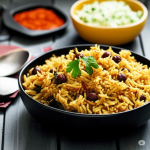
Chickpea Biryani Recipe | Healthy Indian Biryani
Biryani is one of India’s most cherished rice dishes, celebrated for its fragrant spices, layered flavours and regional diversity. This Millet and Black Chickpea Biryani Recipe brings a thoughtful variation to the traditional Indian biryani by combining the goodness of ancient grains with the earthy richness of kala chana (black chickpeas).
Servings 6 People
Calories 420kcal
Equipment
- Heavy-bottomed pot with a tight-fitting lid – Ideal for cooking biryani evenly and allowing the flavours of millet, black chickpeas and spices to blend beautifully. A Dutch oven or thick kadai works well.Pressure cooker – Useful for cooking black chickpeas until tender while maintaining their texture and nutritional value.Fine-mesh strainer – For washing and draining millet properly before cooking.Wooden spoon or spatula – Helps gently mix ingredients without breaking the grains.Measuring cups and spoons – For accurate ingredient measurements and consistent results
Ingredients
- 1 cup 200g Foxtail Millet (Kangni) or Kodo Millet (Kodra) – choose your preferred gluten-free millet for this recipe, ensuring a delightful millet Biryani.
- 2 cups 480ml warm water
- ½ tsp Salt
- 1 tbsp Vegan Ghee or Coconut Oil
- For the Black Chickpea Kala Chana Masala:
- 1 cup 200g dried Black Chickpeas (Kala Chana), soaked then boiled in a pressure cooker with 3 cups water).
- 2 tbsp Vegan Ghee or Coconut Oil
- 2 Bay Leaves Tej Patta
- 4-5 Green Cardamoms Choti Elaichi
- 2-3 Cinnamon Sticks Dalchini, 1-inch pieces
- 4-5 Cloves Laung
- 1 tsp Cumin Seeds Jeera
- 2 large Onions thinly sliced
- 1 tbsp Ginger-Garlic Paste
- 2-3 Green Chillies slit lengthwise (adjust to taste)
- 1 large Tomato finely chopped
- ½ cup 120g Vegan Curd/Yoghurt
- ¼ cup finely chopped Coriander Leaves
- ¼ cup finely chopped Mint Leaves
- Dry Spice Powders:
- 1 tbsp Coriander Powder Dhaniya Powder
- 1 tsp Cumin Powder Jeera Powder
- 1 tsp Turmeric Powder Haldi Powder
- 1 tsp Red Chilli Powder Degi Mirch for colour, or hotter as per taste
- 1 tbsp Biryani Masala good quality, store-bought or homemade – key for authentic Biryani flavour.
- ½ tsp Garam Masala
- Salt to taste
- For Layering Optional but Recommended for Authenticity:
- ½ cup Crispy Fried Onions Bhavna Pyaz – use minimal oil or air-fry for a healthier version
- A few strands of Saffron Kesar, soaked in 2 tbsp warm plant-based milk (e.g., almond milk)
- 2 tbsp fresh Mint Leaves chopped
- 2 tbsp fresh Coriander Leaves chopped
- 1-2 tbsp Vegan Ghee or Coconut Oil for drizzling
Instructions
- Phase 1: Prepare the Millet and Black Chickpeas
- Cook the Black Chickpeas (Kala Chana)
- Soak the black chickpeas for 4–6 hours or preferably overnight. Soaking helps reduce cooking time and ensures the chickpeas cook evenly. Drain and rinse well, then pressure cook with 3 cups fresh water for 20–25 minutes until tender but firm enough to hold their shape. Drain the excess water and keep the cooked chickpeas aside.
- Cook the Millet
- Wash the millet thoroughly under running water until the water turns clear. Add the rinsed millet, 2 cups warm water and ½ teaspoon salt to a saucepan. Bring it to a boil, then reduce the heat, cover and cook on low flame for 15–20 minutes until the water is absorbed and the millet becomes fluffy.
- Avoid stirring frequently while cooking, as this can make the millet sticky. Once cooked, gently fluff with a fork. Add 1 tablespoon vegan ghee or coconut oil, mix lightly and keep covered until required.
- Phase 2: Prepare the Biryani Masala
- Temper the Whole Spices
- Heat vegan ghee or coconut oil in a heavy-bottomed pot. Add bay leaves, green cardamom, cinnamon, cloves and cumin seeds. Sauté for 30 seconds until the spices release their aroma.
- Cook the Onions
- Add thinly sliced onions and cook patiently on medium heat until they turn golden brown and caramelised. This step creates the deep flavour base for the Millet and Black Chickpea Biryani.
- Add Aromatics and Spices
- Add ginger-garlic paste and slit green chillies. Sauté for 2–3 minutes until the raw aroma disappears.
- Add chopped tomatoes and cook until soft and the oil begins to separate. Reduce the heat and add coriander powder, cumin powder, turmeric, red chilli powder, biryani masala and garam masala. Cook for 1–2 minutes, adding a splash of water if needed to prevent the spices from sticking.
- Add Vegan Curd and Black Chickpeas
- Remove the pot from heat briefly and gradually mix in the vegan curd to prevent splitting. Return to low heat and add cooked black chickpeas, chopped coriander and mint leaves.
- Mix gently and simmer for 5 minutes, allowing the kala chana to absorb the aromatic masala. Adjust salt according to taste.
- Phase 3: Layering the Millet Biryani
- First Layer
- Spread half of the prepared black chickpea masala evenly at the bottom of the pot.
- Millet Layer
- Add half of the cooked millet over the masala. Spread gently without pressing the grains. Sprinkle fresh mint and coriander leaves.
- Second Masala Layer
- Add the remaining black chickpea masala over the millet layer, spreading it evenly.
- Final Millet Layer
- Cover with the remaining millet to create the final layer.
- Garnishing
- Top with fresh mint, coriander leaves and crispy fried onions (optional). Drizzle saffron-infused plant milk over the top and add a few drops of vegan ghee or coconut oil for extra aroma and richness.
- Phase 4: Dum Cooking – Bringing the Flavours Together
- Seal the Pot
- Cover the pot tightly with a lid. For a traditional dum effect, seal the edges with dough made from wheat flour and water. This helps retain steam and allows the flavours to blend beautifully.
- Slow Cook on Dum
- Place the pot on a very low flame for 20–25 minutes. If the flame is strong, keep a heavy-bottomed tawa underneath to prevent the bottom layer from burning.
- Avoid opening the lid during dum cooking, as the trapped steam is essential for developing the authentic flavour of this High-Protein Millet Biryani Recipe.
- Rest Before Serving
- Turn off the heat and allow the biryani to rest for 10–15 minutes. This resting time helps the flavours settle and keeps the millet grains light and separate.
- Gently fluff the layers before serving and enjoy a wholesome Millet and Black Chickpea Biryani that combines traditional biryani flavours with the goodness of ancient grains.
Notes
-
Madhu Savara’s Tips for Perfect Millet and Black Chickpea Biryani
Choose the Right Millet:
You can experiment with different millets such as kodo millet or little millet. Each millet has its own texture and flavour. Adjust the water quantity and cooking time according to the millet variety to achieve perfectly cooked, fluffy grains. Soak Black Chickpeas Properly:
Do not skip soaking the kala chana. Soaking for several hours helps reduce cooking time and improves texture. If using canned black chickpeas, rinse them thoroughly before adding to remove excess sodium. Build Flavour Slowly:
The depth of a good biryani comes from patience. Take time to caramelise the onions properly, as they create the rich foundation for the biryani masala and enhance the overall flavour. Balance the Spices:
Adjust green chillies and red chilli powder according to your preferred spice level. A good quality biryani masala makes a noticeable difference. For a more personalised flavour, homemade biryani masala can also be used. Add Seasonal Vegetables:
For extra nutrition and colour, add vegetables like carrots, green beans or potatoes. Cook them along with the black chickpeas so they absorb the aromatic masala flavours. Make Healthier Crispy Onions:
Instead of deep-frying onions, you can air-fry or bake thinly sliced onions until crisp. This gives the biryani a delicious garnish while keeping it lighter. Quick Cooking Option:
For a faster version, millet and black chickpeas can be prepared using an Instant Pot or pressure cooker. Once cooked, follow the same layering and dum cooking method. Prepare in Advance:
This High-Protein Millet and Black Chickpea Biryani Recipe is ideal for batch cooking. Prepare a larger quantity and enjoy it for family meals, lunch boxes or planned meals during the week.