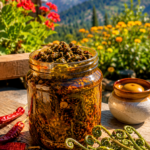
Kasrod Pickle Recipe – Traditional Chamba Fiddlehead Fern Achar
Kasrod pickle is a traditional Chamba delicacy prepared from the tender, tightly coiled fronds of Kasrod, the local name associated with the edible fiddlehead fern Diplazium esculentum. In this Kasrod pickle recipe, the young fronds are cleaned, briefly blanched and dried before being mixed with mustard oil, mustard powder, turmeric, red chilli and salt. The pickle develops a tangy, mildly bitter and spicy taste as the ingredients mature together. Kasrod achar can be served in small quantities with rice, roti or a traditional Indian meal. Making Kasrod pickle is also a practical way of preserving a seasonal ingredient beyond its short fresh season. The exact taste and method can vary between households, with some families using their own combination of spices and preparation techniques.
Servings 20 grams per person
Calories 45kcal
Equipment
- Large bowl – for cleaning KasrodKnife and chopping board – for trimming and cutting the frondsLarge saucepan – for blanching KasrodClean cotton cloth or large tray – for draining and drying the frondsMixing bowl – for combining Kasrod with oil and spicesClean, completely dry glass jar with a tight-fitting lid – for storing the Kasrod pickleClean wooden or steel spoon – for mixing and transferring the pickle
Ingredients
- Fresh young Kasrod Himachali fiddlehead fern – 500–600 g
- Mustard oil – 150–200 ml
- Mustard seed powder rai powder – 2–2½ tbsp
- Salt – 1½–2 tsp or to taste
- Turmeric powder – 1 tsp
- Red chilli powder – 1–1½ tsp or to taste
- Fenugreek seeds methi dana, lightly roasted and powdered – 1 tsp
- Asafoetida hing – a small pinch, optional
- Water – sufficient for blanching
- Turmeric powder – ½ tsp for blanching
Instructions
- Select young, tightly coiled Kasrod fiddlehead fern fronds. Gently remove the brown scales and fine hairs. Wash the fronds thoroughly 2–3 times and cut them into 2–3 cm pieces.
- Bring sufficient water to a boil in a saucepan. Add ½ teaspoon turmeric powder. Add the prepared Kasrod and blanch for 2–3 minutes.
- Drain the Kasrod immediately and rinse once with cold water. Spread the pieces in a single layer on a clean cloth or tray.
- Sun-dry or air-dry the Kasrod until completely free of surface moisture.
- Heat the mustard oil until it reaches the smoking point. Switch off the heat and allow the oil to cool completely.
- Place the dried Kasrod in a clean, dry mixing bowl. Add salt, turmeric powder, red chilli powder, mustard seed powder, roasted fenugreek powder and hing, if using.
- Mix the Kasrod and spices thoroughly.
- Pour the cooled mustard oil over the mixture and mix well until the Kasrod pieces are evenly coated.
- Transfer the prepared Kasrod pickle into a clean, completely dry glass jar. Press the mixture down gently and leave a little space at the top.
- Close the jar tightly and place it in sunlight for 7–15 days. Stir once every 2–3 days with a clean, dry spoon.
- The Kasrod achar is ready when the flavours have blended, and the sharp raw taste of the mustard has mellowed.
Notes
Madhu Savara’s Tips and Variations
- Dry the blanched Kasrod thoroughly before mixing it with the pickle spices.
- Adjust the amount of red chilli powder to taste.
- Roasted and coarsely powdered fennel seeds or ajwain can be added for a different flavour.
- If there is little sunlight, allow the Kasrod pickle to mature for a longer period in a clean, dry place.
- For a softer, oilier Kasrod achar, increase the mustard oil slightly according to your preference.