
A Story from the Himalayan Hills
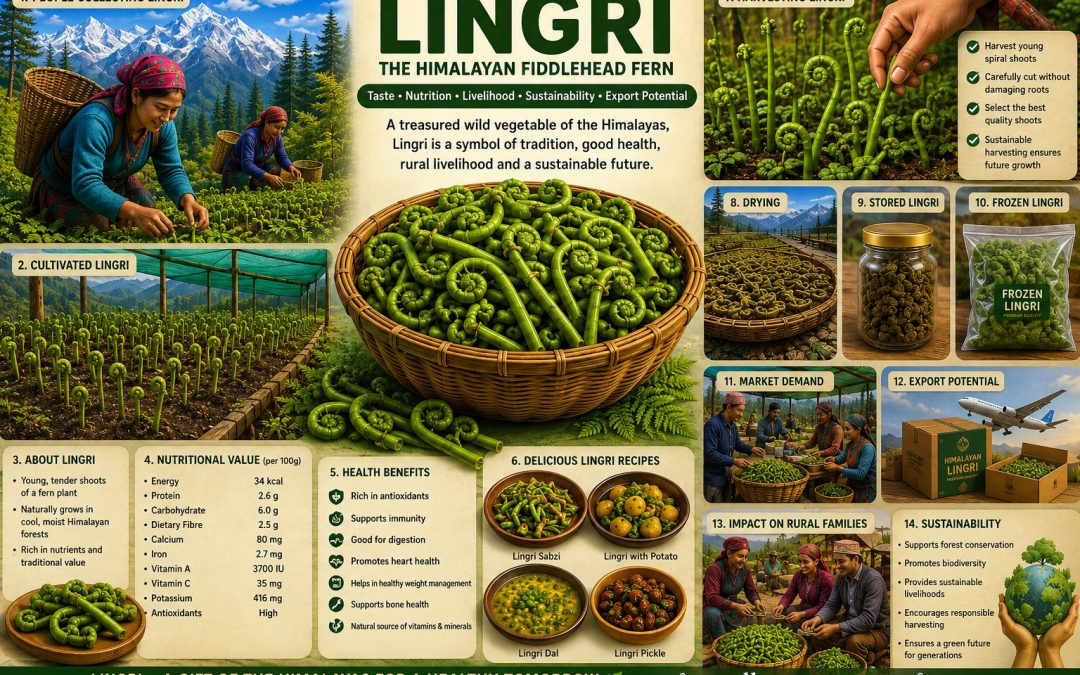
The morning mist had just begun to lift from the terraced slopes of the Himalayas. Women carrying woven bamboo baskets walked carefully through forest trails, their eyes trained on the fresh green shoots emerging from the damp earth. These curled green shoots, known locally as Lingri, have been harvested by mountain communities for generations.
For many families living in remote Himalayan villages, Lingri is more than a seasonal vegetable. It represents tradition, nutrition, culture, and livelihood. Children grow up eating Lingri sabzi prepared by their grandmothers. Local markets eagerly await its arrival each season. Travellers seek its unique taste, while health-conscious consumers increasingly recognise its nutritional value.
Today, Lingri is gaining attention beyond mountain villages. Researchers, chefs, nutritionists, agricultural experts, and exporters are discovering the remarkable potential of this wild Himalayan treasure.
Table of Contents
- Preface
- About Lingri
- Origin and History of Lingri
- Identification of Lingri
- Nutritional Value of Lingri
- Health Benefits of Lingri
- Traditional Himalayan Recipes Using Lingri
- Cultivation Possibilities
- Harvesting Techniques
- Storage and Preservation
- Market Demand for Lingri
- Export Potential of Lingri
- Impact on Rural Himalayan Families
- Sustainability and Environmental Importance
- Frequently Asked Questions
- Call to Action
- Conclusion
- Disclaimer
Preface
Lingri occupies a unique position among Himalayan vegetables. Unlike commercially cultivated vegetables that dominate modern agriculture, Lingri continues to thrive as a seasonal mountain delicacy closely linked with traditional knowledge and sustainable harvesting practices.
As consumer demand shifts towards natural foods, wild edibles, and nutrient-rich vegetables, Lingri has emerged as a promising crop capable of generating income while preserving ecological balance. Its growing popularity among chefs, health enthusiasts, and food researchers has brought renewed attention to this remarkable Himalayan resource.
This comprehensive guide explores every aspect of Lingri, from its origins and nutritional benefits to its economic significance and export prospects.
About Lingri
Lingri, commonly known as the Himalayan Fiddlehead Fern, refers to the young coiled fronds of certain fern species that grow naturally across the Himalayan region. The term “fiddlehead” comes from the resemblance of the young curled frond to the decorative scroll found on stringed instruments such as violins.
These tender shoots emerge during spring and early summer in moist forest areas, near streams, and on mountain slopes. Before the fronds fully unfurl into mature ferns, they are harvested and consumed as a vegetable.
Lingri is widely enjoyed in regions of:
- Himachal Pradesh
- Jammu and Kashmir
- Uttarakhand
- Sikkim
- Arunachal Pradesh
- Parts of Nepal and Bhutan
Its distinctive flavour, tender texture, and nutritional richness have made it a valued component of Himalayan cuisine.
Origin and History of Lingri
The use of Lingri dates back centuries in Himalayan communities where people relied extensively on forests for food, medicine, and livelihood.
Long before modern agriculture became widespread, mountain communities developed a deep understanding of edible wild plants. Through generations of observation and experience, they identified safe fern species suitable for consumption.
Historical evidence suggests that wild edible ferns formed an important part of seasonal diets throughout the Himalayan belt. During spring, when cultivated vegetables were scarce, Lingri provided essential nutrients and dietary diversity.
Traditional knowledge surrounding Lingri harvesting, preparation, and preservation has been passed orally from one generation to another. This knowledge remains a vital component of Himalayan cultural heritage.
Today, Lingri stands as a symbol of indigenous food wisdom and sustainable resource utilisation.
Identification of Lingri
Correct identification is crucial because not all fern species are edible.
Key characteristics of edible Lingri include:
Appearance
- Bright green colour
- Tightly coiled young shoots
- Tender stem structure
- Smooth texture
- Curled fiddle-like head
Growth Habitat
- Moist forest floors
- Stream banks
- Shaded mountain slopes
- Humus-rich soils
- High rainfall regions
Harvest Stage
The ideal harvesting stage occurs when the fronds remain tightly curled and measure approximately 10–20 centimetres in length.
Once fully opened, the shoots become fibrous and unsuitable for culinary use.
Nutritional Value of Lingri
Lingri is considered one of the most nutritious wild Himalayan vegetables.
Its nutritional profile includes:
Vitamins
- Vitamin A
- Vitamin C
- Vitamin E
- Several B-complex vitamins
Minerals
- Iron
- Potassium
- Calcium
- Magnesium
- Manganese
- Phosphorus
Other Nutrients
- Dietary fibre
- Antioxidants
- Plant-based protein
- Phytochemicals
- Natural bioactive compounds
Nutritional Advantages
Compared with many cultivated vegetables, Lingri offers:
- Higher antioxidant content
- Rich micronutrient density
- Low calorie value
- Good fibre content
- Natural plant compounds beneficial for overall wellness
These characteristics make Lingri an attractive addition to modern healthy diets.
Health Benefits of Lingri
Supports Digestive Health
The dietary fibre present in Lingri promotes healthy digestion and supports regular bowel movements.
Rich Source of Antioxidants
Lingri contains antioxidants that help combat oxidative stress and support cellular health.
Supports Immune Function
The presence of vitamins and minerals contributes to normal immune system functioning.
Helps Maintain Bone Health
Calcium, phosphorus, and magnesium support bone strength and maintenance.
Supports Heart Health
Its low-fat profile and mineral composition make Lingri a valuable component of a balanced diet.
Supports Healthy Weight Management
Lingri is naturally low in calories while providing fibre and essential nutrients.
Encourages Dietary Diversity
Nutrition experts increasingly recommend consuming diverse plant foods, and Lingri contributes significantly to dietary variety.
Traditional Medicinal Importance
Many Himalayan communities have traditionally regarded Lingri as a nourishing seasonal food that promotes vitality and overall well-being.
Traditional Himalayan Recipes Using Lingri
The versatility of Lingri has made it a cherished ingredient across Himalayan households. Its earthy flavour and tender texture allow it to be prepared in several traditional ways.
1. Traditional Lingri Sabzi
The most common preparation involves sautéing fresh Lingri with:
- Mustard oil
- Onions
- Garlic
- Green chillies
- Local Himalayan spices
This simple dish preserves the natural flavour of the Himalayan fiddlehead fern while delivering excellent nutrition.
2. Lingri Potato Curry
Many families combine Lingri with potatoes to create a hearty mountain-style curry served with chapati or rice.
3. Lingri Pickle
In several Himalayan regions, Lingri is preserved as a pickle using mustard oil, spices, and natural fermentation methods. This allows households to enjoy Lingri beyond its harvesting season.
4. Lingri with Local Pulses
Traditional cooks often combine Lingri with lentils and pulses, enhancing both protein content and flavour.
5. Dried Lingri Preparations
Sun-dried Lingri is rehydrated and cooked during the off-season, ensuring year-round availability.
Cultivation Possibilities of Lingri
Historically, Lingri has been harvested from the wild. However, increasing market demand has encouraged interest in semi-cultivation and commercial cultivation.
Suitable Conditions
Lingri thrives under:
- Cool temperatures
- High humidity
- Partial shade
- Organic-rich soils
- Adequate moisture
These conditions closely resemble natural Himalayan forests.
Potential for Agroforestry
Lingri can be integrated into:
- Forest farming systems
- Agroforestry models
- Organic farming projects
- Community-managed woodland cultivation
Advantages of Cultivation
Income Diversification
Farmers can supplement earnings through Lingri production.
Low Chemical Requirement
Lingri generally requires minimal chemical inputs.
Sustainable Land Use
Cultivation encourages environmentally responsible farming practices.
Value Addition Opportunities
Farmers can market:
- Fresh Lingri
- Dried Lingri
- Frozen Lingri
- Pickled Lingri
Harvesting Techniques
Proper harvesting ensures product quality while protecting future growth.
Ideal Harvest Time
Lingri is generally harvested during:
- Early spring
- Late spring
- Early summer
depending upon altitude and climatic conditions.
Harvesting Method
Harvesters:
- Select young curled shoots.
- Cut only mature harvestable fronds.
- Avoid damaging underground rhizomes.
- Leave sufficient shoots for regeneration.
Best Practices
- Harvest selectively.
- Avoid over-collection.
- Use clean cutting tools.
- Follow rotational harvesting methods.
These practices help maintain healthy fern populations and ensure long-term sustainability.
Storage and Preservation
Because fresh Lingri has a limited shelf life, proper storage is essential.
Fresh Storage
Fresh Lingri should be:
- Cleaned thoroughly.
- Stored under refrigeration.
- Protected from excessive moisture loss.
Under suitable conditions, fresh Lingri can remain marketable for several days.
Drying
Drying remains one of the oldest preservation methods.
Benefits include:
- Extended shelf life
- Easy transportation
- Reduced storage costs
- Off-season availability
Freezing
Commercial processors increasingly use freezing techniques to preserve:
- Texture
- Colour
- Nutritional quality
Pickling
Pickled Lingri creates additional value while preserving the product for months.
Market Demand for Lingri
Demand for Lingri has grown significantly in recent years.
Several factors contribute to this trend.
Growing Interest in Traditional Foods
Consumers increasingly seek authentic regional foods with cultural significance.
Rise of Health-Conscious Eating
The nutritional benefits of Lingri attract health-focused consumers.
Expansion of Specialty Food Markets
Hotels, restaurants, and gourmet food businesses are introducing Himalayan ingredients into their menus.
Interest in Wild and Natural Foods
Wild edible plants have gained popularity among chefs and food enthusiasts worldwide.
Tourism and Culinary Exploration
Visitors to Himalayan regions often seek local delicacies, increasing demand for Lingri-based dishes.
Export Potential of Lingri
Among Himalayan vegetables, Lingri possesses considerable export potential.
Why International Markets Are Interested
Nutritional Appeal
Global consumers increasingly favour nutrient-dense foods.
Exotic Food Category
Lingri qualifies as a unique specialty vegetable with strong culinary appeal.
Organic Market Opportunities
Many naturally harvested Lingri products can meet organic market expectations.
Demand for Sustainable Foods
Consumers worldwide increasingly prefer foods linked to environmentally responsible practices.
Potential Export Products
- Fresh Lingri
- Frozen Lingri
- Dried Lingri
- Pickled Lingri
- Ready-to-cook Lingri products
Key Export Markets
Potential markets include:
- United States
- Canada
- United Kingdom
- Germany
- France
- Australia
- Japan
- Singapore
Challenges to Address
To realise full export potential, stakeholders must strengthen:
- Quality control
- Cold chain infrastructure
- Packaging standards
- Certification systems
- Traceability mechanisms
Impact on Rural Himalayan Families
Few Himalayan vegetables contribute to rural livelihoods as directly as Lingri.
Seasonal Income Generation
Collection and sale of Lingri provide supplementary income during spring months.
Women’s Participation
Women play a significant role in:
- Harvesting
- Processing
- Drying
- Marketing
This contributes to household economic resilience.
Reduced Dependence on External Employment
Income from non-timber forest products such as Lingri helps families diversify their earnings.
Preservation of Traditional Knowledge
Commercial value encourages younger generations to retain valuable indigenous knowledge.
Community Development
Income generated through sustainable Lingri trade can support:
- Education
- Healthcare
- Household improvements
- Local entrepreneurship
Sustainability and Environmental Importance
Lingri demonstrates how biodiversity conservation and economic development can coexist.
Promotes Forest Conservation
Healthy forests remain essential for Lingri growth.
Communities benefiting from Lingri often have greater incentives to protect forest ecosystems.
Encourages Sustainable Harvesting
Responsible harvesting practices help maintain ecological balance.
Supports Biodiversity
Fern-rich ecosystems contribute to overall biodiversity conservation.
Climate Resilience
Diversified forest-based livelihoods improve resilience against climatic and economic uncertainties.
Sustainable Rural Development
Lingri represents a model where environmental stewardship directly supports economic wellbeing.
Frequently Asked Questions (FAQs)
What is Lingri?
Lingri is the young edible shoot of certain fern species found in the Himalayan region. It is commonly known as the Himalayan fiddlehead fern.
Is Lingri healthy?
Yes. Lingri is rich in vitamins, minerals, antioxidants, dietary fibre, and beneficial plant compounds.
Where is Lingri found?
Lingri naturally grows in Himalayan regions including Himachal Pradesh, Uttarakhand, Jammu and Kashmir, Sikkim, and neighbouring mountain areas.
Can Lingri be cultivated?
Yes. Although traditionally harvested from the wild, Lingri shows promising potential for semi-cultivation and commercial cultivation under suitable conditions.
How is Lingri consumed?
Lingri is commonly prepared as a vegetable, curry, pickle, dried product, or ingredient in traditional Himalayan dishes.
Does Lingri have export potential?
Yes. Growing global demand for healthy, exotic, sustainable foods creates significant export opportunities for Lingri products.
Can Lingri support rural livelihoods?
Absolutely. Lingri collection, processing, and marketing provide valuable seasonal income for many Himalayan families.
Call to Action
The future of Himalayan agriculture lies not only in modern crops but also in recognising the value of traditional treasures such as Lingri.
By supporting sustainable harvesting, responsible cultivation, local entrepreneurs, and rural producers, consumers can contribute to preserving both biodiversity and cultural heritage.
Choose authentic Himalayan products. Support mountain communities. Promote sustainable food systems. Discover the remarkable world of Lingri.
Conclusion
Lingri, the Himalayan fiddlehead fern, stands as a remarkable example of how nature, tradition, nutrition, and economic opportunity can come together in a single vegetable.
For centuries, Lingri has nourished Himalayan communities while remaining deeply rooted in local culture and ecological balance. Today, its nutritional richness, culinary versatility, market demand, and export potential are attracting attention far beyond mountain villages.
As consumers increasingly seek sustainable, healthy, and authentic foods, Lingri offers an exceptional opportunity to strengthen rural livelihoods, encourage biodiversity conservation, and promote responsible economic development across the Himalayan region.
The story of Lingri is not merely the story of a vegetable. It is the story of traditional wisdom, resilient communities, thriving ecosystems, and a sustainable future waiting to be embraced.
Disclaimer
The information provided in this article is published solely for educational, informational, agricultural, culinary, and general awareness purposes. While every effort has been made to ensure the accuracy, completeness, and reliability of the content at the time of publication, the author and Madhusavara.com make no representations or warranties regarding the completeness, suitability, accuracy, or applicability of the information for any specific purpose.
Readers are advised to independently verify any information relating to nutrition, health, cultivation practices, harvesting methods, food preparation, commercial activities, marketing opportunities, export procedures, legal requirements, certifications, or business decisions before acting upon it. Wild plants should always be identified carefully, and harvesting should be conducted responsibly and in accordance with applicable laws, forest regulations, environmental guidelines, and local authority requirements.
Any action taken by readers based on the information presented in this article is entirely at their own discretion and responsibility. The author and Madhusavara.com shall not be responsible for any direct, indirect, incidental, consequential, commercial, financial, agricultural, health-related, environmental, or other losses, damages, claims, disputes, injuries, or issues arising from the use of, reliance upon, interpretation of, or inability to use the information contained in this article.
The views and opinions expressed in this article are intended for general informational purposes and should not be considered professional medical, legal, financial, agricultural, nutritional, investment, or business advice. Readers should consult qualified professionals and relevant authorities before making decisions related to health, diet, cultivation, commercial ventures, investments, exports, or any other specialised matter.
By reading and using this article, readers acknowledge and agree that they are solely responsible for their decisions, actions, and outcomes arising from the use of the information provided herein.
