
Author’s Note
The Himalayas have always fascinated me—not only for their breathtaking landscapes but also for the incredible food traditions that have quietly survived among their remote villages. During my interactions with villagers, elderly farmers, and mountain communities, I discovered that many traditional Himalayan potato varieties, once treasured as lifelines during harsh winters, are now disappearing from fields and family kitchens.
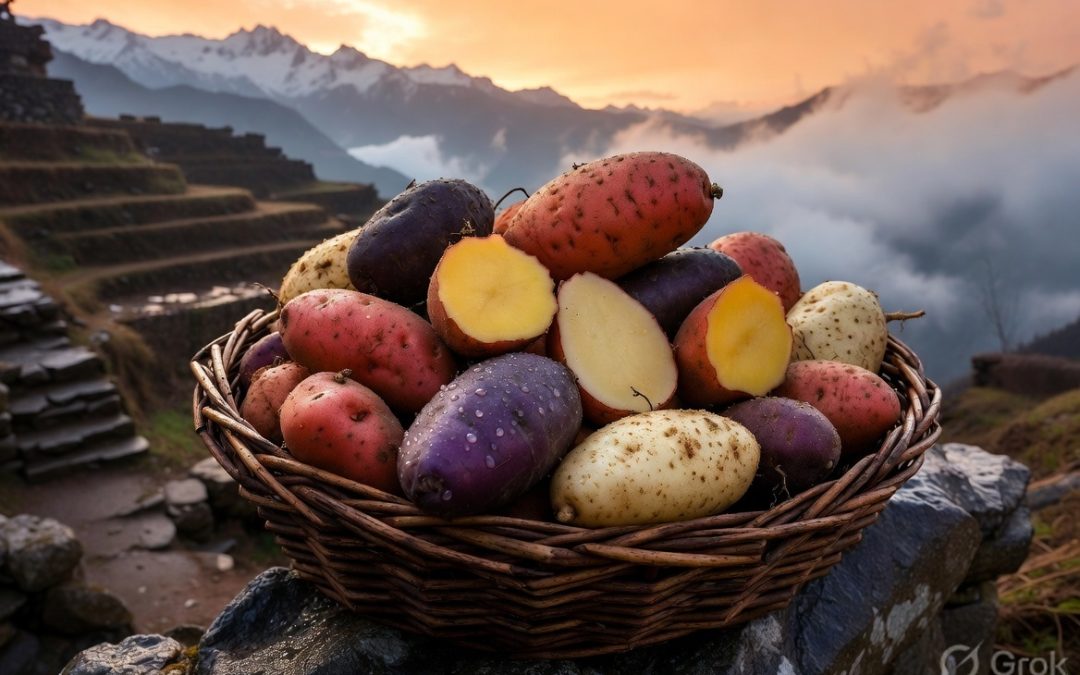
This blog is my humble effort to document and celebrate these forgotten mountain treasures before they fade into history. Every colourful tuber, every local name, and every farming tradition tells a story of resilience, biodiversity, and generations of indigenous wisdom. These potatoes are far more than crops; they are living guardians of Himalayan heritage, perfectly adapted to extreme climates where modern commercial varieties often struggle.
At MadhuSavara.com, my mission extends beyond sharing recipes. I strive to preserve traditional foods, forgotten ingredients, and the culinary heritage that shaped communities long before industrial agriculture transformed our plates. By bringing these rare Himalayan potato varieties into the spotlight, I hope to inspire researchers, home cooks, farmers, and food lovers to appreciate, conserve, and support these priceless mountain treasures.
If this article encourages even one reader to value indigenous crops, support local farmers, or rediscover a forgotten Himalayan variety, I will consider my effort worthwhile. Our food heritage survives only when we remember it, celebrate it, and pass it on to the next generation.
— Madhu Savara
Founder & Heritage Food Researcher
MadhuSavara.com – Preserving India’s Forgotten Culinary Heritage, One Story at a Time.
Table of Contents
- The Whisper of Ancient Tubers: A Himalayan Story
- Preface
- About Himalayan Potato: Origins and Adaptation
- Diversity of Lost & Rare Himalayan Potato Varieties
- Cultural, Nutritional, and Medicinal Significance
- Superiority Over Modern Varieties and Reasons for Loss
- Impact on Rural Himalayan Villages and Livelihoods
- Economic Potential: Effects on Potato Industry, Market, Farmers, and Export Opportunities
- Effects of Climate Change, Lifestyle, and Resource Shifts
- Conservation Efforts and Revival Initiatives
- Frequently Asked Questions (FAQs)
- Conclusion
- Disclaimer
The Whisper of Ancient Tubers: A Himalayan Story
High in the mist-shrouded valleys of the Himalayas, where terraced fields cling to steep slopes and frost nips at dawn, a humble tuber tells a tale of resilience and heritage. Imagine a Sherpa farmer in Nepal’s Khumbu region or a family in India’s Jumla district harvesting potatoes that their ancestors have nurtured for generations. These are not ordinary spuds — they are lost and rare Himalayan potato varieties, living links to a time when potatoes sustained communities through harsh winters and isolation.
One such story comes from Darjeeling’s hills, where the once-renowned Darjeeling Red Round thrived before modern varieties overshadowed it. Farmers recall its robust flavour and adaptability, now fading into memory. In Jumla, Nepal, at over 2,000 metres, local landraces produce nutrient-dense tubers prized for their taste and resilience. These Himalayan potato varieties embody survival against odds — frost, poor soils, and altitude — yet many teeter on the edge of extinction.
This blog delves deep into these treasures, celebrating their legacy while urging action to prevent their loss.
Preface
This exploration stands as one of the most comprehensive resources available on lost and rare Himalayan potato varieties. It offers an unparalleled, holistic synthesis that goes far beyond fragmented academic papers or brief overviews. This guide weaves rich historical narratives, detailed genetic insights, socio-economic realities, in-depth nutritional and medicinal analyses, real-world livelihood impacts, market and export potential, and forward-looking conservation strategies amid climate pressures, covering every critical dimension of the subject.
No other single resource examines the unique high-altitude adaptations of these landraces — traits modern varieties often cannot match — with such thoroughness, while addressing cultural significance, economic opportunities, threats, and revival pathways. Every aspect receives exhaustive attention. The aim is to inform, inspire, and drive collective action to protect this vital biodiversity for cultural heritage, food security, and agricultural resilience worldwide.
About Himalayan Potato
Himalayan potato varieties refer to traditional and landrace potatoes (Solanum tuberosum) cultivated in the high-altitude regions of the Indian, Nepali, and Bhutanese Himalayas. Introduced from the Andes centuries ago via colonial routes or trade, they were selectively bred by local farmers for short growing seasons, frost tolerance, and nutritional density.
Unlike commercial hybrids, these potatoes exhibit remarkable genetic diversity. They grow at elevations from 1,500 to over 3,500 metres, where few other crops survive. Key adaptations include deeper eyes for protection, varied skin colours (red, white, purple), and flesh that ranges from waxy to floury. They form a cornerstone of mountain agriculture, rotating with barley, buckwheat, and legumes to maintain soil health.
Diversity of Lost & Rare Himalayan Potato Varieties
Himalayan regions host dozens of rare Himalayan potato landraces, many undocumented or nearly lost:
- Jumla Local / Jumli Potato (Nepal): Grown organically at extreme altitudes in Karnali province. Known for superior taste, storability, and micronutrient content (iron, zinc).
- Darjeeling Red Round: A historic red-skinned variety from India’s Darjeeling hills. Before the 1980s, Darjeeling was home to significant potato diversity (over 1,200 varieties documented in research stations), with Darjeeling Red Round highly prized for market appeal and resilience.
- Nepali Hill Landraces: Over 35 distinct varieties documented in single villages, including Kaalo Aalu (black potato) and others showing notable late blight resistance.
- Bhutanese Traditional Varieties: Bombay White, Darjeeling Red Round, and Hazarey persist alongside modern releases.
- Other Indian Himalayan Types: In Ladakh, Uttarakhand, and Sikkim, local selections emphasise frost hardiness.
These Himalayan potato landraces represent invaluable genetic treasures for breeding climate-resilient crops.
Cultural, Nutritional, and Medicinal Significance
In Himalayan cultures, potatoes are more than food — they are identity. Sherpa stews, Nepali aloo tama, and Bhutanese dishes rely on local varieties for authentic flavour.
Nutritional Values: Many rare types boast higher levels of antioxidants (anthocyanins in purple/red flesh), vitamins (C, B6), minerals (iron, zinc, potassium), and resistant starch than wide modern varieties. Coloured landraces deliver antioxidant levels comparable to berries, supporting immunity, heart health, and anti-inflammatory benefits in high-altitude environments prone to oxidative stress.
Medicinal Properties: Traditional systems attribute diuretic, digestive, and energy-boosting qualities. Higher micronutrient density helps combat anaemia and altitude-related ailments, while lower glycemic impact in some landraces aids blood sugar management.
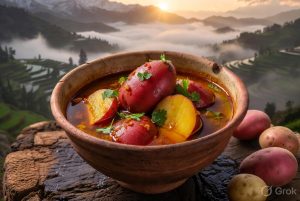
Reviving a Lost Himalayan Treasure: Darjeeling Red Round Aloo Ko Jhol — a hearty, spiced potato stew that celebrates the unique flavour and vibrant colour of rare Himalayan potato varieties.
Reviving a Lost Recipe: Darjeeling Red Round Aloo Ko Jhol (Spiced Red Potato Stew)
One of the nearly forgotten preparations using the lost Darjeeling Red Round variety is a simple, hearty Aloo Ko Jhol — a rustic, one-pot spiced stew that showcases the potato’s floury texture, earthy depth, and vibrant red skin, which infuses the gravy with a unique colour and robust flavour not easily replicated with commercial varieties.
Ingredients (Serves 4)
- 500g Darjeeling Red Round potatoes (or closest heirloom red-skinned variety), scrubbed but not peeled
- 2 tbsp mustard oil
- 1 tsp kalonji (nigella seeds)
- 4–5 garlic cloves, crushed
- 2–3 dried red chillies
- 1 medium onion, finely sliced
- ½ tsp turmeric powder
- 1 tsp red chilli powder (adjust to taste)
- Salt to taste
- Fresh coriander leaves and a squeeze of lemon for garnish
- Optional: A handful of fresh green peas or wild greens for added Himalayan touch
Method
- Boil the potatoes in their skins until just tender (retaining the red skin adds colour and nutrients). Cool slightly and break into large, irregular chunks by hand — this rustic method allows the floury interior to thicken the gravy naturally.
- Heat mustard oil in a kadai until the smoking point, then reduce the heat. Add kalonji and dried red chillies; let them sizzle.
- Add crushed garlic and sliced onion; sauté until golden and fragrant.
- Stir in turmeric, chilli powder, and salt. Add the broken potatoes and mix gently so they absorb the spices.
- Pour in 1–1½ cups water, cover, and simmer on low heat for 10–12 minutes until the gravy thickens and potatoes are infused with flavours.
- Finish with fresh coriander and lemon juice.
This dish was once common in Darjeeling household kitchens and small tea estate gatherings, but is now rarely prepared with the original variety. The Red Round’s texture makes the gravy naturally silky, and its skin adds a subtle bitterness that balances the spices — qualities modern uniform potatoes lack. Reviving such recipes helps preserve both the variety and cultural memory.
Superiority Over Modern Varieties and Reasons for Loss
Why better? Traditional Himalayan potato varieties often outperform modern hybrids in resilience (frost, drought, poor soil tolerance), distinctive flavour, storability with minimal chemicals, and nutritional density. They require fewer inputs, support agrobiodiversity, and maintain genetic variability for long-term adaptation. Modern varieties prioritise uniform yield and appearance but frequently lack micronutrient depth, natural disease resistance, and suitability for marginal high-altitude conditions.
Why lost now? Strong market preference for high-yielding, uniform tubers (e.g., Kufri Jyoti, Desiree); widespread replacement by commercial seeds; youth migration and generational shifts; and erosion of traditional knowledge.
Impact on Rural Himalayan Villages and Livelihoods
Lost Himalayan potato varieties serve as lifelines for rural communities. They ensure reliable food security in isolated villages, generate income via local markets and niche organic sales, and preserve cultural heritage. Their decline intensifies poverty, diminishes dietary diversity, and increases dependence on expensive external inputs in resource-scarce mountain economies. Families lose seed-saving autonomy, contributing to debt cycles and out-migration. Preservation sustains smallholder farming, women’s agricultural roles, and vibrant village life.
Economic Potential: Effects on Potato Industry, Market, Farmers, and Export Opportunities
Reviving and scaling Himalayan potato varieties today could profoundly transform the potato industry, markets, and farmers’ livelihoods. These landraces offer premium opportunities in niche and high-value segments, complementing rather than directly competing with high-volume commercial production.
Impact on Farmers’ Livelihoods: Cultivation of traditional varieties can boost incomes through premium pricing for organic, heirloom, or nutrient-dense potatoes (e.g., Jumla potatoes often command higher local prices). They reduce input costs (fewer pesticides/fertilisers) and enhance resilience, providing stable yields in marginal lands. This supports seed sovereignty, reduces debt from commercial seed purchases, and creates opportunities for women and community-based enterprises in seed production and value addition.
Effects on Potato Industry and Market: Integrating these varieties diversifies the market, tapping into growing demand for speciality, colourful, and nutritionally superior potatoes. They enable new product lines (e.g., artisanal chips, frozen products, or functional foods with high antioxidants). The industry benefits from genetic traits for breeding resilient commercial varieties, reducing vulnerability to climate risks and diseases. This could stabilise supply chains and open innovation in processing and packaging for differentiated products.
Export Potential: There is strong potential for niche exports. Himalayan landraces could command premiums in markets valuing heritage, organic, or nutrient-rich foods (e.g., urban India, Europe, the Middle East). Cross-border trade with India, Bangladesh, and beyond is viable with proper post-harvest management and certification. Value-added products like chips or flakes from coloured varieties could target health-conscious global consumers. Successful models from other regions show how such varieties create robust value chains linking farmers to supermarkets and exports.
Overall, revival creates a dual market: mass commercial for volume and premium/heritage for higher margins, ultimately strengthening the entire industry’s sustainability and profitability.
Effects of Climate Change, Lifestyle, and Resource Shifts
Climate change severely amplifies threats: rising temperatures, erratic rainfall, reduced snowfall, and surging pests/diseases (e.g., late blight) have caused dramatic yield drops in Himalayan potato areas. Warmer conditions stress frost-adapted landraces while promoting invasive pathogens.
Lifestyle changes — urbanisation, youth migration to cities, and shifts to cash crops — erode traditional farming practices. Resource shifts, including deforestation, soil degradation, and water scarcity, further compound the crisis. Ironically, Himalayan potato landraces hold critical keys to adaptation due to their inherent resilience traits.
Conservation Efforts and Revival Initiatives
Organisations like ICAR-CPRI (India), NARC (Nepal), and the International Potato Centre (CIP) lead germplasm conservation, participatory breeding, clean seed distribution, and farmer seed banks. Community trials in Jumla, value-chain development for native varieties, and exchanges with Andean germplasm offer promising pathways for enhanced resilience.
Frequently Asked Questions (FAQs)
Q1: What makes Himalayan potato varieties different from commercial ones? A: Himalayan potato varieties are adapted to extreme conditions with superior nutrition, flavour, and resilience compared to uniform modern hybrids.
Q2: Are there truly lost Himalayan potato varieties? A: Yes. Many Darjeeling types and undocumented landraces have largely disappeared from fields.
Q3: How do traditional Himalayan potatoes compare nutritionally? A: They often provide higher antioxidants, iron, zinc, and resistant starch, offering better health benefits for high-altitude living.
Q4: How does climate change affect these potatoes? A: It drives significant yield losses through heat, erratic weather, and diseases, threatening both landraces and modern crops.
Q5: How can individuals help preserve them? A: Support heirloom growers, advocate for biodiversity policies, grow adaptable varieties where suitable, and raise awareness.
Q6: What is the impact on rural Himalayan lives? A: Loss reduces food security, income, and cultural continuity, accelerating migration and poverty.
Q7: What are the market and export benefits of growing Himalayan potato varieties now? A: They enable premium pricing, niche markets, reduced input costs for farmers, industry diversification, and export opportunities in heritage and health-focused segments.
Conclusion
The lost and rare Himalayan potato varieties are more than agricultural relics — they are beacons of resilience, cultural pride, nutritional powerhouses, and vital genetic resources for a climate-stressed future. Their preservation and revival safeguard rural Himalayan villages, enhance food sovereignty, strengthen the potato industry through diversification and innovation, and equip humanity against mounting environmental challenges while unlocking economic opportunities. This in-depth examination highlights the urgent need for farmers, policymakers, scientists, and global citizens to act decisively: document, cultivate, research, and celebrate these high-altitude treasures before they vanish forever. The mountains whisper their stories — it is our shared duty to ensure they echo for generations.
CTA: Join the movement today! Share this comprehensive guide, source authentic Himalayan potato varieties from ethical farmers or cooperatives, volunteer with conservation projects, or contact agricultural departments in India, Nepal, or Bhutan. Subscribe for more insights on sustainable potato heritage and climate-smart agriculture. Try the revived Darjeeling Red Round recipe and experience a taste of Himalayan heritage!
Strong Disclaimer: This blog is for informational and educational purposes only, based on available research and reports. It does not constitute agricultural, medical, financial, or any other professional advice. Potato cultivation practices must follow local guidelines and expert consultation. Variety availability, yields, and conditions change over time and by location. The author and publisher assume no liability for any actions or outcomes based on this content. Always consult certified agronomists, institutions, or healthcare providers for personalised recommendations.
