
Madhu Savara’s Wild Mango & Jackfruit Pickle Magic
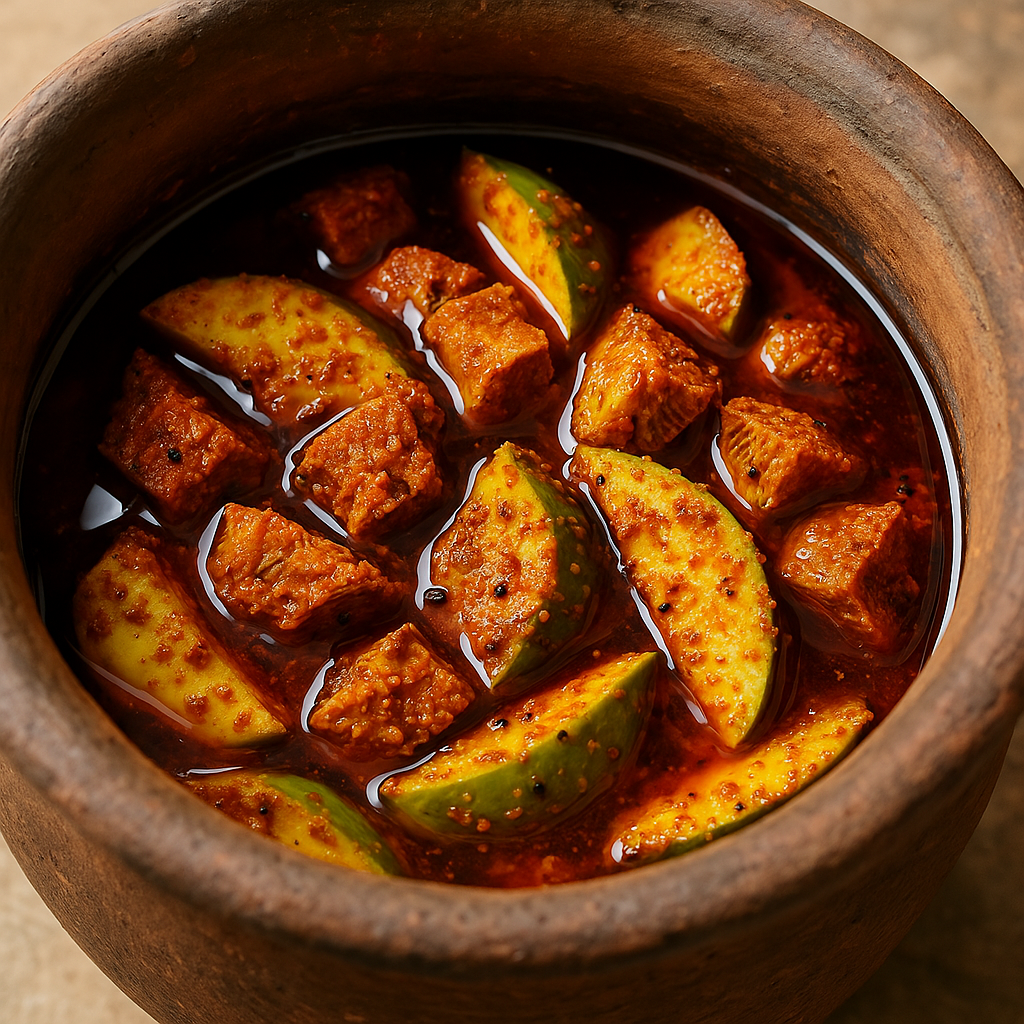
Madhu Savara’s Signature Mango & Monkey Jackfruit Pickle – A Forest-Flavoured Heirloom in Every Jar
Preface & Introduction
Madhu Savara’s Signature Mango & Monkey Jackfruit Pickle – A Forest-Flavoured Heirloom in Every Jar
Madhu Savara’s Signature Mango & Monkey Jackfruit Pickle – A Forest-Flavoured Heirloom in Every Jar
Every summer in India, the kitchen becomes a sacred space of ancestral ritual. The clinking of steel pans rings through the warm, spice-laden air, mingling with the smoky perfume of mustard oil. Hands, seasoned by generations, blend sun-dried spices into a soulful dance — the origin of every traditional Indian pickle.
As a barefoot child trailing my grandmother through the emerald forests of Hazaribagh, Jharkhand, I remember the wild monkey jackfruit — jungli kathal — growing defiantly amidst the sal trees. Clutching her paring knife with one hand and shading her eyes with the other, she’d whisper, “Yeh kathal ka achar sirf jungle jaanta hai, sheher nahi.”
Today, I bring to your table a forgotten treasure — a homemade forest fruit pickle crafted with the tang of raw mango and the deep, fibrous bite of wild monkey jackfruit, slow-aged in sharp mustard oil, enriched with roasted Indian spices, and preserved like memory in glass. This isn’t just a mango jackfruit pickle — it’s Madhu Savara’s heirloom Indian achar, a rare and regal example of zero-waste, probiotic food preservation from India’s tribal heartlands.
Origin, Significance & Cultural Importance
This traditional Indian pickle recipe hails from the tribal regions of Jharkhand, Odisha, and Chhattisgarh — areas where foraged food, seasonal cooking, and women-led culinary wisdom sustain communities through extreme climates.
Unlike cultivated jackfruit, monkey jackfruit (jungli kathal) is wild, fibrous, and rich in earthy flavour — historically valued by Oraon and Munda tribes as both food and medicine. When paired with raw mangoes and preserved in pungent mustard oil, it becomes a bold, spiced pickle recipe — a staple that transcends taste and time.
This recipe celebrates:
-
Seasonal sustainability
-
Fermented Indian pickles and their gut-healing value
-
Heirloom achar recipes passed through generations
-
The wild, bold spirit of authentic Indian pickles
Whispered through generations, not written in books, this authentic Indian achar is my tribute to the forest’s soul — a mustard oil pickle that belongs to the earth, the hands that make it, and the legacy it preserves
Servings
142servings of 50 gm each
Preparation Time:
• Preparation Time: 45 minutes (excluding sun drying) • Total Time (including fermentation): 5–7 days minimum
Cooking Time:
20 minutes
Calories
142
Ingredients
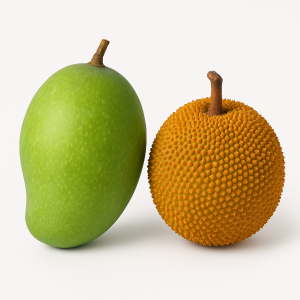
Freshly picked raw mangoes and wild monkey jackfruit — the heart of Madhu Savara’s signature forest-flavoured pickle.
This heirloom pickle blends wild forest flavours with the tang of summer mangoes, handcrafted in true Madhu Savara tradition.
(Standardised)
- Raw mangoes (unripe, firm, medium-sized) – 1 kg (peeled, 1.5-inch pieces)
- Monkey jackfruit (peeled and parboiled) – 500 gm
- Mustard oil – 300 ml (smoked, cooled)
- Split mustard seeds (rai kuria) – 100 gm
- Fennel seeds (saunf) – 50 gm
- Fenugreek seeds (methi dana) – 25 gm
- Turmeric powder – 2 tbsp
- Kashmiri red chilli powder – 1 tbsp
- Hing (asafoetida) – ¼ tsp
- Black salt – 1 tsp
- Rock salt – 2 tbsp
- White vinegar – 100 ml (optional, enhances shelf life)
Equipment Needed
- Large stainless-steel mixing bowl
- Sharp knife & wooden chopping board
- Sterilised glass/ceramic jars (martbaan)
- Clean muslin cloth
- Mortar & pestle or dry grinder
- Iron kadhai or heavy-bottom pan
- Weighing scale/measuring spoons
Nutrition Information
Per 50 gm Serving)
| Nutrient | Value |
| Calories | 142 kcal |
| Protein | 1.8 gm |
| Carbohydrates | 12.5 gm |
| Dietary Fibre | 3.2 gm |
| Fats | 10.8 gm |
| Saturated Fat | 1.1 gm |
| Vitamin C | 9 mg |
| Iron | 0.8 mg |
| Sodium | 210 mg |
Step by Step Instructions
- Step-by-Step Recipe Instructions
- Prepare the Mangoes & Jackfruit
- Wash mangoes, pat dry thoroughly.
- Peel, cut into 1.5-inch pieces.
- Steam or pressure cook jackfruit for 5 minutes (1 whistle max). Cool and shred coarsely.
- Spread both on cotton cloth, sun-dry 4–6 hours.
- Smoke the Mustard Oil
- Heat mustard oil till it smokes, switch off, and let cool.
- This reduces pungency and enhances preservation.
- Roast and Grind Spices
- Dry roast methi dana, saunf, and rai kuria separately.
- Cool and grind coarsely to retain crunch and aroma.
- Mix and Marinate
- In a large bowl, combine mango, jackfruit, ground spices, turmeric, chilli powder, hing, and salt.
- Add vinegar if using.
- Pour in cooled mustard oil and mix thoroughly.
- Transfer into clean martbaans, seal with muslin.
- Cure Under the Sun
- Place jars under sunlight for 5–7 days, shaking gently every day.
- Ensure no moisture gets in.
Tips and Variations
- Add kalonji (nigella seeds) or ajwain (carom) for deeper ayurvedic warmth
- For a spicier version, include green peppercorns
- Use apple cider vinegar for a modern gut-health twist
- Replace jackfruit with parboiled lotus stem (kamal kakdi) for a North Indian variation
Allergen Information
- Mustard
- Fenugreek
- Asafoetida (may contain gluten)
Other Essentials
Serving Suggestions
- Pair with bajre ki roti, dal-chawal, or khichdi
- Serve alongside stuffed parathas or pooris for a punch
- Add to a wrap, chaat, or platter for fusion indulgence
Storage Instructions
- Store in sterilised glass jars in a dry place.
- Use only dry spoons.
- Keeps for 8–12 months outside refrigeration, or 18 months when refrigerated.
FAQs
Q1. Can I use ripe mangoes instead?
No. Only raw, sour mangoes have the acidity and firmness required for long-term pickling.
Q2. Is Monkey Jackfruit available online?
Some tribal co-operatives and organic brands stock it during the summer. You may substitute with young jackfruit.
Q3. Can I skip vinegar?
Yes. Vinegar is optional but helps prolong shelf life and enhance sharpness.
Q4. Can I use olive oil instead of mustard oil?
Not recommended. Mustard oil is antimicrobial and traditional for Indian pickles.
Q5. How long should I sun it?
Minimum 5 days. In humid areas, increases to 10–12 days. Shake daily.
Conclusion
This isn’t just a pickle. It is your connection to a forest, a memory of a grandmother, and a bite of something wild and sacred. It stands tall among Indian condiments, not because it is spicy, but because it tells a story. One jar at a time.
So open it. Taste it. Remember who we are.
Call to Action
👉 Try this delicious Mango & Monkey Jackfruit Pickle at home and let us know your feedback in the comments below!
💬 Don’t forget to share this recipe with your family and friends.
📌 Follow us on Facebook: facebook.com/madhusavaraskitchen
Disclaimer
Important Notice: Read Before Proceeding
The recipes, preparation methods, nutritional details, and related content published on Madhu Savara’s website, social media, and associated platforms are intended solely for general informational and educational purposes. While every effort has been made to ensure accuracy and reliability, we make no guarantees regarding the results, safety, or accuracy of any recipe presented here.
We are not licensed nutritionists, dieticians, or medical professionals. The nutritional values provided are estimates only, calculated using third-party tools, and should not be used for medical diagnosis, dietary treatment, or allergy management. If you have any medical conditions, dietary restrictions, or food allergies, please consult your doctor or certified dietitian before attempting any recipe.
Cooking inherently involves sharp tools, high heat, and the risk of injury or fire. You assume full responsibility for your kitchen practices. Madhu Savara, the website, and all contributors shall not be held liable for any damage, injury, loss, or adverse outcome resulting directly or indirectly from the preparation, consumption, or interpretation of any content herein.
By using this website and attempting any recipe, you agree to hold harmless and indemnify Madhu Savara and her team from any liability, legal claim, or damages arising from the use of this content. You are encouraged to exercise independent judgment and take full responsibility for your health, kitchen safety, and actions.
