
Royal Dal Makhni by Madhu Savara – The King of All Dals
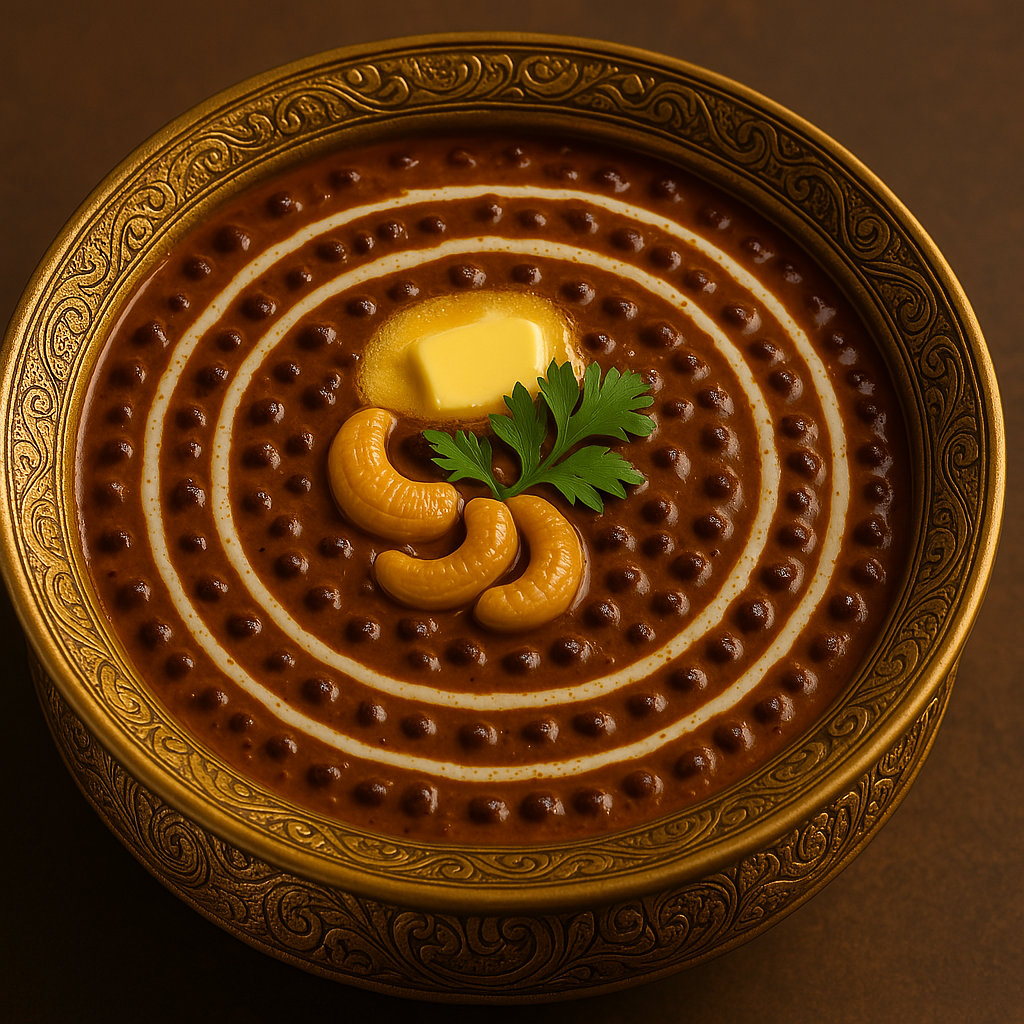
A rich, slow-cooked legacy of Punjab’s royal kitchens
Introduction: The Tale of Royal Dal Makhni
If you have ever travelled through the fertile plains of Punjab or enjoyed a hearty meal at a rustic dhaba along the Grand Trunk Road, chances are you’ve tasted the comforting depth of Dal Makhni—the pride of North Indian cuisine.
Dal Makhni, literally translating to “buttery lentils,” is no ordinary dish. It carries with it a legacy that began in the kitchens of Moti Mahal in Delhi, where it was first perfected to complement the rich tandoori offerings introduced in post-partition India. This humble combination of whole black urad dal and rajma, slow-cooked overnight with spices, cream, and butter, became an instant classic. Its luxurious texture, smoky undertone, and subtle spice balance transformed it into a beloved dish served at weddings, family feasts, and five-star restaurants alike.
What makes Dal Makhni so special isn’t just its taste—it’s the patience and technique that go into its making. Unlike quick curries, Dal Makhni is a slow-brewed preparation, symbolising hospitality, richness, and celebration. Over the years, it has come to represent the essence of Punjabi warmth, bridging tradition with indulgence.
Today, this iconic dish has become a global ambassador of Indian cuisine, served everywhere from New Delhi to New York, from Punjabi homes to Michelin-starred restaurants. Its creamy, earthy profile continues to win hearts across generations.
In this blog, we bring you the most authentic, detail-oriented, and no-shortcuts version of Royal Dal Makhni—crafted for those who value tradition, flavour, and the joy of cooking something truly timeless.
Servings
4
Preparation Time:
8–10 hours soaking + 30 minutes prep
Cooking Time:
1 hour (after soaking)
Calories
320
Ingredients
Standardised Ingredients
| Ingredient | Quantity |
|---|---|
| Whole black urad dal (sabut urad) | 1 cup |
| Rajma (kidney beans) | 2 tbsp |
| Fresh cream | ½ cup |
| White butter | 3 tbsp |
| Desi ghee | 2 tbsp |
| Onion (finely chopped) | 1 large |
| Ginger-garlic paste | 1½ tbsp |
| Tomato puree (fresh, strained) | 1 cup |
| Kashmiri red chilli powder | 1½ tsp |
| Turmeric powder | ¼ tsp |
| Garam masala | 1 tsp |
| Salt | to taste |
| Kasuri methi (crushed) | 1 tsp |
| Warm water | 4–5 cups |
Equipment Needed
-
Heavy-bottomed handi or pressure cooker
-
Wooden ladle (for slow mashing)
-
Strainer
-
Small tadka pan
-
Cooking spatula
-
Mixing bowls
Nutrition Information
(Per Serving)
| Nutrient | Value |
|---|---|
| Calories | 320 kcal |
| Protein | 14 g |
| Carbohydrates | 30 g |
| Fat | 16 g |
| Fibre | 9 g |
| Saturated Fat | 6 g |
Step by Step Instructions
Step-by-Step Cooking Instructions
🌙 Overnight Soaking:
-
Wash and soak urad dal and rajma in plenty of water for 8–10 hours. This is crucial to achieve the creamy texture.
🔥 Pressure Cooking:
2. In a pressure cooker, add soaked dal and rajma with 3 cups of water and a pinch of salt.
3. Pressure cook on medium heat for 6–7 whistles. Let it rest until pressure releases naturally.
🧅 Base Preparation:
4. Heat 2 tbsp ghee in a heavy-bottomed handi. Add chopped onions and sauté until golden brown.
5. Add ginger-garlic paste and cook until the raw aroma disappears.
🍅 Tomato Infusion:
6. Add tomato puree, turmeric, red chilli powder, and cook on medium-low flame till ghee separates.
🥣 Merge the Dal:
7. Add boiled dal and rajma to the masala. Mix gently.
8. Pour 1½ cups warm water. Simmer on low flame for 45–60 minutes, stirring every 10 minutes.
🧈 Royal Finish:
9. Add crushed kasuri methi, garam masala, butter, and cream. Let it simmer for another 10 minutes.
10. Mash slightly with a wooden ladle for a velvety texture. Taste and adjust salt.
💨 Optional Dhungar (Smoky Flavour):
-
Place a small live coal in a steel bowl over the dal, add a drop of ghee, and cover for 2 minutes.
Tips and Variations
-
Always cook on low heat for depth of flavour.
-
Replace cream with malai for an old-school touch.
-
Add a splash of milk to adjust the consistency without thinning the flavour.
-
You can use a slow cooker overnight for restaurant-style texture.
-
A dollop of white butter at serving time is non-negotiable!
Allergen Information
-
Contains dairy (butter, cream, ghee)
-
Gluten-free if served without wheat-based bread
-
May contain traces of legumes; not suitable for those with legume allergy
Other Essentials
Serving Suggestions
-
Serve hot with butter naan, lachha paratha, or steamed basmati rice.
-
Accompanied by onion rings, green chutney, and a dollop of white butter.
-
Garnish with fresh coriander and a swirl of cream.
Storage Instructions
-
Store in the fridge in an airtight container for up to 3 days.
-
Reheat on low flame, adding a splash of milk or cream.
-
Avoid freezing as cream can split.
Serving Suggestions
-
Serve hot with butter naan, lachha paratha, or steamed basmati rice.
-
Accompanied by onion rings, green chutney, and a dollop of white butter.
-
Garnish with fresh coriander and a swirl of cream.
Storage Instructions
-
Store in the fridge in an airtight container for up to 3 days.
-
Reheat on low flame, adding a splash of milk or cream.
-
Avoid freezing as cream can split.
Call to Action
Try this delicious Royal Dal Makhni at home and let us know your feedback in the comments below! Don’t forget to share with your friends.
👉 Follow us on Facebook for more such legendary recipes: Facebook Page – Madhu Savara’s Kitchen
👉 Follow us on WhatsApp for tasty recipes
Comments Section
What are your memories of Dal Makhni? Have you ever tried a smoked version at home? Share your love, tips, or even variations in the comments below!
Disclaimer
Important Notice: Read Before Proceeding
The recipes, preparation methods, nutritional details, and related content published on Madhu Savara’s website, social media, and associated platforms are intended solely for general informational and educational purposes. While every effort has been made to ensure accuracy and reliability, we make no guarantees regarding the results, safety, or accuracy of any recipe presented here.
We are not licensed nutritionists, dieticians, or medical professionals. The nutritional values provided are estimates only, calculated using third-party tools, and should not be used for medical diagnosis, dietary treatment, or allergy management. If you have any medical conditions, dietary restrictions, or food allergies, please consult your doctor or certified dietitian before attempting any recipe.
Cooking inherently involves sharp tools, high heat, and the risk of injury or fire. You assume full responsibility for your kitchen practices. Madhu Savara, the website, and all contributors shall not be held liable for any damage, injury, loss, or adverse outcome resulting directly or indirectly from the preparation, consumption, or interpretation of any content herein.
By using this website and attempting any recipe, you agree to hold harmless and indemnify Madhu Savara and her team from any liability, legal claim, or damages arising from the use of this content. You are encouraged to exercise independent judgment and take full responsibility for your health, kitchen safety, and actions.
