
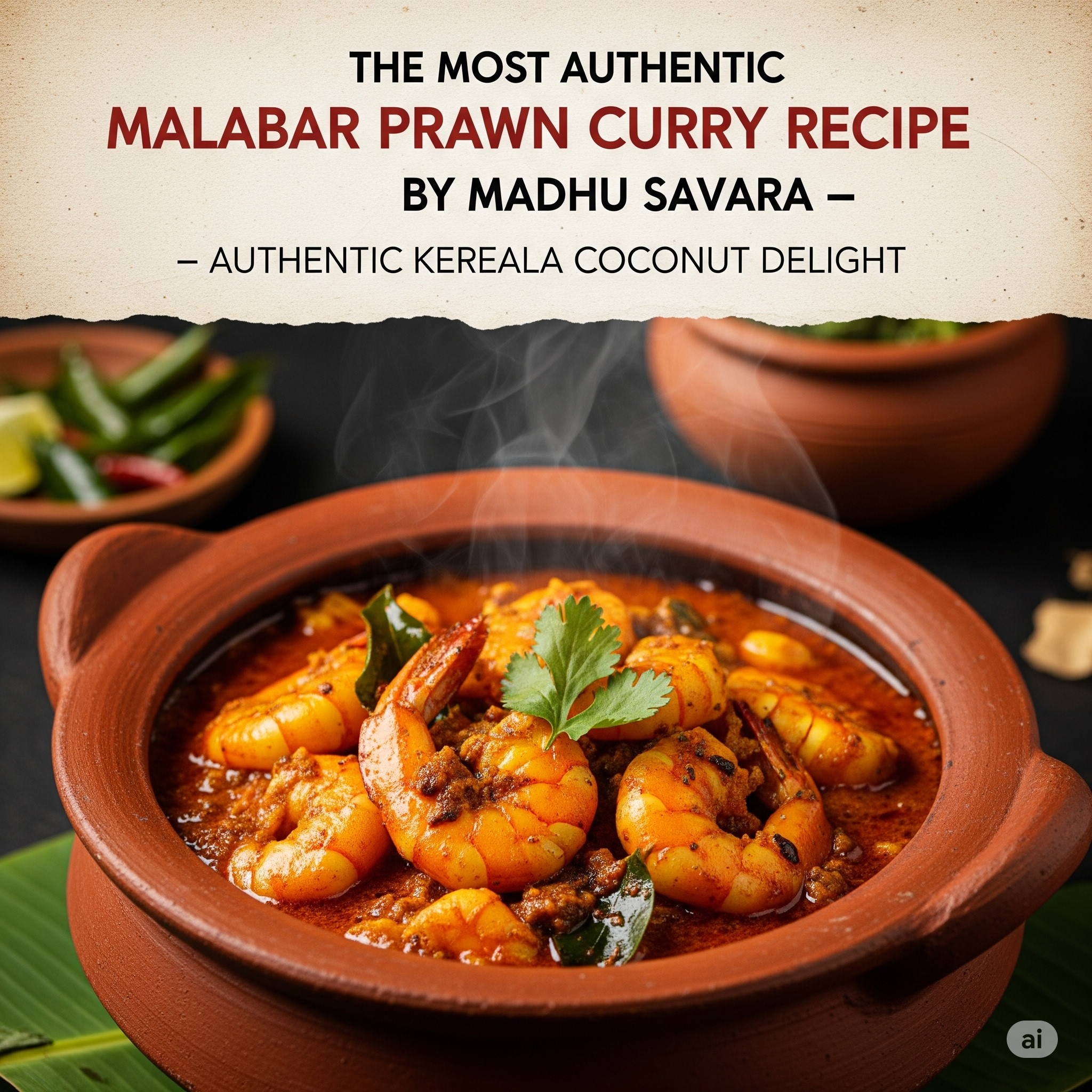
Malabar Prawn Curry Recipe by Madhu Savara
recipes
🧧 Preface
From the lush coconut groves of Kerala to your plate, Malabar Prawn Curry is more than a recipe; it’s a nostalgic journey through India’s coastal heritage. Authored with love and culinary expertise by Madhu Savara, this dish is a symphony of spices, coconut milk, and fresh seafood. Let’s bring it alive, not just with taste but with tradition.
📚 Table of Contents
-
Introduction
-
Significance, Origin & Importance
-
Ingredients
-
Equipment Required
-
Preparation Time, Cooking Time, Servings
-
Step-by-Step Recipe
-
Tips & Variations
-
Allergen Info
-
Nutritional & Micronutritional Values
-
Storage Suggestions
-
Common Mistakes to Avoid
-
Chef’s Personal Tips
-
FAQs
-
Conclusion
-
About Madhu Savara
🌴 Introduction
Prawns cooked in silky coconut milk with a dash of home-ground spices — Malabar Prawn Curry is a dish that turns a weekday lunch into a coastal celebration. Rich yet balanced, spicy yet soothing, this curry holds the essence of the Arabian Sea and the aroma of Kerala’s backwaters.
🌍 Significance, Origin & Importance
The Malabar Coast of Kerala is known for its bountiful seafood and abundant coconut trees. This recipe emerged from the traditional kitchens of fisherfolk, where fresh catch met freshly grated coconut. Over generations, it evolved into a dish served not only in homes but also in Kerala’s royal feasts.
Storytelling Insight:
During a boat journey in Kozhikode, Madhu once shared a humble meal with a local fisherman. He served prawns cooked in coconut milk, tempered with curry leaves and dried chillies. That moment lives in this recipe, rekindled in your kitchen.
Servings
4 portions
Preparation Time:
20 minutes
Cooking Time:
25 minutes
Calories
280
Ingredients
🛒 Standard Ingredients (Serves 4)
| Ingredient | Quantity |
|---|---|
| Fresh prawns (cleaned & deveined) | 500 gm |
| Coconut milk (thick) | 1 cup |
| Coconut milk (thin) | 1 cup |
| Onion (sliced) | 2 medium |
| Tomato (chopped) | 1 large |
| Ginger-Garlic paste | 1 tbsp |
| Green chillies (slit) | 2 |
| Curry leaves | 1 sprig |
| Turmeric powder | ½ tsp |
| Kashmiri red chilli powder | 1 tsp |
| Coriander powder | 1 tsp |
| Garam masala | ½ tsp |
| Mustard seeds | ½ tsp |
| Fenugreek seeds | ¼ tsp |
| Coconut oil | 2 tbsp |
| Salt | to taste |
| Water | ½ cup |
Equipment Needed
-
Heavy-bottomed pan or earthen pot (manchatti)
-
Spatula or wooden ladle
-
Mixing bowl
-
Lid for simmering
-
Knife & chopping board
Nutrition Information
🧬 (Per Serving)
| Nutrient | Amount |
|---|---|
| Calories | 280 kcal |
| Protein | 22 gm |
| Fat | 18 gm |
| Carbohydrates | 8 gm |
| Omega-3 | High |
| Vitamin B12 | Rich |
| Iron | Moderate |
| Magnesium | Good source |
Step by Step Instructions
👨🍳 Step-by-Step Recipe
-
Marinate Prawns:
Toss cleaned prawns with turmeric and salt. Set aside for 10 minutes. -
Heat Oil & Temper:
In a heavy-bottomed pan, heat the coconut oil. Add mustard seeds, let them splutter. Add fenugreek seeds and curry leaves. -
Sauté Onions & Tomatoes:
Add sliced onions and green chillies. Sauté until golden. Then add ginger-garlic paste and cook for 2 minutes. Add chopped tomatoes. -
Add Spices:
Mix in chilli powder, coriander powder, and salt. Sauté until the oil separates. -
Pour Thin Coconut Milk:
Add 1 cup of thin coconut milk and bring to a boil. -
Cook the Prawns:
Add marinated prawns and simmer for 5–7 minutes till just cooked. -
Finish with Thick Coconut Milk:
Add 1 cup of thick coconut milk. Stir gently. Don’t boil after this step. -
Final Touch:
Sprinkle garam masala, stir, and turn off the flame. Let the flavours rest for 5 minutes before serving.
Tips and Variations
🍽️
-
Use earthenware for authentic flavour.
-
Add kokum for a tangy variation
-
Substitute prawns with squid or fish fillets
-
Add a dash of pepper for extra spice
-
For a vegetarian version, try mushrooms or tofu
Allergen Information
⚠️
-
Contains shellfish (prawns)
-
Coconut milk may cause an allergic reaction in rare cases
-
Use gluten-free spice blends if required
Other Essentials
| source |
🧊 Storage Suggestions
-
Store leftovers in a glass container
-
Refrigerate up to 2 days
-
Gently reheat on low flame (don’t boil) to prevent curdling
❌ Common Mistakes to Avoid
-
Overcooking prawns – they become rubbery
-
Boiling thick coconut milk – it will split
-
Skipping tempering – flavour falls flat
-
Using canned coconut milk without shaking well
👨🍳 Madhu Savara’s Tips
-
Always use fresh curry leaves
-
Taste the curry before adding salt — coconut milk alters salt perception
-
Let the curry sit for 10 minutes before serving — flavours deepen beautifully
❓ Frequently Asked Questions
Q. Can I use frozen prawns?
A. Yes, but thaw completely and pat dry before cooking.
Q. Can this be made ahead of time?
A. Yes. Cook till just before adding thick coconut milk. Reheat and add fresh coconut milk before serving.
Q. What’s the best accompaniment?
A. Steamed coconut rice, Kerala red rice, ghee rice, or appams.
💓 Conclusion – An Emotional Touch
Food is memory. Every spoonful of this curry brings back the whisper of waves, the rustle of coconut leaves, and the warmth of coastal hospitality. This isn’t just about prawns — it’s about a story on your plate, shared from my kitchen to yours.
👩🍳 About Madhu Savara
Madhu Savara is not just a food blogger — she’s a kitchen storyteller. With a passion rooted in Indian tradition and a flair for reinventing classics, her recipes blend authenticity with elegance. Every blog on www.madhusavara.com is a promise of purity, taste, and soul.
Disclaimer
Important Notice: Read Before Proceeding
The recipes, preparation methods, nutritional details, and related content published on Madhu Savara’s website, social media, and associated platforms are intended solely for general informational and educational purposes. While every effort has been made to ensure accuracy and reliability, we make no guarantees regarding the results, safety, or accuracy of any recipe presented here.
We are not licensed nutritionists, dieticians, or medical professionals. The nutritional values provided are estimates only, calculated using third-party tools, and should not be used for medical diagnosis, dietary treatment, or allergy management. If you have any medical conditions, dietary restrictions, or food allergies, please consult your doctor or certified dietitian before attempting any recipe.
Cooking inherently involves sharp tools, high heat, and the risk of injury or fire. You assume full responsibility for your kitchen practices. Madhu Savara, the website, and all contributors shall not be held liable for any damage, injury, loss, or adverse outcome resulting directly or indirectly from the preparation, consumption, or interpretation of any content herein.
By using this website and attempting any recipe, you agree to hold harmless and indemnify Madhu Savara and her team from any liability, legal claim, or damages arising from the use of this content. You are encouraged to exercise independent judgment and take full responsibility for your health, kitchen safety, and actions.
