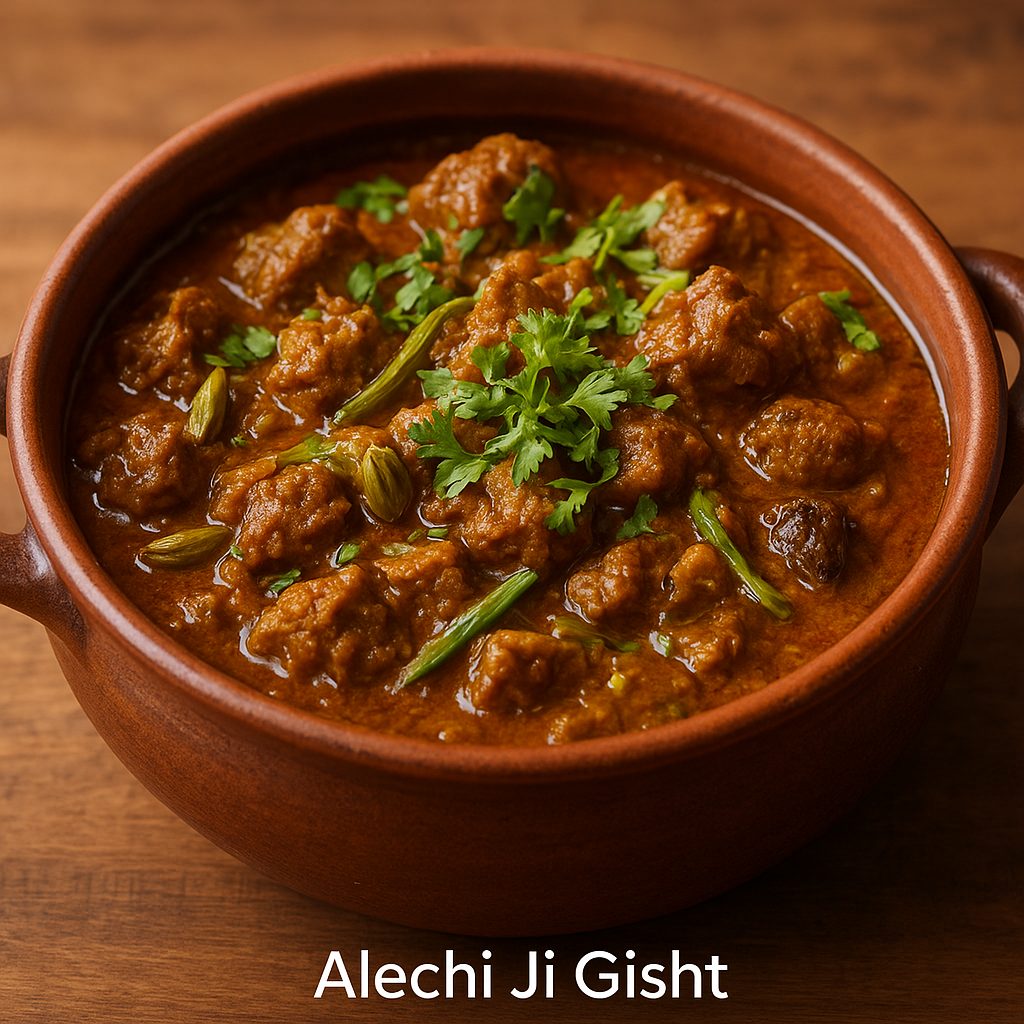
Storage & Make-Ahead for Alechi Ji Gisht
Cooling: Let Alechi Ji Gisht cool to room temperature within 2 hours. Do not leave it out longer.
Refrigeration (Best for 3 days): Store Alechi Ji Gisht in airtight glass or stainless-steel containers. Keep gravy and meat submerged; the fat cap on top naturally preserves flavour.
Freezing (Up to 3 months): Portion Alechi Ji Gisht into 1–2 serving pouches or containers. Leave 1–2 cm headspace for expansion. Label with date.
Thawing: For frozen Alechi Ji Gisht, thaw overnight in the fridge. For quick service, place the sealed pouch in cool water until loosened, then reheat gently.
Reheating (Stovetop preferred): Warm Alechi Ji Gisht on low heat until piping hot (about 74°C). Add a splash of hot water/stock to loosen the gravy; do not hard-boil to avoid tightening the meat.
Microwave: Reheat Alechi Ji Gisht covered and vented; stir halfway for even heating.
Separation tips: If fat separates on chilling, reheat and whisk back; adjust salt only after reheating.
What not to do: Avoid storing Alechi Ji Gisht in reactive aluminium; avoid repeated freeze-thaw cycles.
Meal prep: Alechi Ji Gisht actually improves a day later as the cardamom and coriander settle into the stock—ideal for make-ahead menus.
Serving after storage: Finish reheating Alechi Ji Gisht with a fresh sprinkle of chopped dhania and a quick warm-through of slit green chillies to revive aroma.
FAQs for Alechi Ji Gisht
1. What makes Alechi Ji Gisht different from other mutton curries?
Alechi Ji Gisht is prepared without onion, tomato, garlic, or dahi. Instead, it relies on green cardamom, coriander, and slow cooking to create flavour, making it lighter and more aromatic than many traditional mutton curries.
2. Why is cardamom the star ingredient in Alechi Ji Gisht?
Cardamom provides the signature aroma of the dish. Its delicate floral sweetness complements the richness of mutton without overpowering the natural flavour of the meat.
3. Can I prepare Alechi Ji Gisht with chicken instead of mutton?
Yes. Chicken can be substituted for mutton. However, reduce the cooking time significantly, as chicken becomes tender much faster than mutton.
4. Which cut of mutton works best for Alechi Ji Gisht?
Bone-in shoulder, leg, or mixed curry-cut mutton works best. The bones enrich the stock and add depth to the final dish.
5. Is Alechi Ji Gisht a spicy dish?
Traditionally, Alechi Ji Gisht is mildly spiced. The focus is on aroma and natural flavour rather than heat. You can adjust the number of green chillies according to your preference.
6. Can I cook Alechi Ji Gisht in a pressure cooker?
Yes. Pressure cooking is a convenient option. Cook the mutton until tender, then finish the dish with coriander, ginger, and green chillies to preserve freshness.
7. Why are onions and tomatoes not used in this recipe?
The absence of onions and tomatoes is intentional. Traditional Sindhi cooks developed Alechi Ji Gisht to highlight the purity of mutton, cardamom, and coriander without the sweetness or acidity of common curry bases.
8. Can I make Alechi Ji Gisht in advance?
Absolutely. Many Sindhi families believe Alechi Ji Gisht tastes even better the next day because the flavours have more time to develop.
9. Is Alechi Ji Gisht suitable for festive occasions?
Yes. Although simple, Alechi Ji Gisht is often served during family gatherings, community feasts, and religious occasions because of its elegant flavour profile and cultural significance.
10. How do I know when the mutton is perfectly cooked?
The mutton should be fork-tender and easy to pull apart while still holding its shape. The stock should be aromatic, lightly coloured, and infused with cardamom.
11. Can I freeze Alechi Ji Gisht?
Yes. It freezes very well for up to three months when stored in airtight containers. Thaw overnight in the refrigerator before reheating.
12. Is Alechi Ji Gisht gluten-free?
Yes. The recipe is naturally gluten-free, provided that all spices used are certified gluten-free and free from additives.
Conclusion
Alechi Ji Gisht stands as proof of Sindhi wisdom: simple, light, yet deeply flavourful. With cardamom, coriander and tender mutton, Alechi Ji Gisht is a recipe that honours tradition and taste alike. Serve Alechi Ji Gisht with steamed rice or phulkas for an authentic Sindhi meal.
Author’s Note
Madhu Savara is the founder of Madhusavara.com, a platform dedicated to preserving traditional recipes, regional cuisines, food heritage, and authentic cooking techniques. Through carefully researched recipes and engaging storytelling, she celebrates the culinary traditions of India and the world.
References:
- Sindhi cuisine books
- K.T. Achaya
- Colleen Taylor Sen
- Food history references