
Preface
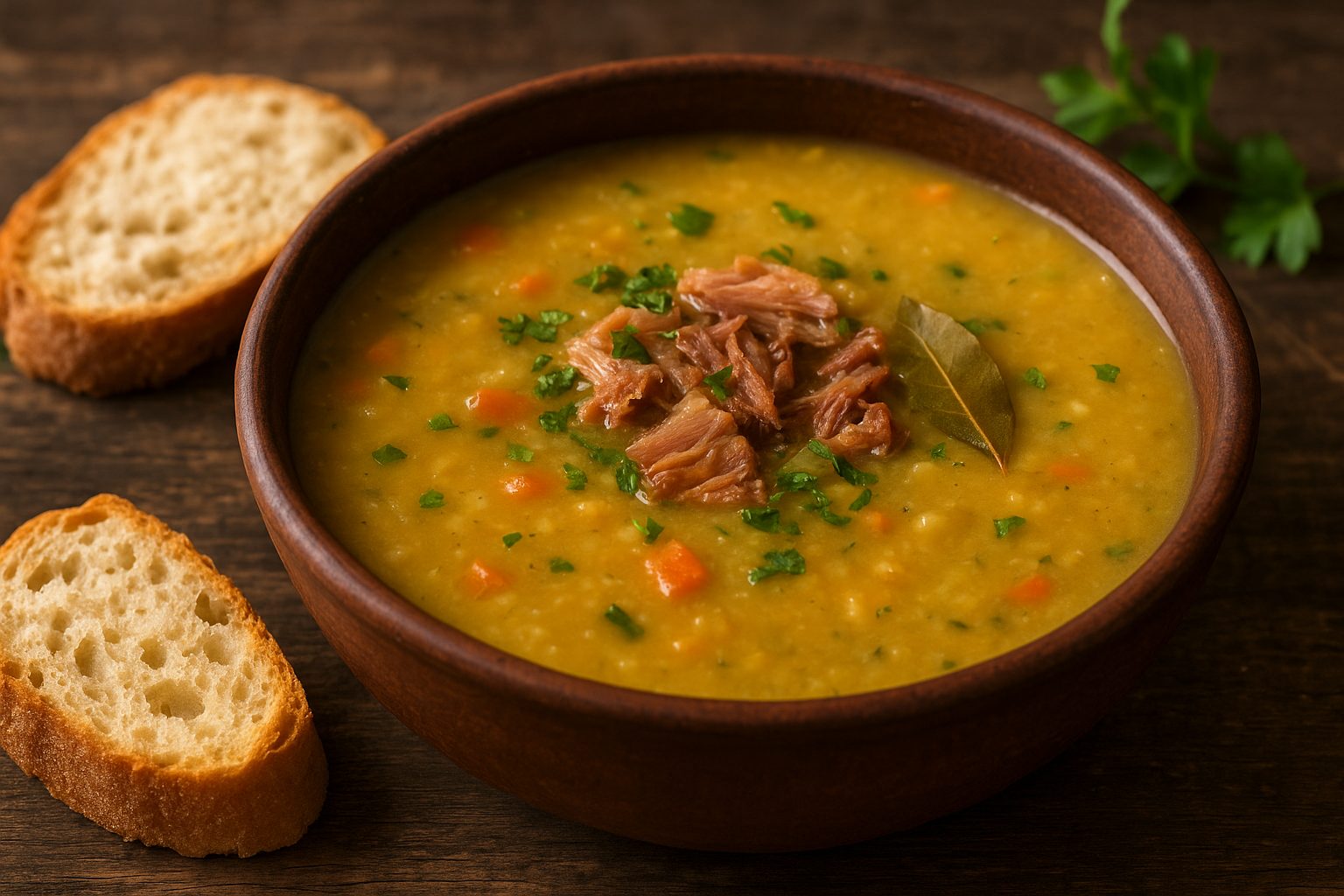
Canadian Pea Soup with Salt Pork, often called Habitant Soup, is more than just a recipe – it is a lost recipe of Canada, a dish that once warmed the hearths of French-Canadian families during long winters. Today, while it survives in commercial tins, the authentic slow-cooked version is vanishing from Canadian kitchens. Reviving this authentic Canadian Pea Soup with Salt Pork not only reconnects us with culinary heritage but also restores a wholesome and comforting tradition that deserves its rightful place on Canadian tables
Table of Contents
Introduction
Significance of Habitant Pea Soup
Why It Is a Lost Recipe
Importance of Reviving It
Preparation & Cooking Time
Calories & Nutritional Value
Standard Ingredients
Utensil Requirements
Authentic Cooking Recipe
Tips & Variations
Allergen Information
Storage & Things to Avoid
Conclusion
Introduction
The lost recipe of Canada, Habitant Pea Soup, dates back to the 1600s when French-Canadian settlers relied on simple, storable ingredients. Salt pork and dried peas provided protein and warmth through harsh winters. This soup carried families, travellers, and traders across generations, becoming an iconic dish. Yet, modern kitchens rarely recreate it from scratch, making it a forgotten Canadian treasure.
Significance of Habitant Pea Soup
Symbol of French-Canadian resilience
One of the earliest farm-to-table recipes in Canada
Represents a time when food was about sustenance and survival, not indulgence
Known as “Habitant Soup” because it was cooked by habitants (French settlers living on the land)
Why It Is a Lost Recipe
Rarely cooked in homes, replaced by canned soups
Modern tastes shifted towards lighter, global cuisines
Younger Canadians are unaware of its heritage value
Culinary memory is fading outside Quebec
Importance of Reviving It
Reviving the lost recipe of Canada, Habitant Pea Soup, is vital to:
Keep culinary heritage alive
Showcase Canadian identity on the global food stage
Encourage slow cooking traditions
Pass authentic recipes to future generations
Servings
Preparation Time:
Cooking Time:
Calories
Ingredients
2 cups dried yellow split peas (rinsed and soaked)
250g salt pork (or substitute with smoked ham hock)
1 medium carrot, diced
2 stalks celery, diced
2 cloves garlic, minced
1 bay leaf
1 tsp black pepper
1 tsp dried thyme
6 cups water or unsalted stock
Fresh parsley for garnish
Optional: pinch of nutmeg (traditional in some Quebec households)
Equipment Needed
Large heavy-bottomed pot or Dutch oven
Wooden ladle
Sharp knife & chopping board
Measuring cups & spoons
Soup bowls for serving
Nutrition Information
Calories: 320 kcal
Protein: 22g
Carbohydrates: 42g
Fibre: 12g
Fat: 8g
Sodium: 420mg
Rich in plant protein, fibre, and minerals
Step by Step Instructions
Soak the peas overnight for the best results. Drain and rinse before cooking.
In a heavy-bottomed pot, add salt pork and sear lightly to release flavour.
Add garlic, carrot, and celery, and sauté till fragrant.
Stir in soaked yellow peas, thyme, pepper, and bay leaf.
Pour in water or unsalted stock, bring to a boil.
Reduce to a simmer and cook 1.5–2 hours, stirring occasionally.
Remove salt pork; shred meat and return to soup (discard excess fat).
Adjust seasoning.
Serve warm, garnished with fresh parsley.
Tips and Variations
For a vegetarian version, skip salt pork and add smoked paprika for depth.
Some households added a touch of molasses for sweetness.
Puree half the soup for a creamier texture while keeping some chunks whole
Allergen Information
Contains pork (replace with smoked turkey or vegetarian options if needed).
Naturally gluten-free.
Suitable for dairy-free diets.
Storage & Things to Avoid
Storage: Refrigerate in an airtight container for up to 4 days. Freezes well for 2 months.
Things to Avoid:
Avoid excess salt (salt pork already contains sodium).
Avoid overcooking peas to mush; texture should remain hearty.
Avoid storing in metal containers; always use glass or BPA-free plastic.
Conclusion
The lost recipe of Canada, Habitant Pea Soup with Salt Pork, is more than a dish – it is a cultural emblem. Reviving it reconnects Canadians to their ancestors, their kitchens, and their resilience. Cooking it today is a way of honouring tradition while bringing soulful warmth to the modern table.
Important Notice: Read Before Proceeding
The recipes, preparation methods, nutritional details, and related content published on Madhu Savara’s website, social media, and associated platforms are intended solely for general informational and educational purposes. While every effort has been made to ensure accuracy and reliability, we make no guarantees regarding the results, safety, or accuracy of any recipe presented here.
We are not licensed nutritionists, dieticians, or medical professionals. The nutritional values provided are estimates only, calculated using third-party tools, and should not be used for medical diagnosis, dietary treatment, or allergy management. If you have any medical conditions, dietary restrictions, or food allergies, please consult your doctor or certified dietitian before attempting any recipe.
Cooking inherently involves sharp tools, high heat, and the risk of injury or fire. You assume full responsibility for your kitchen practices. Madhu Savara, the website, and all contributors shall not be held liable for any damage, injury, loss, or adverse outcome resulting directly or indirectly from the preparation, consumption, or interpretation of any content herein.
By using this website and attempting any recipe, you agree to hold harmless and indemnify Madhu Savara and her team from any liability, legal claim, or damages arising from the use of this content. You are encouraged to exercise independent judgment and take full responsibility for your health, kitchen safety, and actions.
