
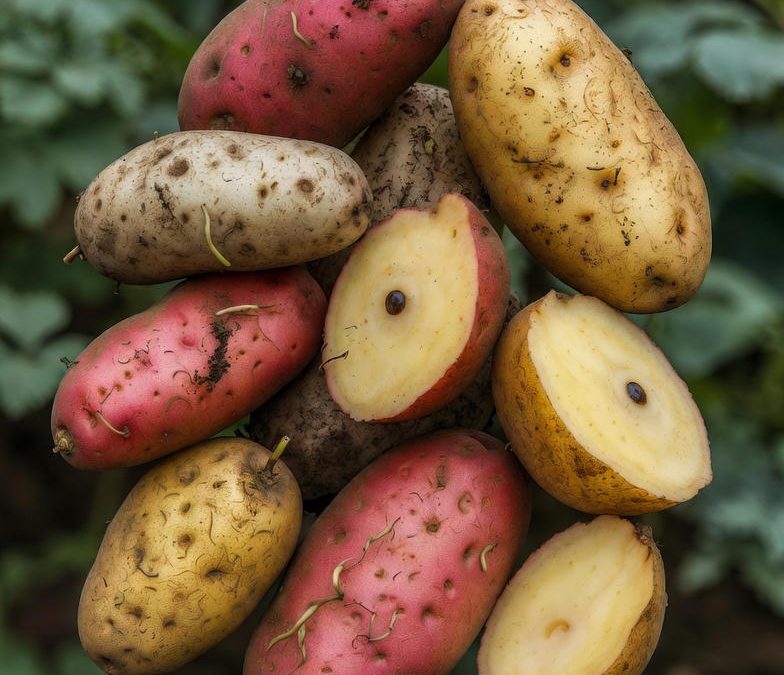
Potatoes: The Silent Powerhouse of Global Agriculture
From the fields of Europe to the plains of India and the farms of the Americas, potatoes feed billions, fuel industrial growth, and sustain economies. Often overlooked, this humble tuber has become a critical player in global food security, processing industries, and exports. Efficient seed systems, mechanisation, cold storage, and fry-grade production define industrial success. Key focus keywords from start to end include: global potato production, potato processing, fry-grade potato, seed systems, cold storage, industrial potatoes, and potato exports.
Introduction – Why the World Can’t Ignore Potatoes
Potatoes are more than just a staple food. They are a raw material for fries, chips, starch, alcohol, and ready-to-cook foods. Industrial clusters, mechanisation, cold storage, and quality seed systems determine which nations dominate the market. This report highlights how different countries manage their potato ecosystems and what lessons can be learned for sustainable and industrial growth.
Global Potato Production: Leaders and Emerging Players
Top Producing Countries (2023)
The global potato landscape is dominated by China, India, and Europe, but emerging clusters in the Americas and Africa are gaining momentum. Production is measured not only in volume but also in processing potential and export readiness.
| Country | Area (ha) | Production (Mt) | Processing Share (%) | Export Share (%) |
|---|---|---|---|---|
| China | 5,000,000 | 90 | 25 | 10 |
| India | 2,220,000 | 56 | 6–7 | <1 |
| Russia | 1,100,000 | 22 | 10 | 2 |
| Ukraine | 800,000 | 22 | 15 | 5 |
| USA | 1,000,000 | 20 | 60 | 15 |
| Netherlands/EU | 1,200,000 | 18 | 70–75 | 50+ |
Historical Journey of the Potato Across Continents
Potatoes travelled from the Andes to every corner of the world, adapting to diverse climates and becoming integral to both household diets and industrial supply chains. Europe’s commercial expansion, China’s cluster strategy, and India’s processing hubs reflect centuries of evolution.
Agro-Climatic Suitability & Major Production Clusters
| Region/Country | Production Volume (Mt) | Dominant Varieties | Applications |
|---|---|---|---|
| Europe | 18–20 | Bintje, Agria | Fry-grade, chips, starch |
| China | 30–35 | Favorita, Atlantic | Fry-grade, industrial processing |
| India | 56 | Kufri series | Domestic consumption, processing |
| USA | 20 | Russet Burbank | Fry-grade, starch |
| Russia & Ukraine | 22–25 | Red Scarlett, Lorch | Table and industrial use |
Potato Value Chain: From Seed to Global Plate
- Seed quality and certification
- Planting, harvesting, grading
- Cold storage & post-harvest handling
- Processing, packaging, and export
- Digital traceability & AI-driven forecasting
Seed Systems, R&D & Biotechnology Interventions
High-yield and disease-resistant varieties are developed by public institutions and private firms. Technologies include tissue culture, mini-tubers, aeroponics, and marker-assisted breeding. Adoption gaps persist in emerging clusters, but global best practices are being implemented to scale fry-grade production.
Input Market Dynamics
- Fertilisers: Balanced NPK and micronutrients
- Pesticides: Integrated pest management (IPM)
- Irrigation: Drip/fertigation for consistent tuber quality
- Mechanisation: Planters, harvesters, graders; essential for industrial-scale production
Production Economics & Farmer Profitability
Cost structures and profitability vary with yield, seed quality, storage, and processing linkages. Contract farming improves fry-grade margins and ensures consistent quality for industrial buyers.
Post-Harvest Management & Cold Chain
- Global post-harvest losses: 15–25%
- Cold storage adoption is advanced in the EU/USA; emerging in India/China
- CA storage, aggregation hubs, and digital traceability reduce losses and stabilise markets
Processing Sector Trends & Opportunities
Frozen fries, chips, and starch dominate industrial production. Fry-grade potatoes require high dry matter and low sugar content to meet industrial standards. Cluster-based processing ensures economies of scale.
Market Analysis & Global Exports
| Export Region | Volume (kt) | HS Code |
|---|---|---|
| EU | 1200 | 0711 |
| Middle East | 500 | 0711 |
| Africa | 400 | 0711 |
| Southeast Asia | 350 | 0711 |
Comparative Study: India vs China vs EU vs USA
| Aspect | India | China | EU | USA |
|---|---|---|---|---|
| Processing Share | 6–7% | 25% | 70–75% | 60% |
| Seed Certification | 10% | 80–90% | 95%+ | 85–90% |
| Cold Storage | Mostly table | Emerging fry-grade CA | Advanced CA | Advanced & automated |
| Contract Farming | 3% | 20–25% | 80% | 50%+ |
| Export Share | <1% | 10% | 50%+ | 15% |
Annexures
Annexure 1: State/Country-wise Potato Production
| Region / Country | Area (ha) | Production (Mt) | Fry-grade Share (%) |
|---|---|---|---|
| India | 2,220,000 | 56 | 6–7% |
| Punjab | 400,000 | 6 | 10–15% |
| Uttar Pradesh | 600,000 | 15 | 5% |
| Gujarat | 200,000 | 4 | 30–35% |
| China | 5,000,000 | 90 | 25% |
| USA | 1,000,000 | 20 | 60% |
| Netherlands/EU | 1,200,000 | 18 | 70–75% |
Annexure 2: Variety-to-Application Mapping
| Variety | Application | Region |
|---|---|---|
| Kufri Chipsona 1 & 2 | Frozen fries, chips | Gujarat, Punjab |
| Kufri Chandramukhi | Table consumption | UP, Bihar |
| Bintje | Chips, fries, starch | Europe |
| Atlantic | Fry-grade, frozen processing | China, USA |
| Russet Burbank | Fry-grade, starch | USA |
| Red Scarlett | Table & industrial | Russia & Ukraine |
Annexure 3: Cold Storage Distribution
| Country/Region | Cold Storage Capacity (Mt) | CA Storage Share (%) |
|---|---|---|
| India | 40 | 10–12% |
| China | 120 | 25–30% |
| EU | 35 | 70–75% |
| USA | 45 | 65–70% |
Annexure 4: HS Codes for Potato Exports
| HS Code | Description |
|---|---|
| 071010 | Seed potatoes |
| 071190 | Fresh or chilled potatoes |
| 200410 | Potato flakes, pellets, powders |
| 200490 | Prepared or preserved potatoes |
FAQ – Potato Industry Insights
Q1: What percentage of global potatoes are processed?
A: Globally, around 25–30% of potatoes are used for processing. EU leads with 70–75%, China 25%, India 6–7%, USA 60%.
Q2: Which varieties are best for fry-grade production?
A: High dry matter and low sugar varieties like Kufri Chipsona, Russet Burbank, Atlantic, and Bintje.
Q3: How can India increase fry-grade potato exports?
A: By expanding certified seed systems, CA storage, contract farming, processing clusters, and compliance with SPS/MRL standards.
Q4: What are the key risks in the potato industry?
A: Climate variability, pest outbreaks (late blight), price volatility, and regulatory delays in exports.
Q5: What technologies are critical for industrial potato production?
A: Tissue culture, mini-tubers, aeroponics, NIR grading, optical sorting, digital traceability, and AI-based yield forecasting.
Conclusion & Future Outlook
The global potato ecosystem is evolving rapidly. India has the volume but needs vertical integration, advanced seed systems, and modern cold chains. Lessons from China, the EU, and the USA show that cluster-based processing, contract farming, and high-grade fry varieties can unlock export potential. By 2030, India can aim for 15–20% processing share, double exports, and digital supply chain integration.
Future Strategies
- Expand certified seed multiplication hubs
- Modernise CA cold storage infrastructure
- Promote contract farming and cluster-based processing
- Deploy AI and satellite tech for precision farming
- Develop globally competitive fry-grade varieties
- Enhance traceability and compliance for exports
Final Takeaway: Potatoes are no longer just a staple; they are a global industrial and trade commodity. Strategic investment, technology adoption, and integrated value chains will define which countries dominate the potato economy in the next decade.
