Three Sisters Stew – A Lost American Recipe Revived by Madhu Savara
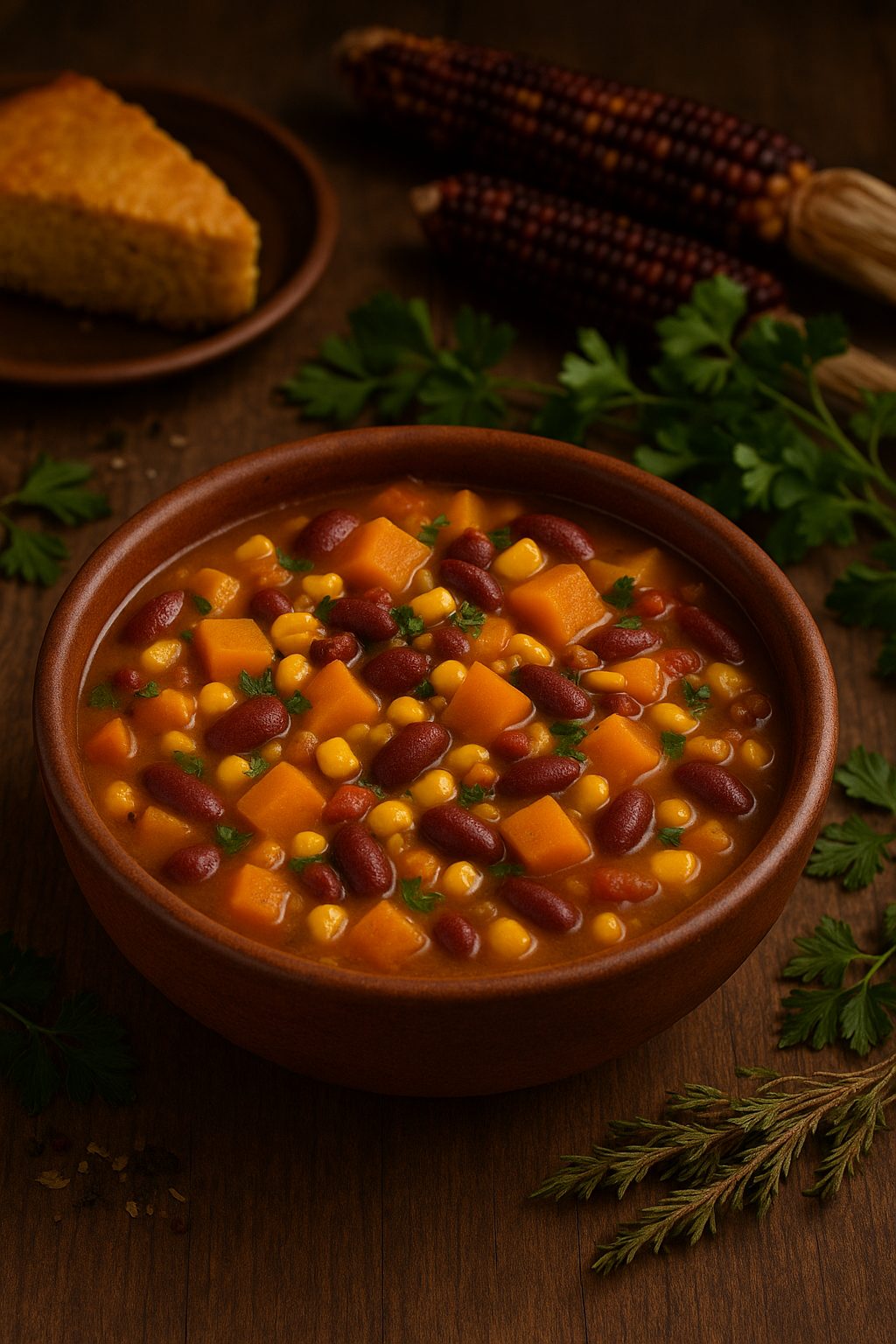
A bowl of Three Sisters Stew with corn, beans, and squash served on a wooden table alongside cornbread and dried maize.

🌽 Preface: A Stew That Tells a Story

The Three Sisters Stew is not just a meal — it’s a narrative passed down through generations of Native American tribes. Known as a lost Red Indian recipe, this ancient dish combines corn, beans, and squash — ingredients rooted in spiritual symbolism, sustainability, and health. Reconnecting with this Native American stew revives a culinary tradition that respects nature and celebrates harmony.

📚 Table of Contents

  • Introduction
  • Cultural Significance
  • Cooking & Preparation Time
  • Ingredients
  • Utensils Required
  • Step-by-Step Traditional Native Stew Recipe
  • Nutritional Value
  • Variations
  • Storage Tips
  • Things to Avoid
  • Serving Suggestions
  • FAQs
  • Conclusion

🪶 Introduction: Three Sisters Stew – A Native American Stew Rooted in Tradition

The Three Sisters Stew holds a sacred place in Indigenous American food culture. As a genuine Red Indian recipe, it blends three staple crops that were cultivated in unison — corn for support, beans for nitrogen fixation, and squash for ground cover. This traditional Native stew provided nourishment, balance, and strength for centuries.

🌾 Cultural Significance of the Three Sisters

Many Native American tribes, including the Iroquois, Cherokee, and Hopi, revered the “Three Sisters” as life-giving spirits. This Indigenous American food represents unity, family, and harmony with the Earth. The Three Sisters Stew was often served during harvest festivals and community gatherings.

Servings

4-5 people

Preparation Time:

15 minutes

Cooking Time:

40 minutes

Calories

210

Ingredients

  • 2 tbsp sunflower oil or traditional bear fat
  • 1 medium yellow onion, finely chopped
  • 3 cloves garlic, minced
  • 2 cups diced butternut squash (or pumpkin)
  • 1 cup fresh or frozen corn kernels
  • 1 cup cooked pinto or tepary beans
  • 1 cup diced tomatoes (optional)
  • 3 cups vegetable broth
  • 1 tsp dried sage (or fresh if available)
  • ½ tsp chilli flakes (optional)
  • Salt to taste
  • Fresh parsley or wild greens for garnish

Equipment Needed

  • Cast-iron pot or Dutch oven
  • Wooden spatula
  • Chopping board and sharp knife
  • Measuring cups
  • Soup ladle

Nutrition Information

Per Serving)

Nutrient Value
Calories 210 kcal
Protein 8g
Carbohydrates 30g
Fiber 7g
Fat 6g
Vitamin A High
Vitamin C High
Folate Moderate
Magnesium Rich
Potassium Rich

This traditional Native stew is gluten-free, dairy-free, and rich in plant-based nutrients.

Step by Step Instructions

Step 1: Heat the sunflower oil in a cast-iron pot. Add chopped onion and sauté until translucent.

Step 2: Stir in minced garlic and sauté for 30 seconds until fragrant.

Step 3: Add diced butternut squash and cook for 5–6 minutes, stirring gently.

Step 4: Add corn, cooked beans, and optional tomatoes. Stir thoroughly.

Step 5: Pour in the vegetable broth. Add dried sage, chilli flakes, and salt. Mix well.

Step 6: Bring the Red Indian recipe stew to a boil, then reduce to a simmer. Cover and cook for 30–35 minutes or until the squash is soft but not mushy.

Step 7: Garnish the hot Native American stew with wild greens or parsley before serving.

Tips and Variations

  • Add wild rice for a Great Lakes-style variant.
  • Replace beans with tepary beans for a Southwestern taste.
  • Incorporate acorn squash for a nuttier flavour.
  • For meat lovers, consider including smoked turkey or venison, as featured in historic tribal stews.

Allergen Information

This traditional Three Sisters Stew is naturally free from most common allergens, but here’s a complete breakdown:

Free From:

  • Gluten

  • Dairy

  • Eggs

  • Nuts

  • Shellfish

  • Soy

  • Refined Sugar

⚠️ Potential Allergens To Note:

  • Legumes (Beans): May cause allergic reactions in individuals sensitive to pulses/legumes (e.g., kidney beans, pinto beans, tepary beans).

  • Corn: Rare, but some individuals may have corn allergies.

  • Squash Family Sensitivities: Those allergic to zucchini or pumpkin may react to butternut or acorn squash.

📝 Allergen Disclaimer

Always verify the source of your beans and corn. If using canned beans or broth, check for cross-contamination or hidden allergens in processing. For traditionalists or those with severe allergies, using fresh, organic, and unprocessed ingredients is highly recommended.

Other Essentials

❌ Things to Avoid

  • Avoid adding heavy spices — this Indigenous American food uses natural flavours.
  • Do not overcook squash to preserve texture.
  • Avoid canned beans with preservatives — use fresh-cooked whenever possible.

❄️ Storage Tips

  • Refrigeration: Store in an airtight container for up to 4 days.
  • Freezing: Freeze in portions for up to 2 months.
  • Reheating: Simmer gently to preserve flavour and nutrition.

🍽️ Serving Suggestions

Serve Three Sisters Stew with:

  • Warm cornbread
  • Wild rice flatbread
  • Herbal tea made from foraged leaves (like mint or sage)

❓ FAQs

Q: Can this Native American stew be made vegan?
A: Yes, this is a naturally vegan recipe — plant-based and wholesome.

Q: Are the “Three Sisters” crops still grown today?
A: Yes, many Indigenous farms and permaculture gardens in the USA continue this sacred agricultural practice.

Q: Can I make this stew in a slow cooker?
A: Absolutely. Add all ingredients to a slow cooker and cook on low for 6–8 hours.

🌟 Conclusion

Reviving the Three Sisters Stew is more than rediscovering a meal — it’s an act of cultural preservation. This lost Red Indian recipe reminds us of Indigenous wisdom, ancestral balance, and food that nourishes both body and soul. By preparing this Native American stew, you’re participating in a deeper story — one of land, legacy, and life.

Disclaimer

Important Notice: Read Before Proceeding

The recipes, preparation methods, nutritional details, and related content published on Madhu Savara’s website, social media, and associated platforms are intended solely for general informational and educational purposes. While every effort has been made to ensure accuracy and reliability, we make no guarantees regarding the results, safety, or accuracy of any recipe presented here.

We are not licensed nutritionists, dieticians, or medical professionals. The nutritional values provided are estimates only, calculated using third-party tools, and should not be used for medical diagnosis, dietary treatment, or allergy management. If you have any medical conditions, dietary restrictions, or food allergies, please consult your doctor or certified dietitian before attempting any recipe.

Cooking inherently involves sharp tools, high heat, and the risk of injury or fire. You assume full responsibility for your kitchen practices. Madhu Savara, the website, and all contributors shall not be held liable for any damage, injury, loss, or adverse outcome resulting directly or indirectly from the preparation, consumption, or interpretation of any content herein.

By using this website and attempting any recipe, you agree to hold harmless and indemnify Madhu Savara and her team from any liability, legal claim, or damages arising from the use of this content. You are encouraged to exercise independent judgment and take full responsibility for your health, kitchen safety, and actions.