
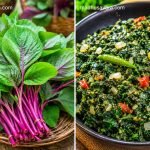
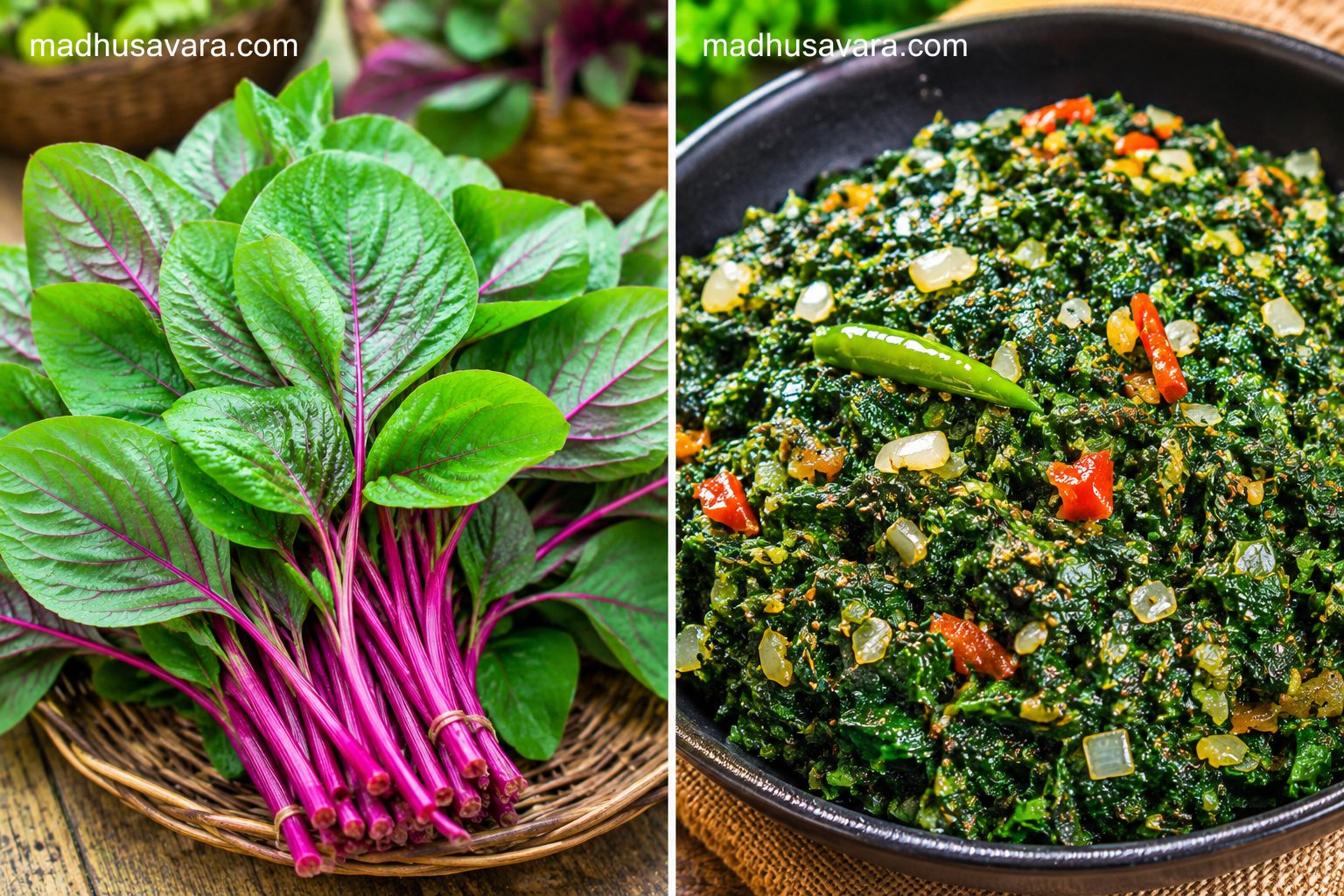
Chaulai Saag Recipe | Traditional Amaranth Greens Curry with Health Benefits
Chaulai Saag is a traditional Indian preparation made from the tender leaves of the amaranth plant. Known by different names across India, Chaulai has been cultivated for centuries for both its nutrient-rich leaves and protein-packed grains.The leaves possess a mild, earthy flavour that pairs beautifully with garlic, onions, tomatoes, and traditional Indian spices.Servings 4 PeopleCalories 110kcalCost NAEquipment
- Sharp knifeChopping boardMixing bowlHeavy-bottom kadhaiWooden spatulaMeasuring spoons
Ingredients
- 500 g fresh Chaulai leaves
- 2 medium onions finely chopped
- 2 tomatoes chopped
- 5 garlic cloves crushed
- 2 green chillies
- 1 teaspoon cumin seeds
- ½ teaspoon turmeric powder
- 1 teaspoon coriander powder
- Salt to taste
- 2 tablespoons mustard oil or ghee
- Water as required
Instructions
- Step 1: Clean the Leaves
- Separate the tender leaves and remove thick stems. Wash thoroughly in multiple changes of water.
- Step 2: Chop the Greens
- Finely chop the cleaned Chaulai leaves.
- Step 3: Heat the Oil
- Heat mustard oil or ghee in a kadhai.
- Step 4: Prepare the Tempering
- Add cumin seeds and allow them to crackle.
- Add crushed garlic and sauté until aromatic.
- Step 5: Cook the Onions
- Add chopped onions and cook until lightly golden.
- Step 6: Add Tomatoes and Spices
- Mix in tomatoes, turmeric powder, coriander powder, green chillies, and salt.
- Cook until the tomatoes become soft.
- Step 7: Add Chaulai Leaves
- Gradually add the chopped leaves while stirring continuously.
- Step 8: Cook Until Tender
- Cover and cook for 10–12 minutes.
- Stir occasionally to prevent sticking.
- Step 9: Adjust Seasoning
- Taste and adjust salt if required.
- Cook until excess moisture evaporates.
- Step 10: Serve Hot
- Serve with roti, bajra roti, makki ki roti, or steamed rice.
Notes
Add potatoes for extra texture. Mix spinach with Chaulai for a milder taste. Add paneer cubes for additional protein. Use desi ghee for a richer flavour. Include roasted gram flour for a rustic village-style version.Common Mistakes to Avoid
- Overcooking the leaves.
- Using wilted greens.
- Adding excessive water.
- Overpowering the dish with spices.
- Skipping proper washing.
- Cooking on very high heat throughout.
Chaulai Saag Recipe | Traditional Amaranth Greens Curry with Health Benefits
Author’s Note
Madhu Savara, Owner of Madhusavara.com
Some of my fondest childhood memories revolve around village kitchens where food was prepared not from recipe books but from tradition. During the monsoon and post-monsoon seasons, bundles of fresh Chaulai would arrive from nearby fields. My grandmother would sit in the courtyard sorting the tender leaves while sharing stories about farming, changing seasons, and the importance of eating local foods.
The aroma of freshly cooked Chaulai Saag spreading through the house remains unforgettable. At that time, nobody spoke about antioxidants, micronutrients, or superfoods. We simply knew that Chaulai was healthy, delicious, and deeply connected to our roots.
Today, as modern diets increasingly rely on processed foods, Chaulai Saag reminds us that some of the best nutrition has always existed in our traditional kitchens.
Preface
Chaulai Saag is one of India’s most underrated traditional dishes. While spinach often dominates conversations around leafy greens, Chaulai offers exceptional nutrition, versatility, and agricultural significance.
Prepared across villages and towns throughout India, this simple dish demonstrates how traditional cooking can deliver remarkable flavour and nourishment using readily available ingredients.
Chaulai Saag is a traditional Indian preparation made from the tender leaves of the amaranth plant. Known by different names across India, Chaulai has been cultivated for centuries for both its nutrient-rich leaves and protein-packed grains.
The leaves possess a mild, earthy flavour that pairs beautifully with garlic, onions, tomatoes, and traditional Indian spices.
Origin and History of Chaulai Saag
Amaranth is among the world’s oldest cultivated crops. Historical records indicate that various species of amaranth were grown across Asia, Africa, and the Americas thousands of years ago.
In India, Chaulai has long been cultivated as a seasonal leafy vegetable and grain crop. Rural communities valued it because it grew easily, required limited agricultural inputs, and provided abundant nutrition throughout the growing season.
Significance and Importance of Chaulai Saag
The significance of Chaulai Saag extends beyond its culinary appeal.
- Represents traditional agricultural wisdom.
- Supports seasonal and local eating.
- Provides affordable nutrition.
- Encourages dietary diversity.
- Preserves regional food traditions.
- Promotes sustainable farming.
- Helps revive forgotten indigenous foods.
At a time when ancient grains and superfoods are gaining popularity worldwide, Chaulai reminds us that India’s own food heritage already contains remarkable nutritional treasures.
Why Chaulai Deserves a Place in Modern Diets
Many people today are actively searching for foods that are nutritious, affordable, and environmentally sustainable. Chaulai satisfies all three requirements.
Unlike highly processed foods, Chaulai offers naturally occurring vitamins, minerals, fibre, and antioxidants. It grows efficiently, adapts well to different climates, and has supported communities for generations.
Those interested in traditional foods may also enjoy exploring our detailed articles on Pahadi Garlic, Lingri Fern, Lasura, Bhangjeera, and other forgotten Indian superfoods that continue to nourish Himalayan and rural communities
Table of Contents
- What is Chaulai Saag?
- Origin and History
- Significance and Importance
- Why Chaulai Deserves a Place in Modern Diets
- Nutritional Value
- Preparation Information
- Ingredients
- Required Utensils
- Detailed Step-by-Step Recipe
- Allergen Information
- Tips and Variations
- Common Mistakes to Avoid
- Storage Guidelines
- Who Should Avoid Chaulai Saag?
- Frequently Asked Questions
- Conclusion
Servings
4
Preparation Time:
15 Minutes
Cooking Time:
20 Minutes
Calories
110
Ingredients
- 500 g fresh Chaulai leaves
- 2 medium onions, finely chopped
- 2 tomatoes, chopped
- 5 garlic cloves, crushed
- 2 green chillies
- 1 teaspoon cumin seeds
- ½ teaspoon turmeric powder
- 1 teaspoon coriander powder
- Salt to taste
- 2 tablespoons mustard oil or ghee
- Water as required
Equipment Needed
- Sharp knife
- Chopping board
- Mixing bowl
- Heavy-bottom kadhai
- Wooden spatula
- Measuring spoons
Nutrition Information
Chaulai is considered a nutritional powerhouse because it contains numerous essential nutrients.
Approximate Nutritional Value Per Serving
- Calories: 105 kcal
- Protein: 4 g
- Carbohydrates: 10 g
- Dietary Fibre: 4 g
- Fat: 5 g
- Calcium: 180 mg
- Iron: 3.5 mg
- Potassium: 420 mg
- Magnesium: 80 mg
- Vitamin A: High
- Vitamin C: High
- Folate: Moderate
- Antioxidants: Present
Key Micronutrients Found in Chaulai
Iron
Supports healthy blood formation and oxygen transport.
Calcium
Contributes to strong bones and teeth.
Vitamin A
Supports vision and immune health.
Vitamin C
Acts as an antioxidant and supports collagen production.
Magnesium
Supports muscle and nerve function.
Potassium
Helps maintain fluid balance and normal muscle function.
Step by Step Instructions
Step 1: Clean the Leaves
Separate the tender leaves and remove thick stems. Wash thoroughly in multiple changes of water.
Step 2: Chop the Greens
Finely chop the cleaned Chaulai leaves.
Step 3: Heat the Oil
Heat mustard oil or ghee in a kadhai.
Step 4: Prepare the Tempering
Add cumin seeds and allow them to crackle.
Add crushed garlic and sauté until aromatic.
Step 5: Cook the Onions
Add chopped onions and cook until lightly golden.
Step 6: Add Tomatoes and Spices
Mix in tomatoes, turmeric powder, coriander powder, green chillies, and salt.
Cook until the tomatoes become soft.
Step 7: Add Chaulai Leaves
Gradually add the chopped leaves while stirring continuously.
Step 8: Cook Until Tender
Cover and cook for 10–12 minutes.
Stir occasionally to prevent sticking.
Step 9: Adjust Seasoning
Taste and adjust salt if required.
Cook until excess moisture evaporates.
Step 10: Serve Hot
Serve with roti, bajra roti, makki ki roti, or steamed rice.
Tips and Variations
- Add potatoes for extra texture.
- Mix spinach with Chaulai for a milder taste.
- Add paneer cubes for additional protein.
- Use desi ghee for a richer flavour.
- Include roasted gram flour for a rustic village-style version.
Common Mistakes to Avoid
- Overcooking the leaves.
- Using wilted greens.
- Adding excessive water.
- Overpowering the dish with spices.
- Skipping proper washing.
- Cooking on very high heat throughout.
Allergen Information
This recipe is naturally:
- Vegetarian
- Vegan (when oil is used)
- Nut-free
- Egg-free
Always verify packaged spices if preparing food for individuals with severe allergies.
Other Essentials
Storage Guidelines
- Store in an airtight container.
- Refrigerate for up to 48 hours.
- Reheat only the required portion.
- Avoid repeated reheating.
- Freezing is not recommended.
Who Should Avoid Chaulai Saag?
Although Chaulai Saag is generally safe and nutritious, moderation may be advisable for:
- Individuals advised to limit oxalate-rich foods.
- Those following specialised dietary restrictions.
- People with known sensitivities to leafy vegetables.
When in doubt, consult a qualified healthcare professional.
Frequently Asked Questions (FAQ Schema Section)
What is Chaulai Saag?
Chaulai Saag is a traditional Indian dish prepared from fresh amaranth leaves cooked with onions, tomatoes, garlic, and spices.
Is Chaulai Saag healthy?
Yes. Chaulai Saag contains fibre, iron, calcium, potassium, vitamins A and C, and several beneficial plant compounds.
Can Chaulai Saag be eaten daily?
Yes. When consumed as part of a balanced diet, Chaulai Saag can be enjoyed regularly.
Is Chaulai the same as amaranth?
Yes. Chaulai is the commonly used Indian name for amaranth.
Can I make Chaulai Saag without onion and garlic?
Absolutely. Many traditional households prepare a satvik version without onion and garlic.
Which roti pairs best with Chaulai Saag?
Bajra roti, makki ki roti, and traditional wheat roti pair exceptionally well.
Can children eat Chaulai Saag?
Yes. It is a nutritious leafy vegetable suitable for children when prepared appropriately.
References and Further Reading
For readers interested in learning more about amaranth cultivation, nutrition, and agricultural importance, reliable information can be found through:
These institutions provide valuable scientific information about traditional crops and sustainable agriculture.
Call to Action
Have you tried this Chaulai Saag Recipe at home?
Share your family’s traditional variation, cooking tips, and childhood memories in the comments below. Your experiences help preserve India’s rich culinary heritage for future generations.
If you enjoyed this recipe, explore our popular articles on Pahadi Garlic, Lingri, Lasura, Bhangjeera, Ber, and other forgotten Indian foods on Madhusavara.com.
Conclusion
Chaulai Saag demonstrates how simple ingredients can create extraordinary nourishment. This Traditional Chaulai Saag recipe combines flavour, nutrition, affordability, and cultural heritage in a single dish.
As interest grows in sustainable foods and traditional diets, Chaulai Saag deserves a permanent place in modern kitchens. Whether you are discovering it for the first time or revisiting a cherished family favourite, this humble dish offers a delicious connection to India’s agricultural and culinary traditions.
Few recipes represent the wisdom of generations as beautifully as Chaulai Saag. By bringing this Amaranth Greens Recipe back to our dining tables, we not only enjoy wholesome food but also help preserve a valuable part of India’s culinary heritage for future generations.
Chaulai Saag is made from the leaves of the amaranth plant. To understand why this ancient crop is considered a nutritional powerhouse, read our in-depth article on Chaulai (Amaranth) benefits, uses, cultivation, and history.
Disclaimer
Important Notice: Read Before Proceeding
The recipes, preparation methods, nutritional details, and related content published on Madhu Savara’s website, social media, and associated platforms are intended solely for general informational and educational purposes. While every effort has been made to ensure accuracy and reliability, we make no guarantees regarding the results, safety, or accuracy of any recipe presented here.
We are not licensed nutritionists, dieticians, or medical professionals. The nutritional values provided are estimates only, calculated using third-party tools, and should not be used for medical diagnosis, dietary treatment, or allergy management. If you have any medical conditions, dietary restrictions, or food allergies, please consult your doctor or certified dietitian before attempting any recipe.
Cooking inherently involves sharp tools, high heat, and the risk of injury or fire. You assume full responsibility for your kitchen practices. Madhu Savara, the website, and all contributors shall not be held liable for any damage, injury, loss, or adverse outcome resulting directly or indirectly from the preparation, consumption, or interpretation of any content herein.
By using this website and attempting any recipe, you agree to hold harmless and indemnify Madhu Savara and her team from any liability, legal claim, or damages arising from the use of this content. You are encouraged to exercise independent judgment and take full responsibility for your health, kitchen safety, and actions.
