
AUTHOR’S NOTE
By Madhu Savara
Owner, Madhusavara.com
Food tells stories that history books often overlook. Some foods survive not because they are heavily marketed, but because generations quietly trusted them. Chaulai (Amaranth) is one such food.
For centuries, chaulai nourished farming families, sustained communities during difficult seasons, and occupied a respected place in traditional Indian diets. Yet modern lifestyles pushed this remarkable crop into the background, replacing it with highly processed alternatives and a handful of commercial grains.
As someone deeply passionate about preserving traditional food knowledge, I believe chaulai deserves renewed attention. This article is my effort to document, celebrate, and preserve the history, nutrition, cultivation, cultural significance, and culinary versatility of one of India’s greatest forgotten treasures.
May this guide inspire readers to rediscover chaulai and pass its legacy to future generations.
A MEMORABLE STORY FROM THE HILLS
Several years ago, I travelled through a remote Himalayan village shortly after the monsoon season. Terraced fields stretched across the mountainsides, displaying shades of green that seemed endless.
As I walked through the village, I noticed a crop growing near almost every household. Some plants had bright green leaves, while others displayed striking reddish-purple hues. Unlike many vegetables that had already been harvested, these plants appeared healthy, vigorous, and abundant.
Curious, I approached an elderly farmer.
“What crop is this?” I asked.
He smiled warmly and replied, “This is chaulai. It has fed our families longer than anyone can remember.”
That evening, I shared dinner with his family. The meal consisted of chaulai saag, homemade maize bread, fresh curd, and a simple lentil preparation. The flavours were earthy, comforting, and deeply satisfying.
During our conversation, the farmer explained how chaulai had supported generations through droughts, poor harvests, and economic hardships. The leaves were consumed fresh, the seeds were stored for winter, and surplus produce was sold in local markets.
His final words stayed with me.
“People now buy expensive superfoods from far away. We already have one growing in our own soil.”
That night,t I realised that chaulai was far more than a crop. It was a living symbol of resilience, sustainability, and nutritional wisdom.
PREFACE
In today’s world, consumers are increasingly searching for foods that are nutritious, sustainable, affordable, and naturally suited to local environments. Ironically, many of these qualities are found in crops that traditional societies have valued for centuries.
Chaulai (Amaranth) stands among the finest examples.
Known for its exceptional nutritional profile, adaptability, and versatility, chaulai has nourished communities across continents for thousands of years. In India, it has long been respected as both a leafy vegetable and a grain-like seed crop.
Despite its remarkable qualities, chaulai gradually disappeared from many modern diets, earning recognition as one of India’s forgotten or lost superfoods.
Today, scientific research, nutrition experts, sustainable agriculture advocates, and health-conscious consumers are once again appreciating the immense value of this ancient crop.
This comprehensive guide explores every major aspect of chaulai, from its history and cultural significance to its nutritional benefits, farming practices, environmental importance, and culinary applications.
TABLE OF CONTENTS
- What is Chaulai (Amaranth)?
- Scientific Classification
- Names of Chaulai in Different Languages
- Origin and History of Chaulai
- Why Chaulai is Called an Ancient Grain
- Why Chaulai Became a Lost Superfood
- Botanical Description
- Types of Chaulai
- Nutritional Value of Chaulai
- Scientific Composition and Phytochemicals
- Health Benefits of Chaulai
- Role of Chaulai in Village Life
- Economic Importance for Farmers
- Chaulai Leaves vs Chaulai Grain
- Culinary Uses
- Popular Chaulai Recipes
- Gluten-Free Properties
- Cultivation Guide
- Environmental Importance
- Things to Keep in Mind
- Traditional Medicinal Uses of Chaulai in Different Regions of India.
- Comparison of Chaulai vs Quinoa vs Millet vs Spinach.
- Future Potential of Chaulai in Climate-Smart Agriculture.
- FAQs
- Call to Action
- Conclusion
- Disclaimer
WHAT IS CHAULAI (AMARANTH)?
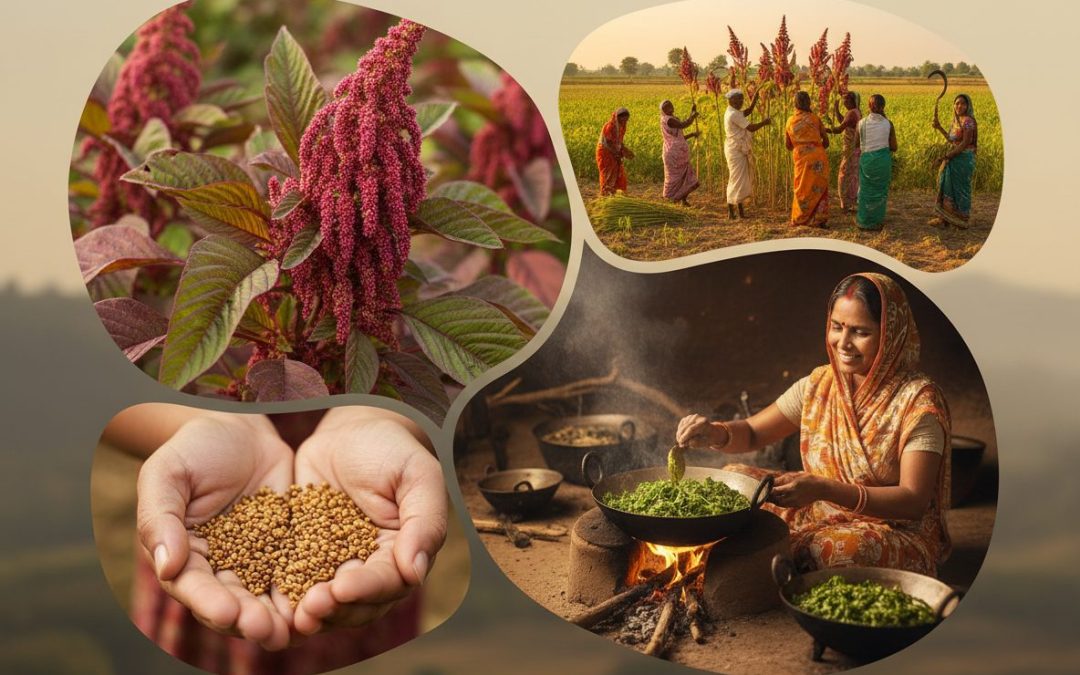
Chaulai, commonly known as Amaranth or Rajgira, refers to a group of plants belonging to the genus Amaranthus.
What makes chaulai unique is that nearly every part of the plant can be utilised:
- Tender leaves are consumed as vegetables.
- Seeds are eaten as grains.
- Stems can serve as fodder.
- Young shoots are used in traditional recipes.
- Plant residues contribute to livestock feeding.
Unlike wheat, rice, or maize, chaulai is classified as a pseudo-cereal because its seeds are used like grains, even though it does not belong to the grass family.
The crop is celebrated for:
- High nutritional density
- Climate resilience
- Fast growth
- Culinary versatility
- Cultural significance
- Economic value
SCIENTIFIC CLASSIFICATION
Kingdom: Plantae
Division: Magnoliophyta
Class: Magnoliopsida
Order: Caryophyllales
Family: Amaranthaceae
Genus: Amaranthus
Common Names:
- Chaulai
- Amaranth
- Rajgira
- Ramdana
Scientific studies identify more than sixty species within the genus, although only a limited number are cultivated extensively for food purposes.
NAMES OF CHAULAI IN DIFFERENT LANGUAGES
| Language | Name |
|---|---|
| English | Amaranth |
| Hindi | Chaulai, Rajgira |
| Sanskrit | Rajgira, Tanduliya |
| Punjabi | Chaulai |
| Gujarati | Rajgira |
| Marathi | Rajgira |
| Bengali | Notey Shaak |
| Tamil | Arai Keerai |
| Telugu | Thotakura |
| Kannada | Dantina Soppu |
| Malayalam | Cheera |
| Odia | Khada Saga |
ORIGIN AND HISTORY OF CHAULAI
The history of chaulai stretches back thousands of years.
Archaeological evidence suggests that various amaranth species were cultivated by ancient civilisations long before the rise of many modern agricultural systems.
The crop gained importance because of its:
- Nutritional richness
- Drought tolerance
- Rapid growth
- Adaptability
- Reliable yields
In India, chaulai became deeply integrated into traditional agriculture and village life. Farmers appreciated its ability to produce food even under challenging conditions.
Traditional communities cultivated chaulai not only as a food source but also as a crop associated with resilience and self-sufficiency.
Over generations, chaulai earned a respected place in fasting foods, household gardens, and local food systems.
Its long history of continuous cultivation has earned it recognition as one of the world’s most significant ancient grains.
WHY IS CHAULAI CALLED AN ANCIENT GRAIN
The term “ancient grain” refers to crops that have remained largely unchanged for centuries while retaining their traditional nutritional characteristics.
Chaulai qualifies because:
- It has been cultivated for thousands of years.
- Traditional cultivation methods remain effective.
- Its nutritional composition has remained highly valued.
- It continues to support local food systems.
Unlike heavily processed modern foods, chaulai represents a direct connection to agricultural traditions that have sustained humanity for generations.
WHY CHAULAI BECAME A LOST SUPERFOOD
Despite its exceptional benefits, chaulai gradually disappeared from many urban diets.
Several factors contributed:
- Expansion of wheat and rice cultivation.
- Industrial food systems.
- Urbanisation.
- Changing dietary habits.
- Reduced awareness among younger generations.
- Marketing of imported health foods.
Ironically, many imported superfoods gained popularity while chaulai, which often provides comparable nutritional value, remained underappreciated.
Today, growing awareness of traditional foods is helping restore interest in this remarkable crop.
BOTANICAL DESCRIPTION
Chaulai is an annual herbaceous plant known for its vigorous growth and adaptability.
Typical characteristics include:
- Height ranging from 30 centimetres to over 2 meters.
- Broad edible leaves.
- Dense flower clusters.
- Small nutrient-rich seeds.
- Extensive root systems.
The plant thrives in diverse environments and demonstrates remarkable resilience under varying climatic conditions.
TYPES OF CHAULAI
Green Leaf Chaulai
Primarily grown for tender edible leaves.
Red Leaf Chaulai
Known for its attractive reddish-purple foliage and high antioxidant content.
Grain Amaranth
Cultivated mainly for seed production.
Dual-Purpose Varieties
Used for both leafy vegetables and grain harvesting.
NUTRITIONAL VALUE OF CHAULAI
Approximate nutritional composition per 100 grams of grain:
| Nutrient | Amount |
| Energy | 371 kcal |
| Protein | 13–14 g |
| Carbohydrates | 65 g |
| Dietary Fiber | 7 g |
| Fat | 7 g |
| Calcium | 159 mg |
| Iron | 7.6 mg |
| Magnesium | 248 mg |
| Potassium | 508 mg |
The leaves additionally provide substantial quantities of vitamins and antioxidants.
SCIENTIFIC COMPOSITION AND PHYTOCHEMICALS
One reason chaulai is considered a superfood is its diverse nutritional composition.
It contains:
- Essential amino acids
- Dietary fibre
- Calcium
- Iron
- Magnesium
- Potassium
- Phosphorus
- Vitamin A
- Vitamin C
- Vitamin K
- Folate
- Carotenoids
- Flavonoids
- Phenolic compounds
- Natural antioxidants
These compounds contribute significantly to the nutritional value and health-promoting properties of chaulai.
HEALTH BENEFITS OF CHAULAI
Excellent Source of Plant Protein
Chaulai contains high-quality protein and essential amino acids.
Supports Digestive Health
Its fibre content promotes healthy digestion and bowel regularity.
Supports Bone Health
Calcium, phosphorus, and magnesium contribute to strong bones.
Supports Cardiovascular Wellness
The nutrient profile supports overall heart health as part of a balanced lifestyle.
Supports Healthy Blood Formation
Iron and folate play important roles in normal blood production.
Supports Weight Management
Protein and fibre help increase satiety.
Provides Antioxidant Protection
Natural antioxidants help protect cells from oxidative stress.
Supports Active Lifestyles
Its nutrient density makes it suitable for diverse dietary patterns.
ROLE OF CHAULAI IN VILLAGE LIFE
The story of Chaulai cannot be fully understood without understanding its relationship with village life.
For generations, chaulai served as much more than a crop. It was a dependable companion of farming families.
In many parts of India, especially hilly and rainfed regions, chaulai was cultivated in kitchen gardens, field borders, mixed cropping systems, and household plots.
Villagers valued chaulai because:
- It grew quickly.
- It tolerated dry conditions.
- It required relatively little care.
- Both leaves and seeds were edible.
- It provided food security during difficult times.
Women often harvested tender leaves for daily meals, while mature seeds were stored for future consumption.
During years when other crops suffered due to drought, excessive rainfall, or pest attacks, chaulai frequently continued to provide nutritious food.
For many rural households, chaulai represented resilience and self-reliance.
Its importance extended beyond human nutrition.
Farmers also utilised:
- Crop residues as livestock fodder.
- Plant biomass for composting.
- Seeds for household consumption and local trade.
Even today, elderly villagers often recall chaulai as one of the most dependable crops of their youth.
ECONOMIC IMPORTANCE OF CHAULAI FOR FARMERS
As agricultural sustainability becomes increasingly important, chaulai offers several economic advantages.
Low Production Costs
Compared with many commercial crops, chaulai generally requires:
- Less irrigation
- Lower fertiliser inputs
- Reduced pesticide dependency
- Minimal maintenance
These characteristics help reduce production costs.
Multiple Income Opportunities
Farmers can generate revenue from:
- Fresh leaves
- Grain production
- Seed sales
- Value-added products
- Organic farming markets
Short Duration Crop
Chaulai grows rapidly and can often provide returns within a relatively short period.
Suitable for Small Farmers
Because it adapts well to diverse conditions, chaulai can be cultivated successfully on small landholdings.
Growing Market Demand
Increasing consumer interest in:
- Ancient grains
- Gluten-free foods
- Sustainable agriculture
- Traditional foods
- Healthy eating
has created new opportunities for farmers cultivating chaulai.
CHAULAI LEAVES VS CHAULAI GRAIN
One of the unique characteristics of chaulai is that both its leaves and seeds possess significant value.
Chaulai Leaves
The leaves are commonly consumed as:
- Saag
- Curries
- Stir-fries
- Soups
- Mixed vegetable dishes
Advantages of Chaulai Leaves
- Rich in vitamins
- Rich in minerals
- Quick harvesting
- Easy cooking
- Widely accepted in traditional cuisine
Chaulai Grain
The seeds are used similarly to cereals.
Common preparations include:
- Flour
- Rotis
- Porridges
- Laddoos
- Chikki
- Breakfast foods
Advantages of Chaulai Grain
- High protein content
- Long storage life
- Gluten-free nature
- Versatile applications
Both forms contribute significantly to food security and nutritional diversity.
CULINARY USES OF CHAULAI
Few traditional crops offer the culinary versatility of chaulai.
The leaves can be:
- Boiled
- Steamed
- Stir-fried
- Added to soups
- Combined with lentils
The grains can be:
- Popped
- Ground into flour
- Cooked as porridge
- Added to baked products
- Used in traditional sweets
Modern chefs are increasingly experimenting with chaulai in:
- Smoothies
- Salads
- Energy bars
- Breakfast bowls
- Health snacks
- Fusion cuisine
Its mild flavour allows it to blend easily with a wide variety of ingredients.
POPULAR CHAULAI RECIPES
Traditional Indian cuisine offers numerous ways to enjoy chaulai.
Some popular preparations include:
1. Chaulai Ka Saag
A simple yet nutritious preparation made using fresh chaulai leaves.
2. Rajgira Roti
A traditional flatbread commonly consumed during fasting periods.
3. Rajgira Paratha
A wholesome variation combining traditional flavours and nutrition.
4. Rajgira Laddoo
A popular festive and fasting sweet.
5. Rajgira Chikki
Made using popped amaranth and natural sweeteners.
6. Amaranth Porridge
A nutritious breakfast option.
7. Amaranth Kheer
A traditional dessert prepared using milk and amaranth grain.
8. Chaulai Dal
A protein-rich combination of lentils and leafy chaulai.
9. Chaulai Soup
A comforting and nutritious preparation.
10. Amaranth Breakfast Bowl
A modern adaptation suitable for health-conscious consumers.
IS CHAULAI GLUTEN-FREE?
Yes.
One of the most important reasons for the growing popularity of chaulai is its naturally gluten-free nature.
Unlike wheat, barley, and rye, chaulai does not contain gluten.
This makes it attractive to consumers seeking gluten-free alternatives.
Benefits of gluten-free chaulai include:
- Greater dietary diversity
- Alternative grain options
- Versatile culinary applications
- Suitability for specialised diets
However, consumers should always verify product labels to ensure there has been no cross-contamination during processing.
CHAULAI CULTIVATION GUIDE
Climate Requirements
Chaulai performs well under warm climatic conditions.
It is highly adaptable and can tolerate varying environmental conditions.
Soil Requirements
The crop grows successfully in:
- Sandy soils
- Loamy soils
- Well-drained soils
- Moderately fertile soils
Sowing Season
The sowing season varies according to region and local climatic conditions.
Water Requirements
One of chaulai’s major strengths is its relatively modest water requirement compared to several conventional crops.
Crop Management
Successful cultivation generally involves:
- Proper land preparation
- Timely sowing
- Weed management
- Balanced nutrition
- Timely harvesting
Harvesting
Leaf Harvesting
Leaves may be harvested repeatedly during the growing season.
Grain Harvesting
Seeds are harvested after reaching physiological maturity.
Proper harvesting and storage help preserve grain quality.
ENVIRONMENTAL IMPORTANCE OF CHAULAI
In an era of climate uncertainty, chaulai offers remarkable environmental advantages.
Drought Tolerance
The crop performs relatively well under limited moisture conditions.
Climate Resilience
Chaulai demonstrates adaptability to changing environmental conditions.
Efficient Resource Use
It can often produce substantial biomass and nutrition with fewer inputs.
Biodiversity Support
Cultivating diverse crops helps strengthen agricultural ecosystems.
Sustainable Agriculture
Chaulai aligns well with principles of sustainable farming.
Its ability to provide nutrition while requiring comparatively fewer resources makes it increasingly relevant for future food systems.
THINGS TO KEEP IN MIND
While chaulai offers numerous benefits, a few practical considerations should be remembered.
- Wash leaves thoroughly before cooking.
- Store grains in airtight containers.
- Purchase from reliable sources.
- Maintain dietary variety.
- Follow proper storage practices.
- Seek professional dietary guidance when necessary.
Moderation and balance remain important components of healthy eating.
TRADITIONAL MEDICINAL USES OF CHAULAI IN DIFFERENT REGIONS OF INDIA
For centuries, chaulai has been valued not only as a food crop but also as a traditional dietary ingredient associated with wellness and nourishment. While modern scientific research continues to investigate many traditional beliefs, communities across India have long included chaulai in everyday diets for its perceived health-supporting properties.
Himalayan Region
In many Himalayan communities, chaulai leaves have traditionally been consumed during seasonal transitions when fresh vegetables become limited. Villagers often regarded chaulai as a strengthening food capable of supporting overall vitality and endurance.
Northern India
Across Punjab, Haryana, Uttar Pradesh, Uttarakhand, and Himachal Pradesh, chaulai saag has long been incorporated into regular meals. Traditional households valued the crop because it was easy to grow and provided nutritious green vegetables throughout much of the growing season.
Western India
In Gujarat and Maharashtra, rajgira has been closely associated with fasting traditions. Rajgira flour, laddoos, and chikki remain popular during religious observances because they provide energy and satiety while complying with fasting dietary customs.
Southern India
Several southern states cultivate leafy amaranth varieties extensively. Traditional recipes featuring amaranth leaves continue to be valued for their nutritional contribution to daily diets.
Traditional Wisdom and Modern Understanding
Although traditional communities have long appreciated chaulai for its nourishing qualities, it should be remembered that traditional dietary practices are not a substitute for professional medical advice. The greatest strength of chaulai lies in its role as a nutrient-dense food that contributes to a balanced and diverse diet.
CHAULAI VS QUINOA VS MILLETS VS SPINACH
As awareness of healthy foods grows, many consumers compare chaulai with other popular superfoods. While each food offers unique benefits, chaulai holds its own remarkably well.
| Feature | Chaulai (Amaranth) | Quinoa | Millets | Spinach |
|---|---|---|---|---|
| Ancient Crop | Yes | Yes | Yes | No |
| Edible Leaves | Yes | Limited | No | Yes |
| Edible Grain | Yes | Yes | Yes | No |
| Gluten-Free | Yes | Yes | Yes | Yes |
| Protein Content | High | High | Moderate | Moderate |
| Fiber Content | Good | Good | Good | Good |
| Mineral Content | Excellent | Excellent | Good | Excellent |
| Climate Resilience | High | Moderate | High | Moderate |
| Water Requirement | Relatively Low | Moderate | Low | Moderate |
| Culinary Versatility | Excellent | Good | Good | Moderate |
Why Chaulai Stands Out
Unlike quinoa, millets, or spinach alone, chaulai offers both highly nutritious leaves and grain from the same crop.
Its advantages include:
- Dual-purpose use.
- Excellent nutritional density.
- Strong adaptability.
- Climate resilience.
- Cultural significance.
- Wide culinary applications.
For farmers, consumers, and home gardeners alike, chaulai represents one of the most versatile traditional crops available.
THE FUTURE OF CHAULAI IN CLIMATE-SMART AGRICULTURE
Agriculture around the world faces unprecedented challenges.
Farmers must increasingly cope with:
- Water scarcity.
- Climate variability.
- Soil degradation.
- Rising production costs.
- Nutritional security concerns.
In this context, chaulai possesses several characteristics that make it highly relevant for the future.
Climate Resilience
Chaulai demonstrates an impressive ability to grow under varying environmental conditions. Its adaptability allows it to perform well in many regions where other crops may struggle.
Efficient Resource Utilisation
Compared with many conventional crops, chaulai often requires relatively modest inputs while still producing valuable food and biomass.
Nutritional Security
Future food systems must focus not only on producing calories but also on delivering essential nutrients.
Chaulai contributes significantly to this objective through its rich content of protein, fibre, vitamins, minerals, and beneficial plant compounds.
Support for Small Farmers
As a versatile and adaptable crop, chaulai offers opportunities for small and marginal farmers seeking resilient farming systems.
Growing Consumer Interest
The increasing popularity of:
- Ancient grains,
- Sustainable foods,
- Local food systems,
- Traditional diets,
- Plant-based nutrition,
is creating renewed opportunities for chaulai cultivation and consumption.
Why the Future Looks Bright
Many agricultural experts now recognise that future food security will depend upon diverse, resilient, and nutrient-dense crops.
Chaulai meets all three criteria.
What was once viewed as a forgotten village crop may become one of the most valuable foods of the twenty-first century.
FREQUENTLY ASKED QUESTIONS
Are chaulai and rajgira the same?
Yes. Rajgira is among the most common names used for amaranth grain in India.
Why is chaulai considered a superfood?
Because of its nutritional density, including protein, fibre, vitamins, minerals, and antioxidants.
Can chaulai leaves be consumed regularly?
Yes. Chaulai leaves can be included as part of a balanced diet.
Is chaulai suitable for fasting?
Yes. Rajgira-based foods are traditionally consumed during fasting periods throughout India.
Can chaulai be grown at home?
Absolutely. Chaulai is among the easiest leafy vegetables to cultivate in kitchen gardens.
Why is chaulai called a lost superfood?
Despite its excellent nutritional qualities and historical importance, it gradually disappeared from many modern diets.
Is chaulai environmentally sustainable?
Its adaptability, resilience, and efficient resource use make it an attractive crop for sustainable agriculture.
What makes chaulai unique among traditional crops?
Its ability to provide both nutritious leaves and nutrient-rich grain makes it exceptionally versatile.
CALL TO ACTION
Have you grown chaulai in your garden, prepared traditional chaulai recipes, or heard stories about its importance from parents or grandparents?
Share your experiences in the comments section below.
Every story helps preserve valuable food traditions for future generations.
If you enjoyed this article, explore more forgotten foods, traditional recipes, agricultural wisdom, and culinary heritage guides on Madhusavara.com.
Together, we can help revive awareness about India’s remarkable food treasures.
STRONG CONCLUSION
Chaulai (Amaranth) stands as one of humanity’s most remarkable yet underappreciated crops.
For thousands of years, this ancient grain and leafy superfood has nourished communities, supported farmers, strengthened food security, and demonstrated extraordinary resilience under challenging conditions.
Its impressive nutritional profile, adaptability, culinary versatility, and cultural significance make chaulai far more than just another crop.
In a world increasingly concerned about health, sustainability, biodiversity, and climate resilience, chaulai offers lessons that are both ancient and modern.
Long before the emergence of expensive imported superfoods, chaulai quietly provided generations with nourishment, strength, and security.
Rediscovering chaulai is not merely about embracing a healthy food.
It is about reconnecting with agricultural wisdom, preserving cultural heritage, supporting sustainable farming, and building a healthier future.
The future of food may depend not only on innovation but also on remembering and valuing the extraordinary crops that have served humanity for centuries.
Among those crops, chaulai deserves a place of honour.
DISCLAIMER
This article has been prepared solely for educational, informational, cultural, and general awareness purposes.
Every effort has been made to ensure accuracy, authenticity, and completeness. However, the information provided should not be interpreted as medical, nutritional, agricultural, scientific, legal, or professional advice.
Readers are encouraged to consult qualified healthcare professionals, nutritionists, agricultural experts, or other relevant specialists before making decisions based on the information presented.
The author, Madhu Savara, and Madhusavara.com expressly disclaim any responsibility, liability, obligation, claim, loss, injury, damage, consequence, or adverse outcome arising directly or indirectly from the use, interpretation, application, or reliance upon any content contained in this article.
Interested in reviving ancient foods in your diet? Continue your journey with our popular blogs on Pahadi Garlic, Lingri, Lasura, monkey jackfruit, Gucchi mushroom, Ber and several forgotten Himalayan superfoods.
