
Author’s Note
By Madhu Savara, Author and Owner of Madhusavara.com
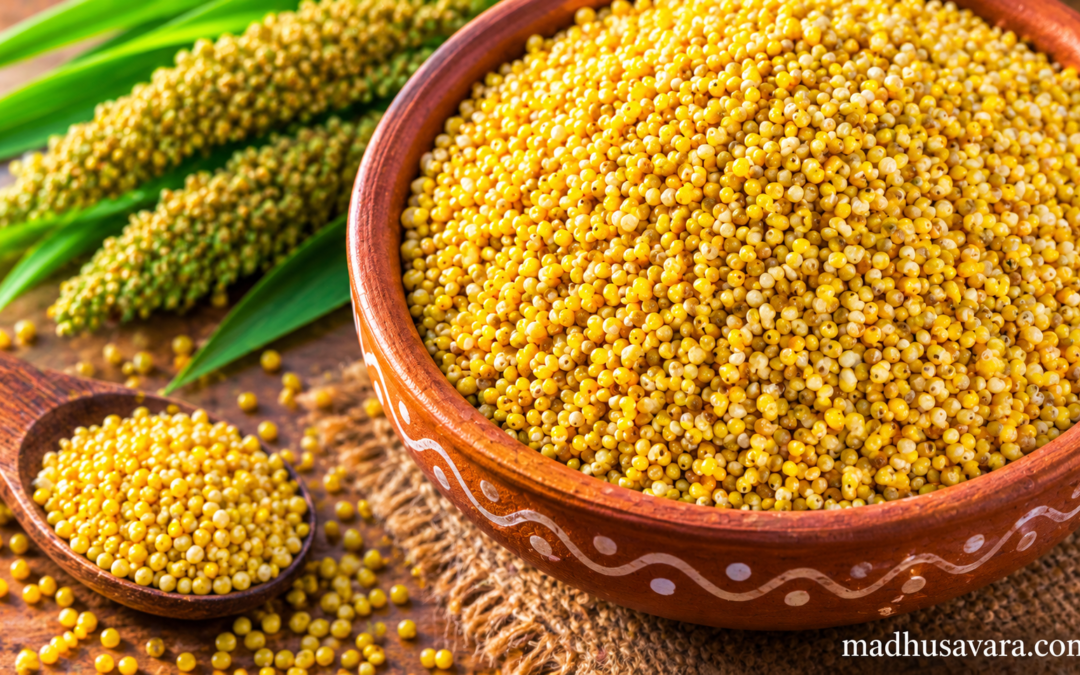
Kutki millet, also known as little millet, is one of India’s traditional small millets. Scientifically known as Panicum sumatrense, it has long been grown in parts of India, particularly in dryland and tribal farming regions.
At Madhusavara.com, the focus is on documenting traditional Indian foods and crops without turning every old grain into a miracle food. This article brings together information about kutki millet, little millet nutrition, cultivation, traditional recipes, regional names and its place in Indian farming.
Where claims about health, history or cultivation are uncertain, they have been kept measured rather than presented as facts. Regional food traditions can also differ, so samai, saame, kutki and little millet may appear differently from one part of India to another.
What Is Kutki Millet?
Kutki millet is a common Indian name for little millet, a small-grained cereal belonging to the species Panicum sumatrense.
It is known as samai or saamai in Tamil, saame or same in Kannada, and by other regional names in different parts of India. In central India, kutki is a familiar name.
Little millet belongs to India’s group of small millets, along with kodo, foxtail, barnyard and proso millet.
The grain can be cooked like rice and can also be ground into flour for traditional preparations.
History of Little Millet in India
Little millet has a long history in the Indian subcontinent. Archaeological research has identified little millet remains at Harappan-period sites, including Harappa, showing that it formed part of ancient agricultural systems.
Researchers have also examined India as an important centre in the history and domestication of Panicum sumatrense. However, the exact date and location of domestication are still matters of scientific research.
It is therefore safer to say that little millet has an old and documented place in Indian agriculture rather than giving a precise domestication date without sufficient evidence.
Over generations, the grain remained important in several dryland farming communities even as rice and wheat became more dominant in mainstream food systems.
Traditional Little Millet Cultivation
Little millet cultivation is generally associated with rainfed farming. The crop can grow in relatively low-input conditions and is considered tolerant of drought and, under suitable conditions, temporary waterlogging.
Farmers may sow little millet by broadcasting or line sowing, depending on local practice, soil and rainfall. The crop is relatively short-duration, although the exact growing period varies by variety and location.
In Tamil Nadu, for example, agricultural information records little millet varieties with crop durations generally ranging from around 80 to 110 days.
Harvesting involves cutting the mature crop, drying it and threshing the grain. The grain is then processed to remove the outer covering before cooking.
Little millet is therefore well suited to the kind of farming systems where farmers value short-duration, hardy crops that can fit within local rainfall patterns.
Little Millet Nutrition
Little millet nutrition is one reason this traditional grain is receiving renewed attention.
The grain provides carbohydrates, protein, dietary fibre and minerals. Nutritional values vary according to variety, growing conditions and processing.
Published food data commonly show around 7–9 grams of protein per 100 grams, along with dietary fibre and minerals such as iron, magnesium and phosphorus.
Little millet is also naturally gluten-free, making it an option for people following gluten-free diets. However, people with celiac disease should consider cross-contamination during processing and choose suitably certified products when necessary.
It is better to view little millet as a nutritious whole grain within a varied diet rather than as a special food with guaranteed health effects.
Kutki Millet Benefits
The term kutki millet benefits is widely searched, but many online descriptions make claims that go beyond the available evidence.
The genuine nutritional benefits are straightforward. Kutki provides dietary fibre, protein and minerals, including iron. It can be used as an alternative to other cereal grains and can add variety to the diet.
Research has also examined the grain’s phenolic compounds, antioxidant activity and processing characteristics.
However, these findings should not be turned into medical promises.
In particular, kutki millet should not be described as a treatment or cure for diabetes. Blood glucose response depends on the quantity eaten, processing, cooking method and the other foods in the meal.
Anyone managing diabetes or another medical condition should discuss dietary choices with a qualified healthcare professional.
Kutki Millet in Madhya Pradesh
Madhya Pradesh is an important region for traditional kutki cultivation.
In Dindori district, kutki is associated with Baiga and Gond farming communities and is cultivated in areas where dryland agriculture remains important. Local varieties and farming knowledge form part of the region’s agricultural heritage.
This is also why tribal millets in Madhya Pradesh deserve attention. The story is not simply about a grain’s nutritional value. It is also about local seeds, farming practices and traditional food knowledge.
The same grain can have different names and varieties from one region to another, making local knowledge an important part of understanding little millet.
Samai and Saame in South India
In Tamil Nadu, samai or saamai is the familiar name for little millet.
It has been cultivated in several parts of the state and is used in traditional foods. In Karnataka, the grain is commonly known as saame or same.
These regional names are useful when searching for kutki millet recipes. A traditional dish may be listed as a samai recipe rather than a little millet recipe.
This regional diversity is one of the strengths of traditional Indian millets.
Traditional Kutki Millet Recipes
Kutki can be prepared much like rice.
In central India, cooked kutki may be served with dal, vegetables or local accompaniments. It can also be used for khichdi and porridge.
In Tamil Nadu, traditional samai recipes include:
- Samai upma
- Samai pongal
- Samai dosa
- Samai idli
- Samai rice
- Samai porridge
Little millet flour can also be used in rotis and other preparations.
The recipes differ between households, communities and regions. There is no single traditional way of cooking kutki.
Kutki Millet Storage
Proper drying is important for millet storage.
After harvesting and processing, clean and sufficiently dried grain can be stored in suitable containers or bags. Modern airtight storage can provide additional protection from moisture and insects.
Storage life depends on grain moisture, temperature, humidity, insects, cleanliness and the type of container used.
It is therefore not accurate to promise that kutki will remain pest-free or edible for a fixed number of years under ordinary conditions.
For household storage, properly dried grain should be kept in a cool, dry place and protected from moisture and pests.
Modern Kutki Millet Recipes
The growing interest in modern millet recipes has brought little millet into urban kitchens.
Today, kutki millet recipes may include:
- Millet pulao
- Upma
- Khichdi
- Breakfast bowls
- Dosa and idli batter
- Salads
- Porridge
- Cookies
- Crackers
- Baked dishes
- Ready-to-cook mixes
Its mild flavour works well with vegetables, pulses and Indian spices.
Modern recipes do not have to replace traditional food. They simply offer another way to use an old grain.
Scientific Perspectives
Research on Panicum sumatrense has examined its nutritional composition, dietary fibre, phenolic compounds, antioxidant activity, processing and genetic diversity.
Studies on soaking, germination and fermentation have also examined changes in nutrient availability and anti-nutritional compounds.
Such research is useful, but it should not be exaggerated. A laboratory finding about an antioxidant compound does not automatically mean that eating the grain prevents a particular disease.
Similarly, nutritional composition can vary according to the grain and how it has been processed.
Kutki Millet and Climate-Resilient Agriculture
The agricultural value of kutki is an important part of its story.
As a drought-tolerant millet, little millet can perform in several rainfed and relatively low-input environments. Its short growing period can also make it useful in farming systems with limited rainfall windows.
This gives kutki a place in discussions about climate-resilient crops and sustainable farming in India.
It should not, however, be presented as a universal solution to climate change or water shortages. Farming results depend on soil, rainfall, variety, seed quality and local agricultural practices.
Its practical strength is diversification: adding hardy traditional crops to farming systems where they are locally suitable.
Why Kutki Millet Still Matters
Kutki millet, or little millet, is a small grain with a long connection to Indian agriculture and food traditions.
From samai in Tamil Nadu to saame in Karnataka and kutki in central India, the grain carries different regional names while belonging to the same species, Panicum sumatrense.
Its value does not depend on miracle claims. It comes from its nutritional composition, traditional food uses, farming characteristics and connection with communities that have continued to grow and cook it.
For Madhya Pradesh tribal farming communities, little millet remains part of local agricultural knowledge. In South India, samai continues to have a place in traditional and modern recipes.
Bringing kutki millet recipes back into everyday cooking does not mean replacing rice, wheat or other grains. It simply means giving one of India’s traditional small millets a place at the table again.
Sometimes an old grain does not need to be reinvented. It simply needs to be remembered.
Disclaimer
This article is published by Madhusavara.com for general educational, food and agricultural information. It is not medical, nutritional, dietary, agricultural or professional advice.
Information about kutki millet benefits, little millet nutrition, gluten-free diets, cultivation, storage and climate-resilient agriculture is based on available information and may vary according to variety, location, processing and preparation.
Nothing in this article should be understood as a claim that kutki millet treats, prevents or cures diabetes or any other disease. Anyone with a medical condition, food allergy, celiac disease or specific dietary requirement should consult a qualified healthcare professional.
Farmers and food producers should independently verify cultivation, processing and storage information with appropriate local agricultural experts or authorities.
Madhu Savara, Madhusavara.com, its owner, authors, contributors and associated parties accept no liability for any direct, indirect, incidental or consequential loss, injury, health consequence, food-related problem, agricultural loss or other damage arising from the use of, reliance upon or interpretation of information published in this article. Readers are responsible for verifying information relevant to their individual circumstances and obtaining professional advice wherever required.
About the Author
Madhu Savara is the author and owner of Madhusavara.com, where she writes about Indian food heritage, traditional recipes, regional cuisines and lesser-known traditional crops.
Her work focuses on documenting India’s food traditions with attention to regional identity, farming practices and the everyday recipes that keep these traditions alive
