
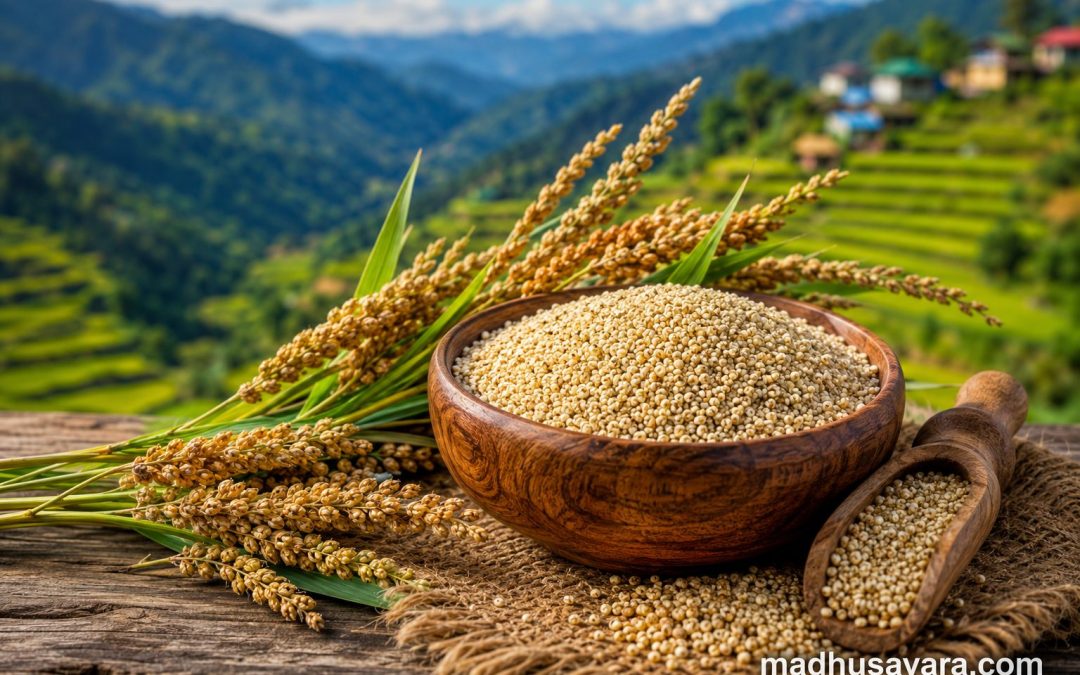
Jhangora (Barnyard Millet): The Lost Himalayan Superfood – Complete Nutrition Guide & Benefits By Madhu Savara Founder, madhusavara.com
Author’s Note: Jhangora, also known as Barnyard Millet, is a traditional Himalayan superfood that has nourished mountain communities for centuries. This complete guide on Jhangora combines scientific research with traditional knowledge while clearly distinguishing between both. All nutritional values for Jhangora are approximate ranges that vary with soil, altitude, and processing.
What is Jhangora (Barnyard Millet)?
Jhangora is the Indian name for Barnyard Millet (Echinochloa frumentacea), a fast-growing annual millet from the Poaceae family. With a short growth cycle of 60–90 days, Jhangora thrives in poor soils, requires minimal irrigation, and is perfectly suited for rain-fed terraced farming in the Himalayas.
Origin, Cultivation & Impact on Rural Villagers’ Lives
Jhangora has been cultivated for centuries in the Himalayan region,s where rice and wheat struggle. It is primarily grown in Uttarakhand, Himachal Pradesh, Jammu & Kashmir, Northeast India, and some tribal areas. Outside India, it is found in Nepal, China, Japan, and parts of Africa.
In rural Himalayan villages, Jhangora cultivation plays a vital role in food security and livelihood. It provides dependable harvests even in harsh conditions with low inputs, supporting small and marginal farmers. For generations, it offered steady energy for physically demanding farm work and symbolised self-sufficiency. Many elderly villagers recall Jhangora as everyday sustenance during lean seasons, helping preserve traditional knowledge and community resilience. Its revival today is helping sustain rural economies and Himalayan agriculture.
Why Jhangora is Called the Forgotten Himalayan Superfood
The term “lost Himalayan superfood” is cultural. Jhangora was once a daily staple in Himalayan households but declined due to the Green Revolution’s focus on rice and wheat, urban migration, and preference for processed grains. Today, Jhangora Barnyard Millet is regaining popularity through millet revival programs and demand for gluten-free, sustainable foods.
Nutritional Profile of Jhangora (Approximate Values per 100g)
Jhangora offers impressive nutrition:
| Nutrient | Amount per 100g |
|---|---|
| Energy | 300–360 kcal |
| Carbohydrates | 68–76 g |
| Protein | 10.5–13.2 g |
| Fat | 3.2–3.8 g |
| Dietary Fibre | 10–12.6 g |
Jhangora is naturally gluten-free and rich in fibre.
Glycemic Index of Jhangora
Studies show the Glycemic Index of Jhangora ranges between 41–50, making it a low-GI food suitable for steady energy and blood sugar management.
3. Micronutrients & Minerals in Jhangora (Key Highlights)
Jhangora stands out for its rich micronutrient profile, making it a true Himalayan superfood:
| Micronutrient | Approximate Content per 100g | Benefit |
|---|---|---|
| Iron | 7–18.6 mg | Supports haemoglobin & energy levels |
| Calcium | 11–35 mg | Bone health |
| Magnesium | High (varies) | Muscle & nerve function |
| Zinc | Notable amounts | Immunity & metabolism |
| Phosphorus | High | Bone & energy metabolism |
| B-Vitamins (Thiamine, Niacin, Riboflavin) | Good source | Energy metabolism & nervous system |
These minerals and vitamins are present in higher bioavailable forms in unpolished Jhangora compared to polished grains. The combination of high fibre and these micronutrients enhances its overall nutritional value.
Comparison with Other Grains
Jhangora Barnyard Millet stands out nutritionally compared to common grains:
| Grain | Protein (g) | Fibre (g) | GI | Key Advantage |
|---|---|---|---|---|
| Jhangora | 10.5–13.2 | 10–12.6 | 41–50 | High fibre, climate resilient, rich minerals |
| Rice (white) | 7–8 | 1–2 | 70+ | Lower fibre & protein |
| Wheat | 10–12 | 2–3 | 60–70 | Lower fibre |
| Ragi (Finger Millet) | 7–8 | 3–4 | 50–60 | Higher calcium, but lower fibre |
| Foxtail Millet | 11–12 | 8–10 | 50–55 | Similarly, but Jhangora has better adaptability in hills |
Jhangora provides superior fibre and better resilience than rice and wheat.
Health Benefits of Jhangora
As part of a balanced diet, Jhangora Barnyard Millet supports:
- Digestive health through high dietary fibre
- Steady energy release due to low glycemic index
- Gluten-free nutrition
- Satiety and weight management
- Better mineral intake (iron, magnesium, zinc)
Note: Jhangora is a nutritious whole grain, not medicine. Consult a healthcare professional for specific dietary needs.
Traditional & Modern Uses of Jhangora
Traditional Himalayan recipes: Plain Jhangora with curd or vegetables, Jhangora khichdi with lentils, Jhangora kheer during festivals, and soft porridge for children and elders.
Modern applications: Millet salads, breakfast bowls, gluten-free desserts, and fusion dishes.
Agricultural & Environmental Importance of Jhangora
Jhangora is a climate-resilient crop ideal for sustainable Himalayan farming. It conserves soil, requires little water, and supports biodiversity in terraced systems.
Storage and Buying Tips for Jhangora
Buy clean, unpolished Jhangora grains with a mild, earthy aroma. Store in airtight containers in a cool, dry place and consume within 6–12 months for best nutrition.
Frequently Asked Questions about Jhangora
- Is Jhangora the same as Barnyard Millet? Yes.
- Is Jhangora gluten-free? Yes, naturally.
- Can Jhangora be used in diabetic diets? Its low GI makes it suitable, but consult your doctor.
- How does Jhangora help rural villagers? It provides food security and income in challenging Himalayan conditions.
Conclusion: Jhangora (Barnyard Millet) beautifully blends Himalayan heritage with modern nutritional needs. This resilient, nutrient-dense Himalayan Jhangora deserves a place in today’s kitchens for health, sustainability, and cultural preservation.
Disclaimer: This article on Jhangora is for informational purposes only. Nutritional values are approximate ranges from scientific literature. It is not medical advice. Consult a qualified professional before making dietary changes.
References
- https://doi.org/10.1007/s13197-011-0516-8
- Other peer-reviewed studies on Barnyard Millet nutrition and glycemic index.
