
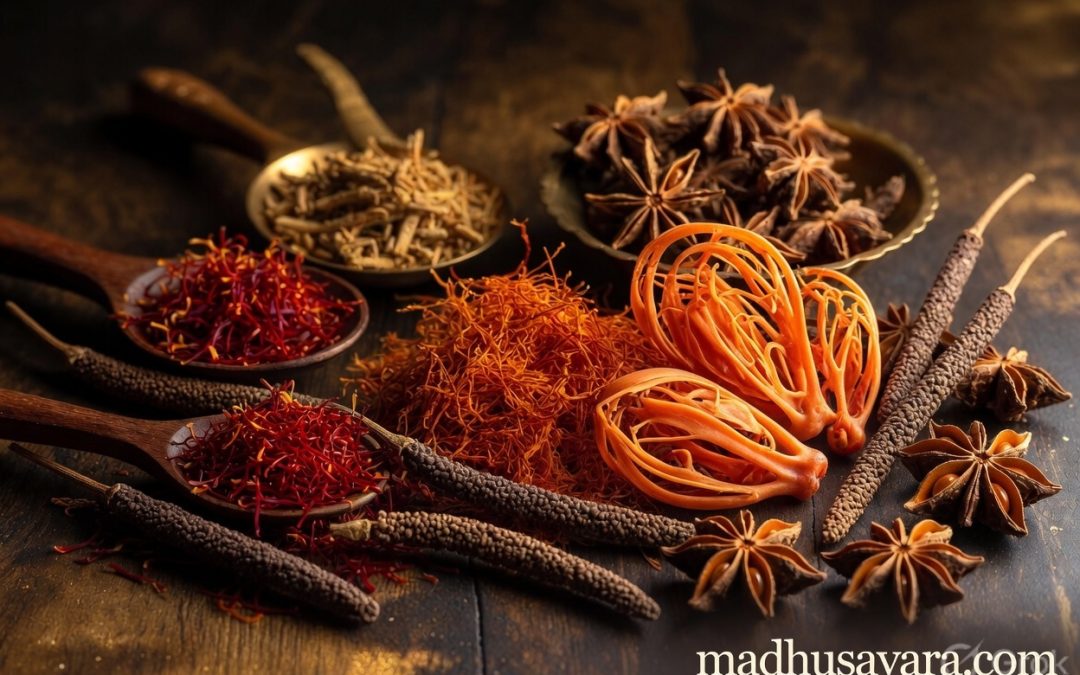
In this definitive guide on the forgotten royal spices of India, we explore the luxurious world of saffron (kesar), mace (javitri), star anise (chakra phool), and long pepper (pippali). These Indian royal spices and Ayurvedic spices have shaped Mughal cuisine, Persian-influenced blends, and traditional medicinal practices for centuries. Whether you seek their rich history, signature recipes, powerful medicinal benefits, or practical kitchen uses, this article covers every aspect in detail to help you fully appreciate and incorporate these medicinal spices from India into your life.
Table of Contents
- Preface: Rediscovering India’s Royal Spice Legacy
- Historical Significance and Mughal Cuisine Connection
- Comparison with Persian Spice Blends
- Origins of These Royal Spices
- Detailed Profile of Each Spice
- Signature Mughal Recipes Featuring These Spices
- Kitchen Uses in Modern Indian Cooking
- Medicinal Benefits and General Health Benefits
- Uses in Ayurveda, Homoeopathy & Traditional Systems
- Precautions, Side Effects & Allergens
- How to Use These Spices Effectively
- Proper Storage Methods
- Frequently Asked Questions (FAQs)
- Conclusion
- Disclaimer
Preface: Rediscovering India’s Royal Spice Legacy
Imagine walking into a Mughal emperor’s banquet hall — the air thick with the intoxicating aroma of saffron-infused rice, warm mace, sweet star anise, and the subtle heat of long pepper. These forgotten royal spices of India — Saffron (Kesar), Mace (Javitri), Star Anise (Chakra Phool), and Long Pepper (Pippali) — were once the crown jewels of imperial kitchens and ancient healing traditions.
Once symbols of power and prosperity, they have quietly faded from everyday cooking. This definitive guide leaves no stone unturned: history, Persian comparisons, authentic recipes, medicinal wisdom, precautions, and practical tips. By the end, you’ll understand why these spices deserve a permanent place in your kitchen and wellness routine.
Historical Significance and Mughal Cuisine Connection
The forgotten royal spices of India reached their zenith during the Mughal Empire (16th–19th century). Mughal emperors, blending Persian, Central Asian, and Indian traditions, created an opulent cuisine. Saffron symbolised divinity and was used lavishly to colour and perfume dishes. Mace and Star Anise added layered warmth to rich gravies, while Long Pepper provided digestive support after heavy feasts.
These spices transformed simple ingredients into royal delicacies, balancing richness with aroma and aiding digestion.
Comparison with Persian Spice Blends
Mughal cuisine is a beautiful fusion of Persian elegance and Indian boldness. Persian cooking favours subtle, aromatic blends like Advieh (typically containing cinnamon, cardamom, cumin, rose petals, and sometimes saffron). It emphasises floral notes and balance without overwhelming heat.
In contrast, Mughal royal kitchens amplified Persian influences with Indian spices. They added Mace, Star Anise, and Long Pepper for deeper warmth and complexity. While Persian pilafs are light and fragrant, Mughal biryanis became layered masterpieces with saffron milk, mace, and pippali for lingering heat and digestive benefits.
This fusion created signature dishes: Persian subtlety met Indian abundance, resulting in the rich, aromatic Mughlai legacy we love today.
Origins of These Royal Spices
- Saffron (Kesar): Ancient Persia/Greece → Kashmir via trade.
- Mace (Javitri): Indonesia’s Banda Islands → India through maritime routes.
- Star Anise (Chakra Phool): China/Vietnam → Indian kitchens via exchanges.
- Long Pepper (Pippali): Indigenous to India, mentioned in Vedic texts over 3,000 years ago, exported to Rome and Greece.
Detailed Profile of Each Spice
Saffron (Kesar): World’s most expensive spice. Vibrant red threads deliver golden colour, honey-like aroma, and subtle bitterness.
Mace (Javitri): Lacy red aril around nutmeg. Offers refined, sweet warmth.
Star Anise (Chakra Phool): Star-shaped pods with sweet liquorice notes.
Long Pepper (Pippali): Catkin-like spikes — sweeter, more aromatic, and complex than black pepper.
Signature Mughal Recipes Featuring These Spices
These forgotten royal spices of India shine in iconic Mughlai dishes:
- Zafrani Chicken Korma Chicken simmered in cashew-almond gravy with saffron milk, mace, and a touch of star anise. The saffron provides luxurious colour and aroma, while mace balances the richness.
- Mughlai Biryani: layers of fragrant basmati rice, marinated meat, saffron-soaked strands, mace blades, star anise pods, and crushed long pepper. Dum-cooked for a perfect fusion of flavours.
- Nihari: Slow-cooked meat stew with mace, star anise, long pepper, and saffron. Traditionally eaten for breakfast — a royal digestive powerhouse.
- Shahi Paneer or Murg Musallam Rich gravy with mace, star anise, and saffron for imperial elegance.
Try these at home — the combination creates unmatched depth that Persian blends alone cannot achieve.
Kitchen Uses in Modern Indian Cooking
- Saffron: Biryanis, halwa, rasmalai, saffron milk, ice cream.
- Mace: Pulao, meat curries, garam masala.
- Star Anise: Chai, vegetarian gravies, broths.
- Long Pepper: Pickles, spice blends, kadhas.
Combine them for authentic royal flavours in everyday meals.
Medicinal Benefits and General Health Benefits
- Saffron: Powerful antioxidant, natural antidepressant, memory booster, PMS relief.
- Mace: Aids digestion, relieves nausea, antibacterial.
- Star Anise: Boosts immunity, eases cough/cold, respiratory support.
- Long Pepper: Enhances metabolism, bioavailability booster, and improves respiratory health.
General Benefits: Anti-inflammatory, immunity enhancer, mood elevator, and digestive aid.
Uses in Ayurveda, Homoeopathy & Traditional Systems
In Ayurveda, Saffron is a premium Rasayana, Pippali features in Trikatu, Mace balances Kapha, and Star Anise supports digestion. Used for vitality, reproduction, and longevity.
In Homeopathy, diluted forms treat digestive and respiratory issues.
Precautions, Side Effects & Allergens
Precautions & Side Effects:
- Saffron: High doses (>1g) are toxic; may cause miscarriage.
- Mace/Star Anise: Overuse can cause hallucinations or seizures.
- Long Pepper: May aggravate Pitta/acidity. Start small.
Allergens:
- Saffron: Rare skin/breathing reactions.
- Mace: Possible cross-reactivity with tree nut allergies.
- Star Anise: Ensure Indian/Chinese variety (avoid toxic Japanese).
Pregnant, breastfeeding, or medicated individuals should consult doctors.
How to Use These Spices Effectively
- Saffron: Soak 5–8 strands in warm milk/water 10–15 mins.
- Mace: 1 blade per dish; grind fresh.
- Star Anise: Whole pods during cooking; remove before serving.
- Long Pepper: Crush lightly or use ½ tsp powder max.
Proper Storage Methods
Airtight glass jars in cool, dark places. Refrigerate saffron and mace (up to 2 years). Prefer whole forms for maximum potency. Avoid heat, light, and moisture.
Frequently Asked Questions (FAQs)
Q1: How do these forgotten royal spices of India differ from Persian blends? Mughal versions add bolder warmth (mace, pippali) to Persian subtlety (advieh).
Q2: Are they safe in pregnancy? Small culinary amounts, yes; high doses of saffron no. Consult a doctor.
Q3: Can nut-allergy sufferers use Mace? Caution is advised due to possible cross-reactivity.
Q4: What is the best way to buy pure saffron? Choose deep red threads from trusted sources like madhusavara.com.
Q5: Which Mughal recipe should beginners try? Start with Saffron Milk or a simple Zafrani Pulao.
Conclusion
The forgotten royal spices of India — Saffron, Mace, Star Anise, and Long Pepper — are more than ingredients. They are a bridge between ancient Persian elegance and Indian abundance, carrying centuries of history, flavour, and healing. From grand Mughal banquets to your modern kitchen, they offer luxury, health, and connection to heritage.
Reintroduce them today — your dishes will transform, your health will benefit, and you’ll create memories worth sharing.
CTA: Ready to bring royal elegance home? Explore premium Saffron, Mace, Star Anise & Long Pepper at madhusavara.com. Try one Mughal recipe this week and share your experience or favourite dish in the comments. Tag a friend who loves Indian cuisine — let’s revive these treasures together!
Disclaimer
This article is for informational and educational purposes only. It is not a substitute for professional medical, Ayurvedic, or nutritional advice. Always consult a qualified healthcare practitioner before using these spices medicinally, especially if pregnant, breastfeeding, allergic, or on medication. Individual results may vary. Every effort has been made for accuracy, but effects depend on quality, dosage, and personal health.
- 7-day red and black rice glow swap challenge red rice vs black rice 2. horse gram kulthi superfood 3.Chulu
