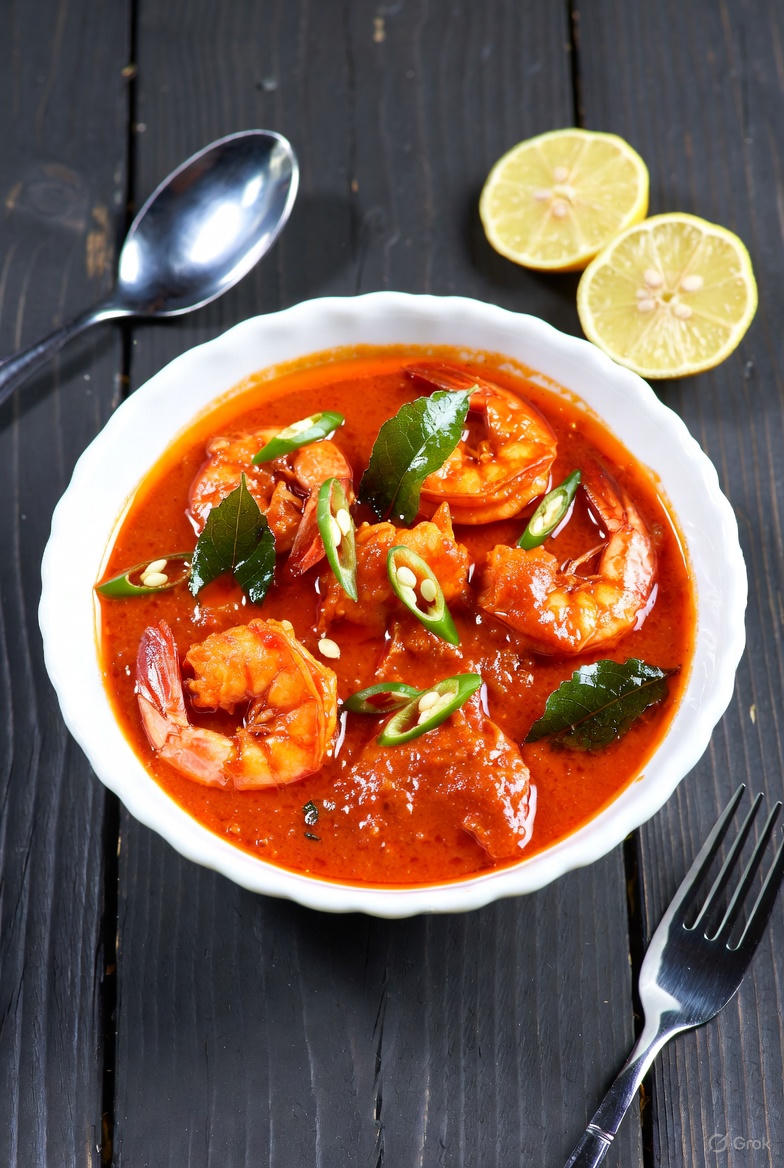
A vibrant bowl of Malabar prawn curry featuring large succulent shrimp in a rich orange-red coconut-based gravy, garnished with fresh cilantro and lemon slices, served in a white bowl on a rustic table with spoon, knife, fork, and warm candlelight in the background.

Recipe Description

This Malabar Prawn Curry is a vibrant, medium-spicy dish featuring succulent shrimp simmered in a rich gravy of coconut milk, tamarind, and a blend of warm spices like mustard seeds, fenugreek, and curry leaves. The result? A tangy-sweet explosion of flavours that’s creamy yet light, with a hint of heat that won’t overwhelm your palate. Ideal for serving over rice or with naan, it’s a quick, one-pot wonder that captures the essence of Kerala’s seafood heritage while being beginner-friendly for American kitchens.

Servings

4 person

Preparation Time:

15 minutes

Cooking Time:

20 minutes

Calories

350

Ingredients

  • 1 lb (450g) large shrimp (prawns), peeled and deveined (fresh or frozen works)
  • 1 cup coconut milk (canned is fine – shake well!)
  • 2 tablespoons tamarind paste (or substitute with lime juice for a twist)
  • 1 large onion, finely chopped
  • 2 tomatoes, chopped
  • 2-3 green chillies, slit (adjust for spice level)
  • 1-inch ginger, grated
  • 4-5 garlic cloves, minced
  • 1 teaspoon mustard seeds
  • 1/2 teaspoon fenugreek seeds
  • 1 teaspoon turmeric powder
  • 2 teaspoons red chilli powder (or paprika for milder heat)
  • 1 teaspoon coriander powder
  • A handful of curry leaves (fresh or dried; available at Indian stores or online)
  • 2 tablespoons coconut oil (or vegetable oil)
  • Salt to taste
  • Fresh cilantro for garnish

Equipment Needed

  • Large skillet or wok
  • Blender or food processor (for paste, optional)
  • Wooden spoon or spatula
  • Measuring cups and spoons
  • Knife and cutting board

Nutrition Information

Per serving (approximate values based on ingredients):

  • Calories: 350
  • Protein: 25g
  • Carbohydrates: 15g
  • Fat: 22g (mostly healthy fats from coconut)
  • Fibre: 3g
  • Sodium: 600mg
  • Key nutrients: High in omega-3s from shrimp, vitamin C from tomatoes, and antioxidants from spices.

Step by Step Instructions

Step-by-Step Instructions

  1. Prep the shrimp: Rinse the shrimp under cold water, pat dry, and season with a pinch of salt and turmeric. Set aside.
  2. Make the spice base: Heat coconut oil in a skillet over medium heat. Add mustard and fenugreek seeds; let them splutter for 30 seconds.
  3. Sauté aromatics: Add chopped onions, ginger, garlic, green chillies, and curry leaves. Cook until onions are golden brown, about 5 minutes.
  4. Add tomatoes and spices: Stir in chopped tomatoes, turmeric, red chilli powder, and coriander powder. Cook until the tomatoes soften, and the oil separates, about 4-5 minutes.
  5. Incorporate tamarind and coconut: Mix in tamarind paste diluted with 1/4 cup water, then pour in coconut milk. Bring to a gentle simmer and season with salt.
  6. Cook the shrimp: Add the shrimp and cook for 5-7 minutes until they turn pink and opaque. Avoid overcooking!
  7. Garnish and serve: Turn off the heat, garnish with cilantro, and let it rest for 2 minutes to meld flavours.

Tips and Variations

  • Spice level: For milder American tastes, reduce chillies or use sweet paprika.
  • Variations: Add veggies like bell peppers or spinach for a nutritious boost. Swap shrimp for chicken or tofu for non-seafood versions.
  • Pro tip: Use fresh coconut milk for authenticity, but canned is a time-saver. Pair with basmati rice or quinoa for a low-carb option.

Allergen Information

  • Contains shellfish (shrimp) – not suitable for those with seafood allergies.
  • Coconut: May trigger tree nut allergies in sensitive individuals.
  • Gluten-free and dairy-free by default.
Other Essentials

Things to Avoid

  • Overcooking the shrimp: They turn rubbery – aim for just pink.
  • Skipping curry leaves: They’re key for that authentic aroma; don’t substitute if possible.
  • Using low-fat coconut milk: It can make the curry watery and less creamy.

Storage Instructions

Store leftovers in an airtight container in the refrigerator for up to 2 days. Reheat gently on the stovetop with a splash of water to restore creaminess. Do not freeze, as the shrimp texture may change.

FAQs

What makes Malabar Prawn Curry different from other Indian curries? It’s uniquely tangy from tamarind and features coconut prominently, unlike cream-based northern curries. The coastal spices give it a fresh, seafood-forward vibe.

Can I use frozen shrimp? Absolutely! Thaw them first, and pat dry to avoid excess water diluting the curry.

Where can I find tamarind paste in the US? Check the international aisle at grocery stores like Walmart or Whole Foods, or order online from Amazon. Lime juice works as a substitute in a pinch.

Is this curry very spicy? It’s medium-spicy, but you can adjust the chilli to suit your taste – start low if you’re new to Indian heat!

How can I make it vegan? Swap shrimp for mushrooms or eggplant, and keep the rest the same for a delicious plant-based version.

Conclusion

Malabar Prawn Curry isn’t just a recipe; it’s an invitation to explore bold, comforting flavours that transport you to India’s sunny shores. With its simple prep and crowd-pleasing taste, it’s bound to become a staple in your kitchen. Whether you’re cooking for family or hosting a dinner party, this dish delivers on health, excitement, and authenticity.

Disclaimer

Important Notice: Read Before Proceeding

The recipes, preparation methods, nutritional details, and related content published on Madhu Savara’s website, social media, and associated platforms are intended solely for general informational and educational purposes. While every effort has been made to ensure accuracy and reliability, we make no guarantees regarding the results, safety, or accuracy of any recipe presented here.

We are not licensed nutritionists, dieticians, or medical professionals. The nutritional values provided are estimates only, calculated using third-party tools, and should not be used for medical diagnosis, dietary treatment, or allergy management. If you have any medical conditions, dietary restrictions, or food allergies, please consult your doctor or certified dietitian before attempting any recipe.

Cooking inherently involves sharp tools, high heat, and the risk of injury or fire. You assume full responsibility for your kitchen practices. Madhu Savara, the website, and all contributors shall not be held liable for any damage, injury, loss, or adverse outcome resulting directly or indirectly from the preparation, consumption, or interpretation of any content herein.

By using this website and attempting any recipe, you agree to hold harmless and indemnify Madhu Savara and her team from any liability, legal claim, or damages arising from the use of this content. You are encouraged to exercise independent judgment and take full responsibility for your health, kitchen safety, and actions.


                                                      Preface

I’m thrilled to introduce you to Malabar Prawn Curry – a gem from India’s southwestern coast that’s about to become your new obsession. If you’re an American tired of the same old shrimp scampi or tacos, this dish brings the heat (literally) with its tangy, creamy coconut base and aromatic spices. It’s like a tropical vacation on your plate, but made super accessible with ingredients you can grab at your local grocery store. Trust me, one bite, and you’ll be hooked.

Table of Contents

  • Significance of Malabar Prawn Curry
  • Recipe Description
  • Servings
  • Cooking Time
  • Preparation Time
  • Calories
  • Ingredients
  • Utensils Required
  • Nutritional Values
  • Step-by-Step Instructions
  • Tips and Variations
  • Allergen Information
  • Things to Avoid
  • Storage Instructions
  • FAQs
  • Conclusion

Significance of Malabar Prawn Curry

Malabar Prawn Curry hails from the Malabar Coast in Kerala, India, a region renowned for its lush coconut groves, spice trade history, and abundant seafood. This dish reflects centuries of cultural fusion – influences from Arab traders, Portuguese explorers, and local traditions – resulting in a curry that’s tangy from tamarind, creamy from coconut, and subtly spiced. It’s not just food; it’s a story of coastal life, where fresh prawns (or shrimp, as we call them in the US) are celebrated in everyday meals and festivals. In America, where we’re embracing diverse cuisines like never before, this curry bridges the gap between exotic and everyday, offering a healthy, gluten-free option that’s perfect for keto or paleo diets.