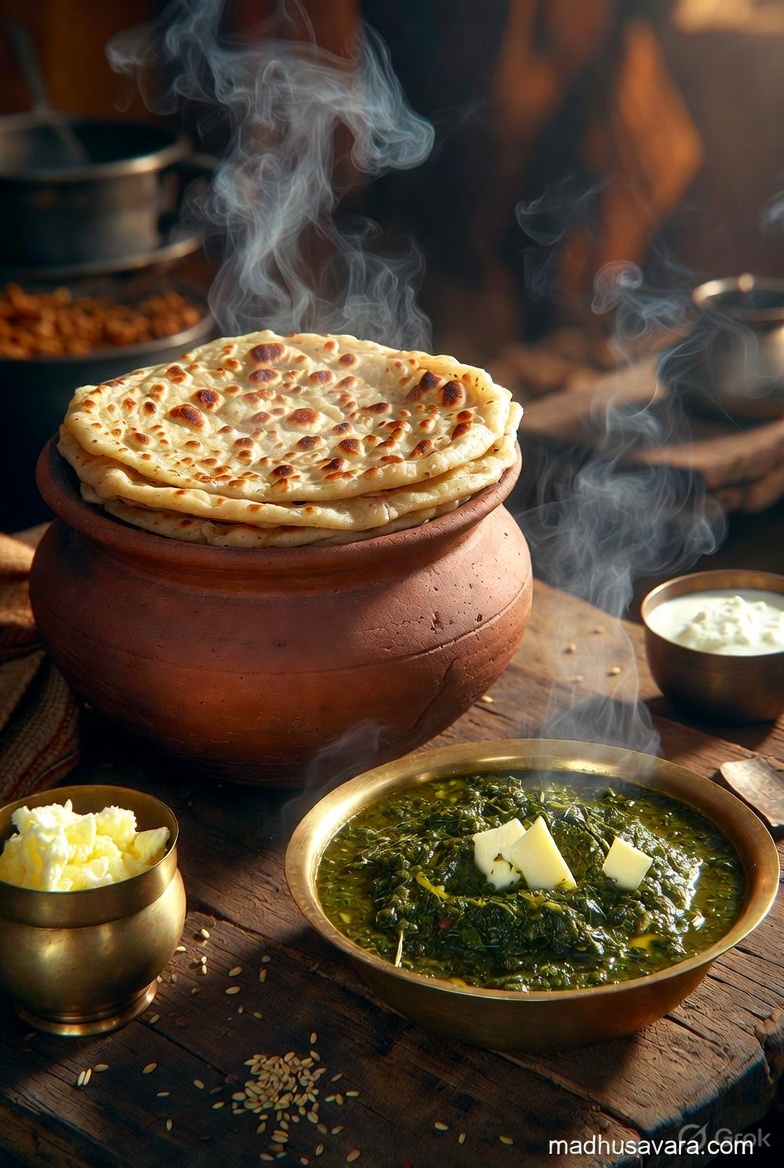
Hot steaming Bathua Parathas served with Bathua Saag, homemade butter and curd in traditional clay and brass utensils on a rustic wooden table, authentic Indian winter village meal.

This authentic bathua saag recipe is a simple Punjabi-style preparation that brings out the natural flavour of bathua leaves. It is wholesome, comforting, and easy to make in modern kitchens while staying true to village traditions.

Servings

4

Preparation Time:

15 minutes

Cooking Time:

20 Minutes

Calories

160

Ingredients

  • 500 grams fresh bathua leaves (Chenopodium album), washed thoroughly
  • 1 large onion, finely chopped
  • 2 tomatoes, chopped (optional)
  • 5-6 garlic cloves, crushed
  • 1-inch ginger, grated
  • 2-3 green chillies
  • 1 tsp cumin seeds
  • ½ tsp turmeric powder
  • 1 tsp coriander powder
  • ½ tsp red chilli powder
  • 2 tbsp mustard oil or ghee
  • Salt to taste
  • Fresh coriander leaves for garnishing

Equipment Needed

  • Pressure cooker or heavy kadai
  • Sharp knife and chopping board
  • Wooden spatula
  • Strainer

Nutrition Information

Bathua’s nutritional value is exceptional. According to nutritional data, 100 grams of fresh bathua leaves approximately contain:

  • Calories: 43 kcal
  • Protein: 4.2 g
  • Dietary Fibre: 4 g
  • Vitamin A: Very High
  • Vitamin C: Excellent source
  • Calcium: Higher than spinach
  • Iron: Rich source (great for anaemia prevention)
  • Vitamins K, B-complex, Magnesium & Potassium: Abundant

Key Health Benefits:

  • Strengthens immunity during winter
  • Supports bone and blood health
  • Aids digestion and prevents constipation
  • Helps in weight management due to high fibre and low calories

Step by Step Instructions

  1. Prepare the Leaves: Wash bathua leaves 3-4 times in clean water. Drain and chop roughly.
  2. Temper the Spices: Heat mustard oil or ghee. Add cumin seeds and let them crackle.
  3. Sauté Aromatics: Add chopped onion, garlic, ginger, and green chillies. Sauté till golden brown.
  4. Add Spices: Stir in turmeric, coriander powder, and red chilli powder. Add tomatoes and cook until soft.
  5. Cook Bathua: Add chopped bathua leaves and salt. Mix well. Sprinkle some water, cover, and pressure cook for 2 whistles (8-10 minutes).
  6. Finish the Saag: Open the lid, mash lightly, and simmer for 3-4 minutes until thick and fragrant. Garnish with fresh coriander.

Your delicious bathua saag is ready to serve!

Tips and Variations

  • Always choose tender, fresh bathua leaves.
  • Mix with spinach or sarson ka saag for a delicious variation.
  • Add paneer cubes for a protein-rich version.
  • For a vegan option, use mustard oil.
  • Serve with a generous dollop of homemade white butter for an authentic taste.

Allergen Information

Bathua leaves are naturally gluten-free and nut-free. However:

  • They contain moderate oxalates — people with kidney stones should consume them in moderation.
  • Wash very thoroughly before cooking.
  • Consult a doctor if pregnant or having specific health conditions.
Other Essentials

Storage Guidelines

Store leftover bathua saag in an airtight container in the refrigerator for up to 2 days. For longer storage, freeze in portions for up to 1 month.

13. Serving Suggestions and Pairings

Best enjoyed hot with makki ki roti, jowar roti, or phulka. Pair with fresh curd, lassi, or sliced onions for a complete winter meal.

Conclusion

Bathua saag is a beautiful example of India’s forgotten yet powerful winter superfoods. This bathua recipe not only nourishes the body with incredible bathua nutritional value but also connects us to our rich culinary heritage.

I highly encourage you to try this traditional bathua saag recipe this winter and experience the taste of real Indian village cooking.

CTA: Did you enjoy this recipe? Share your experience in the comments below. Subscribe to madhusavara.com for more authentic Indian recipes and heritage stories. Follow us on Instagram and Pinterest @madhusavara for beautiful food photography and traditional wisdom.

Written with love by Madhu Savara Owner – madhusavara.com

Disclaimer

Important Notice: Read Before Proceeding

The recipes, preparation methods, nutritional details, and related content published on Madhu Savara’s website, social media, and associated platforms are intended solely for general informational and educational purposes. While every effort has been made to ensure accuracy and reliability, we make no guarantees regarding the results, safety, or accuracy of any recipe presented here.

We are not licensed nutritionists, dieticians, or medical professionals. The nutritional values provided are estimates only, calculated using third-party tools, and should not be used for medical diagnosis, dietary treatment, or allergy management. If you have any medical conditions, dietary restrictions, or food allergies, please consult your doctor or certified dietitian before attempting any recipe.

Cooking inherently involves sharp tools, high heat, and the risk of injury or fire. You assume full responsibility for your kitchen practices. Madhu Savara, the website, and all contributors shall not be held liable for any damage, injury, loss, or adverse outcome resulting directly or indirectly from the preparation, consumption, or interpretation of any content herein.

By using this website and attempting any recipe, you agree to hold harmless and indemnify Madhu Savara and her team from any liability, legal claim, or damages arising from the use of this content. You are encouraged to exercise independent judgment and take full responsibility for your health, kitchen safety, and actions.


Growing up in a small village in North India, winter mornings were incomplete without the sight of fresh bathua leaves. I still remember my grandmother returning from the fields with big bunches of bathua, her hands covered in dew. She would patiently clean the bathua leaves while sharing stories of how this humble green kept our family healthy through the cold season.

The entire house would fill with the earthy aroma of traditional bathua saag cooking on the clay chulha. We would enjoy it with hot makki ki roti and a dollop of white butter. Those simple meals created some of my most cherished childhood memories. Even today, preparing this bathua saag recipe brings me back to those warm, loving moments.

Table of Contents

  1. Origin and History of Bathua (Chenopodium Album)
  2. Importance and Significance of Bathua in Indian Culture
  3. Bathua Nutritional Value and Health Benefits
  4. About This Traditional Bathua Saag Recipe
  5. Ingredients for Bathua Saag
  6. Equipment Required
  7. Step-by-Step Bathua Saag Recipe
  8. Preparation Time, Cooking Time & Calories
  9. Tips and Variations for Perfect Bathua Recipe
  10. Allergen Information and Things to Avoid
  11. Storage Guidelines
  12. Serving Suggestions and Pairings
  13. Conclusion

Origin and History of Bathua (Chenopodium Album)

Bathua, scientifically known as Chenopodium album, is an ancient leafy green that originated in Europe and Western Asia. It has been growing naturally in India for centuries and is widely found across the northern plains during winter. Often growing alongside wheat and mustard crops, bathua leaves are one of the most abundant Indian winter greens.

In rural households, it has been valued as a nutritious wild edible for generations.

Importance and Significance of Bathua in Indian Culture

Bathua saag is more than just food — it represents sustainable living and India’s rich food heritage. In Ayurveda and traditional Indian medicine, bathua leaves are respected for their medicinal properties. They are considered excellent for blood purification, digestion, and boosting immunity during winter.

By reviving traditional bathua saag, we support local farmers, reduce food waste, and reconnect with our seasonal eating wisdom.

Key Health Benefits:

  • Strengthens immunity during winter
  • Supports bone and blood health
  • Aids digestion and prevents constipation
  • Helps in weight management due to high fibre and low calories