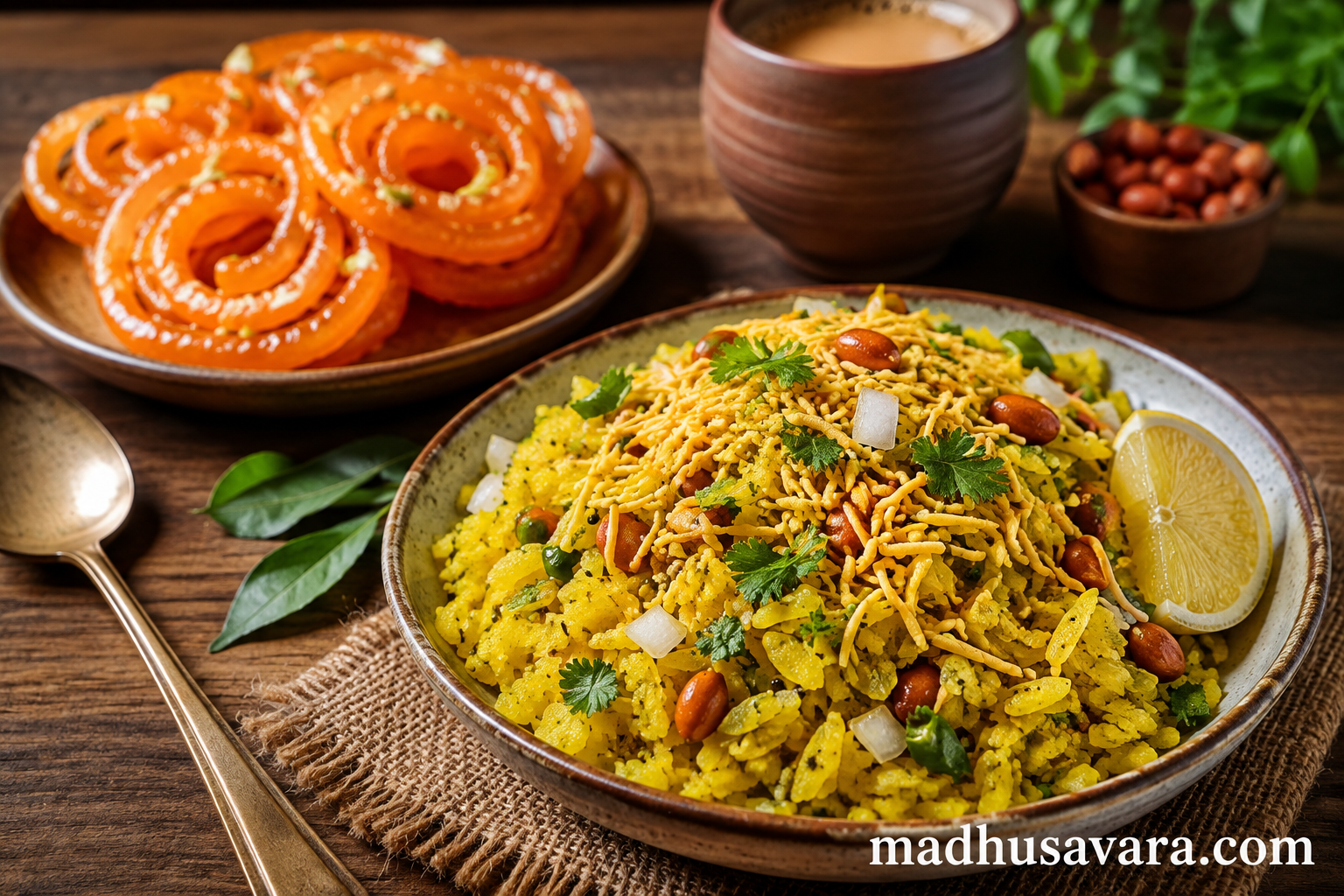
Some recipes don’t just feed the body—they stay with you, like quiet memories of home. Indori Poha is one of them.
This simple dish, made with flattened rice, originates from Indore, a city in Madhya Pradesh renowned for its warmth, vibrant street food, and unhurried mornings. Over time, Poha became part of everyday life there—something people turn to not just for breakfast, but for comfort. What makes it special is how gentle it feels—light, soft, and never too heavy—yet full of flavour from a slow tempering of mustard seeds, curry leaves, and green chillies. And just when you think it’s done, a final touch of sev gives it that cheerful crunch on top.
I’ve made Indori Poha in my kitchen for years—sometimes for my children before school, sometimes for guests on quiet Sundays, and often just for myself when the day needs a calm beginning. Among all the recipes I hold close, this one has been loved the most.
Today, I’m sharing it here, with the hope that your home, too, finds the same peace and joy in it as mine always has.
Servings
Preparation Time:
Cooking Time:
Calories
Ingredients
-
Poha (flattened rice) – 2 cups (medium-thick variety)
-
Onion – 1 medium, finely chopped
-
Green chillies – 1 or 2, chopped (adjust to taste)
-
Curry leaves – 8–10
-
Mustard seeds – 1 tsp
-
Turmeric powder – ½ tsp
-
Sugar – ½ tsp (optional, but adds a nice balance)
-
Salt – to taste
-
Lemon juice – 1 tbsp (or as preferred)
-
Oil – 2 tbsp
-
Fresh coriander leaves – for garnish
-
Sev – for topping (Indori or nylon sev works best)
-
Roasted peanuts – a small handful (optional, but traditional)
Equipment Needed
- You don’t need any fancy tools to make Poha—just a few basic things that most home kitchens already have:
-
Colander or sieve – To rinse and drain the poha without making it mushy
-
Heavy-bottomed kadhai or pan – For tempering and mixing everything evenly
-
Spatula or flat spoon – To stir the poha gently without breaking it
-
Knife and chopping board – For chopping onions, chillies, and coriander
-
Small bowl – To squeeze and hold lemon juice
-
Measuring cups/spoons (optional) – For beginners who want exact quantities
A Tip from Madhu:
What matters most is not the kind of equipment, but the care with which you cook. Keep the flame low, stir gently, and taste as you go -
Nutrition Information
(Per Serving – Approx. 170g)
| Nutrient | Approximate Value |
|---|---|
| Calories | 230–250 kcal |
| Carbohydrates | 35–40 g |
| Protein | 4–5 g |
| Fat | 8–10 g |
| Fiber | 2–3 g |
| Sugar | 1–2 g |
| Sodium | Depends on the salt used |
| Iron | Moderate |
| Vitamin C | From lemon, moderate |
Health Notes:
-
Light and Easy to Digest: Poha is naturally light, making it gentle on the stomach, ideal for breakfast or a light evening meal.
-
Low in Sugar: Contains no added sugar, unless you choose to add a pinch for balance.
-
Good Source of Carbs: Provides quick energy, especially useful to start the day.
-
Customizable: You can boost the protein and fibre by adding vegetables, peanuts, or sprouts.
Disclaimer: Nutritional values are approximate and may vary depending on the ingredients used and portion size. For specific dietary needs, consult a certified nutritionist
Step by Step Instructions
-
-
Wash the Poha:
Take the poha in a sieve or colander. Rinse it gently under running water. Use your fingers to move it lightly—you want to clean it, not mash it. Let it sit for 5–10 minutes to soften. It should become fluffy, not soggy. Sprinkle a little salt and turmeric over it and mix gently with your hands. -
Prepare the Tempering:
Heat oil in a heavy-bottomed pan or kadhai. Add mustard seeds and let them crackle. Then add curry leaves and green chillies. Stir for a few seconds, then add chopped onions. Sauté the onions till they turn soft and translucent—no need to brown them. -
Add Peanuts (Optional):
If you’re using peanuts, add them now and roast them lightly in the same pan until they become crunchy. -
Mix in the Poha:
Add the soaked poha to the pan. Mix gently with a light hand, so the poha stays fluffy. Add sugar if using. Cook on low heat for 2–3 minutes, covered. You don’t want to overcook—it just needs to warm through and soak up the flavours. -
Finish with Lemon and Coriander:
Turn off the heat. Squeeze fresh lemon juice over it and mix. Garnish with chopped coriander leaves. -
Serve with Sev:
Spoon the poha onto a plate and top generously with sev just before serving. Serve hot, with a cup of chai if you like.
A Note from Madhu:
Every home adds its touch to Poha. Some add boiled potatoes, some skip peanuts, and others add grated coconut. In my kitchen, I’ve kept it simple, just as I’ve always made it for my family. -
Tips and Variations
-
Tips from Madhu’s Kitchen:
-
Rinse gently, don’t soak: Poha should be soft but not mushy. Just rinse under running water and let it rest. Too much water will make it soggy.
-
Use medium-thick poha: Thin poha breaks easily, and thick poha may stay hard unless soaked longer. Medium-thick poha gives the perfect texture.
-
Taste as you go: Every brand of poha behaves differently. Always taste it once before adding to the pan—you’ll know if it needs more softening.
-
Don’t skip the lemon: A gentle squeeze of fresh lemon at the end brings all the flavours together.
-
Add sev only at the end: If you add sev too early, it will turn soggy. Always sprinkle it just before serving.
Simple Variations to Try:
-
With vegetables: You can add small cubes of boiled potatoes, green peas, or even grated carrots for a wholesome twist.
-
Without onions or garlic: For a satvik version, skip onions and add a pinch of asafoetida (hing) in the tempering.
-
Jain variation: Skip onions, garlic, and root vegetables entirely. Add crushed roasted peanuts for texture and protein.
-
With coconut: In some regions, a little fresh grated coconut is added on top along with coriander—it adds a gentle sweetness.
-
Kanda Poha style: Use extra onions and fewer spices. Let the sweetness of the onions shine through.
A Final Thought:
Poha is forgiving, comforting, and always welcoming. Whether you dress it up with vegetables or keep it plain and simple, the joy lies in making it your own. Don’t be afraid to try it your way. -
Allergen Information
-
This recipe may contain the following allergens:
-
Peanuts – If used, peanuts are a common allergen. Please omit them if you or your guests are allergic.
-
Mustard seeds – These are part of the tempering and may cause reactions in those with mustard allergies.
-
Sev (topping) – Often made from gram flour (besan) and sometimes contains additives; those allergic to chickpeas or packaged snacks should check the label or skip it.
Note: If you’re serving this to guests or children, it’s always good to ask in advance about any known allergies and adjust the ingredients accordingly.
-
🍽️ Serving Suggestions
-
Traditional Toppings: Enhance your Indori Poha with classic toppings like Jeeravan masala, finely chopped onions, fresh coriander, sev, and a squeeze of lemon juice. These additions elevate the flavour profile and add delightful textures.
-
Authentic Pairing: For an authentic Indore breakfast experience, serve Indori Poha alongside hot, crispy jalebis. This sweet and savoury combination is a beloved staple in Indore.
-
Beverage Pairing: Complement your meal with a cup of masala chai or filter coffee to complete the traditional experience. Moonfires.com
🙏 Tribute to Culinary Traditions
This recipe is inspired by the rich culinary heritage of Indore and the broader Malwa region. The unique preparation methods and flavour profiles have been cherished and passed down through generations, reflecting the region’s vibrant food culture.
📣 Call to Action
Craving a taste of Indore? Prepare this delightful Indori Poha at home and bring the flavours of the streets of Indore to your kitchen. Whether for breakfast or a light snack, it’s sure to please your palate
Important Notice: Read Before Proceeding
The recipes, preparation methods, nutritional details, and related content published on Madhu Savara’s website, social media, and associated platforms are intended solely for general informational and educational purposes. While every effort has been made to ensure accuracy and reliability, we make no guarantees regarding the results, safety, or accuracy of any recipe presented here.
We are not licensed nutritionists, dieticians, or medical professionals. The nutritional values provided are estimates only, calculated using third-party tools, and should not be used for medical diagnosis, dietary treatment, or allergy management. If you have any medical conditions, dietary restrictions, or food allergies, please consult your doctor or certified dietitian before attempting any recipe.
Cooking inherently involves sharp tools, high heat, and the risk of injury or fire. You assume full responsibility for your kitchen practices. Madhu Savara, the website, and all contributors shall not be held liable for any damage, injury, loss, or adverse outcome resulting directly or indirectly from the preparation, consumption, or interpretation of any content herein.
By using this website and attempting any recipe, you agree to hold harmless and indemnify Madhu Savara and her team from any liability, legal claim, or damages arising from the use of this content. You are encouraged to exercise independent judgment and take full responsibility for your health, kitchen safety, and actions.

