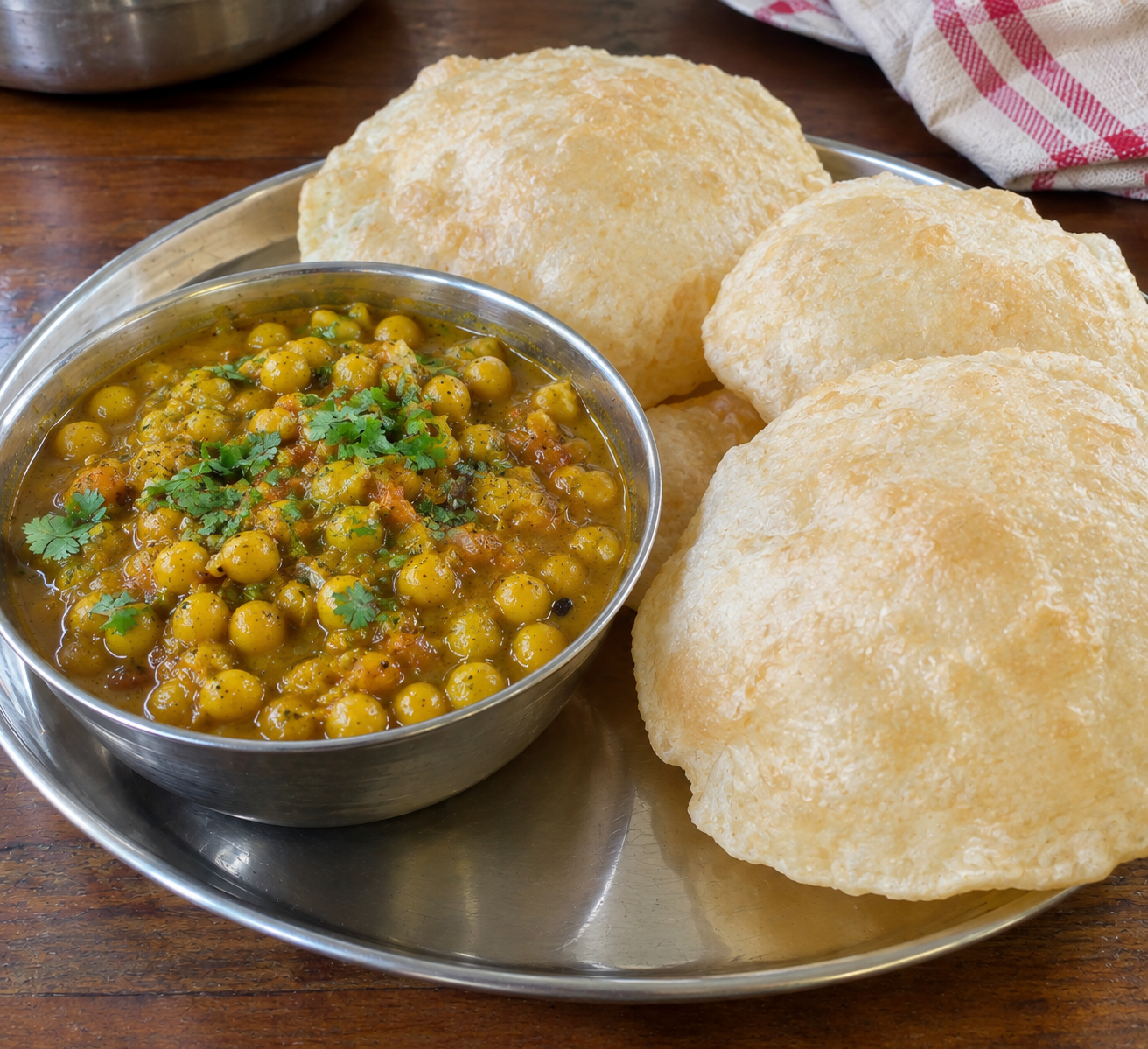
Kolkata Bengali Ghugni with Soft Puffed Luchi – Authentic Motorer Ghugni Recipe
Kolkata Bengali Motorer Ghugni with soft puffed luchi, authentic homemade Bengali ghugni recipe

Author’s Note

At Madhusavara.com, I share recipes with a focus on the food, the ingredients and the cooking itself. I do not believe a recipe needs an invented story or exaggerated claims to make it interesting.

This Kolkata Bengali Ghugni with soft, puffed Luchi is a practical recipe for making both at home. The Ghugni is made with dried whole peas, potatoes, mustard oil and Bengali spices, while the Luchi is prepared from maida and fried until soft and puffed.

I am Madhu Savara, author and owner of Madhusavara.com, and I wrote this recipe to make the preparation clear enough to follow without unnecessary complication.

Description of the Recipe

Kolkata Bengali Ghugni, also called Motorer Ghugni, is a preparation of dried whole peas cooked with potatoes and a spiced masala. The cooked peas remain the main ingredient, with the potatoes adding body to the curry.

Mustard oil, ginger, cumin, coriander, green chillies and other whole spices give the Ghugni its Bengali character. A small quantity of freshly prepared bhaja masala is added towards the end for its roasted spice aroma.

Luchi is a soft, pale fried bread made from maida. It is rolled into small discs and fried until it puffs. Unlike an atta poori, Luchi is traditionally kept light in colour.

The combination is best served hot, with the freshly fried Luchi used to scoop up the warm Ghugni.

Table of Contents

  1. Description of the Recipe
  2. Ingredients for Bengali Ghugni
  3. Ingredients for Soft Puffed Luchi
  4. Nutritional Value
  5. Equipment Needed
  6. Step-by-Step Recipe
  7. Allergen Information
  8. Madhu Savara’s Tips
  9. Things to Avoid
  10. Frequently Asked Questions
  11. Call to Action
  12. Final Thoughts
  13. Author’s Bio

Servings

4 servings

Preparation Time:

25 Minutes plus 8 hours Soaking time

Cooking Time:

45 Minutes

Calories

620

Ingredients

Ingredients for Bengali Ghugni

For the Ghugni

  • 250 g dried whole yellow or white peas
  • 2 medium potatoes
  • 1 medium onion, thinly sliced
  • 1 medium tomato, finely chopped
  • 1½ tablespoons ginger paste
  • ½ tablespoon garlic paste, optional
  • 3 green chillies, slit
  • 2 tablespoons mustard oil
  • ½ teaspoon cumin seeds
  • 2 bay leaves
  • 1 small cinnamon stick
  • 2 green cardamoms
  • 2 cloves
  • 1 dried red chilli, optional
  • ¾ teaspoon turmeric powder
  • 1 teaspoon cumin powder
  • 1 teaspoon coriander powder
  • ½ teaspoon Kashmiri red chilli powder
  • ½ teaspoon sugar
  • Salt to taste
  • 1½ teaspoons bhaja masala
  • 1 tablespoon lemon juice or 1–2 teaspoons tamarind pulp
  • 2 tablespoons chopped coriander leaves

For Bhaja Masala

  • 1 tablespoon cumin seeds
  • 1 tablespoon coriander seeds
  • 1 dried red chilli
  • ½ teaspoon fennel seeds, optional

Ingredients for Soft Puffed Luchi

  • 250 g maida
  • 2 tablespoons ghee or neutral oil
  • ½ teaspoon salt
  • Approximately 150 ml warm water, or as required
  • Oil for deep-frying

Equipment Needed

Needed

  • Large bowl for soaking the peas
  • Pressure cooker or heavy-bottomed saucepan
  • Kadai
  • Cooking pan
  • Small dry-roasting pan
  • Mixing bowl
  • Rolling board
  • Rolling pin
  • Slotted spoon

Nutrition Information

Nutritional Value

The following values are approximate and will vary with the quantity of oil used and absorbed during cooking and frying.

NutrientApproximate amount per serving
Calories620 kcal
Protein17 g
Carbohydrates86 g
Dietary Fibre13 g
Fat23 g
Sugar6 g

Step by Step Instructions

Step-by-Step Recipe

Prepare the Bhaja Masala

Dry-roast the cumin seeds, coriander seeds and dried red chilli over low heat until fragrant. Add the optional fennel seeds if using. Cool completely and grind to a fine powder. Keep aside.

Prepare the Ghugni

1. Soak the peas
Wash the dried peas and soak them in plenty of water for 8 hours. Drain and rinse.

2. Cook the peas
Cook the soaked peas in fresh water until tender but still holding their shape. Reserve some of the cooking liquid.

3. Prepare the base
Heat mustard oil in a kadai. Add cumin seeds, bay leaves, cinnamon, cardamom, cloves and dried red chilli. Add the onion and cook until lightly golden.

4. Cook the masala
Add the potatoes and cook briefly. Add tomato, ginger paste, optional garlic and green chillies. Cook until softened. Add turmeric, cumin, coriander and Kashmiri chilli powder with a splash of water and cook the masala properly.

5. Add the peas
Add the cooked peas, salt and sugar. Pour in enough reserved cooking liquid to obtain a medium-thick curry. Cover and simmer for 10–15 minutes.

6. Finish
Stir in the bhaja masala and simmer for 2–3 minutes. Add lemon juice or tamarind pulp according to taste. Finish with chopped coriander.

Prepare the Luchi

1. Make the dough
Mix maida and salt. Rub in the ghee or oil. Gradually add warm water and knead into a soft, smooth dough.

2. Rest and divide
Cover and rest the dough for 30–45 minutes. Divide it into 12 equal portions and shape each into a smooth ball.

3. Roll
Lightly grease the rolling surface and roll each ball into an even 8–10 cm disc.

4. Fry
Heat oil in a deep kadai over medium-high heat. Slide in a Luchi and gently press the surface with a slotted spoon as it rises. Turn once, fry briefly and remove.

5. Serve
Serve the hot Luchi immediately with warm Ghugni.

Tips and Variations

Madhu Savara’s Tips

Choose the peas carefully

Use good-quality dried whole peas. Very old peas can take considerably longer to soften and may cook unevenly.

Keep some cooking liquid.

The water in which the peas are cooked is useful for adjusting the final consistency of the Ghugni without diluting its flavour unnecessarily.

Prepare only a small quantity of bhaja masala.

Freshly roasted spices are more fragrant. There is no need to prepare a large quantity unless you intend to use it in another dish.

Keep the Luchi dough soft

A stiff dough makes rolling difficult and does not give the same soft texture. Add water gradually rather than pouring it in at once.

Fry the Luchi in batches.

Frying too many Luchis together lowers the oil temperature and makes it harder for them to puff properly.

Allergen Information

Allergen Information

Luchi contains wheat and gluten because it is made with maida.

Luchi prepared with ghee contains a dairy ingredient. Using neutral oil instead of ghee avoids that ingredient.

The Ghugni is vegetarian when prepared with the ingredients listed above.

If cooking for someone with a known allergy, check packaged spice labels for additional ingredients or traces.

Other Essentials

Things to Avoid

  • Do not burn the whole spices or powdered masala.
  • Do not cook the peas until they completely lose their shape.
  • Do not add excessive water to the Ghugni at once.
  • Do not use a large quantity of dry flour while rolling Luchi.
  • Do not roll some Luchis much thicker than others.
  • Do not overcrowd the kadai while frying.
  • Do not fry Luchi until dark brown; it should remain pale and soft.

Frequently Asked Questions

Is Motorer Ghugni the same as Matar Ghugni?

The names can vary by region and household. In Bengali cooking, motorer ghugni commonly refers to Ghugni made with dried whole peas, while matar is also used more broadly for peas.

Can Ghugni be made without onion and garlic?

Yes. For a no-onion, no-garlic version, omit both ingredients. Ginger, green chilli and the spices can still be used to build the flavour.

Why does the Ghugni become thicker after cooking?

The cooked peas continue to absorb liquid as the Ghugni rests. This is normal. A little hot water can be added while reheating if the curry becomes too thick.

Can Luchi dough be prepared in advance?

Yes. The dough can be prepared ahead and kept covered for a short period before rolling. Keep it protected from drying out.

Why does Luchi sometimes puff on one side only?

Uneven rolling is one possible reason. If one part of the disc is noticeably thicker than another, steam does not spread evenly during frying.

Can leftover Ghugni be frozen?

Ghugni can be frozen in an airtight container, although its texture may change slightly after thawing and reheating. For the best result, refrigerate it when it is going to be eaten within a short period.

Call to Action

If you enjoy Indian recipes that focus on ingredients, cooking technique and regional flavours, explore more recipes on Madhusavara.com.

You will find recipes from different parts of India along with practical kitchen content, all published under the name of Madhu Savara, author and owner of Madhusavara.com.

Save this Bengali Ghugni with Luchi recipe for a breakfast, family meal or weekend cooking project, and explore more regional recipes from Madhusavara.com.

Final Thoughts

Kolkata Bengali Ghugni and soft Luchi make a particularly satisfying combination because the tender peas and spiced gravy pair naturally with freshly fried bread.

The recipe does not need complicated techniques. Properly soaking and cooking the peas, preparing the masala carefully and giving the Luchi dough enough attention are the main stages.

Serve the Ghugni warm and fry the Luchi just before eating. That is when the contrast between the soft curry and freshly puffed bread is at its best.

Author’s Bio

Madhu Savara is the author and owner of Madhusavara.com, a food and kitchen-focused website featuring Indian recipes, regional preparations and practical kitchen content.

Through Madhusavara.com, Madhu Savara shares recipes with clear ingredients, practical cooking instructions and an emphasis on traditional flavours that readers can prepare in their own kitchens.

Disclaimer

Important Notice: Read Before Proceeding

The recipes, preparation methods, nutritional details, and related content published on Madhu Savara’s website, social media, and associated platforms are intended solely for general informational and educational purposes. While every effort has been made to ensure accuracy and reliability, we make no guarantees regarding the results, safety, or accuracy of any recipe presented here.

We are not licensed nutritionists, dieticians, or medical professionals. The nutritional values provided are estimates only, calculated using third-party tools, and should not be used for medical diagnosis, dietary treatment, or allergy management. If you have any medical conditions, dietary restrictions, or food allergies, please consult your doctor or certified dietitian before attempting any recipe.

Cooking inherently involves sharp tools, high heat, and the risk of injury or fire. You assume full responsibility for your kitchen practices. Madhu Savara, the website, and all contributors shall not be held liable for any damage, injury, loss, or adverse outcome resulting directly or indirectly from the preparation, consumption, or interpretation of any content herein.

By using this website and attempting any recipe, you agree to hold harmless and indemnify Madhu Savara and her team from any liability, legal claim, or damages arising from the use of this content. You are encouraged to exercise independent judgment and take full responsibility for your health, kitchen safety, and actions.


Kolkata Bengali Ghugni with Soft Puffed Luchi – Authentic Motorer Ghugni Recipe

Kolkata Bengali Ghugni, also called Motorer Ghugni, is a preparation of dried whole peas cooked with potatoes and a spiced masala. The cooked peas remain the main ingredient, with the potatoes adding body to the curry.
Mustard oil, ginger, cumin, coriander, green chillies and other whole spices give the Ghugni its Bengali character. A small quantity of freshly prepared bhaja masala is added towards the end for its roasted spice aroma.
Luchi is a soft, pale fried bread made from maida. It is rolled into small discs and fried until it puffs. Unlike an atta poori, Luchi is traditionally kept light in colour.
Course Breakfast
Cuisine Bengali
Keyword authentic Bengali Ghugni, Bengali Ghugni recipe, Bengali Ghugni with Luchi, Ghugni with Luchi, Kolkata Bengali Ghugni, Kolkata style Ghugni, Motorer Ghugni, soft puffed Luchi
Prep Time 25 minutes
Cook Time 45 minutes
Soaking Time 8 hours
Total Time 9 hours 10 minutes
Servings 4 Servings
Calories 620kcal
Author Madhu Savara

Equipment

  • Large bowl for soaking the peasPressure cooker or heavy-bottomed saucepanKadaiCooking panSmall dry-roasting panMixing bowlRolling boardRolling pinSlotted spoon

Ingredients

  • For the Ghugni
  • 250 g dried whole yellow or white peas
  • 2 medium potatoes
  • 1 medium onion thinly sliced
  • 1 medium tomato finely chopped
  • tablespoons ginger paste
  • ½ tablespoon garlic paste optional
  • 3 green chillies slit
  • 2 tablespoons mustard oil
  • ½ teaspoon cumin seeds
  • 2 bay leaves
  • 1 small cinnamon stick
  • 2 green cardamoms
  • 2 cloves
  • 1 dried red chilli optional
  • ¾ teaspoon turmeric powder
  • 1 teaspoon cumin powder
  • 1 teaspoon coriander powder
  • ½ teaspoon Kashmiri red chilli powder
  • ½ teaspoon sugar
  • Salt to taste
  • teaspoons bhaja masala
  • 1 tablespoon lemon juice or 1–2 teaspoons tamarind pulp
  • 2 tablespoons chopped coriander leaves
  • For Bhaja Masala
  • 1 tablespoon cumin seeds
  • 1 tablespoon coriander seeds
  • 1 dried red chilli
  • ½ teaspoon fennel seeds optional
  • Ingredients for Soft Puffed Luchi
  • 250 g maida
  • 2 tablespoons ghee or neutral oil
  • ½ teaspoon salt
  • Approximately 150 ml warm water or as required
  • Oil for deep-frying

Instructions

  • Step-by-Step Recipe
  • Prepare the Bhaja Masala
  • Dry-roast the cumin seeds, coriander seeds and dried red chilli over low heat until fragrant. Add the optional fennel seeds if using. Cool completely and grind to a fine powder. Keep aside.
  • Prepare the Ghugni
  • Soak the peas
  • Wash the dried peas and soak them in plenty of water for 8 hours. Drain and rinse.
  • Cook the peas
  • Cook the soaked peas in fresh water until tender but still holding their shape. Reserve some of the cooking liquid.
  • Prepare the base
  • Heat mustard oil in a kadai. Add cumin seeds, bay leaves, cinnamon, cardamom, cloves and dried red chilli. Add the onion and cook until lightly golden.
  • Cook the masala
  • Add the potatoes and cook briefly. Add tomato, ginger paste, optional garlic and green chillies. Cook until softened. Add turmeric, cumin, coriander and Kashmiri chilli powder with a splash of water and cook the masala properly.
  • Add the peas
  • Add the cooked peas, salt and sugar. Pour in enough reserved cooking liquid to obtain a medium-thick curry. Cover and simmer for 10–15 minutes.
  • Finish
  • Stir in the bhaja masala and simmer for 2–3 minutes. Add lemon juice or tamarind pulp according to taste. Finish with chopped coriander.
  • Prepare the Luchi
  • Make the dough
  • Mix maida and salt. Rub in the ghee or oil. Gradually add warm water and knead into a soft, smooth dough.
  • Rest and divide
  • Cover and rest the dough for 30–45 minutes. Divide it into 12 equal portions and shape each into a smooth ball.
  • Roll
  • Lightly grease the rolling surface and roll each ball into an even 8–10 cm disc.
  • Fry
  • Heat oil in a deep kadai over medium-high heat. Slide in a Luchi and gently press the surface with a slotted spoon as it rises. Turn once, fry briefly and remove.
  • Serve
  • Serve the hot Luchi immediately with warm Ghugni

Notes

Madhu Savara’s Tips

Choose the peas carefully

Use good-quality dried whole peas. Very old peas can take considerably longer to soften and may cook unevenly.

Keep some cooking liquid.

The water in which the peas are cooked is useful for adjusting the final consistency of the Ghugni without diluting its flavour unnecessarily.

Prepare only a small quantity of bhaja masala.

Freshly roasted spices are more fragrant. There is no need to prepare a large quantity unless you intend to use it in another dish.

Keep the Luchi dough soft

A stiff dough makes rolling difficult and does not give the same soft texture. Add water gradually rather than pouring it in at once.

Fry the Luchi in batches.

Frying too many Luchis together lowers the oil temperature and makes it harder for them to puff properly.

0 Comments

Submit a Comment

Your email address will not be published. Required fields are marked *

Recipe Rating