
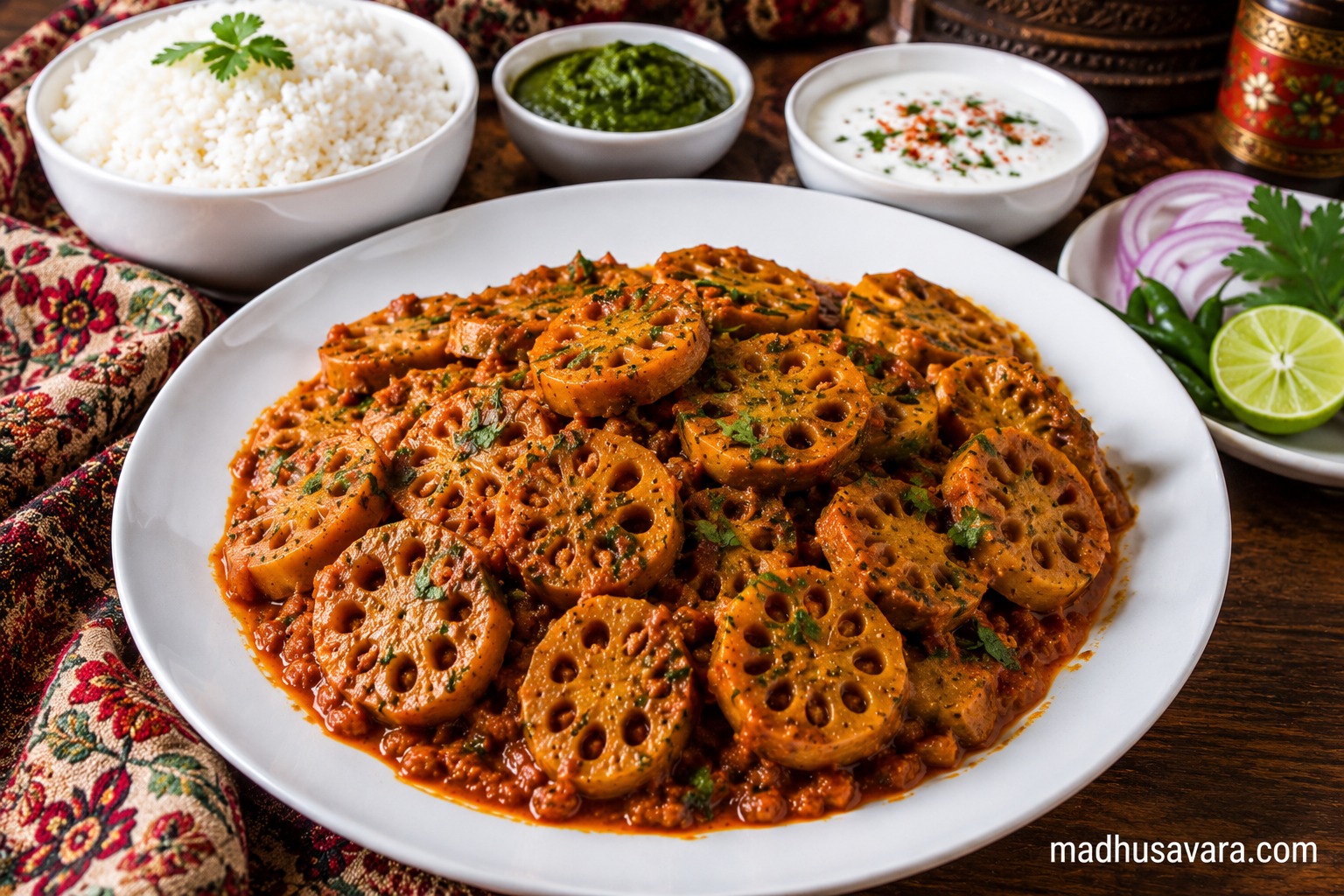
Kashmiri Nadru Recipe (Authentic Lotus Stem Curry) – Madhu Savara's Traditional Kitchen
Kashmiri Nadru Recipe – Authentic Lotus Stem Curry
The Kashmiri Nadru Recipe is a traditional Authentic Lotus Stem Curry from the Kashmir Valley. Made with fresh Nadru (lotus stem), curd, fennel powder, dry ginger powder, and other traditional Kashmiri spices, this curry is known for its mild flavour and unique crunchy texture. Unlike many Indian curries, the spices in this Kashmiri Nadru Recipe do not overpower the main ingredient. Instead, they bring out the natural taste of the lotus stem, making every bite flavourful and satisfying.Servings 4 People
Calories 190kcal
Equipment
- Iron kadai or heavy-bottom pan – Ensures even cooking and helps the spices develop their full flavour.Slotted spoon – Useful for lifting the cooked lotus stem from the water without excess liquid.Mixing bowls – For washing the Nadru and keeping the spices ready before cooking.Kitchen knife – To peel (if required) and slice the lotus stem into even rounds.Chopping board – Provides a safe and stable surface for cutting the Nadru.Flat ladle (karchi) – For sautéing the spices and gently stirring the curry without breaking the lotus stem slices.
Ingredients
- 250 grams Nadru Lotus Stem, washed thoroughly, peeled if required, and sliced into ¼-inch thick rounds
- 2 tablespoons mustard oil for authentic Kashmiri flavour
- ½ teaspoon cumin seeds jeera
- ¼ teaspoon asafoetida hing
- 1 teaspoon turmeric powder haldi
- 1½ teaspoons Kashmiri red chilli powder for colour and mild heat
- 1 teaspoon fennel powder saunf powder, freshly ground if possible
- ½ teaspoon dry ginger powder saunth
- Salt to taste
- 2 cups water or as required to cook the lotus stem
- ½ teaspoon garam masala optional, for a slightly warmer flavour at the end
Instructions
- Step 1: Clean and Prepare the Nadru
- Wash the Nadru (lotus stem) thoroughly under running water to remove all traces of mud. Peel the outer skin lightly if it is tough, then slice the lotus stem into ¼-inch thick rounds. Soak the slices in lightly salted water for 10 minutes to prevent discolouration and remove any remaining impurities. Drain and keep aside.
- Step 2: Parboil the Lotus Stem
- Bring 2 cups of water to a boil in a heavy-bottom pan. Add a pinch of turmeric and the sliced Nadru. Cook for 10–12 minutes, or until the lotus stem is just tender but still retains a slight crunch. Do not overcook. Drain the water and keep the parboiled Nadru aside.
- Step 3: Prepare the Masala Base
- Heat 2 tablespoons mustard oil in an iron kadai or heavy-bottom pan until it reaches the smoking point. Reduce the heat and allow the oil to cool slightly.
- Add the cumin seeds and let them crackle. Stir in the asafoetida (hing) for a few seconds. Add the Kashmiri red chilli powder, fennel powder, dry ginger powder, and turmeric powder. Sprinkle 1–2 tablespoons of water immediately and stir continuously to prevent the spices from burning. Cook for about 1 minute until the masala becomes aromatic.
- Step 4: Cook the Kashmiri Nadru Curry
- Add the parboiled Nadru to the prepared masala and gently mix so that every slice is evenly coated with the spices.
- Pour in 1½ to 2 cups of warm water, add salt to taste, and bring the curry to a gentle boil. Reduce the heat and simmer uncovered for 15–20 minutes, allowing the lotus stem to absorb the flavours and the gravy to thicken naturally.
- If using garam masala, sprinkle it over the curry during the last minute of cooking and stir gently.
- Step 5: Rest and Serve
- Switch off the heat and let the Kashmiri Nadru Recipe rest for 10 minutes before serving. This resting time allows the flavours to blend beautifully and gives the Authentic Lotus Stem Curry its traditional taste.
- Serve hot with steamed basmati rice, Kashmiri pulao, or phulkas for a wholesome Kashmiri meal.
Notes
Variations and Tips
- Try the yoghurt version: If you enjoy a slightly tangy flavour, add 2–3 tablespoons of whisked curd (yoghurt) after sautéing the spices. Cook on a low flame while stirring continuously to prevent the curd from curdling.
- Cook in an iron kadai: Preparing this Kashmiri Nadru Recipe in an iron kadai gives the gravy a deeper colour and enhances its traditional flavour.
- Don’t overcook the Nadru: Lotus stem should remain slightly crisp. Overcooking will make it soft and reduce its signature texture.
- Use fresh fennel and dry ginger powder: These two spices are the heart of an Authentic Lotus Stem Curry. Freshly ground spices provide the best flavour and aroma.
- Adjust the gravy: Some families prefer a thin, soupy curry, while others like it slightly thick. Add or reduce water according to your preference.
- Garnish is optional: Traditionally, the Kashmiri Nadru Recipe is served without any garnish. However, if serving with chapati or paratha, you may sprinkle a little chopped fresh coriander just before serving.
- Rest before serving: Let the curry rest for 10 minutes after cooking. This allows the lotus stem to absorb the spices, making the flavours even better.
