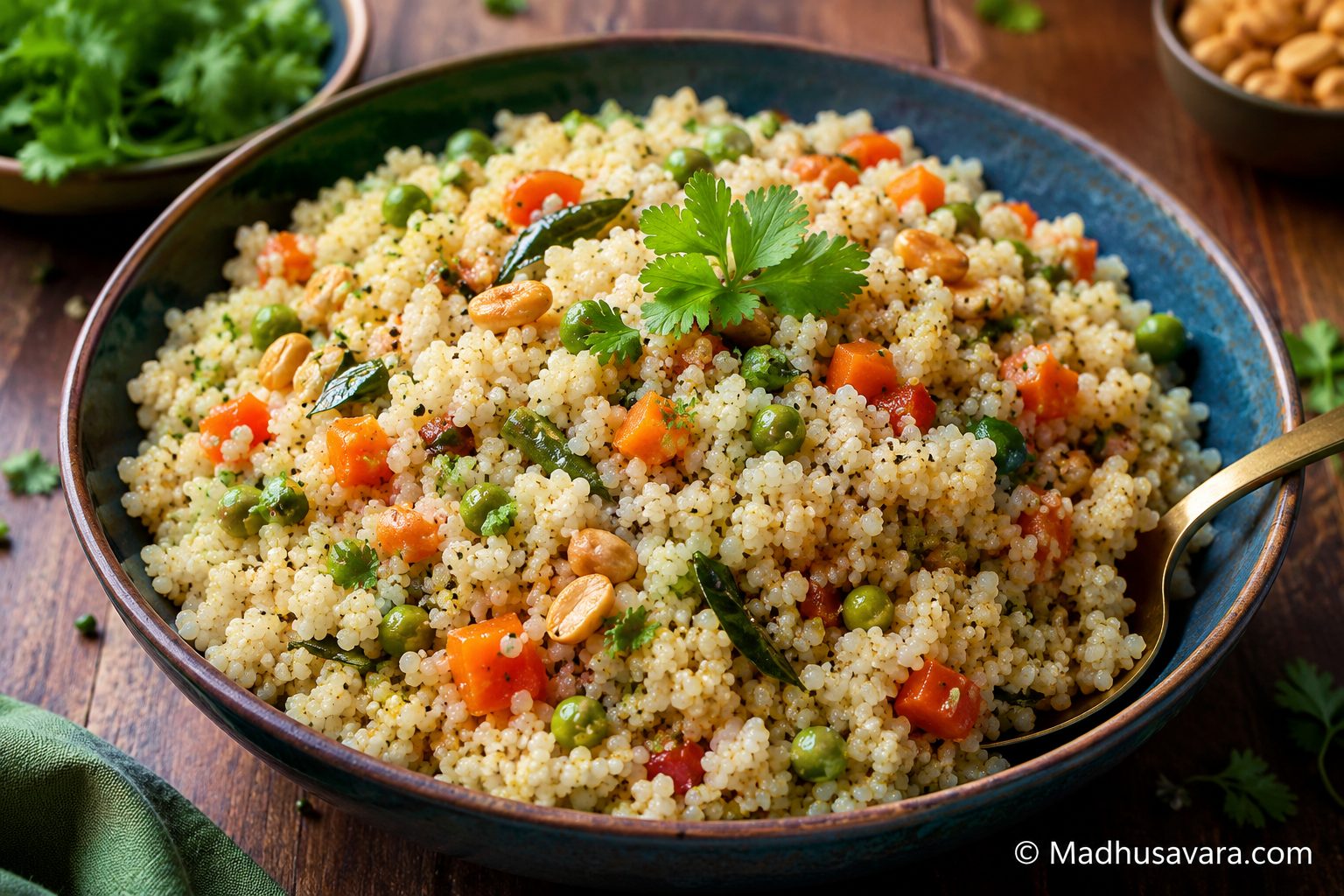
Classic Jhangora Recipe | Traditional Barnyard Millet Recipe | Healthy Himalayan Millet | Madhu Savara
Classic Jhangora Recipe served in a rustic blue bowl with fluffy Barnyard Millet, green peas, carrots, fresh coriander, roasted peanuts and aromatic spices on a wooden table, photographed in natural light with a vibrant Himalayan village-style presentation.

About Jhangora

Jhangora, scientifically known as Barnyard Millet, is one of India’s oldest cultivated millet varieties. It has remained an integral part of Himalayan food culture due to its remarkable nutritional profile and adaptability to mountainous terrain.

The grain is naturally white to cream in colour and becomes delightfully soft after cooking. Its mild flavour allows it to absorb spices, herbs and vegetables beautifully, making it suitable for a wide variety of dishes ranging from comforting porridges to savoury one-pot meals.

Today, nutritionists and chefs appreciate Jhangora not only for its traditional value but also for its impressive health benefits. It serves as a wholesome alternative to refined rice and complements balanced diets exceptionally well.

Whether you are preparing a nourishing family lunch or looking for a light yet satisfying dinner, this Classic Jhangora Recipe offers the perfect combination of nutrition, taste and tradition.

Health Benefits of Classic Jhangora Recipe

Rich Source of Dietary Fibre

Jhangora supports healthy digestion and promotes prolonged satiety, helping reduce unnecessary snacking.

Naturally Gluten-Free

People avoiding gluten can enjoy this Classic Jhangora Recipe as a wholesome substitute for wheat-based meals.

Supports Steady Energy

Being a complex carbohydrate, Jhangora releases energy gradually, helping maintain stamina throughout the day.

Packed with Essential Minerals

Barnyard Millet provides iron, phosphorus, magnesium and calcium that contribute to overall well-being.

Heart-Friendly Choice

Its fibre content and naturally low fat make it a suitable grain for balanced diets.

Easy to Digest

Unlike many refined grains, cooked Jhangora feels light on the stomach while remaining filling.

Suitable for Modern Healthy Diets

Whether you follow a vegetarian lifestyle or simply wish to diversify your grains, the Classic Jhangora Recipe fits beautifully into everyday meals.

Servings

4 serving

Preparation Time:

15 minutes

Cooking Time:

25 minutes

Calories

244

Ingredients

Main Ingredients

  • 1 cup Jhangora (Barnyard Millet)
  • 2½ cups water
  • 2 tablespoons desi ghee
  • 1 medium onion, finely chopped
  • 1 medium tomato, finely chopped
  • 2 green chillies, finely chopped
  • 1 teaspoon cumin seeds
  • 1 teaspoon grated ginger
  • 6–8 fresh curry leaves (optional)
  • ¼ teaspoon turmeric powder
  • ½ teaspoon red chilli powder
  • ½ teaspoon freshly ground black pepper
  • 1 teaspoon coriander powder
  • Salt to taste
  • 2 tablespoons fresh coriander leaves, finely chopped

Optional Ingredients

  • ½ cup green peas
  • ½ cup diced carrots
  • ½ cup French beans
  • ¼ cup sweet corn
  • A squeeze of fresh lemon juice
  • Roasted peanuts or cashews for garnish

Equipment Needed

  • Heavy-bottomed saucepan or kadai
  • Deep cooking pot with lid
  • Fine mesh strainer
  • Wooden spatula
  • Measuring cups and spoons
  • Sharp kitchen knife
  • Chopping board
  • Mixing bowl
  • Serving bowl

The right utensil plays an important role in achieving perfectly fluffy grains. A heavy-bottomed pan distributes heat evenly and prevents the Jhangora from sticking to the base while cooking.

Nutrition Information

(Approximate Per Serving)

Nutrient Amount
Calories 245 kcal
Carbohydrates 47 g
Protein 7 g
Dietary Fibre 6 g
Fat 3 g
Calcium 22 mg
Iron 3.8 mg
Magnesium 68 mg
Phosphorus 172 mg
Potassium 195 mg
Sodium 210 mg (varies with salt)

Step by Step Instructions

The beauty of this Classic Jhangora Recipe lies in respecting the grain rather than overpowering it with excessive spices. Jhangora has a delicate flavour that becomes wonderfully aromatic when cooked patiently over medium heat. Follow each step carefully to achieve soft, fluffy and separate grains every single time.

Step 1: Sort and Clean the Jhangora

Take 1 cup of Jhangora (Barnyard Millet) and spread it on a clean plate.

Remove any tiny stones, husk or impurities that may occasionally be present in traditionally processed millet. Although packaged Jhangora is generally cleaned, this simple step ensures a perfect meal.

Transfer the grain into a fine sieve.

Wash it under running water three to four times until the water runs almost clear.

Why This Step Matters

Cleaning removes dust and excess starch, helping the grains cook evenly without becoming sticky.

Step 2: Soak the Jhangora

Transfer the washed Jhangora to a bowl.

Pour enough fresh water to cover the grains completely.

Allow it to soak for about 15–20 minutes.

Avoid soaking for longer than 30 minutes as the grains are naturally delicate and may become overly soft.

Tip

If you are short on time, soak the Jhangora in lukewarm water for 10 minutes.

This simple trick helps reduce cooking time while maintaining the texture of the Classic Jhangora Recipe.

Step 3: Prepare the Vegetables

While the Jhangora is soaking, prepare the vegetables.

Finely chop:

  • Onion
  • Tomato
  • Green chillies
  • Fresh coriander
  • Ginger

Dice the carrots into small cubes.

Trim and finely chop the French beans.

Keep the peas and sweet corn ready.

Uniformly chopped vegetables cook evenly and enhance the overall appearance of this Traditional Jhangora Recipe.

Prepare the Tempering

Heat the Ghee

Place a heavy-bottomed kadai or saucepan over medium heat.

Add two tablespoons of desi ghee.

Allow it to melt gently without smoking.

Add Whole Spices

Once the ghee becomes warm, add:

  • Cumin seeds

Allow them to crackle naturally.

Their earthy aroma forms the flavour base of the Classic Jhangora Recipe.

Add Ginger and Green Chillies

Add:

  • Grated ginger
  • Chopped green chillies

Sauté for about one minute until fragrant.

Avoid browning the ginger.

Cook the Onion

Add the chopped onions.

Cook over medium heat for about five to six minutes.

Stir occasionally until they become soft and light golden.

Do not overcook them as heavily browned onions can dominate the subtle flavour of Barnyard Millet.

Add Tomatoes

Mix in the chopped tomatoes.

Cook until they soften completely and release their natural juices.

This usually takes around four to five minutes.

The tomatoes should blend smoothly with the onions without remaining chunky.

Add the Ground Spices

Add the following spices:

  • Turmeric powder
  • Coriander powder
  • Red chilli powder
  • Freshly ground black pepper
  • Salt

Mix continuously for about one minute.

The spices should coat the vegetables evenly without burning.

If required, sprinkle one tablespoon of water to prevent sticking.

Madhu Savara’s Secret

Never fry powdered spices on very high heat.

Gentle cooking preserves their natural aroma and creates a cleaner flavour in the Classic Jhangora Recipe.

Add the Vegetables

Now add:

  • Green peas
  • Carrots
  • French beans
  • Sweet corn

Mix everything thoroughly.

Cook for four to five minutes.

The vegetables should remain slightly crisp as they continue cooking with the Jhangora.

Overcooked vegetables lose both colour and texture.

Add the Soaked Jhangora

Drain the soaked Jhangora completely.

Add it gently to the cooked vegetables.

Using a wooden spatula, mix carefully for about two minutes.

Allow every grain to become lightly coated with the aromatic masala.

This roasting step gives the Himalayan Jhangora Recipe its signature nutty aroma.

Why Roasting is Important

Light roasting helps:

  • Develop a richer flavour
  • Improve grain texture
  • Reduce stickiness
  • Enhance aroma

Never skip this stage.

Add Water

Pour in 2½ cups of hot water.

Hot water maintains the cooking temperature and allows the grains to cook more evenly.

Mix gently only once.

Avoid repeated stirring.

Excessive stirring can break the delicate millet grains.

Simmer the Classic Jhangora Recipe

Increase the flame until the mixture reaches a gentle boil.

Once boiling, immediately reduce the flame to low.

Cover the pan tightly with a lid.

Allow the Jhangora to cook undisturbed for 18–20 minutes.

Resist the temptation to open the lid repeatedly.

The trapped steam cooks the grains perfectly.

Check for Doneness

After about 18 minutes, remove the lid carefully.

The water should be completely absorbed.

The grains should appear soft, fluffy and separate.

Taste one grain.

It should be tender without becoming mushy.

If required, sprinkle two to three tablespoons of hot water.

Cover again and cook for another three to four minutes.

Rest Before Serving

Switch off the flame.

Allow the cooked Jhangora to rest for at least five to seven minutes.

Resting helps the grains firm up naturally.

Finally, fluff gently using a fork instead of a spoon.

This keeps the grains separate and beautifully textured.

Final Garnishing

Sprinkle generously with:

  • Fresh coriander leaves
  • Fresh lemon juice
  • Roasted peanuts or cashews (optional)

Serve immediately while hot.

The aroma at this stage truly reflects the simplicity and elegance of the Classic Jhangora Recipe.

Tips and Variations

Chef’s Tips for the Best Classic Jhangora Recipe

Use Fresh Jhangora

Recently harvested Barnyard Millet always cooks faster and develops a sweeter flavour.

Measure Water Carefully

Too much water makes the grains sticky.

Too little water leaves them undercooked.

Cook Slowly

Patience produces the fluffiest Traditional Jhangora Recipe.

Medium and low heat always deliver the best results.

Prefer Desi Ghee

Ghee enhances both flavour and aroma far better than refined oil.

Avoid Constant Stirring

Stirring repeatedly breaks the delicate grains.

Allow steam to do most of the cooking.

Let It Rest

Never serve immediately after switching off the flame.

Five to seven minutes of resting dramatically improves texture.

Delicious Variations of the Classic Jhangora Recipe

Vegetable Jhangora Recipe

Add seasonal vegetables like broccoli, mushrooms, capsicum and spinach.

Protein-Rich Jhangora Recipe

Mix cooked chickpeas, green gram or soy chunks.

Coconut Jhangora Recipe

Add freshly grated coconut towards the end of cooking.

Lemon Herb Jhangora Recipe

Finish with lemon zest, coriander and mint.

Spicy Village-Style Jhangora Recipe

Increase green chillies and freshly crushed black pepper for a more robust Himalayan flavour.

Allergen Information

The Classic Jhangora Recipe is naturally gluten-free.

However, please note the following:

  • Contains dairy if prepared with desi ghee.
  • Contains tree nuts if garnished with cashews.
  • Contains peanuts if roasted peanuts are added.
  • Individuals with specific millet allergies should consume only after consulting their healthcare professional.
Other Essentials

Serving Suggestions

Traditional Himalayan Style

Serve the Classic Jhangora Recipe with:

  • Pahadi Gahat Dal
  • Bhatt ki Churkani
  • Aloo ke Gutke
  • Fresh cucumber raita
  • Homemade white butter
  • Green chutney

Everyday Family Meal

Pair the Jhangora Recipe with:

  • Mixed vegetable curry
  • Paneer curry
  • Rajma
  • Kala chana
  • Moong dal tadka
  • Plain curd
  • Fresh salad

Festive Meal

Serve alongside:

  • Pumpkin sabzi
  • Pahadi cucumber raita
  • Stuffed capsicum
  • Roasted papad
  • Homemade pickle

Common Mistakes to Avoid

Skipping the Washing Process

Always wash Jhangora thoroughly.

Soaking for Too Long

Extended soaking weakens the grain structure.

Using Excess Water

This is the most common reason for sticky Jhangora.

Cooking on High Heat

Rapid cooking causes uneven texture.

Stirring Too Frequently

Broken grains lose the authentic appearance of a perfect Classic Jhangora Recipe.

Opening the Lid Repeatedly

Escaping steam delays cooking and affects consistency.

Storage Tips

Allow the Classic Jhangora Recipe to cool completely before storing.

Transfer it into a clean airtight container.

Refrigerate for up to two days.

For reheating, sprinkle one or two tablespoons of water before warming gently.

Avoid reheating multiple times as this reduces both flavour and texture.

Freshly prepared Jhangora always delivers the best taste, aroma and nutritional value.

Why the Classic Jhangora Recipe is Better Than Other Grains

The Classic Jhangora Recipe is much more than a traditional Himalayan meal. It represents a wholesome way of eating that combines nutrition, sustainability and authentic flavour. While polished rice and refined wheat have become common staples in many households, Jhangora continues to stand apart because of its naturally rich nutritional profile and remarkable versatility.

Naturally Gluten-Free

Unlike wheat, Jhangora is naturally gluten-free, making it an excellent choice for people looking to diversify their diet with wholesome grains. It offers a satisfying meal without the heaviness often associated with refined cereals.

Rich in Dietary Fibre

One of the greatest strengths of the Classic Jhangora Recipe is its high fibre content. Fibre supports healthy digestion, promotes fullness and helps maintain steady energy levels throughout the day.

Better Satiety

Jhangora keeps you feeling satisfied for longer than many refined grains. A bowl of freshly cooked Traditional Jhangora Recipe can easily become the centrepiece of a balanced lunch or dinner.

Packed with Essential Minerals

Barnyard Millet naturally contains iron, magnesium, phosphorus and calcium, nutrients that contribute to overall wellness when consumed as part of a balanced diet.

Easy to Digest

Despite being filling, Jhangora remains remarkably light on the stomach. This makes the Healthy Millet Recipe suitable for family meals across all age groups.

Sustainable Farming Crop

Jhangora thrives with comparatively less water than many conventional cereals. Supporting millet cultivation also encourages environmentally sustainable farming practices and helps preserve India’s rich agricultural heritage.

Naturally Versatile

Whether you prepare it as a savoury meal, comforting porridge, festive kheer or nutritious pulao, the Classic Jhangora Recipe adapts beautifully to different cooking styles and regional flavours.

Frequently Asked Questions

What is Jhangora?

Jhangora, also known as Barnyard Millet, is an ancient Himalayan millet that has been cultivated for centuries. It is widely appreciated for its light texture, nutritional value and versatility in traditional Indian cooking.

Is the Classic Jhangora Recipe gluten-free?

Yes. Jhangora is naturally gluten-free. However, always ensure that the packaged grain has not been processed alongside gluten-containing cereals if you have severe gluten sensitivity.

Do I need to soak Jhangora before cooking?

Yes. Soaking the grain for about 15–20 minutes helps it cook evenly and improves the final texture.

Can I cook Jhangora in a pressure cooker?

Certainly. After preparing the tempering, pressure cook the mixture for one whistle on medium heat and allow the pressure to release naturally. This method saves time while producing soft, fluffy grains.

Can I prepare the Classic Jhangora Recipe without vegetables?

Absolutely. The traditional village-style version is often prepared using only ghee, cumin, ginger and a few simple spices, allowing the natural flavour of the millet to shine.

Can children eat Jhangora?

Yes. The Classic Jhangora Recipe is soft, nourishing and suitable for children when prepared with mild spices.

Can I prepare it for fasting?

Many families enjoy plain Jhangora during fasting by using rock salt, cumin, green chillies and ghee. Always follow the fasting traditions observed in your household.

How long does cooked Jhangora stay fresh?

When stored in an airtight container in the refrigerator, cooked Jhangora generally stays fresh for up to two days. Reheat gently before serving.

Can I use Jhangora instead of rice?

Yes. The Classic Jhangora Recipe makes an excellent substitute for rice in everyday meals and pairs well with dals, curries and vegetables.

Why is Jhangora becoming popular again?

Growing awareness about traditional Indian millets, wholesome eating and sustainable agriculture has encouraged many families to bring Jhangora back into their kitchens.

Serving Ideas

Enjoy the Classic Jhangora Recipe with simple accompaniments that complement its delicate flavour.

  • Gahat Dal
  • Bhatt ki Churkani
  • Pahadi Aloo ke Gutke
  • Seasonal mixed vegetable curry
  • Boondi or cucumber raita
  • Fresh green chutney
  • Homemade pickle
  • Roasted papad
  • Plain curd
  • Fresh salad

For festive occasions, garnish with roasted cashews, raisins and a drizzle of pure desi ghee to elevate both flavour and presentation.

Why You Will Love This Classic Jhangora Recipe

  • Simple ingredients that are easily available.
  • Authentic Himalayan flavour.
  • Naturally gluten-free.
  • Rich in fibre and essential minerals.
  • Light yet satisfying.
  • Suitable for everyday family meals.
  • Beginner-friendly recipe.
  • Adaptable with seasonal vegetables.
  • Budget-friendly and wholesome.
  • Perfect for both traditional and modern Indian kitchens.

Madhu Savara’s Tips

Every memorable recipe begins with good ingredients and patient cooking. Choose clean, fresh-quality Jhangora, measure the water carefully and allow the grain to cook slowly without frequent stirring. Resting the cooked millet for a few minutes before serving helps achieve soft, fluffy grains that showcase the true character of this traditional Himalayan staple.

Small details often make the biggest difference. Fresh coriander, a squeeze of lemon and a spoonful of pure desi ghee added just before serving transform this Classic Jhangora Recipe into an unforgettable family meal.

Conclusion

The Classic Jhangora Recipe beautifully demonstrates that extraordinary food does not require complicated ingredients or elaborate techniques. Rooted in the culinary traditions of the Himalayas, this humble Barnyard Millet recipe continues to nourish generations with its comforting taste, impressive nutrition and timeless simplicity.

Whether you are rediscovering traditional Indian millets, planning healthier family meals, or simply exploring regional cuisines, this recipe deserves a place in your kitchen. Every spoonful reflects the wisdom of mountain communities who understood the value of wholesome, seasonal and locally grown food long before it became a modern trend.

Prepare this authentic Classic Jhangora Recipe, share it with your loved ones and keep alive one of India’s finest culinary traditions for generations to come.

Call to Action

If you enjoyed this Classic Jhangora Recipe, explore more authentic Himalayan recipes, forgotten regional foods and wholesome millet dishes on MadhuSavara.com. Share this recipe with your family and friends, leave your valuable feedback and inspire others to rediscover India’s rich culinary heritage—one traditional recipe at a time.

Special Note.

This Classic Jhangora Recipe has been carefully developed using traditional Himalayan cooking practices, extensive culinary research and practical kitchen experience. Preparation times, nutritional values and cooking results may vary depending on the variety of Barnyard Millet, ingredients, cookware and cooking conditions used. The nutritional information provided is approximate and intended for general guidance only. If you have food allergies, dietary restrictions or any medical condition, please consult a qualified healthcare professional or registered dietitian before making significant dietary changes. Always use fresh, high-quality ingredients and follow proper food hygiene practices to achieve the best flavour, texture and safety.

1

Disclaimer

Important Notice: Read Before Proceeding

The recipes, preparation methods, nutritional details, and related content published on Madhu Savara’s website, social media, and associated platforms are intended solely for general informational and educational purposes. While every effort has been made to ensure accuracy and reliability, we make no guarantees regarding the results, safety, or accuracy of any recipe presented here.

We are not licensed nutritionists, dieticians, or medical professionals. The nutritional values provided are estimates only, calculated using third-party tools, and should not be used for medical diagnosis, dietary treatment, or allergy management. If you have any medical conditions, dietary restrictions, or food allergies, please consult your doctor or certified dietitian before attempting any recipe.

Cooking inherently involves sharp tools, high heat, and the risk of injury or fire. You assume full responsibility for your kitchen practices. Madhu Savara, the website, and all contributors shall not be held liable for any damage, injury, loss, or adverse outcome resulting directly or indirectly from the preparation, consumption, or interpretation of any content herein.

By using this website and attempting any recipe, you agree to hold harmless and indemnify Madhu Savara and her team from any liability, legal claim, or damages arising from the use of this content. You are encouraged to exercise independent judgment and take full responsibility for your health, kitchen safety, and actions.


Author’s Note

Every traditional grain carries a story, and Jhangora is one of the finest treasures preserved by the Himalayan communities for centuries. This Classic Jhangora Recipe is my heartfelt tribute to those mountain kitchens where simple ingredients transform into nourishing meals filled with warmth, tradition and unforgettable flavours.

This recipe has been prepared using authentic cooking methods while making it practical for modern Indian kitchens without compromising its original taste.

A Short Story from the Mountains

Long before supermarkets introduced packaged millets, families in the Himalayan villages carefully stored freshly harvested Jhangora for daily meals. A steaming bowl of cooked Jhangora often welcomed farmers returning from long hours in the terraced fields, offering comfort, strength and satisfaction in every bite.
Origin of the Classic Jhangora Recipe

Jhangora, popularly known as Barnyard Millet, has been cultivated across the Himalayan regions of Uttarakhand for generations. Owing to its ability to thrive in high-altitude climates with limited water, it became one of the most dependable grains for mountain households.

Unlike polished rice, Jhangora retained its natural goodness and was prepared during family meals, festive occasions, religious fasting and community celebrations. Even today, many villages continue to cook this humble grain using traditional iron utensils and locally grown herbs.

With the growing awareness of healthy eating, the Classic Jhangora Recipe has once again found its rightful place in kitchens across India and abroad.

Why This Classic Jhangora Recipe is Special

The beauty of this Classic Jhangora Recipe lies in its simplicity.

It is naturally gluten-free, easy to digest, rich in fibre and packed with essential minerals. Despite using only a handful of ingredients, it delivers remarkable flavour, excellent texture and long-lasting satiety.

Unlike heavily processed grains, Jhangora preserves much of its natural nutritional profile, making it an ideal choice for children, adults and elderly family members alike.

Prepared correctly, every grain remains soft, fluffy and separate without becoming sticky.

Table of Contents

  • Author’s Note
  • Story Behind the Recipe
  • Origin of Jhangora
  • Why This Recipe is Special
  • About Jhangora
  • Health Benefits of Jhangora
  • Preparation Time
  • Cooking Time
  • Total Time
  • Servings
  • Calories
  • Nutritional Value Chart
  • Ingredients Required
  • Utensils Required
  • Step-by-Step Cooking Method
  • Chef’s Tips
  • Variations
  • Allergen Information
  • Common Mistakes to Avoid
  • Storage Tips
  • Why Jhangora is Better than Other Grains
  • Frequently Asked Questions
  • Conclusion
  • Call to Action
  • Disclaimer.