
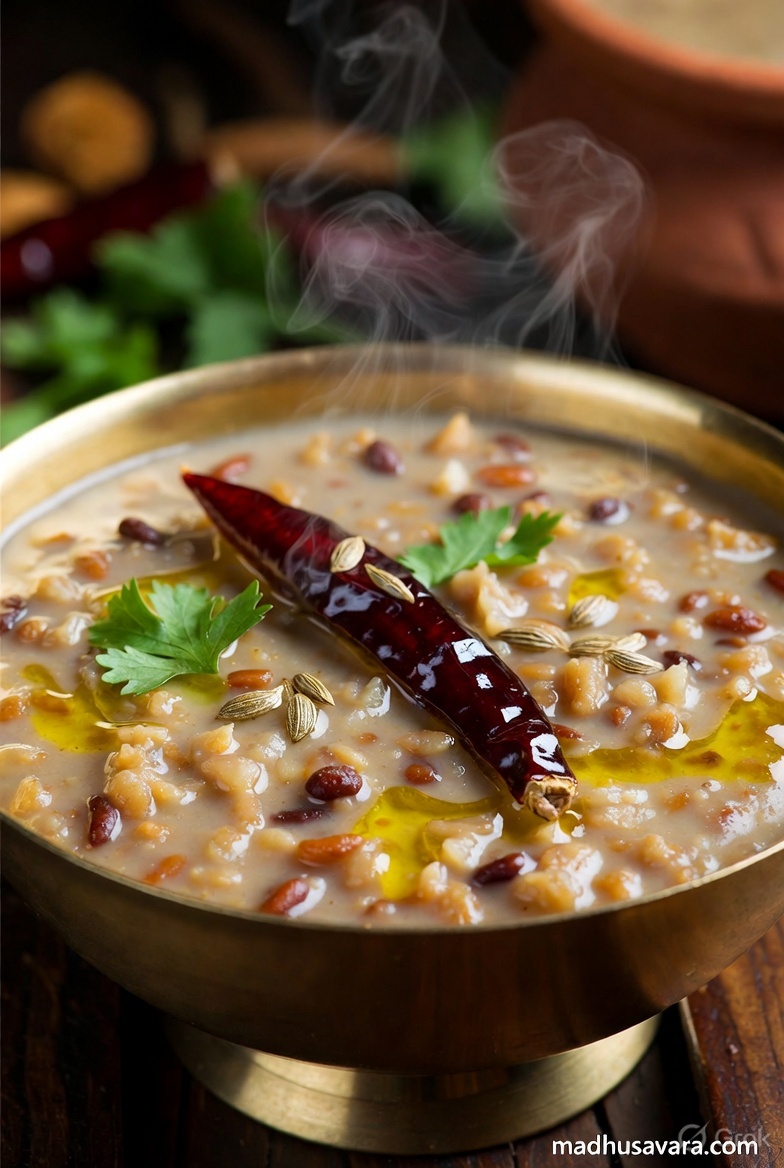
Mash ki Dal Recipe | Kangra Style Dal for Kangri Dham Recipes from Himachal
Hello dear friends,
I am Madhu Savara, a passionate homemaker from Chandigarh. Through madhusavara.com, I share authentic recipes from Himachal. After Teliya Maah, Sepu Vadi, and other Kangri Dham Recipes, here is the Mash ki Dal Recipe, a simple and comforting Kangra-style dal loved in Kangra homes.
What is Mash ki Dal Recipe?
Mash ki Dal Recipe is a traditional black gram dal from the Kangra region of Himachal Pradesh. It is milder than Teliya Maah and is often prepared in homes as well as during Kangri Dham feasts. The dal has a creamy texture with gentle spices and ghee tempering.
Origin and Significance:
Mash ki Dal Recipe has been a part of Kangra Valley cuisine for generations. It is a regular dal in daily meals and also finds a place in traditional Kangri Dham food. It pairs beautifully with rice, roti and other Kangra special dishes.
Preface: In the green valleys of Kangra, where the air is fresh and the people hold their traditions close to heart, simple meals often become memorable. I still remember visiting a family in Kangra during a small gathering. The lady of the house served hot, steaming rice with a bowl of Mash ki Dal Recipe. That comforting aroma of ghee and cumin, the creamy texture of the dal, and the warmth with which it was served made the entire meal special. Since then, this Kangra Style Dal has become a regular in my kitchen.
Table of Contents
- What is Mash ki Dal Recipe?
- Origin and Significance
- Recipe Card
- Utensils Required
- Ingredients
- Step-by-Step Cooking Method
- Tips and Variations
- Things to Avoid
- Storage Instructions
- Allergen Information
- Nutritional Value
- FAQs
- Conclusion
Servings
4 serving
Preparation Time:
10 minutes plus soaking
Cooking Time:
25-30 minutes
Calories
230
Ingredients
1 cup split black gram (dhuli urad dal)
4 cups water
1 tsp ginger-garlic paste
1 tsp turmeric powder
1 tsp red chilli powder
Salt to taste
2-3 tbsp ghee
1 tsp cumin seeds
2 dry red chillies
1 medium onion, finely chopped (optional)
Fresh coriander leaves for garnishing
Equipment Needed
Pressure cooker,
heavy-bottomed kadai or pan,
wooden spoon for stirring,
sharp chopping knife.
Nutrition Information
| Nutrient | Amount | % Daily Value |
|---|---|---|
| Calories | 220 kcal | – |
| Protein | 12 g | – |
| Fibre | 6 g | – |
| Iron | Good source | – |
Step by Step Instructions
- Wash the urad dal thoroughly and soak it in water for 30 minutes. This helps the dal cook faster and become softer.
- In a pressure cooker, add the soaked dal, 4 cups of water, turmeric powder, salt and ginger-garlic paste. Cook for 3-4 whistles or till the dal becomes soft and creamy.
- Heat 2-3 tablespoons ghee in a pan on medium flame.
- Add cumin seeds and let them crackle. Then add dry red chillies and sauté for a few seconds.
- Add finely chopped onion and fry till golden brown.
- Add red chilli powder and immediately pour the cooked dal into the pan.
- Mix everything well and let it simmer on low flame for 5-7 minutes so that the flavours blend nicely.
- Turn off the heat. Garnish with fresh coriander leaves and a spoon of ghee on top before serving hot with rice or roti.
Tips and Variations
You can add a pinch of garam masala for extra aroma. Skip onion if you want a sattvic version. For a creamier texture, mash some dal while cooking and add a little milk at the end.
Allergen Information
This Mash ki Dal Recipe is naturally gluten-free. It contains ghee, which is dairy. People with a mustard or dairy allergy should take care. No nuts, soy or eggs in the recipe.
Other Essentials
Things to Avoid: Do not overcook the dal into a complete paste. Do not use too much chilli powder if serving with other spicy Kangri Dham dishes.
Storage Instructions: Store Mash ki Dal Recipe in an airtight container in the refrigerator for up to 2 days. Reheat with a little water or milk when serving.
FAQs Q1: What is the difference between Mash ki Dal Recipe and Teliya Maah? Mash ki Dal Recipe is lighter with split dal and ghee tempering, while Teliya Maah is richer with whole dal and lots of mustard oil.
Q2: Can I make Mash ki Dal Recipe without onion and garlic? Yes, you can skip both for a simple sattvic version suitable for fasting or temple style.
Q3: How to make Mash ki Dal Recipe more creamy? Mash some portion of the dal while cooking and add a little milk at the end for extra creaminess.
Call to Action: Try this Mash ki Dal Recipe at home and enjoy the authentic taste of Kangra. Share your experience in the comments and tag us with your photos.
Conclusion: Mash ki Dal Recipe is simple comfort food that represents the warmth of Kangra kitchens. It completes your Kangri Dham collection beautifully. I hope you enjoy making and serving it to your family.
Authentic References
- Singh, A., & Sharma, R. (2020). Traditional Food Practices of Mandi District, Himachal Pradesh. Journal of Ethnic Foods, 7(1), 12. https://doi.org/10.1186/s42779-020-00045-7
Author’s Bio:
MadhuSavara is the founder of MadhuSavara.com, a passionate home chef, recipe developer, food researcher, and culinary storyteller dedicated to preserving India’s rich food heritage. She specialises in authentic regional recipes, forgotten traditional dishes, Himalayan cuisine, healthy home cooking, and time-tested kitchen wisdom. Every recipe is personally researched, tested, and written with detailed instructions, practical tips, and cultural insights to help readers recreate genuine flavours with confidence. Through MadhuSavara.com, her mission is to preserve culinary traditions, celebrate local ingredients, and inspire home cooks around the world to embrace authentic Indian cooking—one recipe at a time.
Disclaimer
Important Notice: Read Before Proceeding
The recipes, preparation methods, nutritional details, and related content published on Madhu Savara’s website, social media, and associated platforms are intended solely for general informational and educational purposes. While every effort has been made to ensure accuracy and reliability, we make no guarantees regarding the results, safety, or accuracy of any recipe presented here.
We are not licensed nutritionists, dieticians, or medical professionals. The nutritional values provided are estimates only, calculated using third-party tools, and should not be used for medical diagnosis, dietary treatment, or allergy management. If you have any medical conditions, dietary restrictions, or food allergies, please consult your doctor or certified dietitian before attempting any recipe.
Cooking inherently involves sharp tools, high heat, and the risk of injury or fire. You assume full responsibility for your kitchen practices. Madhu Savara, the website, and all contributors shall not be held liable for any damage, injury, loss, or adverse outcome resulting directly or indirectly from the preparation, consumption, or interpretation of any content herein.
By using this website and attempting any recipe, you agree to hold harmless and indemnify Madhu Savara and her team from any liability, legal claim, or damages arising from the use of this content. You are encouraged to exercise independent judgment and take full responsibility for your health, kitchen safety, and actions.
