
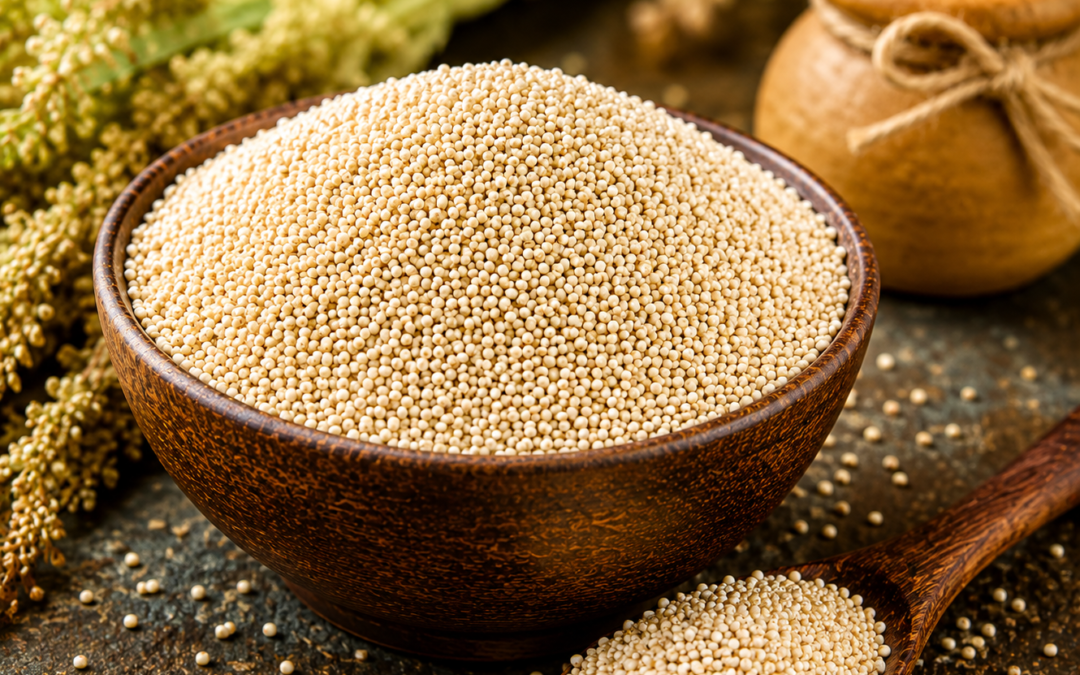
Ramdana – The Sacred Grain of India
Author’s Note
By Madhu Savara, author and owner of madhusavara.com
Ramdana is a traditional Indian grain that has a distinctive place in food culture, particularly in preparations made during vrat and fasting. The small grain is used in several traditional foods, including Ramdana ladoo, Ramdana patti, Ramdana flour and other regional preparations.
This article looks at Ramdana grain, its traditional uses, cultivation, food traditions, nutritional composition, preservation and continuing relevance in Indian kitchens. Where names and practices vary from one region to another, they are treated as regional terms rather than assumed to mean the same thing everywhere.
What Is Ramdana?
Ramdana is a small traditional grain used in different parts of India. The name itself carries cultural significance and is often understood as “God’s grain” or “Rama’s grain” in traditional usage.
Ramdana is particularly familiar in households where foods prepared for vrat and fasting are part of the culinary tradition. Popped Ramdana is used to make ladoos and patti, while Ramdana flour is used in selected traditional preparations.
The names used for traditional grains can change considerably from one state, community or language to another. Therefore, terms such as Rajgira, Amaranth, Chaulai, Bathu and other regional names should not automatically be treated as interchangeable with Ramdana without establishing the local context.
Ramdana and Its Place in Indian Food Traditions
Ramdana has survived not only as a crop but also as part of India’s traditional food knowledge.
Its most familiar association today is with vrat food. Ramdana ladoos and other preparations made from the grain are found in fasting traditions, particularly around occasions when households follow specific food restrictions.
At the same time, Ramdana is not limited to one particular festival. Traditional preparations can also be part of ordinary household food culture, depending on the region and community.
The continued use of Ramdana demonstrates how traditional Indian grains have remained connected with seasonal food practices, local agriculture and household cooking.
Ramdana for Fasting and Vrat
One of the best-known uses of Ramdana is in fasting and vrat food.
Popped Ramdana can be combined with jaggery or sugar to prepare Ramdana ladoo and Ramdana patti. Ramdana flour is also used in some fasting preparations.
However, fasting customs are not identical throughout India. The foods permitted during a vrat can differ according to the particular vrat, family tradition, community and region. Therefore, Ramdana should be understood as a traditional fasting food in the contexts where it is customarily used, rather than as a universal rule for every fast.
Ramdana Ladoo
Ramdana ladoo is one of the most recognisable traditional preparations made with popped Ramdana.
The basic preparation uses popped Ramdana bound together with melted jaggery or sugar. Depending on the household, the ladoos may be kept simple or combined with ingredients traditionally permitted during the particular fasting period.
Ramdana ladoo is especially associated with vrat, fasting and festive food traditions. Its simple preparation has helped keep this traditional grain familiar across generations.
Ramdana Flour and Traditional Recipes
Ramdana can also be ground into flour for use in traditional cooking.
Ramdana flour may be used for preparations such as rotis, puris, parathas and other regional foods. The exact recipe differs from household to household.
During fasting, the flour may be combined with ingredients traditionally used in vrat cooking. Potato and rock salt, for example, are commonly used in many fasting recipes, although the permitted ingredients depend on the particular fasting tradition being followed.
Other traditional uses of Ramdana include:
Ramdana Patti
Popped Ramdana bound with jaggery or sugar is used to make a crisp Ramdana patti or chikki-style preparation.
Ramdana Kheer
Some traditional kitchens use Ramdana in sweet preparations such as kheer, cooking the grain with milk, sugar and aromatic spices such as cardamom.
Popped Ramdana
Popping the small grains creates a light ingredient that can be eaten or incorporated into traditional sweets and snacks.
Ramdana Cultivation
Ramdana cultivation forms part of the wider story of India’s traditional grain agriculture.
The crop associated with grain amaranth has been studied by Indian agricultural institutions, including ICAR, with research covering crop improvement, cultivation and adaptation in different regions.
However, cultivation practices should not be presented as one fixed method for all Ramdana-growing areas. Sowing time, seed rate, spacing, irrigation, soil requirements and harvesting period can vary according to the crop type, variety, climate and local farming system.
Farmers traditionally select cultivation practices according to local conditions. In rain-fed and hill farming systems, crop management can be different from practices followed in irrigated plains.
Soil and Field Preparation
Small-seeded crops require careful field preparation because even distribution of seed is important for a uniform crop.
Farmers generally prepare a reasonably fine seedbed and pay attention to drainage, moisture and weed management. Exact recommendations should be based on the particular variety and local agricultural conditions rather than applying one national figure to every field.
Sowing and Crop Management
The sowing season for grain amaranth varies with region and production system. Agricultural research in India has examined both rabi and other production systems for grain amaranth.
Water requirements, fertilisation and weed control similarly depend on local soil and weather conditions.
For this reason, farmers should follow locally recommended agricultural practices when cultivating Ramdana commercially.
Harvesting and Storage
Ramdana is harvested when the crop reaches maturity and the seed has developed sufficiently. After harvesting, the grain needs proper drying and cleaning before storage.
Because the seeds are small, careful threshing, cleaning and drying are important for maintaining grain quality.
Nutritional Composition of Ramdana
Ramdana contains protein, carbohydrate, dietary fibre, fat and minerals. The exact nutritional composition varies according to the variety, growing conditions and method of processing.
Research on grain amaranth has also examined its protein and amino-acid composition. ICAR research, for example, has specifically studied protein and lysine content in grain-amaranth material.
These nutritional characteristics are part of the reason traditional grains continue to attract interest from researchers, farmers and consumers.
This article discusses nutritional composition as a food characteristic and does not make medical or therapeutic claims about Ramdana.
Ramdana and Traditional Indian Food Culture
Food traditions surrounding Ramdana demonstrate how Indian households have historically used small grains in different ways.
A single grain can have several identities in the kitchen:
- popped and used in Ramdana ladoo
- made into Ramdana patti
- ground into Ramdana flour
- used in traditional sweet preparations
- included in selected vrat and fasting foods
These preparations are often simple, relying on a few familiar ingredients.
The importance of Ramdana therefore extends beyond the grain itself. Its continued presence in traditional kitchens reflects the connection between agriculture, food customs and cultural practices.
Regional Names and Local Terminology
Regional Indian food terminology requires particular care.
A name used for one grain in one region may refer to a different plant, variety or preparation elsewhere. For this reason, Ramdana, Rajgira, Amaranth, Chaulai, Bathu and other local names should not automatically be presented as exact synonyms without reliable regional or botanical evidence.
This is especially important when documenting traditional foods because local names can change across languages and communities.
For a food-heritage article, preserving these distinctions is more useful than forcing every regional name into one category.
Preservation and Storage of Ramdana
Proper drying and storage are important for maintaining Ramdana grain.
Clean, dry grain should be kept away from moisture and stored in a clean, dry container. Traditional households have used different storage methods depending on the local climate and available containers.
Popped Ramdana is particularly important to protect from moisture because it can lose its desirable texture when exposed to humidity.
Regular inspection of stored grain can help identify moisture, insects or other storage problems at an early stage.
Ramdana in the Modern Kitchen
Ramdana continues to find a place in contemporary Indian cooking.
Traditional Ramdana ladoo, Ramdana flour and fasting recipes remain familiar uses, while home cooks can also incorporate the grain into new versions of traditional dishes.
Its use in modern kitchens is part of a wider interest in India’s traditional grains and forgotten or less-used food crops.
For food writers and home cooks, Ramdana offers an opportunity to document recipes that connect present-day cooking with older regional food traditions.
Agricultural Relevance of Ramdana
Traditional grains have relevance beyond the kitchen.
Indian agricultural research has included grain amaranth among underutilised crops and has worked on varieties, cultivation and crop improvement. ICAR records, for example, document grain-amaranth varieties and research for different Indian production regions.
The broader importance of crops such as these lies in maintaining agricultural diversity and preserving crop varieties suited to different farming environments.
For farmers, however, the actual suitability of Ramdana cultivation depends on local climate, soil, variety, market demand and available farming practices. It is therefore better to consider Ramdana as one part of diversified agriculture rather than describe it as universally superior to other crops.
Why Ramdana Still Matters
Ramdana may be a small grain, but its story connects several parts of Indian food culture.
It is found in traditional fasting food, Ramdana ladoo, Ramdana flour and regional household cooking. Its cultivation also forms part of India’s wider tradition of growing diverse food crops.
The grain’s cultural identity, traditional recipes and continuing agricultural relevance make Ramdana worth documenting at a time when many traditional foods are gradually becoming less familiar.
For me, documenting Ramdana is not simply about recording a grain. It is about preserving the names, foods, farming practices and traditions that have given India’s food heritage its remarkable regional diversity.
Conclusion
Ramdana – the sacred grain – remains connected with traditional Indian food culture, particularly through Ramdana ladoo, Ramdana flour and vrat preparations.
Its story includes cultivation, food traditions, regional terminology and changing patterns of Indian cooking. While the names used for similar-looking grains can differ across regions, careful documentation helps preserve the identity of each traditional food.
Ramdana deserves a place in the continuing record of India’s traditional grains—not because of exaggerated claims, but because of its genuine place in food traditions, farming practices and household kitchens.
Disclaimer
The information provided in this article is for general informational and educational purposes only. Madhu Savara and madhusavara.com make no representations or warranties regarding the completeness, accuracy or suitability of the information presented. Traditional food names, cultivation practices and fasting customs can vary by region, community and individual tradition. Readers should verify agricultural or dietary details with appropriate local or professional sources where necessary. This article does not provide medical advice or make medical claims.
