- 4

Crispy Ragi Chilla / Dosa with Chaulai Greens and Paneer Filling – High-Protein Breakfast in 20 Minutes
In our fast-paced lives, finding a nutritious, high-protein breakfast that is ready in 20 minutes can feel challenging. This Crispy Ragi Chilla / Dosa with Chaulai Greens and Paneer Filling is the perfect solution. It combines the goodness of Ragi with protein-rich paneer and iron-packed Chaulai (Amaranth) greens for a balanced, delicious start to your day.Servings 4 PeopleCalories 350kcalCost NAEquipment
- Non-stick tawa or cast-iron skilletMixing bowlsSpatulaGrater or chopper
Ingredients
- 1 cup Ragi flour
- ½ cup whole wheat flour or besan optional, for binding
- 1 cup finely chopped Chaulai Amaranth greens
- 150 g paneer crumbled
- 1 medium onion finely chopped
- 2 green chillies chopped
- 1 tsp ginger-garlic paste
- ½ tsp cumin seeds
- ½ tsp turmeric powder
- Salt to taste
- Water as needed
- Oil or ghee for cooking
Instructions
- Step 1: Prepare the Batter
- In a large mixing bowl, combine the ragi flour, wheat flour (or besan), turmeric powder, cumin seeds, and salt. Gradually add water while whisking continuously to form a smooth, lump-free batter with a slightly thick, dosa-like consistency. Allow the batter to rest for 5 minutes.
- Step 2: Prepare the Chaulai-Paneer Filling
- Heat 1 teaspoon of oil in a pan over medium heat. Add the ginger-garlic paste, chopped green chillies, and onion. Sauté until the onion turns soft and translucent. Stir in the chopped Chaulai greens and cook for about 2 minutes, or until wilted. Add the crumbled paneer, mix well, and season with salt. Switch off the heat and keep the filling aside.
- Step 3: Cook the Ragi Chilla
- Heat a tawa or non-stick griddle over medium flame. Pour a ladleful of batter onto the centre and spread it gently into a thin circular chilla. Drizzle a few drops of oil around the edges. Cook for 1–2 minutes until the underside becomes golden brown and crisp.
- Step 4: Add the Filling
- Place 2–3 tablespoons of the prepared paneer-chaulai mixture on one half of the chilla. Fold it into a semi-circle or roll it like a dosa. Press gently with a spatula and cook for another minute, ensuring both sides are crisp and lightly browned.
- Step 5: Repeat and Serve
- Repeat the process with the remaining batter and filling. Serve the Crispy Ragi Chilla hot with mint chutney, coriander chutney, curd, or your favourite dip.
Notes
For extra crispiness, add a tablespoon of rice flour to the batter. Replace paneer with tofu for a vegan version. Add grated carrots or spinach for more vegetables. Make it spicier with red chilli powder.
Crispy Ragi Chilla / Dosa with Chaulai Greens and Paneer Filling – High-Protein Breakfast in 20 Minutes
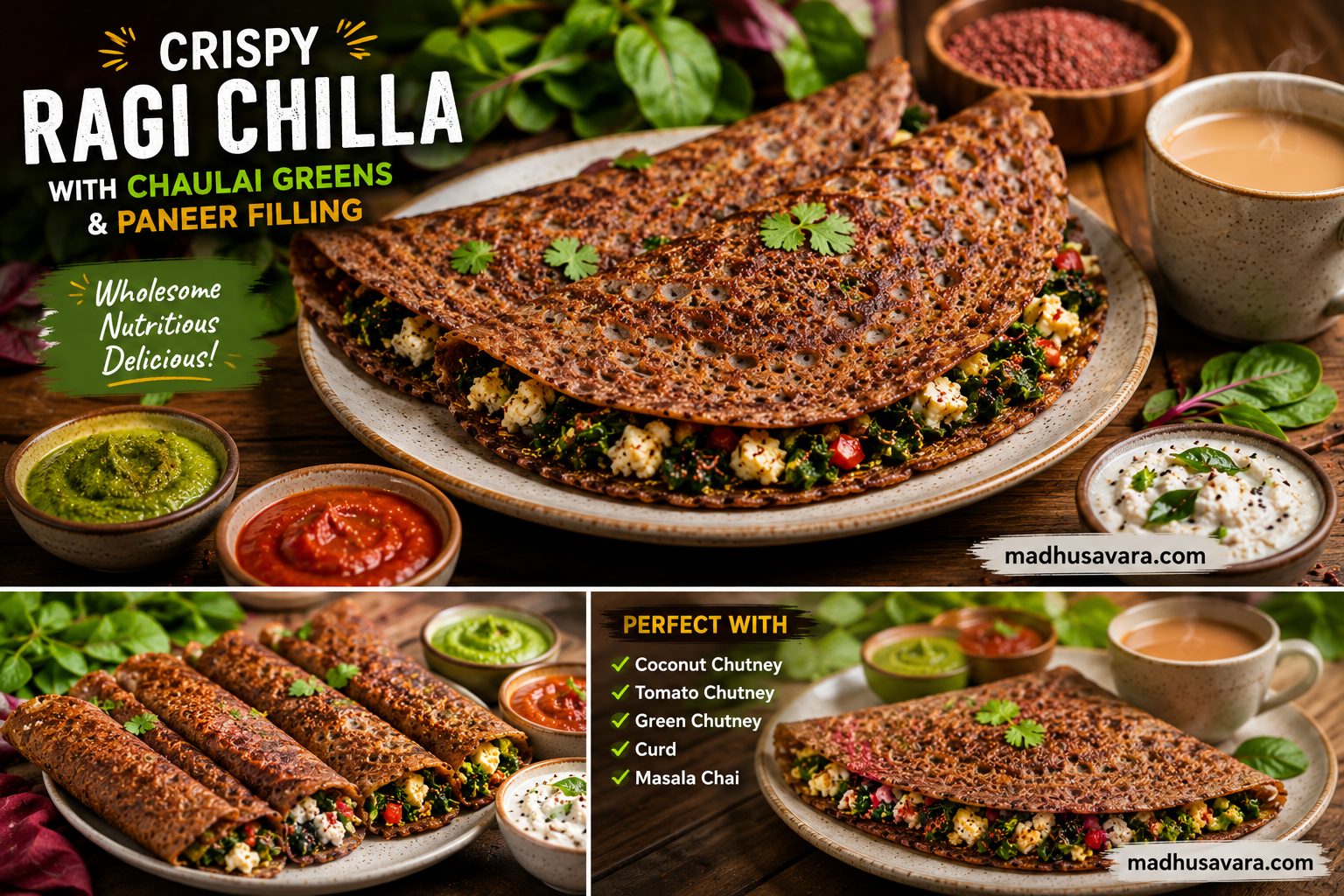
Author’s Note by Madhu Savara, Owner of madhusavara.com
Hello dear readers,
At madhusavara.com, we believe that healthy eating should be simple, delicious, and rooted in our traditional wisdom. As a passionate home chef and wellness enthusiast, I love transforming everyday ingredients into nourishing meals. Today, I’m excited to share my personal favourite — Crispy Ragi Chilla / Dosa with Chaulai Greens and Paneer Filling — a high-protein breakfast that comes together in just 20 minutes.
A Childhood Memory
I still remember waking up to the sizzle of my grandmother’s iron tawa in our Punjab home during summer holidays. One year, during our visit to her friend’s village near Chitradurga, I tasted a millet chilla stuffed with fresh greens and soft paneer. The crispy edges, earthy aroma of Ragi, and the burst of flavours left me craving it for days. That simple yet powerful breakfast taught me how millets like Ragi can turn ordinary mornings into something truly special. This recipe is my tribute to those warm memories.
Preface
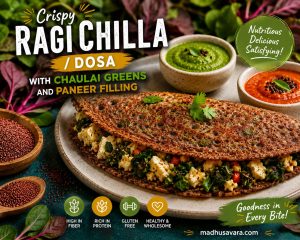
In our fast-paced lives, finding a nutritious, high-protein breakfast that is ready in 20 minutes can feel challenging. This Crispy Ragi Chilla / Dosa with Chaulai Greens and Paneer Filling is the perfect solution. It combines the goodness of Ragi with protein-rich paneer and iron-packed Chaulai (Amaranth) greens for a balanced, delicious start to your day.
Significance, Importance and Origin of Ragi
Ragi, also known as Finger Millet, has been a staple in Indian diets for centuries, especially in South India. Originating from East Africa, it reached India thousands of years ago and became vital in dryland farming regions. Its importance lies in its climate resilience, high calcium, and fibre content, making it ideal for diabetes management, bone health, and weight control. In modern times, Ragi is regaining popularity as a gluten-free superfood.
Ragi is a nutrient-dense millet rich in complex carbohydrates, protein, calcium, iron, and antioxidants. It has a low glycemic index, making it excellent for blood sugar control. When used in Crispy Ragi Chilla or Ragi Dosa, it creates a naturally crisp texture while providing sustained energy.
Why This High-Protein Breakfast?
This Ragi Chilla / Dosa recipe delivers high-quality protein from paneer, fibre from Ragi and Chaulai greens, and essential micronutrients — all in under 20 minutes. It is satisfying, filling, and supports weight loss, muscle maintenance, and overall wellness.
Table of Contents
- Preface
- Significance, Importance and Origin of Ragi
- About Ragi
- Why This High-Protein Breakfast?
- Ingredients
- Equipment Required
- Nutritional Value
- Step-by-Step Instructions
- Allergen Information
- Tips and Variations
- Things to Avoid
- Serving Suggestions
- Storage Instructions
- Special Instructions
- FAQs
- Conclusion and CTA
Servings
4 (8–10 chillas)
Preparation Time:
10 minutes
Cooking Time:
10 minutes
Calories
350
Ingredients
- 1 cup Ragi flour
- ½ cup whole wheat flour or besan (optional, for binding)
- 1 cup finely chopped Chaulai (Amaranth) greens
- 150g paneer, crumbled
- 1 medium onion, finely chopped
- 2 green chillies, chopped
- 1 tsp ginger-garlic paste
- ½ tsp cumin seeds
- ½ tsp turmeric powder
- Salt to taste
- Water as needed
- Oil or ghee for cooking
Equipment Needed
- Non-stick tawa or cast-iron skillet
- Mixing bowls
- Spatula
- Grater or chopper
Nutrition Information
- Protein: 14–16g
- Carbohydrates: 45g
- Fibre: 8g
- Calcium: 180mg
- Iron: 3.5mg
Step by Step Instructions
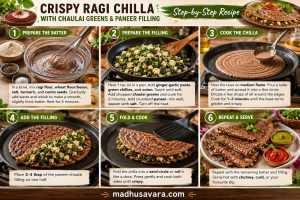
Learn how to make Crispy Ragi Chilla with Chaulai Greens and Paneer Filling through this easy step-by-step visual guide. A wholesome millet-based breakfast packed with protein, fibre, and flavour.
Step 1: Prepare the Batter
In a large mixing bowl, combine the ragi flour, wheat flour (or besan), turmeric powder, cumin seeds, and salt. Gradually add water while whisking continuously to form a smooth, lump-free batter with a slightly thick, dosa-like consistency. Allow the batter to rest for 5 minutes.
Step 2: Prepare the Chaulai-Paneer Filling
Heat 1 teaspoon of oil in a pan over medium heat. Add the ginger-garlic paste, chopped green chillies, and onion. Sauté until the onion turns soft and translucent. Stir in the chopped Chaulai greens and cook for about 2 minutes, or until wilted. Add the crumbled paneer, mix well, and season with salt. Switch off the heat and keep the filling aside.
Step 3: Cook the Ragi Chilla
Heat a tawa or non-stick griddle over medium flame. Pour a ladleful of batter onto the centre and spread it gently into a thin circular chilla. Drizzle a few drops of oil around the edges. Cook for 1–2 minutes until the underside becomes golden brown and crisp.
Step 4: Add the Filling
Place 2–3 tablespoons of the prepared paneer-chaulai mixture on one half of the chilla. Fold it into a semi-circle or roll it like a dosa. Press gently with a spatula and cook for another minute, ensuring both sides are crisp and lightly browned.
Step 5: Repeat and Serve
Repeat the process with the remaining batter and filling. Serve the Crispy Ragi Chilla hot with mint chutney, coriander chutney, curd, or your favourite dip.
Tips and Variations
- For extra crispiness, add a tablespoon of rice flour to the batter.
- Replace paneer with tofu for a vegan version.
- Add grated carrots or spinach for more vegetables.
- Make it spicier with red chilli powder.
Allergen Information
Contains gluten (if wheat flour is used), dairy (paneer). Can be made gluten-free by using only Ragi flour or a millet blend. Nut-free.
Other Essentials
Things to Avoid:
- Do not make the batter too thin — it won’t become crispy.
- Avoid high flames while cooking, as Ragi burns quickly.
- Do not overstuff the filling, or the chilla may tear.
Serving Suggestions: Serve hot with coconut chutney, tomato chutney, green chutney, or a bowl of curd. Pairs beautifully with masala chai.
Storage Instructions: Best consumed fresh. Batter can be refrigerated for up to 24 hours. Cooked chillas can be stored in an airtight container in the fridge for 1 day and reheated on a tawa.
Special Instructions: Use fresh Chaulai greens for the best flavour and nutrition. Always cook on medium heat for perfect crispiness.
FAQs
1. Is this Ragi Chilla suitable for diabetics? Yes, thanks to Ragi’s low glycemic index and high fibre content.
2. Can I make this gluten-free? Absolutely. Skip wheat flour and use only Ragi flour.
3. How much protein does one serving provide? Approximately 14–16g per serving of 2 chillas.
4. Can I prepare the batter in advance? Yes, you can prepare it the night before and store it in the refrigerator.
5. What if I don’t have Chaulai greens? You can substitute spinach or methi leaves.
Conclusion and Call to Action
This Crispy Ragi Chilla / Dosa with Chaulai Greens and Paneer Filling proves that healthy, high-protein breakfasts can be quick, tasty, and deeply satisfying. By incorporating Ragi recipes into your routine, you embrace ancient wisdom for modern wellness. Try this Ragi Paneer Chilla this week and feel the difference!
Visit madhusavara.com for more authentic Ragi recipes and wellness tips. Share your experience in the comments and tag us on social media.
Special Note: This recipe is for informational and educational purposes. Nutritional values are approximate. Consult a healthcare professional or nutritionist before making dietary changes, especially for medical conditions. Madhu Savara and madhusavara.com assume no liability for any outcomes.
Disclaimer
Important Notice: Read Before Proceeding
The recipes, preparation methods, nutritional details, and related content published on Madhu Savara’s website, social media, and associated platforms are intended solely for general informational and educational purposes. While every effort has been made to ensure accuracy and reliability, we make no guarantees regarding the results, safety, or accuracy of any recipe presented here.
We are not licensed nutritionists, dieticians, or medical professionals. The nutritional values provided are estimates only, calculated using third-party tools, and should not be used for medical diagnosis, dietary treatment, or allergy management. If you have any medical conditions, dietary restrictions, or food allergies, please consult your doctor or certified dietitian before attempting any recipe.
Cooking inherently involves sharp tools, high heat, and the risk of injury or fire. You assume full responsibility for your kitchen practices. Madhu Savara, the website, and all contributors shall not be held liable for any damage, injury, loss, or adverse outcome resulting directly or indirectly from the preparation, consumption, or interpretation of any content herein.
By using this website and attempting any recipe, you agree to hold harmless and indemnify Madhu Savara and her team from any liability, legal claim, or damages arising from the use of this content. You are encouraged to exercise independent judgment and take full responsibility for your health, kitchen safety, and actions.