
Author’s Note
Some ingredients belong as much to a landscape as they do to a kitchen. Gucchi mushroom, the wild morel associated with the Indian Himalayas, is one of them.
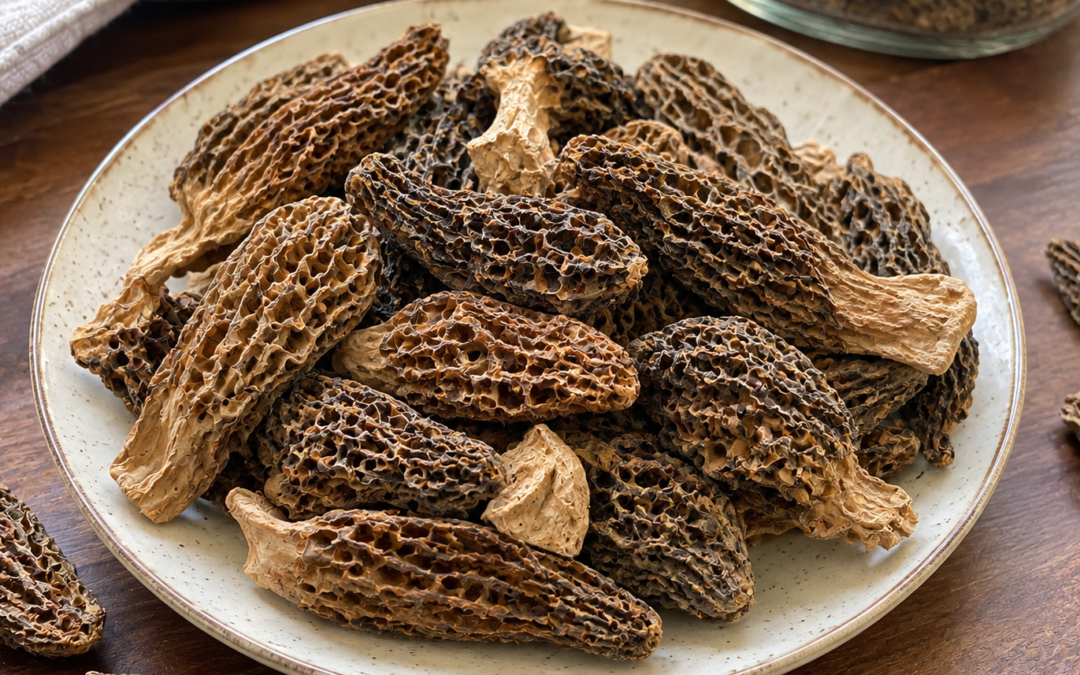
Appearing seasonally in the mountains, Gucchi has traditionally been gathered from the wild, dried and used in regional cooking. Its distinctive honeycomb-like appearance and earthy flavour make it quite different from everyday cultivated mushrooms.
Beyond the kitchen, Gucchi also reflects an older knowledge of seasons, forests and wild foods that continues to form part of Himalayan food culture.
— Madhu Savara
Author & Owner, MadhuSavara.com
Table of Contents
| No. | Section |
|---|---|
| 1 | What is Gucchi Mushroom? |
| 2 | Gucchi in the Indian Himalayas |
| 3 | Gucchi in Village Life and Food Culture |
| 4 | Flavour and Culinary Uses |
| 5 | Fresh and Dried Gucchi |
| 6 | Nutritional Value |
| 7 | Buying, Cleaning and Storing Gucchi |
| 8 | Things to Keep in Mind |
| 9 | Frequently Asked Questions |
| 10 | Final Thoughts |
| 11 | About Madhu Savara |
What is Gucchi Mushroom?
Gucchi, also written as Guchhi, is the Indian name commonly used for edible morels belonging to the genus Morchella.
These mushrooms are easily noticed for their unusual caps, covered with deep pits and ridges that create a honeycomb-like appearance. True morels also have a characteristically hollow interior.
Morels occur in different parts of the world. In India, Gucchi mushroom is particularly associated with the Himalayan region, including Jammu & Kashmir and Himachal Pradesh.
Gucchi is a culinary name rather than the botanical name of a single species. The genus Morchella includes a number of species and lineages, so all morels should not automatically be treated as one species.
Gucchi in the Indian Himalayas
Himalayan Gucchi is traditionally a wild and seasonal ingredient.
Morels appear when temperature, moisture and other natural conditions are favourable. Their earthy colouring also allows them to blend easily into the forest floor, making their collection dependent on familiarity with the landscape.
Although controlled cultivation of morels has developed internationally, the Indian Gucchi tradition remains closely associated with seasonal gathering in the Himalayan region.
Once collected, the mushrooms are commonly dried. This preserves them beyond their short season and allows them to travel from mountain regions to kitchens elsewhere in India.
Gucchi in Village Life and Food Culture
For communities familiar with Gucchi, collecting it represents more than simply finding an unusual mushroom.
It reflects knowledge of season, terrain and local wild foods. People familiar with the landscape know when conditions may favour morels and where they have appeared before.
Collected mushrooms can be dried for household use or sale, connecting a seasonal forest ingredient with the local economy.
This relationship is part of a wider Himalayan food tradition in which the surrounding landscape contributes alongside cultivated fields. Wild greens, mushrooms and other seasonal foods become useful because generations learn to recognise, collect and prepare them.
Practices naturally differ between regions and villages, but Gucchi remains an interesting example of food knowledge rooted in the Himalayan landscape.
Flavour and Culinary Uses
Gucchi has a distinctive earthy, savoury flavour and a firm yet tender texture when properly prepared. Its deeply pitted cap readily holds the flavours of the dish in which it is cooked.
In Indian kitchens, Gucchi mushroom can be used in pulao, curries and regional preparations. Its flavour is best allowed to remain noticeable rather than being covered with excessive spices.
One regional example is Gucchi Mushroom Madra, where morels are cooked in a curd-based Himachali preparation. MadhuSavara.com has a separate Gucchi Mushroom Madra recipe for readers who want to explore the ingredient through a complete dish.
Fresh and Dried Gucchi
Fresh Gucchi is highly seasonal and perishable, while dried Gucchi can be stored and transported for considerably longer.
Dried morels need to be soaked before cooking so that they soften and regain their texture. Their pitted caps can hold fine grit and natural debris, making careful cleaning important.
Fresh and dried Gucchi should also not be compared directly by weight, particularly when discussing nutrition, because drying removes much of the mushroom’s moisture.
Nutritional Value
Morels contain protein, fibre, carbohydrates and various micronutrients, but their composition varies according to Morchella species, growing conditions, geographical origin and whether they are fresh or dried.
Scientific reviews have found considerable variation in the reported nutritional composition of different morel samples.
For this reason, a single nutritional figure should not be presented as universally applicable to every Gucchi mushroom. Its nutritional composition is best understood as variable rather than converted into exaggerated food or medical claims.
Buying, Cleaning and Storing Gucchi
Choose dried Gucchi that is properly dry and free from mould, moisture or an unusual smell. Before cooking, soak and clean the mushrooms carefully, as grit can settle in their pitted caps and hollow centres. Store dried Gucchi in an airtight container away from moisture, heat and direct sunlight.
Things to Keep in Mind
Never Identify Wild Gucchi from Photographs Alone
Wild mushroom identification requires expertise. Never eat a mushroom simply because it resembles photographs of a morel.
Do Not Eat Morels Raw
Gucchi mushrooms should be properly cooked before eating.
Clean Them Carefully
The pits in the cap and the hollow interior can retain grit and forest debris even after drying.
Avoid Spoiled Mushrooms
Do not use Gucchi showing mould, unwanted moisture, deterioration or an abnormal smell.
Frequently Asked Questions
Are Gucchi and Guchhi the same?
Yes. Gucchi and Guchhi are alternative English spellings commonly used for the same Indian culinary ingredient.
Is Gucchi the same as a button mushroom?
No. Gucchi belongs to the genus Morchella, while the common button mushroom is Agaricus bisporus. Their appearance, texture, flavour and growing patterns are different.
Can Gucchi mushrooms be cultivated?
Morels can be cultivated under controlled conditions, and commercial cultivation has developed considerably in some countries. However, Himalayan Gucchi in the Indian food tradition remains strongly associated with wild collection.
Can Gucchi be used like an ordinary mushroom?
It can be used in several mushroom dishes, but its distinctive flavour and texture are better appreciated in preparations where the mushroom remains noticeable.
Is Gucchi found only in India?
No. Morchella species occur in several parts of the world. Gucchi is the Indian culinary name particularly associated with Himalayan morels.
Final Thoughts
Gucchi mushroom is more than an unusual Himalayan ingredient. Its story connects the kitchen with season, landscape and the traditional knowledge required to recognise and gather wild food.
Its distinctive flavour has earned it a place in regional cooking, but its cultural value is equally interesting. Himalayan Gucchi reminds us that Indian food traditions were shaped not only by what people cultivated, but also by what they learnt to gather from the landscape around them.
About Madhu Savara
Madhu Savara is the author and owner of MadhuSavara.com. She writes about Indian recipes, regional ingredients and traditional food knowledge, with a focus on the diverse culinary traditions found across India.