
🌿 A Scholarly Overview of Its Botany, Agroecology, and Cultural
🖋️ Author’s Note:
This article synthesises peer-reviewed scientific literature, ethnobotanical studies, and documented traditional knowledge systems concerning Bunium persicum Boiss. Fedtsch. (Apiaceae). It aims to provide an accurate, evidence-based account of the species’ botanical characteristics, cultivation in Himalayan agroecosystems, and socio-cultural roles, while highlighting conservation imperatives
🌄 Introduction
Kala Jeera, scientifically known as Bunium persicum, is one of the most prized aromatic spices of the Himalayan region. Often referred to as Himalayan Black Cumin, Black Caraway, or Shahi Jeera in certain culinary traditions, this rare spice is native to specific high-altitude mountain ecosystems of the Himalayas and adjoining regions of Central and Western Asia.
Unlike ordinary cumin (Cuminum cyminum), Kala Jeera is adapted to cold mountain environments and grows naturally in alpine and sub-alpine landscapes. Its limited cultivation range, slow growth cycle, and labour-intensive harvesting methods contribute to its rarity and premium value. For generations, it has been an integral part of Himalayan cuisine, traditional food systems, and local agricultural heritage.
🌱 Botanical Identity
Scientific Name: Bunium persicum Boiss. Fedtsch.
Family: Apiaceae (Umbelliferae)
Growth Form: Perennial herbaceous geophyte with underground tubers and stems typically reaching 30–80 cm in height.
Key Characteristics
- Finely dissected feathery leaves
- Small white flowers arranged in compound umbels
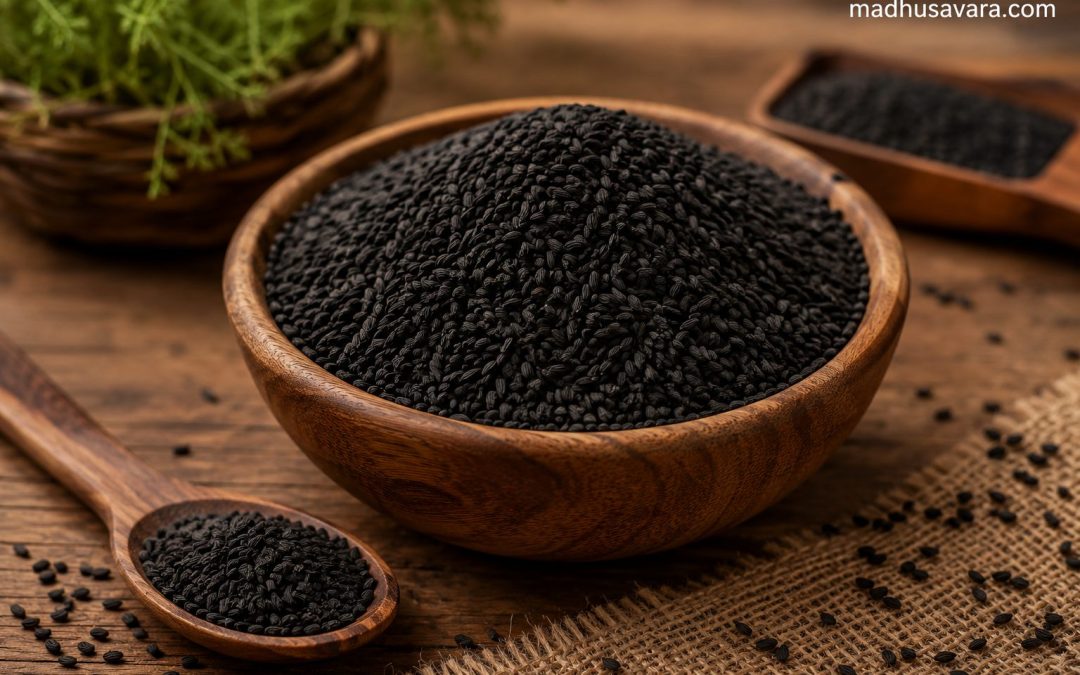
- Slender crescent-shaped seeds
- Dark brown to nearly black colouration
- Strong, earthy, and complex aroma
Kala Jeera is often confused with common cumin (Cuminum cyminum), caraway (Carum carvi), and kalonji (Nigella sativa). However, these are entirely different species. Authentic Kala Jeera possesses a richer aroma with earthy, nutty, and slightly sweet notes that become more pronounced when roasted.
📍 Natural Habitat and Cultivation Zones
Kala Jeera thrives in alpine and sub-alpine ecosystems at elevations ranging from approximately 1,800 to 3,500 metres above sea level. The spice is primarily cultivated and collected in:
- Jammu & Kashmir, particularly high-altitude regions such as Gurez Valley
- Himachal Pradesh, including Kinnaur and Lahaul-Spiti
- Uttarakhand’s upper Himalayan tracts
- Parts of western Nepal
- Afghanistan, Iran, and selected regions of Central Asia
The plant flourishes in cold, dry climates with rocky, well-drained soils and seasonal snowfall. Unlike many commercial spices, Kala Jeera is poorly suited to humid lowland environments and intensive irrigated agriculture.
🌾 Traditional Agroecological Systems
In Himalayan villages, Kala Jeera is generally cultivated within small-scale mixed farming systems rather than large commercial plantations. Farmers often grow the crop in small terraced fields, field borders, or intercrop systems alongside grains and other hardy mountain crops.
Traditional cultivation relies heavily on:
- Rainfed agriculture
- Farmyard manure and organic inputs
- Indigenous farming knowledge
- Biodiversity-friendly practices
In many regions, Kala Jeera remains a semi-domesticated crop closely linked to local ecological conditions and traditional agricultural systems.
🌱 Phenology and Cultivation Practices
Sowing
Sowing usually takes place between April and June after winter snow has melted and soils become workable. Seeds often benefit from natural cold stratification, which improves germination rates.
Growth Cycle
Kala Jeera has a relatively slow growth cycle compared to many cultivated spices. Plants spend several months developing vegetative growth before flowering and seed production.
Harvesting
Harvesting typically occurs between September and November when the seeds reach full maturity. Entire plants are manually cut, sun-dried, and threshed by hand. Due to the rugged mountain terrain and absence of mechanisation, harvesting remains labour-intensive.
Average yields are modest, generally ranging from 100 to 400 kilograms per hectare depending on environmental conditions, cultivation practices, and seed quality.
❄️ Factors Contributing to the Rarity of Kala Jeera
Several factors contribute to the scarcity and high market value of Kala Jeera:
- Restricted geographic distribution
- Dependence on specific high-altitude microclimates
- Small-scale fragmented cultivation
- Slow growth cycle
- Climate sensitivity
- Limited production volumes
- Labour-intensive harvesting and processing
- Pressure on wild populations
- Limited seed improvement and breeding programmes
These challenges highlight the importance of sustainable cultivation and conservation efforts.
🏆 Why Kala Jeera Is Called the Black Gold of the Himalayas
Kala Jeera has earned the title “Black Gold of the Himalayas” because of its rarity, exceptional aroma, cultural significance, and economic value. Unlike common spices that are cultivated across vast agricultural landscapes, authentic Himalayan Kala Jeera is produced only in select mountain regions with highly specialised environmental conditions.
For generations, local communities have treasured the spice for its culinary versatility and traditional uses. Its limited availability and strong demand have made it one of the most valuable spices produced in the Himalayan region.
The spice also supports rural livelihoods in remote mountain areas where agricultural opportunities are often limited. Its cultivation represents not only an economic activity but also a living tradition that connects local communities with their ecological and cultural heritage.
🏔️ Socio-Cultural and Economic Role in Himalayan Communities
In many Himalayan villages, Kala Jeera serves both as a household spice and a valuable supplementary source of income. Families traditionally preserve their own seed stock and cultivate the crop on small mountain terraces using knowledge passed down through generations.
The spice plays an important role in:
- Daily lentil and rice preparations
- Traditional meat dishes such as Rogan Josh and Yakhni
- Winter foods and herbal preparations
- Pickles and spice blends
- Festive and ceremonial meals
The knowledge associated with Kala Jeera cultivation, harvesting, storage, and culinary use forms an important part of Himalayan biocultural heritage.
🌿 Phytochemistry and Nutritional Profile
Kala Jeera seeds contain a rich array of essential oils and bioactive compounds. Major constituents include:
- Cuminaldehyde
- Gamma-terpinene
- p-Cymene
- Beta-pinene
- Various phenolic compounds and antioxidants
These compounds contribute to the spice’s distinctive aroma and have been associated with antioxidant, antimicrobial, digestive, and anti-inflammatory properties in scientific studies.
🍲 Culinary Applications
Kala Jeera is highly valued for its intense aroma and flavour.
Common Uses
- Tempering dals and curries
- Flavouring rice dishes and pulaos
- Seasoning meat preparations
- Enhancing traditional Himalayan recipes
- Incorporating into Mughlai cuisine
For best results, the seeds are lightly roasted or tempered in ghee or oil to release their aromatic compounds.
🔍 How to Identify Pure Kala Jeera
With growing demand, adulteration and mislabelling are increasingly common.
Authentic Kala Jeera seeds are:
- Small and slender
- Crescent-shaped
- Dark brown to nearly black
- Matte rather than glossy
- Intensely aromatic when crushed
Genuine Himalayan Black Cumin produces a deep, earthy aroma with subtle sweet notes and should be free from mould, excessive broken material, or foreign impurities.
Checking the botanical name Bunium persicum and purchasing from trusted suppliers can help ensure authenticity.
🏺 Storage Recommendations
Store whole Kala Jeera seeds in airtight, opaque containers away from moisture, sunlight, and excessive heat.
For maximum flavour retention:
- Keep seeds whole until needed
- Avoid prolonged exposure to the air
- Store in a cool, dry environment
Properly stored seeds can maintain their aroma and quality for extended periods.
🎓 Research and Conservation Efforts
Agricultural universities, research institutions, and local communities are actively working to conserve Kala Jeera and improve its sustainable cultivation.
Key focus areas include:
- Documentation of indigenous knowledge
- Conservation of genetic diversity
- Climate resilience research
- Sustainable harvesting techniques
- Improved cultivation practices
- Support for mountain farming communities
These efforts are increasingly important as climate change and habitat degradation pose challenges to traditional cultivation systems.
❓ Frequently Asked Questions
Is Kala Jeera the same as ordinary cumin?
No. Kala Jeera (Bunium persicum) is a different species with distinct botanical, ecological, and culinary characteristics.
When is Kala Jeera harvested?
Harvesting generally occurs between September and November after seed maturity.
Why is Kala Jeera so expensive?
Its rarity results from limited cultivation areas, specialised growing conditions, low yields, and labour-intensive harvesting methods.
Is Kala Jeera cultivated on a commercial scale?
Production remains largely small-scale and concentrated in traditional Himalayan farming systems.
What is the primary use of Kala Jeera?
Kala Jeera is primarily used as a premium culinary spice in Himalayan and North Indian cuisine, although it also holds significance in traditional food and herbal practices.
🌿 Conclusion
Kala Jeera (Bunium persicum) represents a remarkable intersection of Himalayan ecology, traditional farming knowledge, cultural heritage, and culinary excellence. Its rarity, distinctive aroma, and historical importance have earned it the reputation of being the Black Gold of the Himalayas.
Protecting this valuable spice requires continued collaboration among researchers, policymakers, and local communities to promote sustainable cultivation, conserve biodiversity, and preserve the traditional knowledge that has sustained Kala Jeera cultivation for generations.
⚠️ Disclaimer
This article is intended solely for educational and informational purposes. It is based on publicly available scientific, agricultural, and ethnobotanical information and should not be considered medical, agricultural, or therapeutic advice. Readers should consult qualified professionals before using Kala Jeera for health-related purposes or implementing cultivation practices. Traditional uses described in this article reflect cultural heritage and should be interpreted alongside modern scientific evidence and local regulations.
