
Authentic Lucknowi Biryani Recipe | Traditional Awadhi Lucknowi Biryani | Royal Dum Mutton Biryani
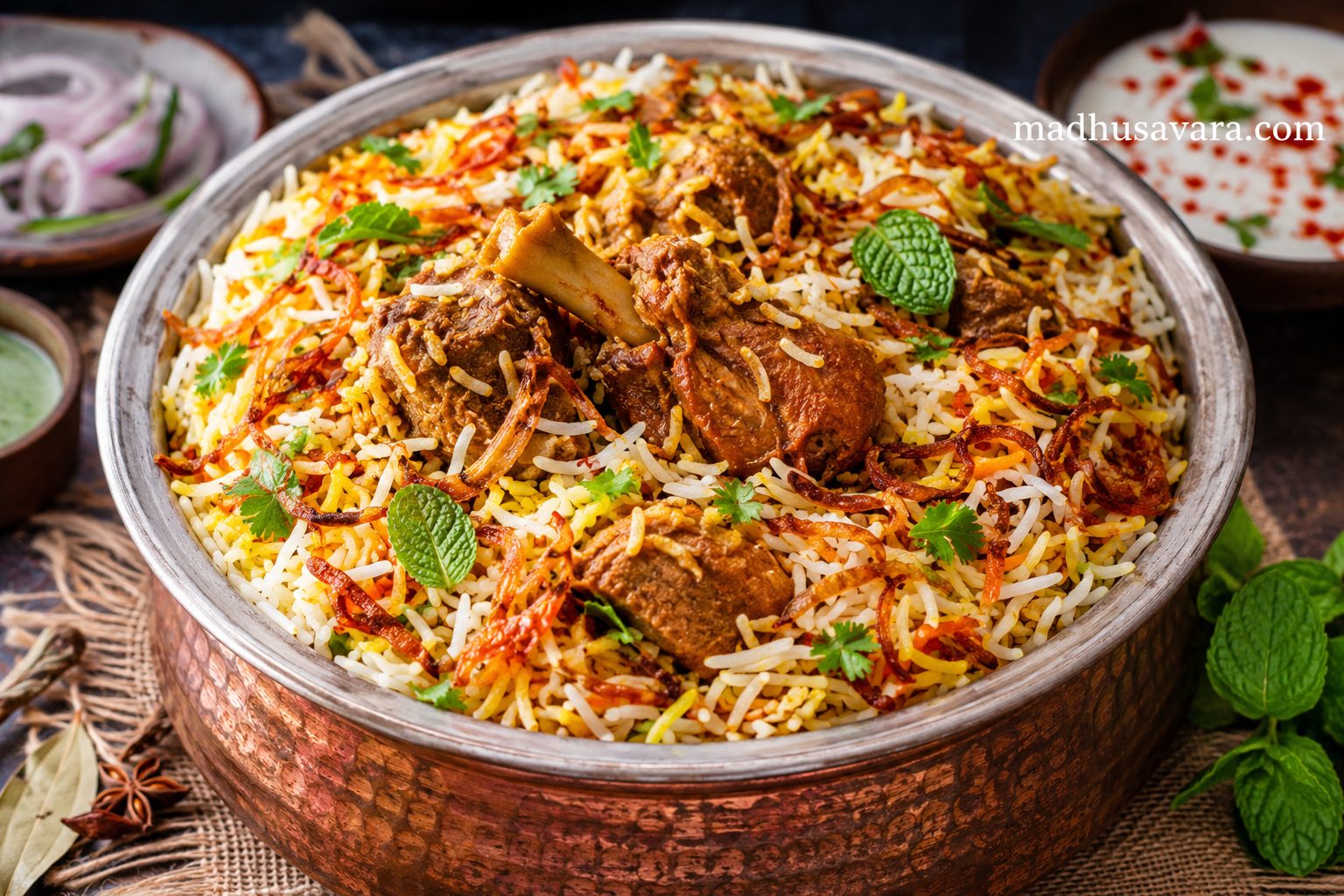
Authentic Lucknowi Biryani Recipe served in a traditional copper handi with saffron-infused basmati rice, tender dum-cooked mutton, crispy fried onions, fresh mint, and aromatic Awadhi spices.

Lucknowi Biryani Recipe is one of the finest treasures of Indian cuisine. Unlike heavily spiced biryanis, Authentic Lucknowi Biryani is known for elegance, balance, aroma, and refinement. Every grain of rice is expected to remain separate, every spice is used with restraint, and every layer reflects the sophistication of Awadhi cooking.

During my culinary journeys and research into regional Indian food traditions, I found that the true beauty of Traditional Lucknowi Biryani lies in its subtlety. It does not overwhelm the palate. Instead, it slowly unfolds layers of saffron, kewra, fragrant rice, and perfectly cooked mutton.


What is Lucknowi Biryani?

Lucknowi Biryani Recipe is a traditional rice-and-meat preparation originating from the royal kitchens of Awadh in present-day Uttar Pradesh. The dish combines fragrant basmati rice, delicately spiced mutton, saffron, kewra water, and aromatic herbs using the famous dum cooking technique.

Authentic Lucknowi Biryani differs significantly from many other biryani styles. The emphasis is on fragrance rather than heat, elegance rather than intensity, and balance rather than excess.

The hallmark of Traditional Lucknowi Biryani is the Pakki Biryani method, where the meat is cooked separately before being layered with partially cooked rice and finished on dum.

Origin and History of Lucknowi Biryani

The story of the Lucknowi Biryani Recipe begins in the royal courts of the Nawabs of Awadh during the eighteenth century.

Persian culinary traditions entered India through royal influences and gradually merged with local ingredients and cooking techniques. The royal chefs of Awadh refined these methods and developed a cuisine known today as Awadhi cuisine.

The Nawabs were great patrons of food and hospitality. Their royal kitchens employed highly skilled cooks who specialised in slow cooking methods, delicate spice blends, and luxurious ingredients.

Authentic Lucknowi Biryani emerged from these kitchens as a dish worthy of kings. Unlike rustic rice dishes, it was carefully crafted to deliver sophistication and balance in every bite.

Today, Traditional Lucknowi Biryani remains one of India’s most respected biryani styles and continues to be celebrated across the country.

Cultural Significance of Awadhi Biryani

Authentic Lucknowi Biryani represents much more than food.

It symbolises:

• Nawabi hospitality

• The culinary heritage of Awadh

• Traditional dum cooking techniques

• Celebration and togetherness

• The refinement of Indian royal cuisine

In many households, Lucknowi Biryani Recipe is reserved for weddings, Eid celebrations, family feasts, festive occasions, and special gatherings.

Why You Will Love This Lucknowi Biryani Recipe

Authentic Awadhi Flavours

This recipe follows traditional cooking principles that have been preserved for generations.

Perfectly Cooked Mutton

Slow-cooked mutton becomes tender, juicy, and infused with aromatic spices.

Fragrant Rice

Every grain remains separate, light, and aromatic.

Ideal for Celebrations

Authentic Lucknowi Biryani is a showstopper for festive meals and special occasions.

Make-Ahead Friendly

The biryani tastes even better after resting, making it perfect for entertaining guests.

Table of Contents

  1. What is Lucknowi Biryani?
  2. Origin and History of Lucknowi Biryani
  3. Cultural Significance of Awadhi Biryani
  4. Why You Will Love This Lucknowi Biryani Recipe
  5. Recipe Overview
  6. Ingredients for Lucknowi Biryani
  7. Equipment Needed
  8. How to Make Authentic Lucknowi Biryani
  9. Cooking Notes

Servings

6 persons

Preparation Time:

Preparation Time 45 Minutes Marination Time 2 Hours

Cooking Time:

1 Hour 15 Minutes

Calories

620

Ingredients

For the Mutton Marinade

750 grams mutton, medium-sized pieces

1 cup thick curd

1 tablespoon ginger paste

1 tablespoon garlic paste

1 teaspoon red chilli powder

1 teaspoon white pepper powder

1 teaspoon salt

½ teaspoon turmeric powder

For Cooking the Mutton

2 tablespoons ghee

2 bay leaves

4 green cardamoms

2 black cardamoms

4 cloves

1 small cinnamon stick

1 large onion, finely sliced

For the Rice

500 grams aged basmati rice

3 litres water

2 bay leaves

6 green cardamoms

4 cloves

1 cinnamon stick

1 tablespoon salt

For Layering

3 tablespoons ghee

10 to 12 saffron strands

3 tablespoons warm milk

2 tablespoons kewra water

1 tablespoon rose water

¼ cup chopped mint leaves

¼ cup chopped coriander leaves

1 cup fried onions

Equipment Needed

Essential Equipment

Heavy-bottomed handi

Large stock pot

Mixing bowl

Sharp knife

Measuring cups

Measuring spoons

Slotted spoon

Traditional Equipment

Atta dough for sealing dum

Iron tawa for slow cooking

Nutrition Information

Nutrient Amount Per Serving
Calories 620 kcal
Protein 28 g
Carbohydrates 62 g
Fat 27 g
Saturated Fat 10 g
Fibre 3 g
Sugar 4 g
Sodium 620 mg
Potassium 480 mg
Iron 18% DV
Calcium 10% DV

Step by Step Instructions

Step 1: Marinate the Mutton

In a large bowl, combine mutton, curd, ginger paste, garlic paste, red chilli powder, white pepper powder, turmeric, and salt.

Mix thoroughly until every piece is coated.

Cover and refrigerate for at least 2 hours. Overnight marination delivers the best flavour.

Step 2: Prepare Fried Onions

Heat ghee in a heavy pan.

Fry sliced onions until golden brown and crisp.

Remove and drain on absorbent paper.

Set aside.

Step 3: Cook the Mutton

Heat ghee in a handi.

Add bay leaves, cardamom, cloves, and cinnamon.

Allow the spices to release their aroma.

Add sliced onions and sauté until lightly golden.

Add marinated mutton.

Cook over medium heat for 10 minutes.

Reduce the flame and continue cooking until the mutton becomes tender.

Add a little hot water if necessary.

The gravy should be thick and cling to the meat.

Step 4: Prepare the Saffron Infusion

Soak saffron strands in warm milk.

Allow the saffron to release its colour and aroma for 15 minutes.

Step 5: Cook the Rice

Wash basmati rice gently until the water runs clear.

Soak for 30 minutes.

Bring water to a boil.

Add whole spices and salt.

Add soaked rice.

Cook until approximately 70 per cent done.

Drain immediately.

The grains should still have a slight bite in the centre.

Step 6: Begin Layering

Spread the cooked mutton evenly in the handi.

Place a layer of partially cooked rice over the mutton.

Sprinkle fried onions.

Add mint and coriander leaves.

Drizzle saffron milk.

Add kewra water and rose water.

Repeat if making multiple layers.

Step 7: Seal for Dum

Cover the handi with a tight-fitting lid.

Seal the edges using wheat flour dough.

Place the handi over a tawa on low heat.

Cook on dum for 30 minutes.

Step 8: Rest Before Serving

Switch off the flame.

Allow the biryani to rest undisturbed for 15 minutes before opening.

This resting period allows the flavours to settle beautifully.

Cooking Notes

Authentic Lucknowi Biryani should never be excessively spicy.

The aroma should be delicate and balanced.

The rice must remain separate and fluffy.

The mutton should be tender enough to break with gentle pressure from a spoon.

Most importantly, patience during dum cooking is the secret to achieving restaurant-quality results at home.

Tips and Variations

Use Aged Basmati Rice

Authentic Lucknowi Biryani requires aged long-grain basmati rice. The grains remain separate and absorb flavours beautifully.

Marinate for Longer

While two hours is sufficient, overnight marination creates deeper flavour and more tender mutton.

Do Not Rush Dum Cooking

The signature aroma of Traditional Lucknowi Biryani develops during slow dum cooking.

Use Fresh Saffron

Fresh saffron imparts colour, aroma, and authenticity that artificial colouring agents cannot replicate.

Cook Rice Only to 70 Percent

Overcooked rice can result in a mushy biryani after dum.

Variations of Lucknowi Biryani

Chicken Lucknowi Biryani

Replace mutton with 1 kilogram of bone-in chicken. Reduce cooking time accordingly.

Shahi Lucknowi Biryani

Add fried cashews, almonds, and raisins for a richer Nawabi experience.

Vegetable Lucknowi Biryani

Use potatoes, carrots, beans, peas, and paneer for a vegetarian adaptation.

Festival Special Lucknowi Biryani

Enhance the biryani with edible silver leaf and extra saffron for special occasions.

Allergen Information

This Authentic Lucknowi Biryani Recipe contains:

Dairy

Curd, milk, ghee, and saffron-infused milk.

Possible Allergens

Whole spices may cause sensitivity in some individuals.

Gluten

The recipe itself is naturally gluten-free. However, wheat flour dough used for sealing the handi during dum cooking contains gluten. It does not directly mix with the biryani but should be noted for those with severe gluten intolerance.

Other Essentials

Storage Instructions

Refrigeration

Store leftover Lucknowi Biryani in an airtight container for up to 2 days.

Freezing

Freeze portions in freezer-safe containers for up to 1 month.

Reheating

Sprinkle a few drops of water before reheating to prevent the rice from drying out.

For best flavour, reheat on low heat rather than using high microwave settings.

Things to Avoid While Making Lucknowi Biryani

Avoid Overcooking the Rice

Rice should remain slightly undercooked before layering.

Avoid Excessive Spice Powders

Authentic Lucknowi Biryani is known for subtle aromas, not overpowering heat.

Avoid Skipping the Resting Period

Allowing the biryani to rest after dum cooking significantly improves flavour distribution.

Avoid Cheap Rice Varieties

Good-quality aged basmati rice is essential for authentic results.

Avoid Frequent Lid Opening

Opening the handi during dum releases valuable steam and aroma.

Serving Suggestions

Serve this Authentic Lucknowi Biryani Recipe with:

Burani Raita

The cooling garlic-flavoured yoghurt complements the richness of the biryani.

Onion Lachha Salad

Fresh onion rings with lemon juice provide excellent contrast.

Mirchi Ka Salan

A mildly spiced gravy that pairs beautifully with Awadhi rice dishes.

Shahi Tukda

A traditional royal dessert that completes the Nawabi dining experience.

Mint Raita

A refreshing accompaniment for festive meals.

Frequently Asked Questions

What makes Lucknowi Biryani different from Hyderabadi Biryani?

Authentic Lucknowi Biryani follows the Pakki method, where the meat is cooked separately before layering with rice. Hyderabadi Biryani often follows the Kacchi method, where raw marinated meat cooks together with rice. Lucknowi Biryani also uses milder spices and focuses more on aroma than heat.

Which rice is best for Lucknowi Biryani Recipe?

Aged long-grain basmati rice is considered essential for Traditional Lucknowi Biryani. It provides excellent aroma, texture, and grain separation.

Can I make Lucknowi Biryani with chicken instead of mutton?

Yes. Chicken can be substituted successfully. However, the traditional and historically authentic version uses mutton.

Why is my biryani rice breaking?

Rice usually breaks because it has been stirred excessively, soaked too long, or overcooked during boiling.

How do I know when the biryani is ready?

A perfectly cooked Lucknowi Biryani releases a rich aroma, the rice remains fluffy and separate, and the mutton becomes fork-tender.

Can I prepare Lucknowi Biryani in advance?

Yes. In fact, many cooks believe the flavours improve after a few hours of resting.

Is saffron necessary?

Saffron is strongly recommended for authenticity, aroma, and colour. However, the recipe can still be prepared without it if unavailable.

What is the secret behind authentic dum cooking?

The secret lies in sealing the vessel properly and allowing slow cooking over low heat. The trapped steam gently cooks the layers and blends all flavours.

Why This Lucknowi Biryani Recipe Deserves a Place in Your Recipe Collection

This Authentic Lucknowi Biryani Recipe combines centuries of culinary tradition with practical home cooking techniques. It is elegant enough for celebrations, comforting enough for family gatherings, and impressive enough to serve guests on special occasions.

Every layer reflects the rich culinary heritage of Awadh, making it one of the most treasured rice dishes in Indian cuisine.

More Traditional Recipes on Madhusavara.com

If you enjoyed this Authentic Lucknowi Biryani Recipe, do explore other traditional recipes on madhusavara.com, including:

Authentic Himachali Dham Recipes

Traditional Chutneys and Pickles

Regional Indian Rice Dishes

Festival Special Sweets

Heritage Recipes from Across India

At Madhusavara.com, our mission is to preserve and celebrate authentic regional cooking traditions for future generations.

Conclusion

Authentic Lucknowi Biryani Recipe stands as a shining example of India’s royal culinary heritage. The fragrant basmati rice, tender mutton, delicate spices, saffron, and traditional dum cooking method come together to create a meal that is both luxurious and comforting.

Whether you prepare this Traditional Lucknowi Biryani for Eid, family celebrations, festive gatherings, or a memorable weekend meal, it is guaranteed to leave a lasting impression on everyone at the table.

Take your time, follow the traditional techniques, and enjoy one of the finest masterpieces of Awadhi cuisine.

Author Bio

About Madhu Savara

Madhu Savara is a passionate culinary writer, recipe developer, and the founder of madhusavara.com. With a deep appreciation for India’s regional food traditions, she is dedicated to documenting authentic recipes, preserving culinary heritage, and helping home cooks recreate traditional dishes with confidence.

Through Madhusavara.com, Madhu shares carefully researched recipes that celebrate the diversity, history, and flavours of Indian and international cuisines. Her work focuses on authenticity, practical cooking guidance, and storytelling that connects readers with the rich cultural roots behind every dish.

Disclaimer

Important Notice: Read Before Proceeding

The recipes, preparation methods, nutritional details, and related content published on Madhu Savara’s website, social media, and associated platforms are intended solely for general informational and educational purposes. While every effort has been made to ensure accuracy and reliability, we make no guarantees regarding the results, safety, or accuracy of any recipe presented here.

We are not licensed nutritionists, dieticians, or medical professionals. The nutritional values provided are estimates only, calculated using third-party tools, and should not be used for medical diagnosis, dietary treatment, or allergy management. If you have any medical conditions, dietary restrictions, or food allergies, please consult your doctor or certified dietitian before attempting any recipe.

Cooking inherently involves sharp tools, high heat, and the risk of injury or fire. You assume full responsibility for your kitchen practices. Madhu Savara, the website, and all contributors shall not be held liable for any damage, injury, loss, or adverse outcome resulting directly or indirectly from the preparation, consumption, or interpretation of any content herein.

By using this website and attempting any recipe, you agree to hold harmless and indemnify Madhu Savara and her team from any liability, legal claim, or damages arising from the use of this content. You are encouraged to exercise independent judgment and take full responsibility for your health, kitchen safety, and actions.


Authentic Lucknowi Biryani Recipe served in a traditional copper handi with saffron-infused basmati rice, tender dum-cooked mutton, crispy fried onions, fresh mint, and aromatic Awadhi spices.
Print

Authentic Lucknowi Biryani Recipe | Traditional Awadhi Lucknowi Biryani | Royal Dum Mutton Biryani

Lucknowi Biryani Recipe is one of the finest treasures of Indian cuisine. Unlike heavily spiced biryanis, Authentic Lucknowi Biryani is known for elegance, balance, aroma, and refinement. Every grain of rice is expected to remain separate, every spice is used with restraint, and every layer reflects the sophistication of Awadhi cooking.
During my culinary journeys and research into regional Indian food traditions, I found that the true beauty of Traditional Lucknowi Biryani lies in its subtlety. It does not overwhelm the palate. Instead, it slowly unfolds layers of saffron, kewra, fragrant rice, and perfectly cooked mutton.
Course Main Course
Cuisine Indian, Lucknow, North India
Keyword authentic lucknowi biryani recipe at home, dum cooked lucknowi biryani recipe, how to make authentic lucknowi biryani, nawabi awadhi biryani recipe, royal mutton lucknowi biryani recipe, traditional awadhi lucknowi biryani recipe
Prep Time 45 minutes
Cook Time 1 hour 15 minutes
marination time 2 hours
Total Time 4 hours
Servings 6 People
Calories 620kcal
Author Madhu Savara
Cost NA

Equipment

  • Essential EquipmentTraditional EquipmentHeavy-bottomed handiLarge stock potMixing bowlSharp knifeMeasuring cupsMeasuring spoonsSlotted spoonAtta dough for sealing dumIron tawa for slow cooking

Ingredients

  • Ingredients for Authentic Lucknowi Biryani
  • For the Mutton Marinade
  • 750 grams mutton medium-sized pieces
  • 1 cup thick curd
  • 1 tablespoon ginger paste
  • 1 tablespoon garlic paste
  • 1 teaspoon red chilli powder
  • 1 teaspoon white pepper powder
  • 1 teaspoon salt
  • ½ teaspoon turmeric powder
  • For Cooking the Mutton
  • 2 tablespoons ghee
  • 2 bay leaves
  • 4 green cardamoms
  • 2 black cardamoms
  • 4 cloves
  • 1 small cinnamon stick
  • 1 large onion finely sliced
  • For the Rice
  • 500 grams aged basmati rice
  • 3 litres water
  • 2 bay leaves
  • 6 green cardamoms
  • 4 cloves
  • 1 cinnamon stick
  • 1 tablespoon salt
  • For Layering
  • 3 tablespoons ghee
  • 10 to 12 saffron strands
  • 3 tablespoons warm milk
  • 2 tablespoons kewra water
  • 1 tablespoon rose water
  • ¼ cup chopped mint leaves
  • ¼ cup chopped coriander leaves
  • 1 cup fried onions

Instructions

  • Step 1: Marinate the Mutton
  • In a large bowl, combine mutton, curd, ginger paste, garlic paste, red chilli powder, white pepper powder, turmeric, and salt.
  • Mix thoroughly until every piece is coated.
  • Cover and refrigerate for at least 2 hours. Overnight marination delivers the best flavour.
  • Step 2: Prepare Fried Onions
  • Heat ghee in a heavy pan.
  • Fry sliced onions until golden brown and crisp.
  • Remove and drain on absorbent paper.
  • Set aside.
  • Step 3: Cook the Mutton
  • Heat ghee in a handi.
  • Add bay leaves, cardamoms, cloves, and cinnamon.
  • Allow the spices to release their aroma.
  • Add sliced onions and sauté until lightly golden.
  • Add marinated mutton.
  • Cook over medium heat for 10 minutes.
  • Reduce the flame and continue cooking until the mutton becomes tender.
  • Add a little hot water if necessary.
  • The gravy should be thick and cling to the meat.
  • Step 4: Prepare the Saffron Infusion
  • Soak saffron strands in warm milk.
  • Allow the saffron to release its colour and aroma for 15 minutes.
  • Step 5: Cook the Rice
  • Wash basmati rice gently until the water runs clear.
  • Soak for 30 minutes.
  • Bring water to a boil.
  • Add whole spices and salt.
  • Add soaked rice.
  • Cook until approximately 70 percent done.
  • Drain immediately.
  • The grains should still have a slight bite in the centre.
  • Step 6: Begin Layering
  • Spread the cooked mutton evenly in the handi.
  • Place a layer of partially cooked rice over the mutton.
  • Sprinkle fried onions.
  • Add mint and coriander leaves.
  • Drizzle saffron milk.
  • Add kewra water and rose water.
  • Repeat if making multiple layers.
  • Step 7: Seal for Dum
  • Cover the handi with a tight-fitting lid.
  • Seal the edges using wheat flour dough.
  • Place the handi over a tawa on low heat.
  • Cook on dum for 30 minutes.
  • Step 8: Rest Before Serving
  • Switch off the flame.
  • Allow the biryani to rest undisturbed for 15 minutes before opening.
  • This resting period allows the flavours to settle beautifully.

Notes

Cooking Notes

Authentic Lucknowi Biryani should never be excessively spicy.
The aroma should be delicate and balanced.
The rice must remain separate and fluffy.
The mutton should be tender enough to break with gentle pressure from a spoon.
Most importantly, patience during dum cooking is the secret to achieving restaurant-quality results at home.