Kasrod Pickle Recipe – Traditional Chamba Fiddlehead Fern Achar
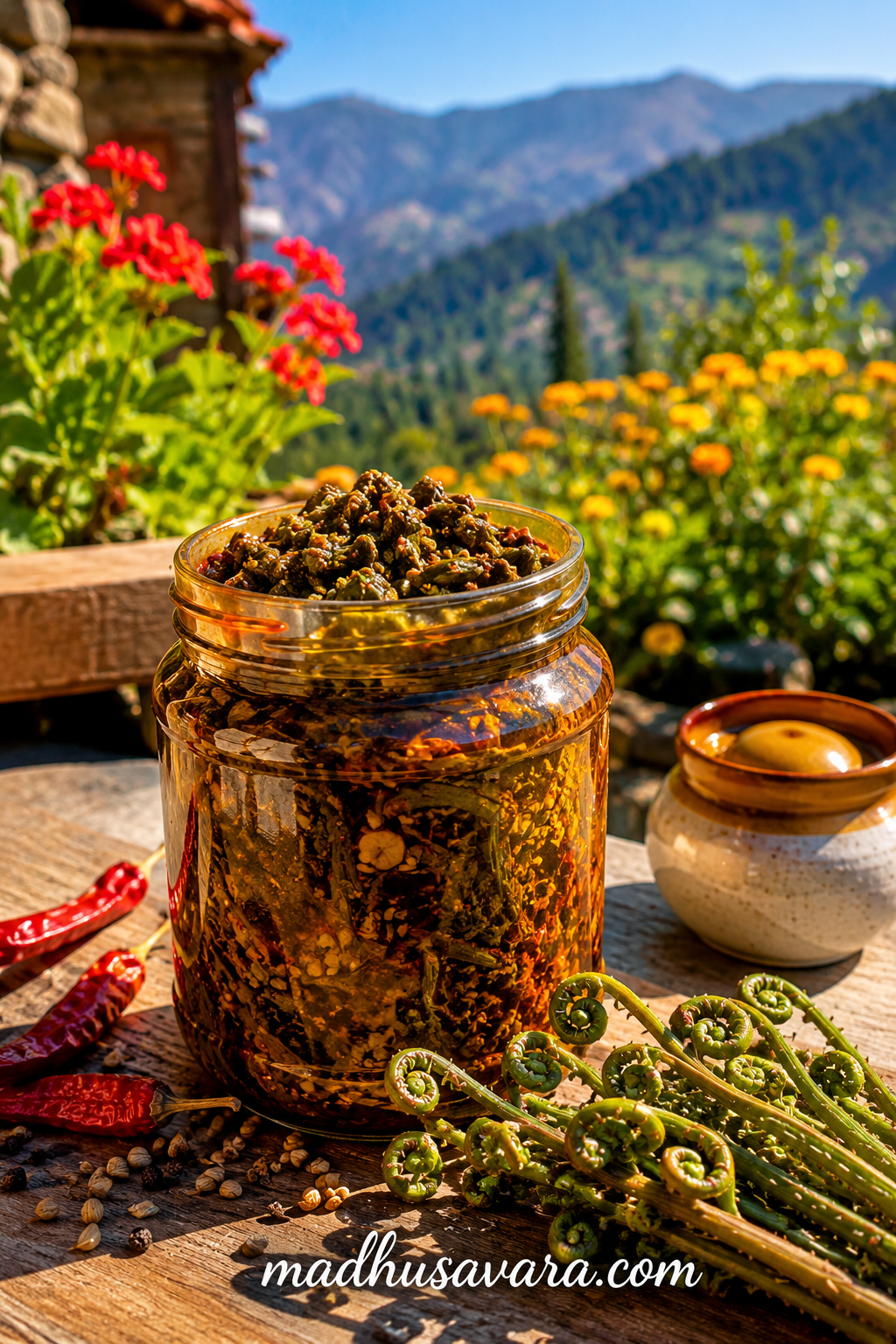
Traditional Kasrod pickle in a glass jar with fresh fiddlehead ferns and spices on a wooden table in sunlight.

Author’s Note

Namaste. I am Madhu Savara, author and owner of madhusavara.com. I have always enjoyed bringing traditional Indian and Himalayan food to readers in a simple and practical way. This Kasrod pickle recipe is based on the traditional way of preparing Kasrod achar from tender fiddlehead fern, commonly associated with Chamba and Himachal Pradesh. In this recipe, Kasrod pickle is prepared with mustard oil and traditional pickle spices to preserve the seasonal fern for longer use. I have explained the ingredients, preparation and storage in an easy-to-follow manner so that readers can understand how this traditional Chamba delicacy is prepared at home. If you are using fresh Kasrod, make sure the plant is correctly identified before cooking or pickling.

Description of the Recipe

Kasrod pickle is a traditional Chamba delicacy prepared from the tender, tightly coiled fronds of Kasrod, the local name associated with the edible fiddlehead fern Diplazium esculentum. In this Kasrod pickle recipe, the young fronds are cleaned, briefly blanched and dried before being mixed with mustard oil, mustard powder, turmeric, red chilli and salt. The pickle develops a tangy, mildly bitter and spicy taste as the ingredients mature together. Kasrod achar can be served in small quantities with rice, roti or a traditional Indian meal. Making Kasrod pickle is also a practical way of preserving a seasonal ingredient beyond its short fresh season. The exact taste and method can vary between households, with some families using their own combination of spices and preparation techniques.

Origin and Significance

Kasrod Chamba is closely associated with the seasonal food traditions of Chamba and the wider Himalayan region. The young Himachali fiddlehead fern is known by different local names in different areas, including Lingad, Lingri and Lungdu. In Chamba, it is commonly known as Kasrod. Traditional Kasrod pickle reflects the familiar Himalayan practice of preserving seasonal vegetables as achar, allowing a limited-season ingredient to be enjoyed later. Along with Kasrod sabzi, Kasrod achar remains a traditional way of preparing this distinctive fiddlehead fern.

Table of Contents

  1. Author’s Note
  2. Description of the Recipe
  3. Origin and Significance
  4. Ingredients
  5. Nutritional Value
  6. Equipment Needed
  7. Step-by-Step Kasrod Pickle Recipe
  8. Allergen Information
  9. Madhu Savara’s Tips and Variations
  10. Things to Avoid
  11. Storage
  12. Frequently Asked Questions
  13. CTA
  14. Final Thoughts
  15. Author’s Bio

Servings

20 grams per person

Preparation Time:

50 Minutes plus 6 hours for drying, fermentation time 10 days

Cooking Time:

7 Minutes for blanching,

Calories

45

Ingredients

Ingredients

For approximately 500 g of cleaned Kasrod

  • Fresh young Kasrod (Himachali fiddlehead fern) – 500–600 g
  • Mustard oil – 150–200 ml
  • Mustard seed powder (rai powder) – 2–2½ tbsp
  • Salt – 1½–2 tsp, or to taste
  • Turmeric powder – 1 tsp
  • Red chilli powder – 1–1½ tsp, or to taste
  • Fenugreek seeds (methi dana), lightly roasted and powdered – 1 tsp
  • Asafoetida (hing) – a small pinch, optional
  • Water – sufficient for blanching
  • Turmeric powder – ½ tsp, for blanching

Equipment Needed

Needed

  • Large bowl – for cleaning Kasrod
  • Knife and chopping board – for trimming and cutting the fronds
  • Large saucepan – for blanching Kasrod
  • Clean cotton cloth or large tray – for draining and drying the fronds
  • Mixing bowl – for combining Kasrod with oil and spices
  • Clean, completely dry glass jar with a tight-fitting lid – for storing the Kasrod pickle
  • Clean wooden or steel spoon – for mixing and transferring the pickle

Nutrition Information

Check Values

Nutrient / ComponentFresh KasrodKasrod Pickle
CaloriesNaturally lowHigher due to mustard oil
ProteinProvides some proteinPresent in small amounts
Dietary fibreProvides dietary fibrePresent, depending on preparation
Vitamin APresent as carotenoidsVaries after preparation
Vitamin CPresent in fresh frondsMay reduce during preparation
IronProvides some ironPresent in small amounts
PotassiumProvides potassiumPresent in small amounts
Mustard oil & spicesNot applicableMajor components of the pickle

Step by Step Instructions

Kasrod Pickle Recipe

  1. Select young, tightly coiled Kasrod fiddlehead fern fronds. Gently remove the brown scales and fine hairs. Wash the fronds thoroughly 2–3 times and cut them into 2–3 cm pieces.
  2. Bring sufficient water to a boil in a saucepan. Add ½ teaspoon turmeric powder. Add the prepared Kasrod and blanch for 2–3 minutes.
  3. Drain the Kasrod immediately and rinse once with cold water. Spread the pieces in a single layer on a clean cloth or tray.
  4. Sun-dry or air-dry the Kasrod until completely free of surface moisture.
  5. Heat the mustard oil until it reaches the smoking point. Switch off the heat and allow the oil to cool completely.
  6. Place the dried Kasrod in a clean, dry mixing bowl. Add salt, turmeric powder, red chilli powder, mustard seed powder, roasted fenugreek powder and hing, if using.
  7. Mix the Kasrod and spices thoroughly.
  8. Pour the cooled mustard oil over the mixture and mix well until the Kasrod pieces are evenly coated.
  9. Transfer the prepared Kasrod pickle into a clean, completely dry glass jar. Press the mixture down gently and leave a little space at the top.
  10. Close the jar tightly and place it in sunlight for 7–15 days. Stir once every 2–3 days with a clean, dry spoon.
  11. The Kasrod achar is ready when the flavours have blended, and the sharp raw taste of the mustard has mellowed.

Tips and Variations

Madhu Savara’s Tips and Variations

  • Dry the blanched Kasrod thoroughly before mixing it with the pickle spices.
  • Adjust the amount of red chilli powder to taste.
  • Roasted and coarsely powdered fennel seeds or ajwain can be added for a different flavour.
  • If there is little sunlight, allow the Kasrod pickle to mature for a longer period in a clean, dry place.
  • For a softer, oilier Kasrod achar, increase the mustard oil slightly according to your preference.

Allergen Information

Information

  • Mustard: Contains mustard seeds and mustard oil. Mustard is a known allergen for some people.
  • Gluten: No gluten-containing ingredients are used in this recipe.
  • Dairy: No dairy ingredient is used.
  • Nuts: No nuts are used.
  • Soy: No soy ingredient is used.
  • Cross-contamination: If you have a known food allergy or sensitivity, check packaged spice powders and other ingredients for possible cross-contamination.
Other Essentials

Things to Avoid

  • Do not use mature or fully unfurled Kasrod fiddlehead fern fronds for this recipe.
  • Clean the young Kasrod fronds properly before blanching and pickling.
  • Do not mix damp Kasrod with the pickle spices and mustard oil.
  • Do not handle Kasrod pickle with wet hands or a wet spoon.
  • Use a clean, completely dry glass jar for storing the Kasrod achar.
  • Do not introduce moisture into the pickle during storage.

Storage

After the Kasrod pickle recipe is prepared and the pickle has matured, keep the jar in a cool, dry place away from direct sunlight. Always use a clean and dry spoon when serving.

The storage life of homemade Kasrod pickle depends on the preparation, drying, oil, cleanliness and storage conditions. Rather than relying on a fixed number of months, check the pickle before use. If you notice mould, an unusual appearance or an unpleasant smell, discard it.

Frequently Asked Questions

Is Kasrod the same as Lingad or Lungdu?

Local names vary across Himalayan regions. Kasrod is a name associated with Chamba and parts of Jammu, while names such as Lingad, Lingri and Lungdu are used in other parts of Himachal Pradesh. Local names can vary, so correct identification of the fern is important.

Can I make Kasrod pickle without blanching?

This Kasrod pickle recipe includes blanching as part of the preparation. If you follow a different family or regional method, the preparation may vary.

How do I know when Kasrod pickle is ready?

The Kasrod achar is ready when the spices and mustard oil have blended well, and the sharp raw taste of the mustard has mellowed. The exact maturation time can vary with weather and preparation.

Is Kasrod pickle very sour?

Kasrod pickle is generally tangy and spicy rather than sharply sour. The final taste depends on the ingredients, spices and preparation method used.

Can I reduce the mustard oil?

Mustard oil is an important ingredient in this traditional Kasrod pickle recipe. Changing the quantity can affect the texture, flavour and keeping quality of the pickle, so it is better to follow a tested recipe when making changes.

Try This Kasrod Pickle Recipe

Bring the traditional taste of Kasrod Chamba to your kitchen with this simple Kasrod pickle recipe. Made with tender Himachali fiddlehead fern, mustard oil and traditional spices, this Kasrod achar is a seasonal Chamba delicacy worth trying. If you enjoy traditional Chamba food, Himachali recipes and regional Indian pickles, try this recipe and share your experience with us. For more traditional Himalayan recipes and regional Indian food, explore madhusavara.com.

Final Thoughts

Kasrod pickle is a simple way of preserving a seasonal ingredient associated with Chamba and Himachali food traditions. The young fiddlehead fern is cleaned, blanched, dried and combined with mustard oil and spices to make Kasrod achar.

For me, recipes such as this are part of the beauty of Indian regional cooking. A seasonal ingredient need not disappear when its fresh season ends. With traditional preparation and careful storage, its distinctive flavour can remain part of the kitchen for longer.

If you enjoy Kasrod Chamba, Himachali recipes, traditional Chamba food and other regional Indian dishes, explore more recipes at madhusavara.com.

Author’s Bio

Madhu Savara is the author and owner of madhusavara.com. She writes about traditional Indian recipes, Himalayan food, regional ingredients and everyday cooking, with a special interest in lesser-known foods and flavours from the hills.

Disclaimer

Important Notice: Read Before Proceeding

The recipes, preparation methods, nutritional details, and related content published on Madhu Savara’s website, social media, and associated platforms are intended solely for general informational and educational purposes. While every effort has been made to ensure accuracy and reliability, we make no guarantees regarding the results, safety, or accuracy of any recipe presented here.

We are not licensed nutritionists, dieticians, or medical professionals. The nutritional values provided are estimates only, calculated using third-party tools, and should not be used for medical diagnosis, dietary treatment, or allergy management. If you have any medical conditions, dietary restrictions, or food allergies, please consult your doctor or certified dietitian before attempting any recipe.

Cooking inherently involves sharp tools, high heat, and the risk of injury or fire. You assume full responsibility for your kitchen practices. Madhu Savara, the website, and all contributors shall not be held liable for any damage, injury, loss, or adverse outcome resulting directly or indirectly from the preparation, consumption, or interpretation of any content herein.

By using this website and attempting any recipe, you agree to hold harmless and indemnify Madhu Savara and her team from any liability, legal claim, or damages arising from the use of this content. You are encouraged to exercise independent judgment and take full responsibility for your health, kitchen safety, and actions.


Traditional Kasrod pickle in a glass jar with fresh fiddlehead ferns and spices on a wooden table in sunlight.
Print

Kasrod Pickle Recipe – Traditional Chamba Fiddlehead Fern Achar

Kasrod pickle is a traditional Chamba delicacy prepared from the tender, tightly coiled fronds of Kasrod, the local name associated with the edible fiddlehead fern Diplazium esculentum. In this Kasrod pickle recipe, the young fronds are cleaned, briefly blanched and dried before being mixed with mustard oil, mustard powder, turmeric, red chilli and salt. The pickle develops a tangy, mildly bitter and spicy taste as the ingredients mature together. Kasrod achar can be served in small quantities with rice, roti or a traditional Indian meal. Making Kasrod pickle is also a practical way of preserving a seasonal ingredient beyond its short fresh season. The exact taste and method can vary between households, with some families using their own combination of spices and preparation techniques.
Course Pickle, Side dish
Cuisine Himachali Cuisine, Pahadi Cuisine, North Indian Cuisine, Indian Cuisine,
Keyword Chamba delicacy, fiddlehead fern pickle, Himachali Kasrod achar, Kasrod achar, Kasrod Chamba, Kasrod pickle, Kasrod pickle recipe, traditional Kasrod pickle
Prep Time 50 minutes
Cook Time 7 minutes
drying and fermentation time 10 days 6 hours
Total Time 10 days 6 hours 57 minutes
Servings 20 grams per person
Calories 45kcal
Author Madhu Savara

Equipment

  • Large bowl – for cleaning KasrodKnife and chopping board – for trimming and cutting the frondsLarge saucepan – for blanching KasrodClean cotton cloth or large tray – for draining and drying the frondsMixing bowl – for combining Kasrod with oil and spicesClean, completely dry glass jar with a tight-fitting lid – for storing the Kasrod pickleClean wooden or steel spoon – for mixing and transferring the pickle

Ingredients

  • Fresh young Kasrod Himachali fiddlehead fern – 500–600 g
  • Mustard oil – 150–200 ml
  • Mustard seed powder rai powder – 2–2½ tbsp
  • Salt – 1½–2 tsp or to taste
  • Turmeric powder – 1 tsp
  • Red chilli powder – 1–1½ tsp or to taste
  • Fenugreek seeds methi dana, lightly roasted and powdered – 1 tsp
  • Asafoetida hing – a small pinch, optional
  • Water – sufficient for blanching
  • Turmeric powder – ½ tsp for blanching

Instructions

  • Select young, tightly coiled Kasrod fiddlehead fern fronds. Gently remove the brown scales and fine hairs. Wash the fronds thoroughly 2–3 times and cut them into 2–3 cm pieces.
  • Bring sufficient water to a boil in a saucepan. Add ½ teaspoon turmeric powder. Add the prepared Kasrod and blanch for 2–3 minutes.
  • Drain the Kasrod immediately and rinse once with cold water. Spread the pieces in a single layer on a clean cloth or tray.
  • Sun-dry or air-dry the Kasrod until completely free of surface moisture.
  • Heat the mustard oil until it reaches the smoking point. Switch off the heat and allow the oil to cool completely.
  • Place the dried Kasrod in a clean, dry mixing bowl. Add salt, turmeric powder, red chilli powder, mustard seed powder, roasted fenugreek powder and hing, if using.
  • Mix the Kasrod and spices thoroughly.
  • Pour the cooled mustard oil over the mixture and mix well until the Kasrod pieces are evenly coated.
  • Transfer the prepared Kasrod pickle into a clean, completely dry glass jar. Press the mixture down gently and leave a little space at the top.
  • Close the jar tightly and place it in sunlight for 7–15 days. Stir once every 2–3 days with a clean, dry spoon.
  • The Kasrod achar is ready when the flavours have blended, and the sharp raw taste of the mustard has mellowed.

Notes

Madhu Savara’s Tips and Variations

  • Dry the blanched Kasrod thoroughly before mixing it with the pickle spices.
  • Adjust the amount of red chilli powder to taste.
  • Roasted and coarsely powdered fennel seeds or ajwain can be added for a different flavour.
  • If there is little sunlight, allow the Kasrod pickle to mature for a longer period in a clean, dry place.
  • For a softer, oilier Kasrod achar, increase the mustard oil slightly according to your preference.

0 Comments

Submit a Comment

Your email address will not be published. Required fields are marked *

Recipe Rating