
Author’s Note
Hello, I’m Madhu Savara from Spoonful of Stories. I’ve always believed that every ingredient carries a story from the land it comes from, and pahadi garlic has one of the most inspiring tales. Growing up with a deep love for Himalayan traditions and regional foods, I’m passionate about bringing these hidden treasures into everyday kitchens. This isn’t just another spice — it’s a piece of mountain heritage that deserves to be celebrated, shared, and savoured. I hope these words encourage you to discover its magic in your own cooking.
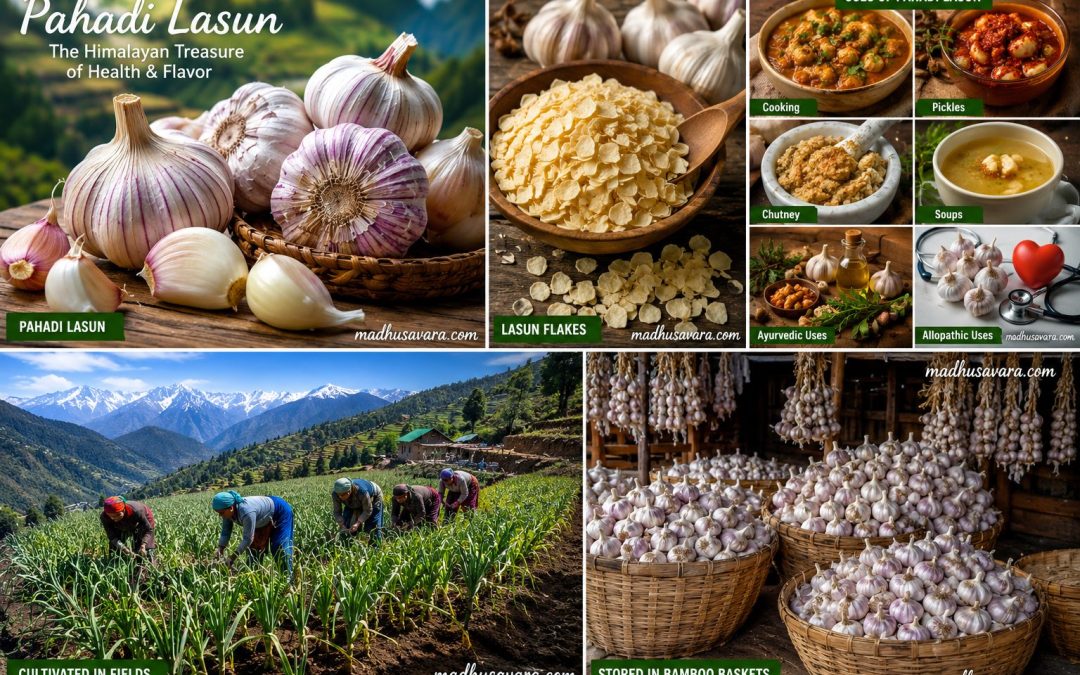
Every mountain has a story, and high up in the majestic Himalayas, where terraced fields hug the steep slopes, and crisp winds whisper through the valleys, pahadi garlic tells one of resilience, flavour, and quiet strength. For generations, families in Himachal Pradesh, Uttarakhand, and Jammu & Kashmir have nurtured this special garlic in cool mountain soils under traditional, low-input farming. Unlike the milder varieties found in the plains, our pahadi lehsun grows slower in the challenging high-altitude climate, packing intense aroma, bold pungency, and powerful goodness into every small, compact bulb. I remember how grandmothers would crush fresh cloves for winter chutneys, pickles, and warming soups to keep the family healthy through the cold months. It wasn’t just food — it was medicine, tradition, and a source of pride passed down through farmer-to-farmer seed exchanges. Today, when I cook with authentic pahadi garlic, I feel connected to those hardworking mountain hands and the pure essence of the hills. Its richer allicin content, vibrant taste, and natural vitality make it truly special — a spoonful of Himalayan stories in every dish!
Pahadi Garlic: The Himalayan Treasure of Health, Heritage and Prosperity
Table of Contents
- Introduction to Pahadi Garlic
- Preface
- Origin and Historical Journey
- Botanical Identity and Classification
- Why Pahadi Garlic Is Special
- Nutritional Profile of Pahadi Garlic
- Bioactive Compounds Found in Garlic
- Significance of Pahadi Garlic in Himalayan Life
- Health Benefits of Pahadi Garlic
- Traditional Uses in Mountain Communities
- Pahadi Garlic in Ayurveda
- Pahadi Garlic and Modern Medical Research
- Pahadi Garlic in Homoeopathic Practice
- Ways to Consume Pahadi Garlic
- Culinary Importance of Pahadi Garlic
- Industrial Applications of Pahadi Garlic
- Export Potential and Global Demand
- Economic Importance for Farmers
Introduction to Pahadi Garlic
Pahadi Garlic, also known as Himalayan Garlic or Mountain Garlic, is one of the most treasured crops cultivated in the majestic Himalayan belt of India. Grown in the cool valleys and terraced fields of Himachal Pradesh, Uttarakhand, Jammu & Kashmir, and adjoining hill regions, this garlic has earned a reputation for its strong aroma, rich flavour, nutritional value, and premium market appeal.
Unlike conventionally grown garlic, pahadi garlic develops under unique mountain conditions where cooler temperatures, mineral-rich soils, clean water sources, and traditional farming methods contribute to its distinct characteristics.
For generations, Himalayan communities have considered pahadi garlic much more than a kitchen ingredient. It has been part of food traditions, household wellness practices, local commerce, and agricultural livelihoods. Today, as consumers increasingly seek natural, authentic, and region-specific foods, pahadi garlic is emerging as one of the most promising speciality agricultural products from the Indian Himalayas.
Preface
Every mountain has a story.
Some tell tales of rivers. Others speak through forests, snowfall, and ancient temples. The Himalayas tell one of their most remarkable stories through agriculture.
In remote villages perched along steep mountain slopes, farmers continue to cultivate crops that have sustained generations. Among these crops, pahadi garlic occupies a place of exceptional respect.
Long before the modern world began searching for superfoods, mountain communities understood the value of this humble bulb. It flavoured their meals during harsh winters, supported household economies, and became deeply woven into local traditions.
Today, the same pahadi garlic is attracting chefs, nutrition enthusiasts, researchers, entrepreneurs, and consumers who appreciate authentic agricultural products.
This article explores every major aspect of pahadi garlic—from its history and nutritional composition to its medicinal significance, culinary uses, industrial applications, and economic importance.
Origin and Historical Journey
Garlic has one of the oldest histories among cultivated crops. Historical records indicate that garlic has been cultivated and consumed for thousands of years across Asia, Europe, Africa, and the Middle East.
In India, garlic gradually adapted to diverse climatic conditions. Over centuries, local farmers in Himalayan regions selected and preserved garlic strains that performed exceptionally well under cooler mountain environments.
These hill-adapted garlic populations eventually became known collectively as pahadi garlic.
Traditional Himalayan agriculture relied heavily on farmer-to-farmer seed exchange. Through generations of observation and selection, communities preserved planting material that demonstrated desirable characteristics such as:
- Strong aroma
- Good storage quality
- Climatic adaptability
- Disease tolerance
- Consumer preference
The result was a distinctive agricultural heritage that continues to support mountain farming systems today.
Botanical Identity and Classification
Scientific Name: Allium sativum L.
Family: Amaryllidaceae
Kingdom: Plantae
Order: Asparagales
Common Names:
- Pahadi Garlic
- Himalayan Garlic
- Mountain Garlic
- Hill Garlic
Economic Part Used:
- Underground bulb
Propagation Method:
- Cloves
Life Cycle:
Although botanically perennial, garlic is generally cultivated as an annual crop for commercial production.
Why Pahadi Garlic Is Special
Many consumers ask what makes pahadi garlic different from ordinary garlic.
The answer lies in a combination of environmental, agricultural, and cultural factors.
Mountain Climate
Cool temperatures allow gradual crop development, which often contributes to improved flavour intensity.
Traditional Farming Systems
Many hill farmers continue to practice relatively low-input agriculture, preserving traditional cultivation methods.
Mineral-Rich Soils
Mountain soils often contain valuable minerals that support healthy crop development.
Strong Aroma
Pahadi garlic is widely appreciated for its pungent fragrance and flavour.
Premium Market Position
Because of limited production and increasing demand, pahadi garlic frequently commands premium prices.
Cultural Heritage
It represents centuries of Himalayan agricultural knowledge and biodiversity.
Nutritional Profile of Pahadi Garlic
Pahadi garlic contains a variety of nutrients that contribute to its reputation as a highly valued food crop.
Major nutrients include:
Vitamins
- Vitamin C
- Vitamin B6
Minerals
- Potassium
- Calcium
- Magnesium
- Phosphorus
- Selenium
- Iron
- Manganese
Other Components
- Dietary fiber
- Natural carbohydrates
- Plant proteins
While garlic is generally consumed in relatively small quantities, it contributes valuable bioactive compounds to the diet.
Bioactive Compounds Found in Garlic
The unique aroma and biological activity of garlic arise from sulfur-containing compounds.
Important compounds include:
Allicin
Allicin forms when garlic cloves are crushed or chopped. It is responsible for much of garlic’s characteristic aroma.
Alliin
A naturally occurring sulfur compound present in intact cloves.
Diallyl Sulfides
Contribute to garlic’s flavour and biological activity.
S-Allyl Cysteine
One of the water-soluble compounds found in garlic preparations.
These compounds have attracted considerable scientific interest and continue to be studied for their physiological effects.
Significance of Pahadi Garlic in Himalayan Life
Few crops play as many roles in mountain communities as pahadi garlic.
Its significance extends across several dimensions.
Agricultural Significance
It provides income opportunities for small and marginal farmers.
Nutritional Significance
It contributes flavour and nutritional value to local diets.
Economic Significance
Premium pricing can improve farm profitability.
Cultural Significance
It forms part of traditional recipes and culinary identity.
Ecological Significance
Its cultivation supports agricultural diversity within Himalayan ecosystems.
Health Benefits of Pahadi Garlic
The popularity of garlic across civilisations is closely linked to its perceived health value.
Supports Cardiovascular Wellness
Garlic has been extensively researched for its potential role in supporting cardiovascular health when consumed as part of a balanced lifestyle.
Provides Antioxidant Activity
Garlic contains compounds that may help protect cells from oxidative stress.
Supports Normal Immune Function
Traditional communities frequently consume garlic during seasonal transitions and winter months.
Supports Digestive Wellness
Garlic has long been included in diets intended to support healthy digestion.
Nutritional Enrichment
Its vitamins, minerals, and bioactive compounds make it a valuable component of diverse diets.
Culinary Wellness
By enhancing flavour naturally, garlic can help reduce dependence on excessive salt and artificial flavouring agents.
Traditional Uses in Mountain Communities
For generations, Himalayan families have used garlic in everyday life.
Common traditional uses include:
- Flavoring soups
- Garlic chutneys
- Winter diets
- Pickle preparation
- Seasonal household wellness practices
- Livestock-related traditional practices
These uses were developed through local experience and cultural traditions rather than modern clinical research.
Pahadi Garlic in Ayurveda
In Ayurvedic literature, garlic is commonly known as Lashuna.
Traditional Ayurvedic texts have described garlic in various formulations and dietary contexts.
Practitioners have historically associated garlic with:
- Digestive support
- General vitality
- Seasonal wellness
- Traditional rejuvenation practices
Ayurvedic use should always be guided by qualified practitioners familiar with individual health conditions and constitution.
Pahadi Garlic and Modern Medical Research
Modern scientific research has shown significant interest in garlic because of its sulfur-containing compounds.
Researchers continue to investigate garlic in relation to:
- Cardiovascular health
- Antioxidant activity
- Metabolic health
- Microbial interactions
- General wellness
However, it is important to understand that garlic is a food and not a substitute for professional medical diagnosis, treatment, or prescribed medicines.
A balanced diet, healthy lifestyle, and professional healthcare remain essential.
Pahadi Garlic in Homoeopathic Practice
Homoeopathy includes preparations derived from garlic under specific formulations. Homoeopathic practitioners may incorporate garlic-derived remedies according to established homoeopathic principles.
Individuals interested in homoeopathic treatment should consult qualified practitioners rather than self-prescribing remedies.
Ways to Consume Pahadi Garlic
Pahadi garlic can be enjoyed in multiple ways.
Raw Garlic
Some people consume small quantities of raw garlic as part of their daily routine.
Garlic Chutney
A traditional favourite across many Himalayan communities.
Garlic Pickle
One of the most popular preservation methods.
Garlic Soup
Particularly valued during cold weather.
Cooked Preparations
Used extensively in vegetables, curries, lentils, sauces, and meat dishes.
Garlic-Infused Oil
Popular in modern kitchens for flavour or enhancement.
Culinary Importance of Pahadi Garlic
The culinary value of pahadi garlic is extraordinary.
Its rich flavour profile enhances:
- Indian curries
- Lentils
- Chutneys
- Pickles
- Soups
- Sauces
- Roasted vegetables
- Meat preparations
Many chefs prefer mountain-grown garlic because of its pronounced aroma and depth of flavour.
The culinary identity of several Himalayan dishes depends heavily on the quality of locally produced garlic.
Industrial Applications of Pahadi Garlic
Pahadi garlic contributes to several industries beyond household consumption.
Food Processing Industry
Used for manufacturing:
- Garlic paste
- Garlic powder
- Garlic flakes
- Garlic granules
Nutraceutical Industry
Garlic-derived ingredients are utilised in various wellness-oriented products.
Spice Industry
An important raw material for seasoning blends and spice mixes.
Functional Foods Sector
Increasingly used in premium and speciality food products.
Hospitality Industry
Hotels and restaurants often seek high-quality garlic for flavour-intensive culinary applications.
Export Potential and Global Demand
Global consumers are increasingly seeking foods with traceable origins, authentic heritage, and premium quality.
This trend creates opportunities for products such as pahadi garlic.
Factors supporting export potential include:
- Strong flavor profile
- Premium branding opportunities
- Speciality food market growth
- Increasing demand for natural foods
- Growing interest in Himalayan agricultural products
Countries in the Gulf region, Europe, and North America continue to show interest in speciality agricultural products from India.
Quality certification, grading, packaging, and supply chain development remain important for successful export expansion.
Bhangjeera Kala Jeera: Forgotten aromatic herbs of the HimalayasHimalayan herbsHimalayan black cumintraditional Himalayan herbsBunium persicumblack cumin seedsHimalayan aromatic herbsKala Jeera benefitsEconomic Importance for Farmers
For many mountain farmers, landholdings are relatively small.
Therefore, crops capable of generating higher value per unit area become extremely important.
Pahadi garlic offers several economic advantages:
Premium Pricing
Authentic mountain-grown garlic often attracts better market prices.
Storage Flexibility
Garlic can be stored for extended periods under proper conditions.
Value Addition
Farmers and entrepreneurs can diversify into processed products.
Growing Consumer Demand
Health-conscious consumers increasingly seek speciality foods.
Rural Employment
Garlic cultivation and processing create opportunities throughout the value chain.
Sustainable Livelihoods
It supports agricultural income while preserving traditional farming systems.
The future of pahadi garlic appears bright as consumer preferences continue shifting toward authentic, locally rooted, and nutritionally valued food.s
Storage, Processing and Value Addition
One of the greatest advantages of pahadi garlic is its excellent storage potential when handled correctly. Unlike many vegetables that require immediate marketing, garlic provides farmers with flexibility, allowing them to sell produce when market conditions become favourable.
Proper Storage Practices
To maximise shelf life:
- Harvest only mature bulbs.
- Remove damaged or diseased bulbs.
- Cure harvested garlic in a shaded, well-ventilated area.
- Avoid direct exposure to rain and moisture.
- Store in mesh bags, bamboo baskets, or ventilated containers.
- Maintain good air circulation.
Properly cured garlic can remain marketable for several months, reducing post-harvest losses and improving profitability.
Value-Added Products
Value addition can significantly increase farmer income and create opportunities for rural entrepreneurship.
Garlic Powder
Garlic powder is widely used in homes, restaurants, food processing units, and seasoning industries.
Garlic Flakes
Dehydrated garlic flakes have a growing demand in domestic and international markets.
Garlic Paste
Ready-to-use garlic paste has become an essential ingredient in modern kitchens.
Garlic Granules
Used extensively by food manufacturers and spice companies.
Garlic Pickle
Traditional garlic pickle remains one of the most popular value-added products in India.
Seasoning Blends
Garlic is a key ingredient in spice mixes, marinades, and culinary blends.
Herbal and Wellness Products
Garlic-derived ingredients are used in various wellness-oriented products and dietary supplements.
Future Scope of Pahadi Garlic
The future of pahadi garlic appears exceptionally promising due to changing consumer preferences and emerging agricultural trends.
Rising Health Awareness
Consumers increasingly prefer foods perceived as natural, traditional, and minimally processed.
Growth of Organic Agriculture
The demand for organically produced foods continues to expand across domestic and international markets.
Premium Food Segment
Urban consumers are willing to pay higher prices for speciality agricultural products with a strong regional identity.
E-Commerce Expansion
Online marketplaces have made it easier for small farmers and entrepreneurs to reach customers nationwide.
Agri-Tourism Opportunities
Himalayan agriculture is attracting interest from tourists seeking authentic farm experiences.
Export Potential
Premium Himalayan agricultural products are gradually gaining recognition in international markets.
Government Support
Various programs promoting mountain agriculture, horticulture, and value addition can support future growth.
The coming decade may offer unprecedented opportunities for farmers, entrepreneurs, and cooperatives associated with pahadi garlic production.
Frequently Asked Questions About Pahadi Garlic
1. What is Pahadi Garlic?
Pahadi Garlic is garlic cultivated in the Himalayan and hill regions of India. It is known for its strong aroma, rich flavour, and premium quality.
2. Is Pahadi Garlic different from normal garlic?
Yes. Pahadi Garlic is generally recognised for its stronger aroma, distinct taste, and traditional mountain cultivation practices.
3. Why is Pahadi Garlic more expensive?
Mountain farming often involves higher labour requirements, smaller farm sizes, lower production volumes, and premium market demand.
4. Which states are famous for Pahadi Garlic cultivation?
Himachal Pradesh, Uttarakhand, and Jammu & Kashmir are among the most recognised regions for producing high-quality mountain garlic.
5. Can Pahadi Garlic be consumed raw?
Yes. Many people consume small quantities of raw garlic as part of their regular diet. Individuals with specific health conditions should seek medical advice.
6. Is Pahadi Garlic beneficial for immunity?
Garlic has traditionally been consumed during seasonal changes and winter months. It contains compounds that are being studied for their role in supporting normal immune function.
7. Does Pahadi Garlic contain allicin?
Yes. Allicin is one of the key sulfur-containing compounds formed when garlic cloves are crushed or chopped.
8. Is Pahadi Garlic used in Ayurveda?
Yes. Garlic, known as Lashuna in Ayurveda, has been described in traditional Ayurvedic literature and formulations.
9. Can diabetic individuals consume Pahadi Garlic?
Many people with diabetes include garlic in their diets. However, dietary decisions should always be guided by qualified healthcare professionals.
10. Is Pahadi Garlic useful for heart health?
Garlic has been the subject of extensive research concerning cardiovascular wellness. It should not replace medical treatment or prescribed medications.
11. What nutrients are found in Pahadi Garlic?
Pahadi Garlic contains vitamins, minerals, dietary fibre, and sulfur-containing compounds that contribute to its nutritional value.
12. How should Pahadi Garlic be stored?
Store garlic in a cool, dry, and well-ventilated place away from excessive moisture and direct sunlight.
13. Is Pahadi Garlic suitable for organic farming?
Yes. Garlic adapts well to organic farming systems when proper soil health and crop management practices are followed.
14. Can Pahadi Garlic be used for making pickles?
Absolutely. Its strong flavour and aroma make it highly suitable for traditional garlic pickles.
15. Is Pahadi Garlic profitable for farmers?
Many farmers consider garlic a valuable cash crop because of premium pricing, storage flexibility, and growing demand.
16. What industries use Pahadi Garlic?
Food processing, spice manufacturing, hospitality, nutraceuticals, and value-added food industries all use garlic products.
17. What is the export potential of Pahadi Garlic?
Premium Himalayan garlic may find opportunities in speciality, gourmet, organic, and ethnic food markets worldwide.
18. How can consumers identify genuine Pahadi Garlic?
Consumers should purchase from trusted farmers, cooperatives, agricultural brands, or certified sellers. Authentic sourcing is more reliable than appearance alone.
19. Can Pahadi Garlic be processed into value-added products?
Yes. Garlic powder, garlic flakes, garlic paste, garlic granules, seasoning mixes, and garlic pickles are common examples.
20. Why is Pahadi Garlic important for Himalayan agriculture?
It supports rural livelihoods, preserves agricultural biodiversity, promotes sustainable farming, and contributes to mountain economies.
21. Is Pahadi Garlic considered a superfood?
While there is no universally accepted scientific definition of a superfood, garlic is widely appreciated for its nutritional profile and bioactive compounds.
22. Can Pahadi Garlic support sustainable agriculture?
Yes. It can contribute to diversified farming systems and improve income opportunities for small and marginal hill farmers.
23. What is the future of Pahadi Garlic in India?
Growing consumer awareness, premium food demand, organic agriculture trends, and e-commerce expansion indicate strong future potential.
24. Is Pahadi Garlic suitable for commercial farming?
Yes. With proper market access, quality planting material, and post-harvest management, it can be cultivated successfully as a commercial crop.
25. Why should consumers choose Pahadi Garlic?
Consumers often choose pahadi garlic because of its strong flavour, premium quality, traditional heritage, and connection to sustainable mountain agriculture.
Call to Action
Have you ever tasted authentic Pahadi Garlic from the Himalayan hills?
Share your experiences, traditional recipes, cultivation stories, and family practices in the comments section. Every conversation about pahadi garlic helps preserve India’s agricultural heritage and supports the hardworking farmers who cultivate this remarkable crop.
If you found this guide valuable, share it with farmers, agriculture students, researchers, chefs, food enthusiasts, and anyone interested in Himalayan agriculture.
Together, we can celebrate and promote one of the finest gifts of the mountains.
Conclusion: A Small Bulb with a Remarkable Legacy
In a world increasingly dominated by industrial agriculture and standardised food systems, Pahadi Garlic stands as a powerful reminder that quality often emerges from tradition, patience, and respect for nature.
From the terraced farms of the Himalayas to modern kitchens across the globe, pahadi garlic continues to demonstrate its value as a crop of exceptional significance. Its rich flavour, cultural importance, nutritional composition, economic potential, and growing consumer demand make it one of the most promising speciality agricultural products in India today.
For farmers, it offers income and resilience.
For consumers, it offers authenticity and flavour.
For researchers, it represents valuable agricultural biodiversity.
For entrepreneurs, it presents opportunities in processing, branding, and exports.
Most importantly, pahadi garlic represents the enduring wisdom of mountain communities who have carefully nurtured this crop for generations.
As interest in sustainable agriculture, regional foods, and traditional farming systems continues to grow, the future of pahadi garlic appears brighter than ever.
The story of pahadi garlic is not merely about a crop.
It is about heritage, health, sustainability, and hope.
Strong Disclaimer
The information presented in this article is intended solely for educational, informational, and agricultural awareness purposes. While every effort has been made to provide accurate and reliable information, readers should not interpret any content related to nutrition, traditional uses, wellness, farming practices, market opportunities, or agricultural economics as medical, legal, financial, or professional advice.
Garlic is a food product and should not be considered a substitute for diagnosis, treatment, medication, or healthcare services provided by qualified medical professionals. Individuals with existing health conditions, allergies, or those taking medications should consult healthcare practitioners before making significant dietary changes.
Similarly, cultivation practices, yields, profitability, market prices, and export opportunities may vary significantly depending on climate, soil conditions, farm management, regional regulations, and market dynamics. Farmers and entrepreneurs should consult agricultural experts, horticulture departments, extension officers, and relevant authorities before making cultivation or investment decisions.
The publisher, author, and website assume no responsibility for decisions made based on the information contained in this article. Readers are encouraged to conduct independent research and seek professional guidance whenever necessary.
