Traditional Himachali Timbur Chutney Recipe | Authentic Pahadi Timru Chutney
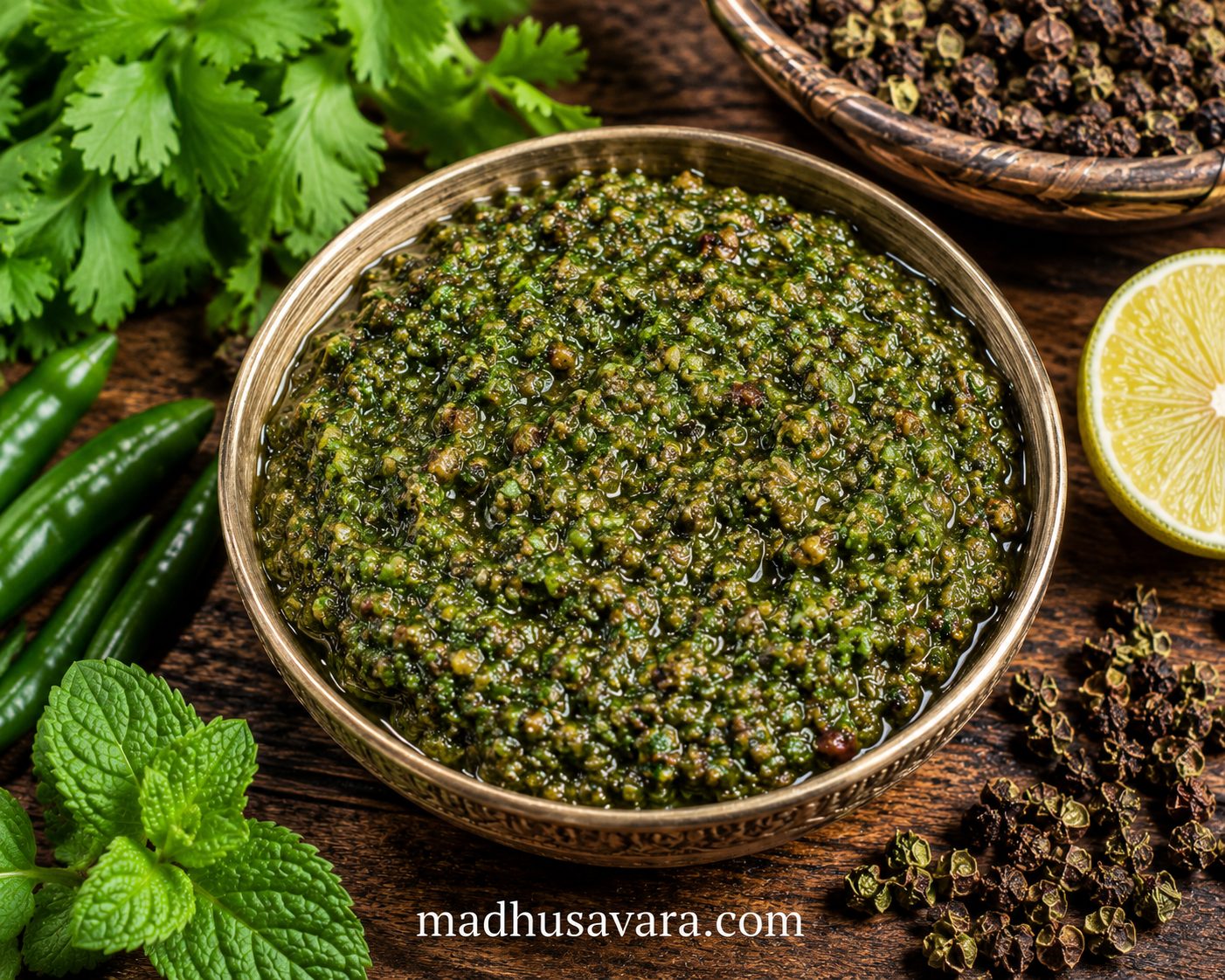
Traditional Himachali Timbur Chutney Recipe served in a handcrafted bowl with Himalayan Timbur spice, fresh coriander, mint leaves, green chillies, and lemon on a rustic wooden surface

Preface:

A Fragrant Memory from the Himalayan Trails

In the old days, long before roads reached every mountain village, travellers often spent days walking through forests, valleys, and steep mountain passes. Food carried during these journeys was simple, practical, and deeply nourishing.

A small pouch containing dried Timbur, locally gathered herbs, and rock salt was considered a valuable companion. When mixed into a fresh chutney, these ingredients transformed plain rotis, boiled potatoes, and lentils into satisfying meals.

Many elderly villagers still recall how a simple Timbur Chutney accompanied shepherds tending flocks in high-altitude meadows, traders travelling between villages, and families working long hours in terraced fields.

Today, while lifestyles have changed, the aroma of freshly prepared Timbur Chutney continues to evoke memories of traditional Himalayan life.

What is Timbur?

If you are wondering what Timbur is, it is a traditional Himalayan spice obtained from the fruits of Zanthoxylum armatum, a thorny shrub that grows naturally across the Himalayan regions of Himachal Pradesh, Uttarakhand, Nepal, and Bhutan. Known locally as Timru, Timur, or Timbur, this aromatic spice has been an integral part of traditional Himalayan cooking for centuries.

The popularity of Traditional Himachali Timbur Chutney and Timru Chutney Recipe preparations has helped preserve the culinary heritage associated with this remarkable mountain spice. The distinctive citrus aroma and gentle tingling sensation of Timbur make it the star ingredient in every authentic Timbur Chutney Recipe prepared across the Himalayan belt.

In many villages, Himalayan Timbur Chutney is considered an essential accompaniment to simple meals, festive dishes, and traditional mountain feasts. Whether prepared as a Pahadi Timbur Chutney, a village-style Timbur Spice Chutney, or an Authentic Timbur Chutney using freshly harvested ingredients, the spice contributes a flavour that cannot easily be replicated by other seasonings.

Today, food enthusiasts seeking an authentic Timbur Recipe are rediscovering this treasured Himalayan ingredient and the rich traditions that surround it. Its unique combination of citrus notes, herbal freshness, and mild warmth continues to make Timbur one of the most respected spices in Himalayan cuisine.

Table of Contents

  • Scientific Name of Timbur
  • Origin of Timbur Chutney
  • Importance of Timbur in Himalayan Voyagers’ Life
  • Why You Will Love This Recipe
  • Recipe Details
  • Nutritional Value
  • Ingredients Required
  • Utensils Needed
  • Step-by-Step Recipe
  • Allergen Information
  • Tips and Variations
  • Common Mistakes to Avoid
  • Storage Instructions
  • Serving Suggestions
  • Cultural Significance
  • Frequently Asked Questions
  • More Himalayan Recipes
  • Conclusion
  • References
  • Author Bio
  • Disclaimer

Servings

4 serving

Preparation Time:

10 minutes

Cooking Time:

2 minutes

Calories

35

Ingredients

Main Ingredients

  • 2 teaspoons dried Timbur
  • 3 tablespoons fresh coriander leaves
  • 1 tablespoon mint leaves
  • 2 green chillies
  • 1 teaspoon roasted cumin powder
  • ½ teaspoon rock salt
  • 1 teaspoon lemon juice

Optional Ingredients

  • 1 garlic clove
  • 1 tablespoon walnuts
  • 1 tablespoon curd

Equipment Needed

  • Traditional stone grinder (preferred)
  • Mixer grinder
  • Measuring spoons
  • Small bowl
  • Serving bowl

Nutrition Information

(Approximate Per Serving)

Nutrient Amount
Calories 35 kcal
Carbohydrates 5 g
Protein 1 g
Fat 1 g
Dietary Fibre 2 g
Sodium Variable
Vitamin C Present
Antioxidants Naturally Present

Step by Step Instructions

Step 1: Roast the Timbur

Place the dried Timbur in a small pan and roast gently for one to two minutes until aromatic.

Step 2: Cool the Spice

Allow the roasted Timbur to cool completely before grinding.

Step 3: Prepare the Fresh Ingredients

Wash the coriander leaves, mint leaves, and green chillies thoroughly.

Step 4: Grind the Ingredients

Add Timbur, herbs, chillies, cumin powder, and rock salt to the grinder.

Step 5: Add Lemon Juice

Add lemon juice and grind to achieve a coarse texture.

Step 6: Adjust Consistency

Add a small quantity of water only if required.

Step 7: Taste and Adjust

Check seasoning and adjust according to preference.

Step 8: Serve

Transfer to a serving bowl and serve immediately.

Tips and Variations

  • Use freshly harvested Timbur whenever available.
  • Avoid excessive roasting.
  • Traditional stone grinding produces superior texture.
  • Fresh herbs enhance flavour significantly.
  • Use rock salt for authentic taste.

Variations of Timbur Chutney

Garlic Timbur Chutney

Add one garlic clove for a stronger village-style flavour.

Walnut Timbur Chutney

Add walnuts for richness and texture.

Yoghurt Timbur Chutney

Mix fresh curd for a creamy version.

Common Mistakes to Avoid

  • Over-roasting the Timbur
  • Using stale spices
  • Adding excessive water
  • Overpowering the flavour with too many ingredients
  • Storing uncovered

Allergen Information

This recipe is generally free from major allergens.

Individuals sensitive to spices should consume cautiously.

If using curd or walnuts, account for dairy and tree nut allergies accordingly.

Other Essentials

Storage Instructions

Store in an airtight container in the refrigerator.

Best consumed within 24 to 48 hours.

Fresh preparation always provides superior flavour and aroma.

Serving Suggestions

What to Serve with Timbur Chutney

  • Siddu
  • Madra
  • Boiled potatoes
  • Steamed rice
  • Traditional lentils
  • Millet rotis

Traditional Himalayan Pairings

Many villagers enjoy Timbur Chutney alongside simple meals consisting of lentils, rice, and seasonal vegetables.

Cultural Significance of Timbur Chutney

Traditional Himachali Timbur Chutney represents a culinary tradition deeply connected to Himalayan forests and village life.

For generations, families have gathered Timbur from surrounding hills, preserving both ecological knowledge and food heritage. The chutney remains a symbol of resourcefulness, community, and the close relationship between mountain people and their natural environment.

Frequently Asked Questions

Are Timru and Timbur the Same?

Yes. In many Himalayan regions, Timru and Timbur refer to the same plant, Zanthoxylum armatum.

What Does Timbur Taste Like?

It offers citrus notes, floral aromas, herbal freshness, and a mild tingling sensation.

Can I Make Timbur Chutney Without Mint?

Yes. Many traditional household recipes omit mint.

Is Timbur Chutney Vegan?

Yes. The traditional recipe is naturally vegan.

Can I Use Sichuan Pepper Instead?

Although related, authentic Timbur delivers a distinct Himalayan flavour.

How Long Can I Store Timbur Chutney?

Fresh chutney is best consumed within two days.

Where Can I Buy Timbur?

Timbur is available in Himalayan regions, speciality spice stores, and selected online marketplaces.

Can Children Consume Timbur Chutney?

Yes, provided the spice level is adjusted appropriately.

More Authentic Himalayan Recipes from Madhusavara.com

If you enjoy the Traditional Himachali Timbur Chutney Recipe, explore other Himalayan favourites on Madhusavara.com, including Siddu, Sepu Vadi, Madra, Telia Mah, Kangra Dham specialities, and traditional mountain food recipes passed down through generations.

Conclusion

Traditional Himachali Timbur Chutney Recipe is much more than a simple accompaniment. It embodies centuries of Himalayan culinary wisdom, sustainable food traditions, and the ingenuity of mountain communities.

Its refreshing aroma, vibrant flavour, and cultural significance make it one of the most distinctive chutneys of the Himalayan region. Whether served with festive meals or everyday food, Timbur Chutney continues to connect modern kitchens with the timeless traditions of the mountains.

References

Singh G. et al. Essential oil composition and biological activities of Zanthoxylum armatum. DOI: 10.1080/10412905.2003.9699877

Barkatullah et al. Phytochemical and pharmacological studies on Zanthoxylum armatum. DOI: 10.4103/0973-7847.112850

Rather M.A. et al. Ethnobotanical and phytochemical review of Zanthoxylum armatum. DOI: 10.1186/s13002-016-0087-7

Author Bio

Madhu Savara is the founder of Madhusavara.com and an independent food writer dedicated to documenting traditional recipes, Himalayan culinary heritage, forgotten foods, and authentic regional cuisines. Through storytelling and research, he preserves culinary traditions that connect modern readers with generations of food.

Disclaimer

Important Notice: Read Before Proceeding

The recipes, preparation methods, nutritional details, and related content published on Madhu Savara’s website, social media, and associated platforms are intended solely for general informational and educational purposes. While every effort has been made to ensure accuracy and reliability, we make no guarantees regarding the results, safety, or accuracy of any recipe presented here.

We are not licensed nutritionists, dieticians, or medical professionals. The nutritional values provided are estimates only, calculated using third-party tools, and should not be used for medical diagnosis, dietary treatment, or allergy management. If you have any medical conditions, dietary restrictions, or food allergies, please consult your doctor or certified dietitian before attempting any recipe.

Cooking inherently involves sharp tools, high heat, and the risk of injury or fire. You assume full responsibility for your kitchen practices. Madhu Savara, the website, and all contributors shall not be held liable for any damage, injury, loss, or adverse outcome resulting directly or indirectly from the preparation, consumption, or interpretation of any content herein.

By using this website and attempting any recipe, you agree to hold harmless and indemnify Madhu Savara and her team from any liability, legal claim, or damages arising from the use of this content. You are encouraged to exercise independent judgment and take full responsibility for your health, kitchen safety, and actions.


Author’s Note

Traditional Himachali Timbur Chutney Recipe is one of the most cherished condiments in traditional Himalayan cooking. Prepared using aromatic Himalayan Timbur, fresh herbs, and simple village ingredients, this authentic Timbur Chutney Recipe has been enjoyed across Himachal Pradesh and neighbouring mountain regions for generations. Whether you know it as a Timru Chutney Recipe, Himalayan Timbur Chutney, or Pahadi Timbur Chutney, this traditional preparation captures the distinctive flavours and culinary heritage of the Himalayas.
Namaste,
Traditional Himachali Timbur Chutney Recipe served in a handcrafted bowl with Himalayan Timbur spice, fresh coriander, mint leaves, green chillies, and lemon on a rustic wooden surface
Print

Traditional Himachali Timbur Chutney Recipe

Traditional Himachali Timbur Chutney Recipe is a treasured mountain delicacy prepared using aromatic Himalayan Timbur spice. This authentic Pahadi chutney combines citrusy flavours, traditional wisdom, and generations of Himalayan culinary heritage in every spoonful.
Course Side Dish
Cuisine Himachal, Indian
Keyword Pahadi Chutney, pahari cuisine, Timru Chutney, traditional himachali food
Prep Time 10 minutes
Cook Time 2 minutes
Total Time 12 minutes
Servings 4 People
Calories 32kcal
Author Madhu Savara
Cost NA

Equipment

  • Traditional stone grinder (preferred)Mixer grinderMeasuring spoonsSmall bowlServing bowl

Ingredients

  • Main Ingredients
  • 2 teaspoons dried Timbur
  • 3 tablespoons fresh coriander leaves
  • 1 tablespoon mint leaves
  • 2 green chillies
  • 1 teaspoon roasted cumin powder
  • ½ teaspoon rock salt
  • 1 teaspoon lemon juice
  • Optional Ingredients
  • 1 garlic clove
  • 1 tablespoon walnuts
  • 1 tablespoon curd

Instructions

  • Step 1: Roast the Timbur
  • Place the dried Timbur in a small pan and roast gently for one to two minutes until aromatic.
  • Step 2: Cool the Spice
  • Allow the roasted Timbur to cool completely before grinding.
  • Step 3: Prepare the Fresh Ingredients
  • Wash the coriander leaves, mint leaves, and green chillies thoroughly.
  • Step 4: Grind the Ingredients
  • Add Timbur, herbs, chillies, cumin powder, and rock salt to the grinder.
  • Step 5: Add Lemon Juice
  • Add lemon juice and grind to achieve a coarse texture.
  • Step 6: Adjust Consistency
  • Add a small quantity of water only if required.
  • Step 7: Taste and Adjust
  • Check seasoning and adjust according to preference.
  • Step 8: Serve
  • Transfer to a serving bowl and serve immediately.

Notes

Common Mistakes to Avoid

  • Over-roasting the Timbur
  • Using stale spices
  • Adding excessive water
  • Overpowering the flavour with too many ingredients
  • Storing uncovered
Tips:
  • Use freshly harvested Timbur whenever available.
  • Avoid excessive roasting.
  • Traditional stone grinding produces superior texture.
  • Fresh herbs enhance flavour significantly.
  • Use rock salt for authentic taste.

I am Madhu Savara, founder of Madhusavara.com. My journey of documenting traditional foods has taken me through villages, mountain kitchens, and conversations with elders who continue to preserve culinary traditions that are rapidly disappearing from modern life.

Preface: A Fragrant Memory from the Himalayan Trails

In the old days, long before roads reached every mountain village, travellers often spent days walking through forests, valleys, and steep mountain passes. Food carried during these journeys was simple, practical, and deeply nourishing.

A small pouch containing dried Timbur, locally gathered herbs, and rock salt was considered a valuable companion. When mixed into a fresh chutney, these ingredients transformed plain rotis, boiled potatoes, and lentils into satisfying meals.

Many elderly villagers still recall how a simple Timbur Chutney accompanied shepherds tending flocks in high-altitude meadows, traders travelling between villages, and families working long hours in terraced fields.

Today, while lifestyles have changed, the aroma of freshly prepared Timbur Chutney continues to evoke memories of traditional Himalayan life.