Karmuha Saag (Karemua Saag): Benefits, Nutrition, Recipe & Why This Forgotten Monsoon Superfood Deserves a Place on Your Plate
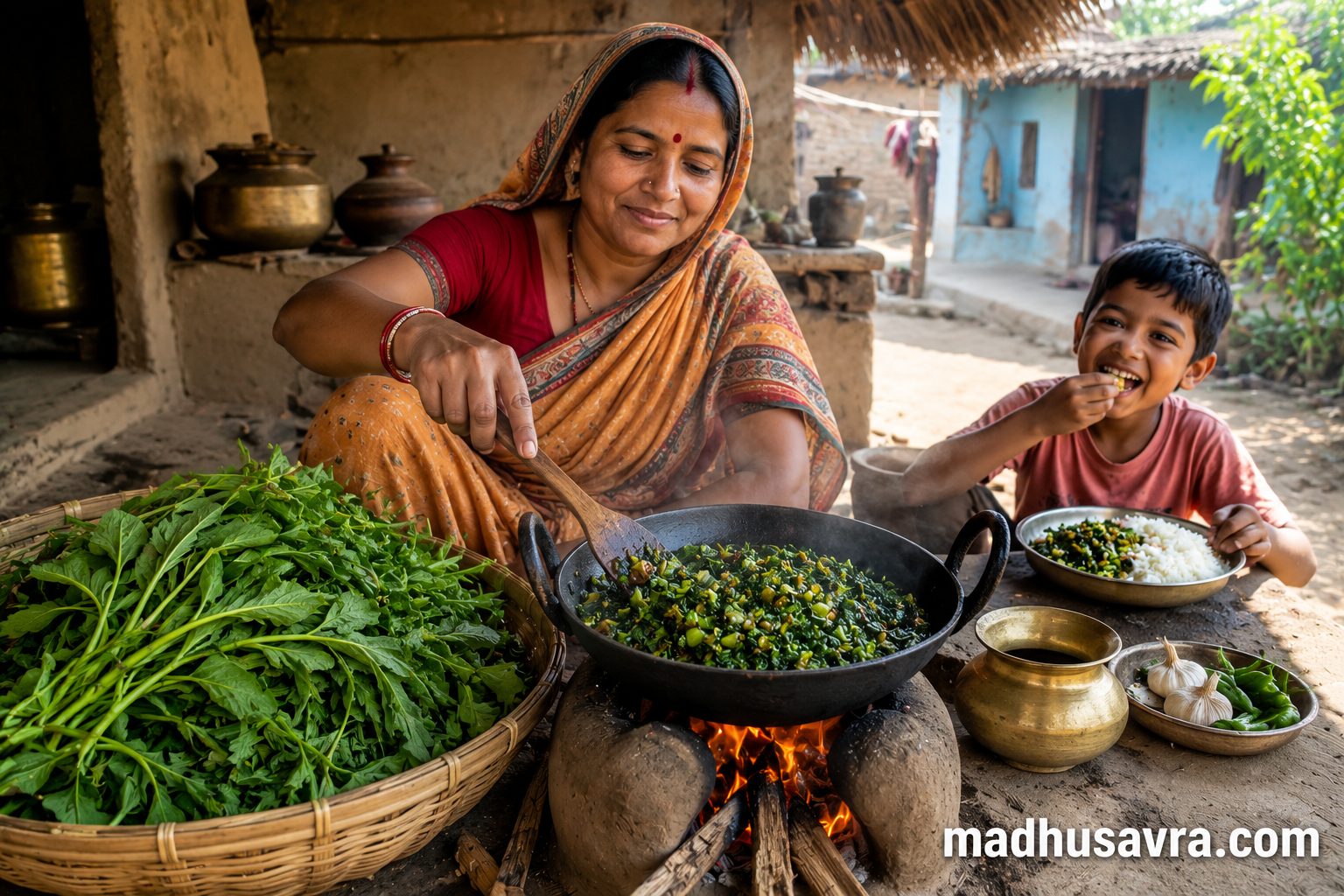
Village woman cooking traditional Karmuha Saag on a clay stove while a happy child enjoys the freshly prepared saag, with fresh Karemua greens displayed in a rural Indian courtyard.

What is Karmuha Saag?

Karmuha Saag, commonly known as Karemua Saag in several regions of North India, is a seasonal wild leafy vegetable that naturally grows in and around paddy fields during the monsoon season.

Unlike commercially cultivated vegetables, Karmuha Saag grows with minimal human intervention and thrives in water-rich agricultural environments.

For generations, villagers across Uttar Pradesh, Bihar, Jharkhand, Chhattisgarh, and neighbouring regions have collected this wild green and incorporated it into traditional meals.

Karmuha Saag is considered one of India’s forgotten seasonal foods and continues to be appreciated by people who value traditional rural diets and locally available nutrition.

Origin and Traditional Significance

Before packaged foods, nutritional supplements, and modern food distribution systems became widespread, seasonal wild greens played an important role in rural diets.

The arrival of monsoon rains traditionally marked the beginning of the Karmuha Saag harvesting season.

Families often gathered the fresh greens early in the morning and prepared them with garlic, onions, and mustard oil.

Many elderly villagers still regard Karemua Saag as an important seasonal food associated with wellness, digestive comfort, and traditional agricultural living.

The story of Karmuha Saag reflects the close relationship between Indian agriculture, seasonal eating, and indigenous food knowledge.

Why Karmuha Saag is Special

Naturally Grown

Karmuha Saag often grows without artificial fertilizers, pesticides, or intensive cultivation.

Seasonal Freshness

Its appearance is closely tied to the monsoon season, making it a true seasonal delicacy.

Sustainable Food Source

It emerges naturally in agricultural ecosystems and requires virtually no additional resources.

Rich Cultural Heritage

The vegetable represents traditional ecological knowledge passed down through generations.

Nutrient-Rich Profile

Karmuha Saag contains vitamins, minerals, fibre, antioxidants, and plant compounds important for overall health.

Servings

4 serving

Preparation Time:

15 minutes

Cooking Time:

20 Minutes

Calories

65

Ingredients

  • 500 grams fresh Karmuha Saag
  • 2 medium onions, finely chopped
  • 8 garlic cloves, crushed
  • 2 green chillies, chopped
  • 2 tablespoons mustard oil
  • ½ teaspoon turmeric powder
  • Salt to taste
  • 1 tablespoon maize flour or gram flour (optional)

Equipment Needed

  • Large bowl
  • Knife
  • Chopping board
  • Kadhai
  • Wooden spatula
  • Strainer

Nutrition Information

Nutritional Value of Karmuha Saag

The exact nutritional composition may vary according to soil quality, rainfall, maturity, and growing conditions.

However, Karmuha Saag is generally considered a valuable source of:

  • Dietary Fibre
  • Vitamin A
  • Vitamin C
  • Iron
  • Calcium
  • Potassium
  • Magnesium
  • Antioxidants
  • Plant-Based Phytonutrients

These nutrients contribute to the reputation of Karmuha Saag as a traditional monsoon superfood.

Estimated Nutrition Value Chart (Per 100 g Fresh Leaves)

Nutrient Approximate Value
Energy 30–40 kcal
Carbohydrates 5–7 g
Protein 2–4 g
Dietary Fibre 2–4 g
Vitamin A Moderate to High
Vitamin C Moderate
Iron Moderate
Calcium Moderate
Potassium Moderate
Magnesium Moderate
Antioxidants Present

Note: Nutritional values are approximate and may vary according to growing conditions and the maturity of the plant.

Comparison Chart: Karmuha Saag vs Other Traditional Wild Greens

Feature Karmuha Saag Bathua Chaulai Poi Saag Kulfa
Growing Season Monsoon Winter Summer Summer-Monsoon Summer
Growth Type Wild Paddy Field Green Semi-Wild Cultivated/Wild Cultivated Wild
Fibre Content Good Good Good Moderate Moderate
Iron Content Moderate High Moderate Moderate Moderate
Calcium Content Moderate Moderate Good Moderate Good
Vitamin A Good Good High Moderate Moderate
Traditional Usage Rural Monsoon Food Winter Saag Vegetable & Saag Curry Chutney & Saag
Availability Seasonal Common Common Common Moderate
Cultural Heritage Value Very High High High Moderate High

Health Benefits of Karmuha Saag

1. Supports Digestive Health

The fibre present in Karmuha Saag may help support healthy digestion and regular bowel movements.

2. Supports Eye Health

Vitamin A contributes to the maintenance of normal vision and healthy eye function.

3. Provides Natural Antioxidants

Antioxidants help protect cells against oxidative stress.

4. Supports Immune Function

Vitamin C contributes to the normal functioning of the immune system.

5. Supports Bone Health

Calcium and magnesium play important roles in maintaining healthy bones and teeth.

6. May Support Heart Health

Leafy vegetables are recognised as important components of balanced diets and healthy lifestyles.

7. Supports Healthy Blood Formation

Iron contributes to normal red blood cell formation and oxygen transport.

8. Traditional Seasonal Wellness Food

Many rural communities consume Karemua Saag during the rainy season as part of traditional wellness practices

Nutrition Information (Approximate Per Serving)

Serving Size: 1 of 4 servings

Nutrient Amount Per Serving
Calories 65–85 kcal
Carbohydrates 6–8 g
Protein 2–3 g
Total Fat 3–5 g
Saturated Fat Less than 1 g
Dietary Fibre 2–3 g
Sugars 1–2 g
Vitamin A Moderate
Vitamin C Moderate
Iron Moderate
Calcium Moderate
Potassium Moderate

Note: Nutritional values are approximate and may vary depending on the maturity of the leaves, growing conditions, ingredients used, and cooking method.

Step by Step Instructions

How to Clean Karmuha Saag Properly

Step 1

Remove yellow, damaged, or wilted leaves.

Step 2

Wash thoroughly under running water.

Step 3

Soak briefly in clean water.

Step 4

Rinse again to remove remaining soil particles.

Step 5

Drain completely before cooking.

Step-by-Step Cooking Method

Step 1: Prepare the Greens

Wash and finely chop the Karmuha Saag.

Step 2: Heat the Oil

Heat mustard oil in a kadhai.

Step 3: Add Garlic

Sauté garlic until fragrant.

Step 4: Add Onions

Cook until light golden brown.

Step 5: Add Green Chillies

Stir briefly.

Step 6: Add Turmeric

Mix thoroughly.

Step 7: Add the Saag

Add chopped Karemua Saag and cook on medium heat.

Step 8: Adjust Consistency

Add maize flour or gram flour if a thicker texture is desired.

Step 9: Final Cooking

Cook until excess moisture evaporates.

Add salt and mix thoroughly.

Step 10: Serve

Serve hot with:

  • Makki Ki Roti
  • Bajra Roti
  • Jowar Roti
  • Steamed Rice
  • Moong Dal
  • Homemade White Butter

Tips and Variations

Regional Variations

Village-Style Garlic Karmuha Saag

Prepared with extra garlic and minimal spices.

Rustic Mashed Version

Cooked and lightly mashed for a smoother texture.

Mixed Saag Version

Combined with spinach, bathua, or mustard greens.

Lentil Karmuha Saag

Cooked together with moong dal for additional protein.

Allergen Information

This recipe is generally free from common allergens such as eggs, dairy, fish, shellfish, and nuts when prepared as described.

However, please note the following:

Ingredient Potential Allergen
Mustard Oil Mustard
Gram Flour (Besan) – Optional Legumes (Chickpeas)
Maize Flour – Optional Generally considered low-allergen

Allergy Advisory

  • Individuals with a known mustard allergy should avoid recipes prepared with mustard oil.
  • If using gram flour (besan), individuals with chickpea or legume allergies should exercise caution.
  • Always ensure that Karmuha Saag is correctly identified and harvested from clean, uncontaminated sources.
  • Cross-contamination may occur during harvesting, storage, or preparation.

Allergen Status: Contains mustard; may contain chickpea (if gram flour is used).

Dietary Information

Diet Type Suitable
Vegetarian Yes
Vegan Yes
Gluten-Free Yes*
Dairy-Free Yes
Egg-Free Yes
Nut-Free Yes

*Provided that no gluten-containing ingredients are added during preparation.

Other Essentials

Common Mistakes to Avoid

  • Skipping thorough washing.
  • Overcooking the leaves.
  • Using excessive spices.
  • Storing unwashed greens.
  • Harvesting from polluted or contaminated water sources.

Storage Tips

Refrigeration

Store cleaned leaves in a breathable bag and use within 2 days.

Cooked Saag

Refrigerate and consume within 24–48 hours.

Freezing

Freezing is generally not recommended as the texture may deteriorate.

Frequently Asked Questions

Is Karmuha Saag safe to eat?

Yes, when correctly identified, cleaned, and cooked.

When is Karmuha Saag available?

Primarily during the monsoon season.

Is Karmuha Saag cultivated commercially?

Generally no. It usually grows naturally in paddy fields and water-rich agricultural land.

What are the major Karemua Saag benefits?

Karemua Saag benefits include dietary fibre, vitamins, minerals, antioxidants, and its role as a nutritious seasonal green.

Does Karmuha Saag contain iron?

Yes, Karmuha Saag naturally contains iron along with other essential minerals.

Can diabetic individuals eat Karmuha Saag?

As a low-calorie leafy vegetable, it may be included in a balanced diet. Individuals should consult healthcare professionals for personalised advice.

Can children consume Karmuha Saag?

Yes, when properly cleaned and cooked as part of a balanced meal.

Read More Traditional Indian Foods on MadhuSavara.com

You may also enjoy:

Read more traditional food stories and recipes at MadhuSavara.com.

Expert Note

Readers interested in regional edible wild greens may also refer to agricultural universities, Krishi Vigyan Kendras (KVKs), and government horticulture departments for additional information regarding local edible plant species.

Conclusion

Whether known as Karmuha Saag or Karemua Saag, this traditional monsoon green remains one of India’s most valuable forgotten foods.

Its nutritional benefits, simple preparation, seasonal availability, and deep cultural roots make Karmuha Saag a remarkable example of India’s rich food heritage.

At a time when imported superfoods dominate health discussions, traditional greens like Karemua Saag remind us that some of the most nourishing foods may be growing quietly in our own fields.

The next time monsoon rains arrive and fresh shoots emerge among paddy fields, remember that nature may be offering one of its most nutritious seasonal gifts.

Karmuha Saag is not merely food—it is tradition, memory, sustainability, and a celebration of rural India’s enduring relationship with the land.

Recipe Quick Facts

Detail Information
Cuisine Traditional Indian
Course Main Course / Side Dish
Preparation Time 15 Minutes
Cooking Time 20 Minutes
Total Time 35 Minutes
Servings 4 Persons
Calories Per Serving 65–85 kcal
Difficulty Level Easy
Season Monsoon
Diet Type Vegetarian, Vegan
Allergens Mustard, Optional Chickpea (Besan)

Written by Madhu Savara

Celebrating India’s forgotten foods, traditional wisdom, and culinary heritage.

Disclaimer

Important Notice: Read Before Proceeding

The recipes, preparation methods, nutritional details, and related content published on Madhu Savara’s website, social media, and associated platforms are intended solely for general informational and educational purposes. While every effort has been made to ensure accuracy and reliability, we make no guarantees regarding the results, safety, or accuracy of any recipe presented here.

We are not licensed nutritionists, dieticians, or medical professionals. The nutritional values provided are estimates only, calculated using third-party tools, and should not be used for medical diagnosis, dietary treatment, or allergy management. If you have any medical conditions, dietary restrictions, or food allergies, please consult your doctor or certified dietitian before attempting any recipe.

Cooking inherently involves sharp tools, high heat, and the risk of injury or fire. You assume full responsibility for your kitchen practices. Madhu Savara, the website, and all contributors shall not be held liable for any damage, injury, loss, or adverse outcome resulting directly or indirectly from the preparation, consumption, or interpretation of any content herein.

By using this website and attempting any recipe, you agree to hold harmless and indemnify Madhu Savara and her team from any liability, legal claim, or damages arising from the use of this content. You are encouraged to exercise independent judgment and take full responsibility for your health, kitchen safety, and actions.


Author’s Note

Some foods are not grown in farms, sold in supermarkets, or promoted by advertising campaigns. They survive through memory, tradition, and the wisdom of generations.

Karmuha Saag, also known as Karemua Saag, is one such treasure.

As monsoon rains nourish India’s paddy fields, this seasonal green emerges naturally from fertile soil. For generations, rural families have harvested it and transformed it into simple yet nourishing meals.

Today, while imported superfoods receive global attention, traditional wild greens such as Karmuha Saag remain largely forgotten despite their nutritional value and cultural significance.

This article explores the history, nutritional profile, health benefits, traditional recipe, comparison with other edible wild greens, and enduring relevance of Karmuha Saag in Indian food heritage.
Table of Contents

  1. What is Karmuha Saag?
  2. Origin and Traditional Significance
  3. Why Karmuha Saag is Special
  4. Nutritional Value of Karmuha Saag
  5. Nutrition Value Chart
  6. Comparison Chart: Karmuha Saag vs Other Wild Greens
  7. Health Benefits of Karmuha Saag
  8. Traditional Karmuha Saag Recipe
  9. Allergen Information
  10. Regional Variations
  11. Common Mistakes to Avoid
  12. Storage Tips
  13. Frequently Asked Questions
  14. Read More Traditional Foods
  15. Expert Note
  16. Conclusion
  17. Quick facts
  18. Disclaimer