
Introduction
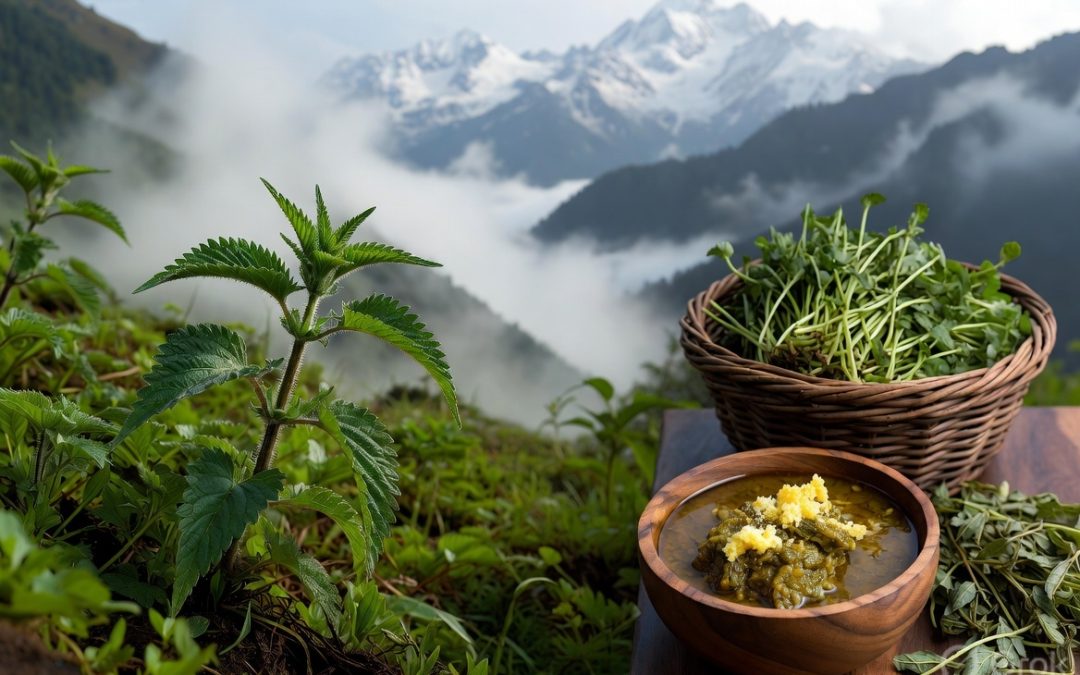
In the misty trails of the Himalayan foothills, a young boy once brushed against a seemingly innocent green plant and cried out in sharp pain. The elders smiled knowingly: “Bichhu Ghas — it stings but strengthens.” For generations, Himalayan nettle (locally called Bichhu Ghas or Kandali) has been both feared for its sting and revered for its extraordinary nourishing and versatile power. What was once considered a troublesome weed has quietly sustained mountain communities through harsh winters and now emerges as one of North India’s most promising forgotten superfoods with significant industrial value.
Table of Contents
- Preface
- About Himalayan Nettle (Bichhu Ghas / Kandali)
- Where It Grows & Foraging / Cultivation Story
- Nutritional Profile (Compared with Common Foods)
- Phytochemical Composition
- Kitchen & Medicinal Uses
- Traditional & Modern Recipes
- Health Benefits (Traditional Knowledge + Modern Science)
- Impact on Rural Population, Industrial Uses & Economic Potential
- Storage, Fresh & Dry Marketing Scope
- Challenges & Conservation Tips
- Frequently Asked Questions (FAQs)
- Conclusion
Preface
This article continues our series on forgotten superfoods of North India. Following Lasura, we present a thoroughly researched profile of Himalayan nettle (Bichhu Ghas / Kandali), combining traditional wisdom with verified scientific and commercial insights.
About Himalayan Nettle (Bichhu Ghas / Kandali)
Himalayan nettle, scientifically known as Girardinia diversifolia (Himalayan Giant Nettle), is a perennial herb in the Urticaceae family. In Uttarakhand and Himachal Pradesh, it is commonly referred to as Bichhu Ghas, Bichhu Buti, or Kandali. The plant features fine, silica-tipped stinging hairs that release histamine and other compounds upon contact.
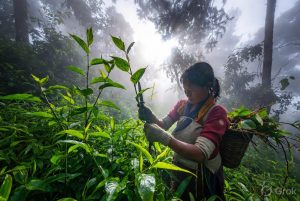
A Himalayan woman carefully harvesting fresh Bichhu Ghas (Kandali) in the misty forests of Uttarakhand. Traditional sustainable foraging of this powerful wild superfood at high altitude.
Where It Grows & Foraging / Cultivation Story
Himalayan nettle thrives in moist, shaded areas at altitudes of 1,200–3,000 meters across Uttarakhand, Himachal Pradesh, Jammu & Kashmir, and parts of Nepal. It grows along forest edges, stream banks, and roadsides with rich, loamy soil.
Foraging: Young shoots are harvested during the monsoon (June–August) using protective gear. Blanching neutralises the sting.
Cultivation: Though primarily wild-harvested, Girardinia diversifolia suits organic agroforestry systems. It requires partial shade, moist, well-drained soil, and minimal inputs. Propagation occurs via seeds or root divisions. Community initiatives in Uttarakhand promote cultivation to ease pressure on wild stocks.
Nutritional Profile (Compared with Common Foods)
Himalayan nettle is nutrient-dense, rich in protein, vitamins, minerals, and antioxidants.
Approximate Comparison (per 100g fresh weight):
| Nutrient | Himalayan Nettle | Spinach | Kale |
|---|---|---|---|
| Protein | 4–6g | 2.9g | 4.3g |
| Iron | 4–8mg | 2.7mg | 1.5mg |
| Calcium | 300–500mg | 99mg | 150mg |
| Vitamin C | High | 28mg | 120mg |
| Vitamin A | Very High | High | High |
It excels in iron and calcium content, supporting its superfood status.
Phytochemical Composition
Himalayan nettle (Girardinia diversifolia) contains a rich array of bioactive phytochemicals that contribute to its medicinal and nutritional value. Key compounds include flavonoids, polyphenols, tannins, sterols (particularly β-sitosterol), phenolic acids, and essential fatty acids such as linoleic and α-linolenic acid. These phytochemicals are responsible for the plant’s potent antioxidant, anti-inflammatory, and antimicrobial properties. The presence of these compounds makes it significantly more bioactive than many common leafy vegetables, explaining its traditional use in managing chronic conditions.
Kitchen & Medicinal Uses
In the Kitchen: Young leaves and shoots of Himalayan nettle (Bichhu Ghas / Kandali) are prepared as saag, soups, or dried for herbal tea. The sting is eliminated through proper cooking.
Medicinal Uses: In traditional Ayurvedic and folk systems, it addresses arthritis, anaemia, joint pain, diabetes, urinary issues, and acts as a blood purifier. Modern research supports its anti-inflammatory, antioxidant, and blood sugar-regulating properties.
Traditional & Modern Recipes
Detailed Recipe: Kandali Saag (Himalayan Nettle Greens)
Ingredients (Serves 4):
- 500g fresh young Himalayan nettle leaves and tender shoots
- 2 medium onions, finely chopped
- 4–5 garlic cloves, crushed
- 1-inch ginger, grated
- 2 green chillies, chopped
- 1 tsp cumin seeds
- ½ tsp turmeric powder
- 2 tbsp mustard oil or ghee
- Salt to taste
- Optional: 1 tbsp maize flour
Method:
- Wear gloves, wash thoroughly, and blanch Himalayan nettle in boiling water for 5–7 minutes. Drain, squeeze, and chop.
- Heat oil, add cumin, then onions, garlic, ginger, and chillies. Sauté until golden.
- Add turmeric and chopped nettles. Cover and cook 12–15 minutes.
- Season with salt and maize flour (if using). Cook uncovered until thickened.
- Serve hot with madua roti, rice, or chapati.
Additional Recipes: Nettle Herbal Tea and Nettle Soup.
Health Benefits (Traditional Knowledge + Modern Science)
Traditional Knowledge: Used as a spring tonic for vitality, joint relief, and recovery.
Modern Insights: Research indicates anti-inflammatory, antioxidant, and potential anti-diabetic effects, supporting arthritis management, blood pressure, and nutrient deficiencies.
Impact on Rural Population, Industrial Uses & Economic Potential
Himalayan nettle provides supplementary income to rural households through leaves, fibre, and value-added products. Women’s self-help groups process it into textiles and teas, preserving knowledge while boosting livelihoods.
Industrial Uses: The bast fibre from Girardinia diversifolia is strong, durable, and eco-friendly. It is used in textiles (fabrics, sarees, scarves), ropes, sacks, mats, nonwoven acoustic panels, and technical textiles. It offers natural UV protection and serves as a sustainable alternative to cotton or synthetic fibres in fashion and industrial applications.
Marketing Scope (Fresh & Dry):
- Fresh: Sold in local Himalayan markets as a seasonal vegetable or for immediate processing. Demand exists in wellness cafes and organic stores for fresh greens and tea.
- Dry: Dried leaves and powder have a longer shelf life for herbal teas, supplements, and nutraceuticals. Fibre is marketed as yarn or fabric for sustainable fashion brands domestically and internationally. Growing global interest in eco-luxury textiles creates strong export potential.
Storage, Fresh & Dry Marketing Scope
Storage: Use fresh leaves immediately. Dried leaves/powder store in airtight containers for 6–12 months in cool, dry conditions. Blanched leaves freeze for up to 3 months. Fibre is stored dry for long-term industrial use.
Challenges: Overharvesting, habitat loss, and climate shifts threaten populations.
Conservation Tips: Adopt regulated harvesting, promote cultivation, and support community value chains.
Frequently Asked Questions (FAQs)
Q1: Is Himalayan nettle safe to eat? A: Yes, when properly blanched or cooked. Always wear gloves.
Q2: Can I cultivate Bichhu Ghas at home? A: Yes, in shaded, moist conditions. It is low-maintenance.
Q3: What are the side effects of Himalayan nettle? A: Possible skin irritation if not handled correctly. Consult a doctor for medicinal use.
Conclusion
Himalayan nettle (Bichhu Ghas / Kandali / Girardinia diversifolia) transforms from a painful weed into a nutritional, medicinal, and industrial powerhouse. Its integration into modern diets, wellness products, and sustainable textiles benefits health, Himalayan communities, and the environment.
Call to Action: Have you tried Kandali Saag or Himalayan nettle tea? Share your experiences below. Prepare the detailed recipe this season and tag us with #HimalayanNettle. Support sustainable sourcing to preserve this valuable resource. Share this article to revive India’s forgotten superfoods.
Madhu Savara Exploring Himalayan Treasures | madhusavara.com
Disclaimer
The information provided in this article is for educational and informational purposes only, based on traditional knowledge, available scientific literature, and general observations. It does not constitute medical, nutritional, agricultural, or professional advice. Neither the author nor madhusavara.com assumes any responsibility or liability for any errors, omissions, or damages arising from the use of this information.
Himalayan nettle contains stinging hairs that can cause skin irritation or allergic reactions in some individuals. Proper identification, careful handling with gloves, and thorough cooking are essential. Always consult a qualified healthcare professional before consuming or using Himalayan nettle for any medicinal purpose, especially if you are pregnant, nursing, taking medication, or have pre-existing health conditions. Misidentification of wild plants can lead to serious health risks.
Foraging and cultivation practices should comply with local laws and environmental regulations. The author and madhusavara.com shall not be held liable for any direct, indirect, incidental, consequential, or punitive damages resulting from the use or reliance on the content of this blog. Readers are advised to exercise their own due diligence and seek expert guidance where necessary.
