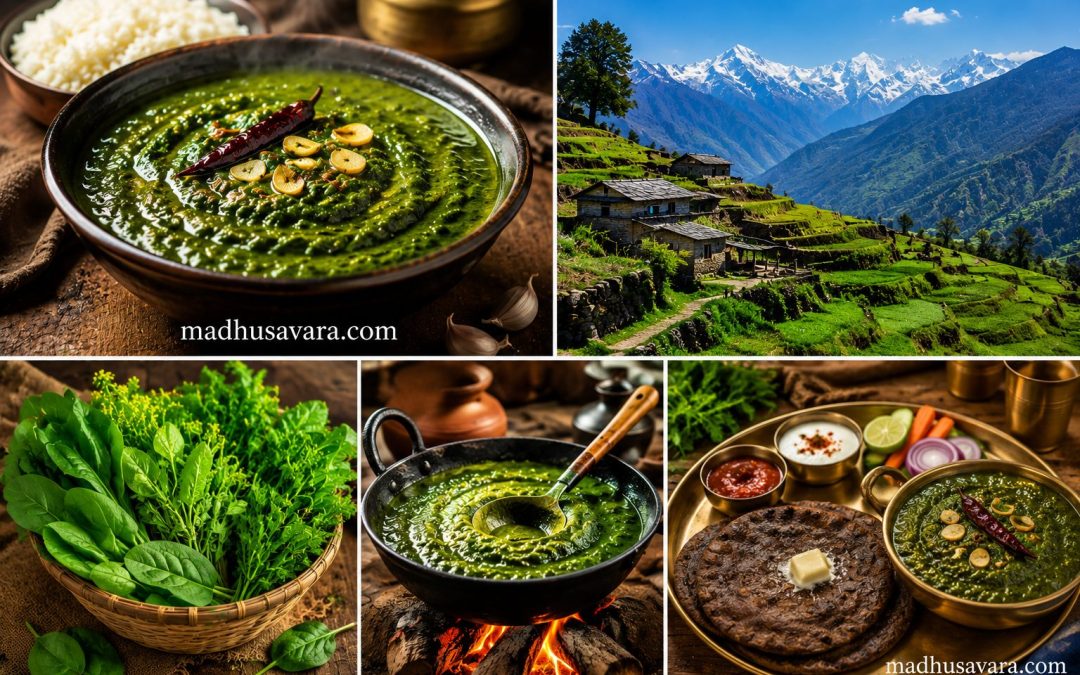
Kafuli: Uttarakhand’s Living Heritage Served One Bowl at a Time

Author’s Note

At Madhusavara.com, every traditional dish is treated as a chapter of history rather than merely a recipe. Behind every ingredient lies a story of farmers, families, changing seasons, forgotten customs, and generations of resilience.

This article has been carefully written to preserve the cultural identity of Kafuli, one of Uttarakhand’s finest heritage foods. The objective is not simply to explain how Kafuli is prepared, but to understand why it continues to occupy a special place in the hearts of Himalayan communities.

Every effort has been made to ensure originality, clarity, and respect for regional traditions while presenting information that is engaging, memorable, and valuable for readers across India and the world.

— Madhu Savara
Owner, Madhusavara.com
Authentic Kafuli, Uttarakhand’s traditional green curry, served steaming hot in a handcrafted brass bowl with garlic tempering, dried red chilli, and aromatic spices, accompanied by fluffy steamed rice in a rustic Indian setting.

A vibrant and appetising presentation of Kafuli, the iconic heritage green dish of Uttarakhand, served in a traditional brass vessel with garlic tempering and paired with steamed rice, celebrates the rich culinary traditions of the Himalayan region.

Preface: A Bowl That Carries the Mountains Within It

When people think of the Himalayas, they often imagine snow-covered peaks, sacred rivers, and breathtaking valleys. Yet, hidden behind these magnificent landscapes is another treasure that rarely receives equal attention—the simple meals that sustained generations long before tourism, highways, or modern conveniences arrived.

In a small stone house overlooking terraced fields, an elderly grandmother carefully stirs a pot of thick green curry over a wood-fired stove. Outside, children return from school while farmers walk back from their fields carrying freshly harvested spinach and fenugreek.

No one announces that dinner is special.

No expensive ingredients have been purchased.

No elaborate spices have travelled thousands of kilometres.

Yet the family gathers with quiet satisfaction because tonight’s meal is Kafuli.

For outsiders, it may appear to be just another spinach preparation. For the people of Uttarakhand, however, Kafuli represents survival, gratitude, sustainability, and the wisdom of generations who understood that true wealth often grows quietly in one’s own backyard.

The story of Kafuli is therefore not simply about food.

It is the story of an entire civilisation adapting to mountains while preserving dignity, health, and community through the simplest of ingredients.

Table of Contents

  1. What is Kafuli?
  2. The Philosophy Behind Kafuli
  3. The Historical Origins of Kafuli
  4. Why Kafuli Became a Heritage Food
  5. The Geography That Created Kafuli
  6. Himalayan Agriculture and Local Wisdom
  7. Cultural Significance in Uttarakhand
  8. The Story Behind the Name
  9. Kafuli as a Symbol of Simplicity
  10. Family Traditions and Intergenerational Knowledge
  11. Impact on Rural Himalayan Villages
  12. Women and the Preservation of Kafuli
  13. Kafuli and Sustainable Living
  14. Why Kafuli Matters in the Twenty-First Century

What is Kafuli?

Kafuli is a traditional green preparation originating from the Kumaon and Garhwal regions of Uttarakhand. It is generally prepared with spinach, fenugreek leaves, mustard greens, bathua, or other locally available leafy vegetables, which are cooked and transformed into a thick, flavourful dish.

Unlike many modern recipes that depend on elaborate ingredients, Kafuli celebrates restraint. Its appeal lies in allowing fresh greens to remain the true hero of the meal.

For many households, Kafuli is comfort food.

For historians, it represents culinary continuity.

For nutritionists, it demonstrates the value of locally available vegetables.

For villagers, it remains simply “home.”

The Philosophy Behind Kafuli

Every traditional recipe reflects a philosophy.

Kafuli embodies several timeless principles:

  • Eat according to the season.
  • Use what nature provides locally.
  • Waste as little as possible.
  • Cook simply but thoughtfully.
  • Share meals with family.
  • Respect the land that feeds you.

These principles evolved naturally in Himalayan communities where transporting food across difficult terrain was once impractical.

Long before sustainability became fashionable, Kafuli quietly practised it every day.

The Historical Origins of Kafuli

Unlike royal cuisines that were documented in palace records, Kafuli belongs to ordinary people.

Its precise date of origin cannot be established because it evolved gradually through everyday cooking practices rather than formal invention.

Centuries ago, villagers depended almost entirely on what could be cultivated on terraced mountain farms.

Leafy vegetables grew reliably even under difficult conditions.

Spinach thrived.

Fenugreek adapted well.

Mustard greens flourished during cooler months.

Rather than allowing surplus produce to go unused, families combined these vegetables into nourishing preparations that could feed everyone economically.

Thus emerged Kafuli—not through luxury, but through necessity, transformed into tradition.

Its continued survival demonstrates that practical wisdom often outlasts fashionable trends.

Why Kafuli Became a Heritage Food

A heritage food is more than an old recipe.

It represents collective memory.

Kafuli qualifies because it preserves:

  • Traditional farming systems
  • Indigenous cooking techniques
  • Seasonal food practices
  • Family rituals
  • Community identity
  • Local biodiversity
  • Intergenerational knowledge

Every household may prepare Kafuli differently, yet every version reflects the same cultural foundation.

This flexibility has helped it survive changing times while retaining authenticity.

The Geography That Created Kafuli

To understand Kafuli, one must first understand Uttarakhand itself.

The Himalayan terrain presents unique challenges:

  • Steep slopes
  • Variable weather
  • Limited cultivable land
  • Isolated villages
  • Seasonal accessibility

Such conditions encouraged communities to rely heavily on hardy crops that could be grown locally.

Leafy vegetables became dependable nutritional resources because they matured relatively quickly and required modest inputs.

The mountains, therefore,e did not merely host Kafuli.

They shaped it.

Without Himalayan geography, Kafuli might never have existed.

Himalayan Agriculture and Local Wisdom

Traditional farmers understood ecological balance long before scientific terminology described it.

Fields often contained multiple crops rather than monocultures.

Kitchen gardens supplied daily vegetables.

Seeds were carefully preserved from previous harvests.

Families rotated crops naturally.

Organic matter returned to the soil.

Kafuli reflects this agricultural diversity.

Its ingredients often vary according to what grows naturally during different seasons.

Rather than forcing uniformity, the recipe embraces adaptation.

This flexibility explains why no two villages prepare Kafuli in the same way.

Cultural Significance in Uttarakhand

Food becomes culture when it carries emotion.

Kafuli appears in everyday meals, family gatherings, village celebrations, and quiet winter evenings.

It reminds people that nourishment extends beyond physical health.

It represents:

  • Hospitality
  • Gratitude
  • Community
  • Continuity
  • Simplicity
  • Self-reliance

Many migrants who leave Uttarakhand for cities describe Kafuli as one of the flavours they miss most because it reconnects them with childhood memories.

The dish, therefore, functions almost like edible nostalgia.

The Story Behind the Name

Several spellings appear in literature and local usage, including Kafuli and Kafuli, depending on transliteration.

The exact linguistic origin remains uncertain and may differ among communities.

What is universally recognised, however, is the cultural meaning attached to the name.

Today, mentioning Kafuli immediately evokes images of Himalayan villages, green fields, iron cooking pots, and family kitchens.

The name has become larger than language itself.

Kafuli as a Symbol of Simplicity

Modern society often associates value with complexity.

Kafuli challenges that assumption.

Its ingredients are inexpensive.

Its preparation is uncomplicated.

Its appearance is modest.

Yet behind this simplicity lies extraordinary nutritional richness and cultural depth.

In many ways, Kafuli teaches that authenticity cannot be manufactured.

It grows naturally through generations of honest living.

Family Traditions and Intergenerational Knowledge

Perhaps the greatest strength of Kafuli is not its taste but its ability to connect generations.

Grandmothers teach daughters.

Parents teach children.

Recipes are rarely measured with precision.

Instead, they rely on observation.

A handful of greens.

A pinch of cumin.

Just enough flour.

Cook until it feels right.

Such intuitive cooking preserves skills that cannot easily be documented in books.

Every preparation, therefore, reverts to an act of cultural transmission.

Impact on Rural Himalayan Villages

Kafuli has played a significant role in supporting village life.

Affordable Nutrition

Families could prepare satisfying meals using vegetables grown close to home, reducing dependence on purchased ingredients.

Food Security

When transportation was limited or weather conditions were difficult, locally grown greens ensured dependable nourishment.

Agricultural Diversity

Because Kafuli accepts multiple leafy vegetables, farmers continued cultivating varied crops instead of relying exclusively on one species.

Economic Sustainability

Small kitchen gardens reduced household expenses while improving nutritional quality.

Community Sharing

Surplus vegetables were often exchanged among neighbours, strengthening social relationships.

Women and the Preservation of Kafuli

The history of Kafuli cannot be separated from the women of Uttarakhand.

For generations, they have:

  • Selected seeds.
  • Managed kitchen gardens.
  • Harvested vegetables.
  • Preserved recipes.
  • Prepared family meals.
  • Passed traditions to children.

Much of Kafuli’s survival owes itself not to written records but to the quiet dedication of women whose knowledge has sustained communities across centuries.

Their contribution deserves recognition as an essential part of India’s intangible cultural heritage.

Kafuli and Sustainable Living

Today,y sustainability is discussed through conferences, reports, and international agreements.

Kafuli demonstrates that sustainability can also emerge naturally through everyday habits.

The dish encourages:

  • Seasonal eating
  • Local sourcing
  • Low transportation requirements
  • Minimal food waste
  • Biodiversity
  • Plant-forward nutrition
  • Community resilience

Its environmental footprint is often considerably lower than that of meals dependent on imported ingredients.

This makes Kafuli remarkably relevant in contemporary discussions about climate-conscious diets.

Why Kafuli Matters in the Twenty-First Century

The world increasingly seeks authentic experiences.

Consumers want transparency.

Families seek healthier meals.

Tourists search for local identity.

Farmers value biodiversity.

Nutritionists encourage leafy vegetables.

Environmentalists advocate sustainable food systems.

Remarkably, Kafuli already embodies each of these aspirations.

It does not require reinvention.

It simply requires appreciation.

Its greatest lesson may be that progress sometimes lies not in abandoning tradition but in understanding it more deeply.

A Thought Worth Remembering

“In Uttarakhand, Kafuli is not merely cooked; it is inherited.”

That single sentence captures why this humble green preparation deserves recognition not just as a recipe but as a living archive of Himalayan resilience, wisdom, and identity.

The Heart of Kafuli: A Recipe That Carries Generations

Every traditional dish has countless versions, but Kafuli has never been about rigid measurements. It is a recipe guided by instinct, availability, and family tradition. A grandmother in Pithoragarh may prepare it differently from a homemaker in Chamoli, yet both would proudly call it Kafuli.

The beauty of this Himalayan classic lies in its adaptability. The recipe changes with the seasons while preserving its soul.

Traditional Ingredients

For approximately four servings, a typical Kafuli may include:

  • 500 grams fresh spinach (palak)
  • 200 grams fresh fenugreek leaves (methi)
  • 100 grams mustard greens (optional)
  • 2 tablespoons rice flour or wheat flour
  • 1 tablespoon mustard oil or ghee
  • 5–6 garlic cloves, finely chopped
  • 1-inch ginger, grated
  • 2 green chillies, finely chopped
  • 1 teaspoon cumin seeds
  • Salt to taste
  • Water as required

Some families also add bathua or locally available Himalayan greens, depending on the season.

Step-by-Step Traditional Preparation

Step 1: Selecting Fresh Greens

The quality of Kafuli depends largely on the freshness of its leafy vegetables. Traditionally, vegetables are harvested from kitchen gardens just before cooking.

Step 2: Washing Thoroughly

Mountain vegetables are carefully washed several times to remove soil and impurities while preserving their freshness.

Step 3: Cooking the Greens

The leaves are gently boiled or steamed until soft without overcooking, helping retain their natural flavour and colour.

Step 4: Grinding

The cooked greens are traditionally ground using a stone grinder or mortar, although modern kitchens often use a blender.

Step 5: Preparing the Tempering

Mustard oil or ghee is heated.

Cumin seeds crackle first.

Garlic, ginger, and green chillies are then sautéed until aromatic.

Step 6: Combining Everything

The green paste is added to the tempering.

Rice flour mixed with water is slowly incorporated to thicken the preparation.

The mixture simmers gently until it develops a creamy consistency.

Step 7: Serving

Kafuli is best enjoyed hot with:

  • Steamed rice
  • Mandua (finger millet) roti
  • Wheat chapati
  • Jhangora preparations
  • Simple village-style accompaniments

Its understated flavour allows the freshness of the greens to remain the centre of attention.

Regional Variations Across Uttarakhand

No single recipe defines Kafuli.

Instead, every region contributes its own personality.

Kumaon Region

  • Greater use of spinach
  • Mild seasoning
  • Smooth consistency

Garhwal Region

  • Mix of multiple leafy greens
  • Slightly stronger garlic flavour
  • Richer texture

Village Adaptations

Some households include:

  • Bathua
  • Local wild greens
  • Additional herbs
  • Different flour ratios
  • Seasonal substitutions

These variations demonstrate the living nature of the tradition rather than inconsistency.

Nutritional Value of Kafuli

Kafuli is a remarkable example of nutrient-dense traditional food.

Nutrient Main Source General Importance
Iron Spinach, mustard greens Supports normal blood formation
Calcium Leafy vegetables Helps maintain bones and teeth
Vitamin A Spinach Supports vision and immune function
Vitamin C Fresh greens Aids normal immune function and iron absorption
Vitamin K Green vegetables Important for normal blood clotting and bone health
Folate Leafy vegetables Supports normal cell growth
Fibre Greens Supports digestive health
Antioxidants Plant compounds Help protect cells from oxidative stress

Because ingredients may vary, nutritional values are approximate and depend on preparation methods.

Why Nutritionists Appreciate Traditional Foods

Modern science increasingly recognises what mountain communities understood intuitively.

Fresh seasonal vegetables:

  • Encourage dietary diversity.
  • Increase fibre intake.
  • Support micronutrient consumption.
  • Reduce dependence on highly processed foods.

Kafuli illustrates how simple local ingredients can contribute to balanced eating patterns.

Kafuli and Sustainable Agriculture

The environmental message of Kafuli is remarkably modern.

It supports:

Seasonal Eating

Vegetables are harvested when naturally available.

Local Farming

Ingredients usually travel only short distances.

Biodiversity

Multiple leafy vegetables remain under cultivation.

Low Waste

Kitchen scraps often return to compost.

Climate Awareness

Reduced transportation can lower environmental impact compared with ingredients shipped over long distances.

Without intending to become an environmental symbol, Kafuli naturally embodies sustainable principles.

Comparison with Other Indian Green Dishes

Kafuli vs Sarson da Saag

Sarson da Saag is dominated by mustard greens and often enriched with butter or ghee.

Kafuli uses multiple leafy vegetables and highlights their natural flavour through simpler preparation.

Kafuli vs Palak Paneer

Palak Paneer combines spinach with paneer and a richer gravy.

Kafuli focuses primarily on greens themselves rather than dairy.

Kafuli vs General Saag

While many Indian regions prepare green vegetable dishes, Kafuli remains uniquely associated with Uttarakhand’s mountain traditions and culinary philosophy.

Kafuli as an Expression of Rural Economy

For generations, Kafuli represented economic resilience.

Families could:

  • Grow ingredients themselves.
  • Minimise household expenses.
  • Reduce market dependence.
  • Feed multiple generations affordably.

Its affordability never reduced its cultural value.

Instead, it strengthened community identity.

Women: The Invisible Guardians of Kafuli

The history of Kafuli belongs equally to the women who preserved it.

They:

  • Selected seeds.
  • Maintained kitchen gardens.
  • Passed recipes orally.
  • Managed household nutrition.
  • Introduced children to seasonal foods.

Without written manuals, their knowledge travelled across generations through observation and participation.

Their contribution forms an invaluable part of India’s intangible cultural heritage.

Kafuli and Tourism

Travellers increasingly seek authentic local experiences rather than generic menus.

Trying Kafuli allows visitors to:

  • Experience Himalayan culinary traditions.
  • Understand local agriculture.
  • Appreciate seasonal cooking.
  • Connect with village life.
  • Support regional food culture.

Many visitors remember Kafuli long after leaving Uttarakhand because it represents authenticity rather than commercialisation.

Why Kafuli Deserves Global Recognition

International audiences increasingly appreciate:

  • Plant-forward cuisine
  • Sustainable eating
  • Regional identity
  • Farm-to-table concepts
  • Traditional food knowledge

Kafuli naturally aligns with these values.

Its global appeal lies not in novelty but in authenticity.

The Future of Kafuli

Urbanisation has changed eating habits across India.

Fast food, processed ingredients, and changing lifestyles challenge many traditional recipes.

Yet Kafuli remains relevant because it offers:

  • Simplicity
  • Nutrition
  • Sustainability
  • Cultural continuity
  • Local pride

By documenting and celebrating dishes like Kafuli, future generations gain an opportunity to reconnect with their culinary roots.

Frequently Asked Questions

What exactly is Kafuli?

Kafuli is a traditional green preparation from Uttarakhand made primarily from leafy vegetables such as spinach and fenugreek, thickened with rice or wheat flour and seasoned with garlic, ginger, and cumin.

Which state is famous for Kafuli?

Kafuli is closely associated with Uttarakhand, particularly the Kumaon and Garhwal regions.

Is Kafuli vegetarian?

Yes. Traditional Kafuli is a vegetarian dish prepared entirely from plant-based ingredients, although some households may use ghee.

Is Kafuli vegan?

When prepared with mustard oil instead of ghee and without dairy additions, Kafuli can fit a vegan dietary pattern.

Why is Kafuli considered heritage food?

It preserves centuries-old agricultural practices, family traditions, local biodiversity, and regional culinary identity.

Can Kafuli be made with different greens?

Yes. Families often use spinach, fenugreek, mustard greens, bathua, and other locally available seasonal vegetables.

Is Kafuli healthy?

Kafuli contains nutrient-rich leafy vegetables and can be part of a balanced diet. Individual dietary suitability depends on personal nutritional needs and medical advice.

What is traditionally served with Kafuli?

It is commonly served with steamed rice, mandua roti, wheat chapati, or other simple local accompaniments.

Why is Kafuli important for rural villagers?

It provides affordable nutrition, supports local farming, preserves biodiversity, and strengthens community traditions.

Can tourists easily find Kafuli?

Many local restaurants and homestays in Uttarakhand serve Kafuli, although availability may vary by season and location.

Kafuli in Literature, Memory, and Identity

Many heritage foods disappear when lifestyles change.

Kafuli has survived because it exists not merely in cookbooks but in memories.

For people born in Uttarakhand and now living elsewhere, the aroma of simmering greens often evokes childhood kitchens, village festivals, family conversations, and winter evenings around a shared meal.

That emotional connection is impossible to measure, yet it forms the strongest foundation for preservation.

Final Reflection

Perhaps Kafuli’s greatest achievement is that it never tried to impress anyone.

It did not emerge from royal courts.

It did not require rare spices.

It did not depend upon luxury.

Instead, it quietly nourished generations through honesty, simplicity, and respect for nature.

Its story reminds us that the finest traditions often begin in ordinary homes where love, labour, and local wisdom come together around a humble meal.

As India rediscovers its regional cuisines, Kafuli deserves recognition not simply as Uttarakhand’s green curry but as one of the country’s finest examples of sustainable culinary heritage.

Conclusion

Kafuli is far more than a recipe preserved in old kitchens. It is a living symbol of Himalayan resilience, agricultural intelligence, cultural continuity, and nutritional wisdom. Every bowl tells the story of terraced fields, hardworking families, changing seasons, and the belief that simple food prepared with care can sustain both body and spirit.

Preserving Kafuli means preserving an invaluable chapter of India’s culinary heritage. Whether enjoyed in a remote mountain village or recreated in an urban home, it continues to inspire appreciation for local ingredients, sustainable living, and traditions that have stood the test of time.

As long as families continue to cook, share, and celebrate Kafuli, its legacy will remain alive for generations yet to come.

Call to Action

Have you tasted Kafuli during your travels or prepared it using your family’s traditional method? Share your experience in the comments on Madhusavara.com and help preserve this remarkable heritage food for future generations. If you found this article informative, share it with friends, food enthusiasts, and anyone interested in India’s rich culinary traditions.

Explore more authentic recipes, heritage food stories, and cultural features only on Madhusavara.com, where every meal tells a story.

Disclaimer

This article has been prepared solely for educational, informational, and cultural awareness purposes. Historical accounts, local traditions, spellings, recipes, ingredients, and preparation methods may vary across regions, families, and communities within Uttarakhand and elsewhere.

While every reasonable effort has been made to present accurate and balanced information, Madhu Savara, Madhusavara, Madhusavara.com, its owner, authors, contributors, editors, affiliates, and representatives make no express or implied representation or warranty regarding the completeness, accuracy, reliability, or suitability of the information contained herein.

Readers are encouraged to exercise independent judgment and, where appropriate, consult qualified culinary, nutritional, agricultural, or healthcare professionals before relying on any information contained in this article.

Under no circumstances shall Madhu Savara, Madhusavara, or Madhusavara.com be liable for any direct, indirect, incidental, consequential, special, exemplary, or other loss, damage, injury, claim, cost, expense, or liability arising from or connected with the use of, interpretation of, or reliance upon this article or any part of its contents. Accessing or using this material constitutes acceptance of this disclaimer.

Explore more authentic recipes, heritage foods, and culinary stories by visiting our other blogs on Madhusavara.com.