
Author’s Note
I am Madhu Savara, owner of Madhusavara.com, and I firmly believe that food is one of the most powerful ways to preserve culture and heritage. Authentic Himachali breads and snacks are not merely recipes; they are living traditions that have nourished mountain communities for centuries. Passed down through generations, these foods showcase the ingenuity, resilience, and hospitality of the people of Himachal Pradesh.
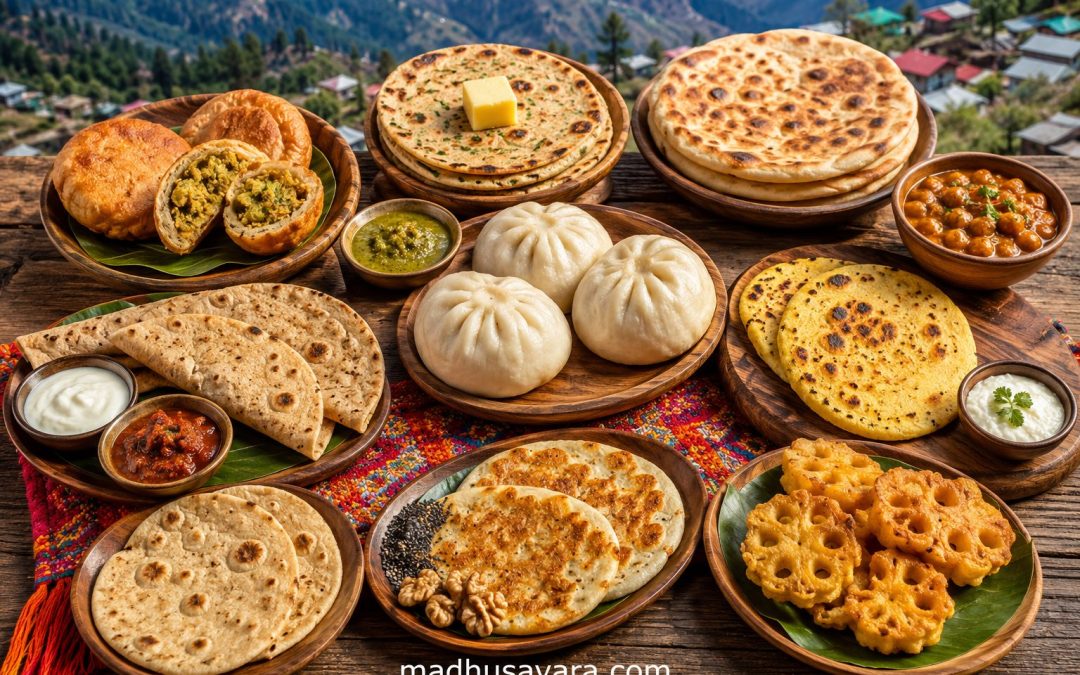
In this article, I take you on a journey through ten authentic Himachali breads and snacks that continue to hold a special place in local homes, festivals, fairs, and family celebrations. Whether you are a food enthusiast, traveller, or home cook, these traditional Himachali foods offer a fascinating glimpse into the culinary heritage of the Himalayas.
10 Authentic Himachali Breads and Snacks That Define Traditional Himachali Foods
Table of Contents
- Introduction
- Significance of Himachali Breads and Snacks
- Babru
- Beduan Roti
- Patande
- Siddu
- Bhaturu
- Aktori
- Chilra
- Manday
- Marchi/Mitdu
- Bhey Pakora
- Frequently Asked Questions
- Conclusion
- Author Bio
- References
Introduction
Authentic Himachali breads and snacks form an integral part of traditional Himachali foods and represent centuries of culinary wisdom developed in the Himalayan region. Prepared using locally grown grains, lentils, dairy products, and seasonal ingredients, these dishes reflect the geography, climate, and cultural diversity of Himachal Pradesh.
Unlike commercial fast foods, traditional Himachali breads and snacks are deeply connected to local customs, harvest celebrations, religious ceremonies, and community gatherings. Each dish tells a unique story about the people and regions from which it originates.
Significance of Himachali Breads and Snacks
Traditional Himachali foods are shaped by the rugged terrain and changing seasons of the Himalayas. Local communities developed recipes that are nutritious, filling, and suitable for mountain life. Many dishes utilise fermentation, steaming, stone-ground grains, and locally sourced ingredients.
These authentic Himachali breads and snacks continue to play an important role in preserving cultural identity while introducing visitors to the rich culinary traditions of the state.
Babru
Area of Origin
Kangra and Shimla districts of Himachal Pradesh.
Traditional Significance
Babru is one of the most recognised authentic Himachali breads and snacks. It is commonly prepared during local fairs, religious events, festivals, and family celebrations.
About Babru
Often described as the Himachali version of kachori, Babru consists of wheat dough stuffed with a seasoned urad dal filling and deep-fried until golden brown. The combination of a crisp exterior and flavourful filling makes it a favourite breakfast and tea-time snack throughout the region.
Beduan Roti
Area of Origin
Kangra Valley, Himachal Pradesh.
Traditional Significance
Beduan Roti has been a staple of farming households for generations and is valued for its ability to provide a wholesome and satisfying meal.
About Beduan Roti
This traditional stuffed flatbread is filled with Arbi or lentils and aromatic spices before being cooked on a griddle. The dish highlights the simple yet nutritious cooking traditions of rural Kangra and is often enjoyed with curd or homemade butter.
Patande
Area of Origin
Sirmaur District, especially the Nahan region.
Traditional Significance
Patande is considered one of the oldest breakfast foods of Himachal Pradesh and remains closely associated with family gatherings and festive occasions.
About Patande
Prepared using wheat flour, milk, and sugar, Patande resembles a soft pancake. Its delicate texture and mildly sweet flavour make it a cherished comfort food that is often served with honey, butter, or ghee.
Siddu
Area of Origin
Shimla, Kullu, and Kinnaur districts.
Traditional Significance
Siddu is widely regarded as one of the most iconic traditional Himachali foods and is especially popular during the winter months.
About Siddu
Prepared from fermented wheat dough and steamed rather than baked, Siddu is traditionally filled with roasted pulses, walnuts, poppy seeds, or local spices. Its distinctive flavour and soft texture make it a beloved dish across Himachal Pradesh.
The traditional Siddu recipe, fermentation tips, and serving suggestions will be published separately on Madhusavara.com.
Bhaturu
Area of Origin
Chamba District.
Traditional Significance
Bhaturu occupies a special place in Chamba’s culinary heritage and is frequently prepared during festivals and community feasts.
About Bhaturu
This naturally fermented bread is known for its soft texture and mildly tangy flavour. Bhaturu is commonly served with Chana Madra and other traditional Himachali curries, creating a satisfying and wholesome meal.
Aktori
Area of Origin
Kinnaur and Lahaul-Spiti regions.
Traditional Significance
Aktori is closely linked to tribal communities and is often prepared during harvest festivals, religious ceremonies, and family celebrations.
About Aktori
Made primarily from buckwheat flour and wheat flour, Aktori is a nutritious pancake that reflects the use of indigenous grains in Himalayan cooking. Its earthy flavour and simple preparation continue to make it popular in high-altitude regions.
Chilra
Area of Origin
Mandi, Kangra, and Chamba districts.
Traditional Significance
Chilra has traditionally been enjoyed as a nourishing breakfast and remains a staple in many Himachali households.
About Chilra
Prepared using fermented rice batter, Chilra resembles a thick pancake and is often served with curd, chutney, or seasonal vegetable dishes. The fermentation process contributes to both flavour and digestibility.
Manday
Area of Origin
Chamba District.
Traditional Significance
Manday is frequently prepared during weddings, festivals, and ceremonial feasts where it symbolises hospitality and celebration.
About Manday
This paper-thin bread requires considerable skill to prepare and is regarded as a culinary art form in many households. Manday is typically paired with traditional curries and festive dishes.
Area of Origin
Kangra and Mandi districts of Himachal Pradesh (with related variations in adjoining rural areas).
Traditional Significance
Marchu (also called Mithdu) is a festive and ceremonial bread closely associated with local celebrations such as weddings, birthdays, and community festivals. It reflects the region’s long tradition of fermentation and the custom of preparing special foods to mark happy occasions and share with family and guests.
About Marchu / Mithdu
This sweet fermented bread is related to everyday Bhaturu but prepared differently for festive use. The dough is made richer with wheat flour, semolina, milk, oil or ghee, jaggery, fennel, and dry fruits, then fermented with the traditional starter Malera. Small portions are pressed in carved wooden moulds that leave decorative patterns and deep-fried until golden. It is typically enjoyed as a snack with tea during celebrations.
Bhey Pakora
Area of Origin
Kullu and Mandi districts.
Traditional Significance
Bhey Pakora demonstrates the creative use of lotus stem in Himachali cuisine and is commonly enjoyed during social gatherings and festive occasions.
About Bhey Pakora
Fresh lotus stem slices are coated in a seasoned gram flour batter and deep-fried until crisp. The result is a distinctive snack with a crunchy texture and rich flavour that continues to be popular across the region.
Frequently Asked Questions
What are the most famous authentic Himachali breads and snacks?
Some of the most famous authentic Himachali breads and snacks include Babru, Siddu, Bhaturu, Patande, Aktori, Chilra, Manday, Beduan Roti, Kachri Ki Roti, and Bhey Pakora.
Which Himachali bread is considered the most iconic?
Siddu is widely regarded as the most iconic traditional bread of Himachal Pradesh because of its unique fermentation and steaming process.
Is Babru similar to Kachori?
Yes, Babru resembles kachori in appearance and preparation, but it has its own distinct Himachali flavour and cultural significance.
Which Himachali bread is traditionally fermented?
Siddu and Bhaturu are among the most popular fermented breads in Himachali cuisine.
Which districts are known for Patande?
Patande is traditionally associated with the Sirmaur district, particularly the Nahan region.
Why are traditional Himachali foods important?
Traditional Himachali foods preserve regional culture, support local agriculture, and showcase centuries-old culinary techniques that continue to be relevant today.
Are these breads and snacks still commonly prepared?
Yes. Many Himachali households continue to prepare these dishes during festivals, family gatherings, and special occasions, helping preserve their culinary heritage.
Conclusion
Authentic Himachali breads and snacks offer a remarkable introduction to the diverse food culture of Himachal Pradesh. From the crispy richness of Babru and the wholesome goodness of Beduan Roti to the fermented flavours of Siddu and Bhaturu, each dish reflects the traditions, values, and lifestyle of Himalayan communities.
These traditional Himachali foods continue to connect people with their heritage while introducing new generations to the rich culinary legacy of the mountains. By preserving and celebrating these recipes, we ensure that the unique flavours of Himachal Pradesh remain alive for years to come.
Call to Action
Which of these authentic Himachali breads and snacks would you like to try first? Share your thoughts in the comments below and explore more traditional Himalayan recipes, https://www.madhusavara.com/kitchen-blog/7-day-red-and-black-rice-glow-swap-challenge/regional food guides, and culinary stories on Madhusavara.com. Don’t forget to bookmark this guide and return for the detailed recipes of each featured dish.
A complete above 10 recipes with preparation tips and serving suggestions will be published separately on Madhusavara.com.
Author Bio
Madhu Savara is the founder and owner of Madhusavara.com, a platform dedicated to documenting authentic Indian recipes, traditional food practices, and Himalayan culinary heritage. Through careful research and storytelling, Madhu strives to preserve regional recipes and share the diverse flavours of India with food lovers around the world.
References
Singh, B., et al. Traditional Fermented Foods of the Indian Himalayas. Journal of Food Science and Technology. DOI: 10.1007/s13197-014-1412-4
Sharma, E., Traditional Food Systems of the Indian Himalayas. Indian Journal of Traditional Knowledge.
Indian Council of Agricultural Research (ICAR). Indigenous Food Practices and Culinary Heritage of Himachal Pradesh.
Ministry of Tourism, Government of India. Culinary Traditions of Himachal Pradesh.
Food and Agriculture Organisation (FAO). Traditional Mountain Food Systems and Sustainable Diets.
