
Author’s Note By Madhu Savara, Owner of madhusavara.com
Namaste, dear readers. As someone who has spent years exploring and sharing the rich tapestry of Indian regional cuisines, I hold a special place in my heart for the grand feasts of the Himalayas. Mandyali Dham, also lovingly called Mandiyali Dham, has always fascinated me with its perfect balance of flavours and deep cultural roots. In this detailed guide, I share authentic insights into this traditional Himachali feast so you can understand, appreciate, and even recreate it at home. Every detail here comes from traditional knowledge and careful study to honour the heritage of Mandyali Dham.
Table of Contents
- Introduction to Mandyali Dham
- What is Mandyali Dham (Mandiyali Dham)?
- Origin and Cultural Significance of Mandyali Dham
- Ingredients Used in Mandyali Dham
- Traditional Utensils Used in Mandyali Dham
- A Short Note on the Cooks – The Botis
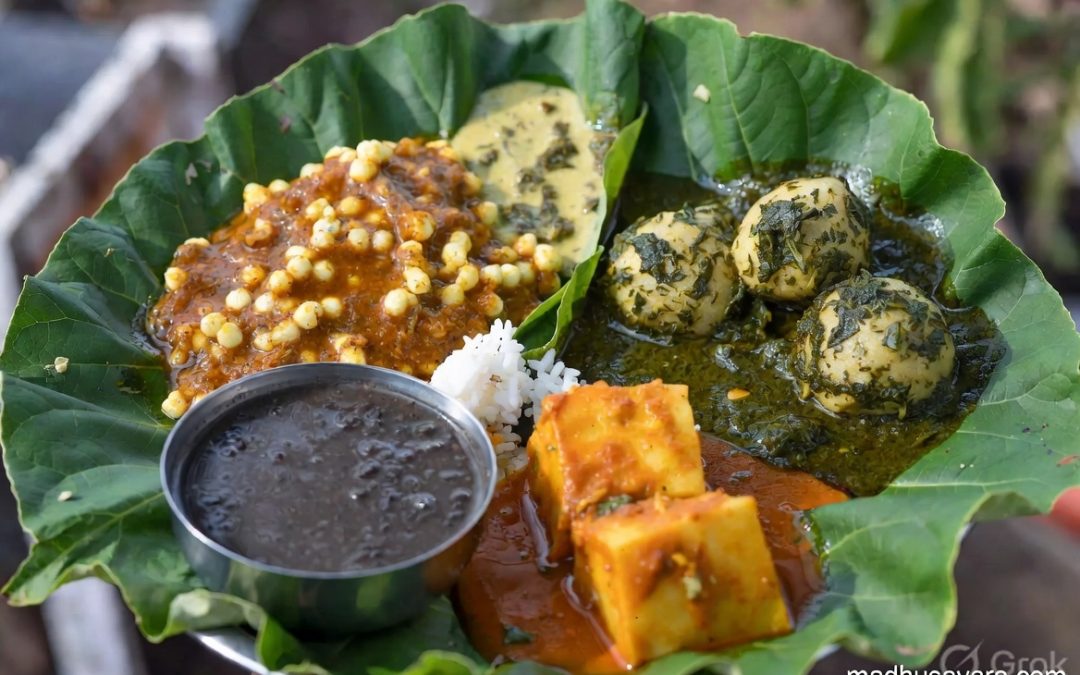
- Popular Dishes Served in Authentic Mandyali Dham
- Traditional Serving Sequence of Mandyali Dham
- Nutritional Benefits and Chart (Per Serving Approx.)
- Food Characteristics and Unique Features
- Variations of Mandyali Dham Within the Mandi Region
- Things to Avoid When Making or Serving Mandyali Dham
- Proper Storage Guidelines for Mandyali Dham
- FAQs on Mandyali Dham and Mandiyali Dham
- Conclusion
- Disclaimer
- Academic and Cultural References
- About the Author
Introduction to Mandyali Dham
Mandyali Dham, also known as Mandiyali Dham, is a cherished traditional vegetarian feast from the Mandi region of Himachal Pradesh. This elaborate meal is far more than food – it is a celebration of community, culture, and ancient wisdom. Prepared for weddings, festivals, and religious occasions, authentic Mandyali Dham follows Ayurvedic principles and offers a complete, balanced dining experience that continues to delight food lovers across India.
If you are searching for an authentic Mandyali Dham recipe, serving details, or cultural insights, this comprehensive guide will help you master the tradition.
What is Mandyali Dham (Mandiyali Dham)?
Mandyali Dham is a satvik, onion-garlic-free vegetarian feast unique to the Mandi district. It features slow-cooked lentil and yoghurt-based dishes served in a specific order on leaf plates (pattals). The complete absence of onion, garlic, and tomatoes allows the natural flavours of spices, curd, and local ingredients to shine through, making Mandiyali Dham both light and deeply satisfying.
Origin and Cultural Significance of Mandyali Dham
The tradition of Himachali Dham dates back centuries, evolving from temple offerings and royal kitchens into a community feast. In the Mandi region, Mandyali Dham developed its distinctive style, later recognised for perfectly incorporating all six Ayurvedic rasas (tastes) in the correct sequence to promote optimal health and digestion. It promotes equality as people sit together on the floor, fostering unity during important life events. This feast remains a living symbol of Himachali hospitality and sustainable local food practices.
Ingredients Used in Mandyali Dham
The beauty of authentic Mandyali Dham lies in its simple, local ingredients:
- Lentils and pulses such as black gram (urad dal), Bengal gram, and horse gram.
- Fresh vegetables like pumpkin and spinach.
- Pure dairy, including thick curd, ghee, and buttermilk.
- Traditional spices – mustard oil, cumin, coriander, cardamom, cinnamon, cloves, fennel, turmeric, and asafoetida.
- Chickpea flour for sweets and jaggery or tamarind for balanced khattas.
These ingredients create harmonious flavours while keeping the meal completely satvik and suitable for festive occasions.
Traditional Utensils Used in Mandyali Dham
In the preparation of authentic Mandyali Dham or Mandiyali Dham, traditional cooks rely on time-honoured brass and copper utensils that have been part of Himachali households for generations. Large pots known locally as baltoi, charoti, or batohi feature a wide base for even heating and a narrower neck that helps retain warmth and flavours during the long, slow cooking process over wood fire. These metal vessels not only conduct heat beautifully but are also believed to impart subtle health benefits through their natural properties. For dishes like the tangy khattas, wide iron kadais or woks are preferred, allowing for perfect caramelisation and a balance of sweet-and-sour notes. This careful choice of utensils is integral to achieving the signature taste and aroma that defines every genuine Mandyali Dham feast.
A Short Note on the Cooks – The Botis
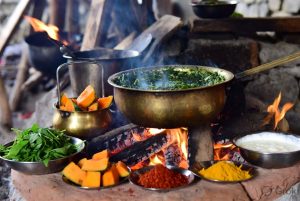
The soul of every authentic Mandyali Dham (Mandiyali Dham) lies in the skilled hands of the botis – hereditary Brahmin cooks who have safeguarded these culinary traditions across generations. These master chefs begin preparations well in advance, often the previous evening, bringing with them not just recipes but an inherited understanding of spices, fire control, and the sacred rhythm of cooking a satvik meal. Their knowledge, passed down orally within families, ensures that each dish in the Mandyali Dham carries the purity and precision required for both taste and cultural significance. In the hills of Mandi, the presence of these dedicated cooks transforms a simple gathering into a memorable celebration of heritage and community.
Popular Dishes Served in Authentic Mandyali Dham
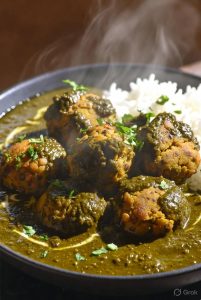
A classic Mandyali Dham platter typically includes:
- Boondi ka Meetha (sweet chickpea flour pearls in syrup)
- Sepu Vadi (signature spinach gravy with fried lentil dumplings)
- Kaddu ka Khatta (sweet and sour pumpkin curry)
- Kol ka Khatta (tangy horse gram preparation)
- Dhuli Urad ki Dal or creamy black gram dal
- Yoghurt-based Madra gravy
- Steamed rice
- Buttermilk jhol to finish
These dishes together create a complete, satisfying feast.
Traditional Serving Sequence of Mandyali Dham
The serving order is one of the most important aspects of Mandyali Dham:
- Sweet dish (Madhura rasa) – Boondi ka Meetha
- Sepu Vadi
- Kaddu ka Khatta (sour-sweet)
- Other khattas like Kol ka Khatta
- Dal and Madra preparations
- Light jhol or buttermilk
This sequence supports digestion and follows ancient Ayurvedic guidelines for a balanced meal.
Nutritional Benefits and Chart (Per Serving Approx.)
Mandyali Dham is highly nutritious and balanced.
| Nutrient | Approximate Value (Per Serving) |
|---|---|
| Calories | 650–850 kcal |
| Protein | 18–25 g |
| Carbohydrates | 80–110 g |
| Healthy Fats | 25–35 g |
| Dietary Fibre | 10–15 g |
| Key Benefits | Rich in B-vitamins, calcium, iron, and probiotics from curd |
It provides sustained energy, supports digestion, and offers a wholesome meal aligned with traditional wellness principles.
Food Characteristics and Unique Features
Authentic Mandyali Dham is creamy yet light, beautifully balanced in sweet, sour, and spicy notes, and aromatic with whole spices. The slow-cooking method creates comforting textures and layered flavours without heaviness. Its satvik nature makes it ideal for festivals and family gatherings.
Variations of Mandyali Dham Within the Mandi Region
While the core structure remains consistent, families and villages in Mandi may add slight personal touches – different beans in the madra, extra seasonal vegetables, or variations in sweetness levels. These regional nuances make every Mandiyali Dham experience special while staying true to tradition.
Things to Avoid When Making or Serving Mandyali Dham
- Adding onion, garlic, or tomatoes
- Rushing the slow-cooking process
- Using excessive spices that overpower natural flavours
- Serving the meal cold
- Deviating from the traditional serving sequence
Proper Storage Guidelines for Mandyali Dham
Enjoy Mandyali Dham fresh whenever possible. Store leftovers in airtight containers in the refrigerator for up to 2 days. Reheat gently on a low flame with a little water or curd. Yoghurt-based dishes are best consumed soon; dal and rice reheat well.
FAQs on Mandyali Dham and Mandiyali Dham
Q1: What is the difference between Mandyali Dham and Kangra Dham? A: Mandyali Dham starts with a sweet dish and prominently features Sepu Vadi, while Kangra Dham has its own variations in madra and dal preparations.
Q2: Can beginners try making Mandyali Dham at home? A: Yes! Start with smaller quantities and follow traditional methods. Detailed recipes are available on madhusavara.com.
Q3: Why is Mandyali Dham considered healthy? A: It balances all six Ayurvedic tastes, uses probiotic-rich curd, and provides complete nutrition without heavy ingredients.
Q4: Where can I taste authentic Mandyali Dham? A: In Mandi, during festivals or at reputed local eateries. You can also recreate it using recipes from madhusavara.com.
Q5: Is there a vegan version of Mandyali Dham? A: Traditional versions use dairy, but mindful substitutions with plant-based curd can be tried while respecting the original spirit.
Conclusion
Mandyali Dham (Mandiyali Dham) beautifully represents the warmth, wisdom, and flavours of Himachal Pradesh. By understanding and preserving this tradition, we keep our cultural heritage alive for future generations. I encourage you to experience this feast and create beautiful memories around it.
Call to Action: Love traditional Indian food? Visit madhusavara.com for more Mandyali Dham recipes, step-by-step Himachali cooking guides, and other authentic regional recipes. Share your Mandyali Dham experience in the comments below, subscribe to our newsletter for regular updates, and explore related posts on Himachali cuisine, festival foods, and satvik recipes. Let’s celebrate India’s rich food heritage together!
Strong Disclaimer
This article on Mandyali Dham (Mandiyali Dham) is provided for educational, cultural, and informational purposes only. All recipes, methods, nutritional information, and descriptions are based on traditional practices, general research, and publicly available sources.
The author and madhusavara.com do not claim to be experts in Ayurveda, nutrition, or medicine. We do not guarantee the accuracy, completeness, or suitability of the information for individual needs.
You should always consult a qualified healthcare professional, registered dietitian, or Ayurvedic practitioner before making any significant changes to your diet, especially if you have any medical conditions, food allergies, or dietary restrictions.
Traditional recipes may vary from family to family and village to village in the Mandi region. Cultural practices and ingredients should be respected and followed responsibly. The author and website shall not be liable for any direct, indirect, or consequential loss or damage arising from the use of the information provided in this article.
Academic and Cultural References
- Tanwar et al. (2017). Himachali dham: Food, culture, and heritage. Journal of Ethnic Foods. DOI: 10.1016/j.jef.2017.10.006.
- Goel et al. (2017). Dham – Traditional Feast of Mandi: A Complete Food with Ayurveda Perspective. References drawn from Ayurvedic texts (Sushruta Samhita) and Himachali cultural studies.
About the Author
Madhu Savara is the founder of madhusavara.com, a trusted platform for genuine Indian home cooking, regional specialities, and cultural food stories. Passionate about preserving traditional recipes, Madhu shares practical, well-researched guides that help readers bring authentic flavours to their kitchens.
