
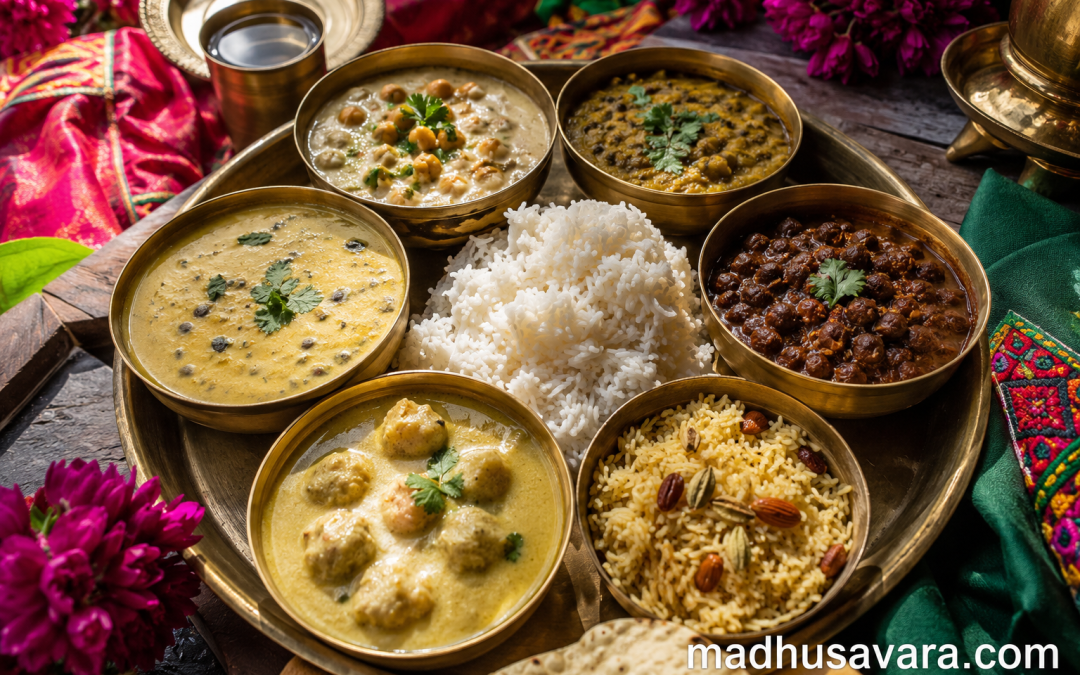
Chamba Dham: Traditional Food of Chamba, Himachal Pradesh
Author’s Note
Some journeys are remembered for breathtaking landscapes, while others stay with us because of the people we meet and the meals we share. My memories of Chamba have always begun with its food. Every visit to this beautiful Himalayan district has reminded me that recipes are not merely lists of ingredients; they are stories lovingly preserved by generations.
Among Chamba’s many culinary treasures, nothing reflects its traditions more beautifully than Chamba Dham. It is a feast that has never chased changing food trends, yet it continues to hold a place of honour in the hearts of the people who prepare it and those fortunate enough to enjoy it.
Unlike lavish banquets that impress with endless choices, a traditional Dham wins you over with balance, simplicity, and heartfelt hospitality. Every dish has a reason for being served, every flavour complements the next, and every guest is welcomed with equal warmth. That timeless tradition inspired me to write this article, hoping it preserves a small part of Chamba’s remarkable food heritage for future generations.
What is Chamba Dham?
The first time someone attends a traditional Chamba Dham, they often expect an ordinary festive lunch. Instead, they discover an experience that feels wonderfully different from modern celebrations.
There are no buffet counters, no elaborate food displays, and no rush to fill a plate. Guests quietly take their places on neatly arranged pattals, traditional plates stitched from leaves. Volunteers carrying steaming vessels move gracefully from one row to another, serving each guest with patience and respect. Conversations grow softer as the aroma of desi ghee, freshly cooked rice, and slow-simmered curries fills the air.
Within minutes, strangers become companions at the same meal, sharing laughter, blessings, and stories over food that has remained unchanged for generations.
That is the true spirit of Chamba Dham.
More than a festive menu, it represents the hospitality, faith, and community life of Chamba district in Himachal Pradesh. Every wedding, temple celebration, religious gathering, or important family occasion becomes an opportunity to preserve traditions that have travelled across centuries without losing their identity.
Why is it Called a Dham?
The word Dham refers to a ceremonial feast prepared for sacred and auspicious occasions. Across Himachal Pradesh, different regions celebrate their own versions of Dham, each reflecting local ingredients and culinary traditions.
The Chamba Dham, often affectionately called Chambyalli Dham, has developed its own distinctive identity. It is recognised for its beautifully balanced flavours, thoughtfully planned sequence of dishes, and recipes prepared almost entirely from locally available ingredients.
Unlike everyday meals cooked for convenience, every preparation in a Dham is made with the occasion in mind. The food is expected to nourish the body while also honouring guests, traditions, and the blessings associated with the celebration.
A Meal That Brings Everyone Together
Perhaps the most beautiful feature of Chamba Dham is that it quietly removes every visible difference between people.
Whether someone is a close family member, a respected elder, a neighbour, or a traveller visiting the village for the first time, everyone sits together and enjoys the same meal. No special tables are reserved, and no guest receives a different menu.
For centuries, this simple tradition has reflected an important belief deeply rooted in Himachali culture: when food is served with sincerity, every guest deserves equal respect.
That sense of togetherness continues to make Chamba Dham far more meaningful than an ordinary feast.
The Story Behind Chamba Dham
Long before modern catering companies and luxury banquet halls became common, community celebrations in Chamba revolved around temples, village courtyards, and family homes.
Preparing food for hundreds of people demanded careful planning, teamwork, and extraordinary culinary skill. Over time, these gatherings gave birth to one of the oldest surviving food traditions in the western Himalayas.
The fertile valleys surrounding the Ravi River provided grains, pulses, dairy, and seasonal produce that naturally shaped the local cuisine. Rather than relying on expensive ingredients imported from distant regions, families perfected recipes using what the mountains generously offered.
Curd became the foundation of rich gravies.
Black gram and chickpeas provided nourishment.
Desi ghee added aroma and depth.
Whole spices enhanced flavour without overwhelming the natural taste of the ingredients.
These humble staples gradually evolved into the ceremonial feast now celebrated as Chamba Dham.
Today, although kitchens have changed and cooking equipment has modernised, the philosophy behind the meal remains remarkably unchanged. Respect the ingredients, cook patiently, and serve every guest with warmth.
The Boti – The Soul of Every Authentic Chamba Dham
Every unforgettable Chamba Dham has one person quietly working behind the scenes—the Boti.
Visitors often notice the beautifully prepared dishes but rarely realise the years of knowledge that make them possible.
A Boti is not simply a cook. He is the guardian of recipes that have travelled from one generation to the next without being written in books. His understanding comes from observation, experience, and countless hours spent beside elders preparing food for weddings and temple feasts.
Watching a traditional Boti at work is an experience in itself.
Before sunrise, large brass vessels are arranged over wood-fired stoves. Lentils begin simmering. Fresh curd is carefully whisked to prevent splitting during cooking. Whole spices are measured almost instinctively, without weighing scales or measuring spoons.
Every movement reflects confidence built over decades.
One vessel may hold creamy Chana Madra, another slowly cooking Mah ki Dal, while yet another carries the sweet and tangy aroma of Chambyalli Kala Chana Khatta. Despite preparing food for hundreds of guests, an experienced Boti maintains remarkable consistency in flavour from the first serving to the last.
It is this quiet mastery that has preserved the authentic taste of Chamba Dham for generations.
Cooking That Cannot Be Rushed
Modern kitchens often celebrate speed. Chamba Dham celebrates patience.
Traditional Dham cooking begins long before the first guest arrives. Pulses are soaked overnight, curd is prepared fresh, spices are cleaned by hand, and every ingredient is arranged before the fire is lit.
Large brass or copper vessels rest over slow-burning wood fires, allowing flavours to develop naturally. There is no hurry to finish one dish before starting another.
Madra is stirred gently until the curd transforms into a silky gravy.
Mah ki Dal cooks slowly until every grain becomes creamy without losing its texture.
Kala chana quietly absorbs the sweet and tangy flavours of tamarind and jaggery while simmering over a gentle flame.
Even the aroma tells a story.
The fragrance of desi ghee mingling with roasted spices drifts across the courtyard long before guests gather for the meal. For many families in Chamba, that familiar aroma signals not only that lunch is ready but also that another joyful celebration is about to begin.
This slow and thoughtful approach remains one of the defining characteristics of authentic Chamba Dham Traditional Food.
Why Chamba Dham Still Matters Today
In an age where food trends change almost every season, Chamba Dham has quietly remained true to its roots.
Its recipes have never depended on fashionable ingredients or elaborate presentation. Instead, they continue to celebrate local produce, community participation, and the timeless belief that a meal tastes better when shared.
Perhaps that is why people who leave Chamba often remember the Dham long after they have forgotten the names of hotels or tourist attractions.
The food carries with it the warmth of mountain hospitality, the wisdom of generations, and a reminder that traditions survive not because they resist change, but because every generation chooses to protect them.
For the people of Chamba, Dham is far more than a festive meal.
It is a celebration of belonging.
The Traditional Chamba Dham Menu – A Feast Planned with Purpose
One of the most remarkable features of Chamba Dham is that nothing appears on the plate by accident. Every preparation has earned its place over generations, and every dish contributes to the overall balance of the meal.
Unlike many festive banquets where dozens of unrelated dishes compete for attention, an authentic Dham follows a thoughtful sequence. Rich dishes are balanced with lighter preparations, creamy gravies are followed by earthy lentils, and the meal concludes with flavours that refresh the palate rather than overwhelm it.
Although individual villages and Botis may make small seasonal adjustments, the traditional menu has remained remarkably consistent across much of Chamba.
Dham Rice – The Heart of Every Serving
Every Chamba Dham begins with steaming hot rice.
At first glance, rice may appear to be the simplest part of the meal, yet it is the foundation upon which the entire feast rests. Each grain is cooked until perfectly soft while remaining separate, allowing it to absorb the gravies served throughout the meal.
In the hills of Chamba, rice is never treated as a side dish. It is the canvas that brings together every flavour prepared by the Boti.
As fresh rice reaches the pattal, the aroma of warm grains rising with gentle clouds of steam signals that the feast has truly begun.
Rajmah Madra – Chamba’s Signature Celebration Dish
If one preparation represents the richness of Chamba Dham, it is undoubtedly Rajmah Madra.
Prepared with Rajmah gently simmered in a thick curd-based gravy, Madra showcases the remarkable ability of Himachali cuisine to create luxurious flavours without relying on onions or tomatoes.
The secret lies in patience.
Fresh curd is cooked slowly over a gentle flame until it develops a smooth, velvety texture. Desi ghee carries the fragrance of whole spices, while Rajmah absorb every layer of flavour during slow cooking.
The result is comforting, aromatic, and deeply satisfying.
Every family in Chamba has memories associated with Madra. For many, the first spoonful instantly brings back childhood weddings, temple festivals, and afternoons spent sitting beside grandparents during community feasts.
Mah ki Dal – Humble Yet Unforgettable
Every great feast needs a dish that speaks through simplicity.
In Chamba Dham, that role belongs to Mah ki Dal, prepared using whole black gram. Locally, many families affectionately refer to it as Teliya Mah because of the generous yet carefully balanced use of mustard oil during its preparation.
The dal cooks slowly until it develops a naturally creamy texture without becoming heavy. Whole spices enhance its earthy flavour while allowing the character of the lentils to remain at the forefront.
Served alongside rice and Madra, Mah ki Dal provides balance to the meal. It is nourishing, wholesome, and proof that traditional cooking rarely depends on complicated techniques.
Many elders in Chamba still believe that no Dham feels complete unless Mah ki Dal appears on the pattal.
Chambyalli Kala Chana Khatta – The Perfect Balance of Sweet and Sour
After enjoying rich curd-based gravies and hearty lentils, the palate welcomes something entirely different.
This is where Chambyalli Kala Chana Khatta makes its graceful appearance.
Prepared with tender kala chana, tamarind, jaggery, mustard oil, and aromatic whole spices, this much-loved dish creates the delicate balance of sweet and tangy flavours that has become one of the defining characteristics of Chamba Dham.
Unlike heavily spiced curries, the beauty of this preparation lies in restraint.
The tamarind brings brightness.
The jaggery softens the sharpness without making the dish sweet.
Whole spices quietly add depth without overpowering the chickpeas.
Each spoonful refreshes the palate and prepares it for the remaining courses of the feast.
It is this thoughtful balance that has helped preserve the popularity of Chambyalli Khatta for generations.
Boor Ki Kadi – A Gentle Expression of Himachali Ingenuity
One of the lesser-known yet deeply cherished dishes of Chamba Dham is Boor Ki Kadi.
Prepared with delicate gram flour boors simmered in a lightly spiced curd-based gravy, this traditional preparation reflects the resourcefulness of Himachali kitchens.
Simple ingredients come together to produce a dish that feels comforting without becoming heavy.
Its mild flavour provides a pleasant contrast to the stronger notes of Madra and Khatta, ensuring that the meal progresses with harmony rather than repetition.
Although visitors often discover Boor Ki Kadi for the first time during a Dham, many leave wondering why such a remarkable recipe remains relatively unknown outside Himachal Pradesh.
Meetha Bhaat – A Sweet Ending Rooted in Tradition
No festive meal feels complete without something sweet.
In Chamba, the celebration often concludes with Meetha Bhaat, fragrant sweet rice prepared with ghee, sugar or jaggery, cardamom, cloves, and dry fruits according to family tradition.
Unlike rich desserts that leave you feeling heavy, Meetha Bhaat offers a gentle sweetness that complements the meal beautifully.
Its golden colour and delicate aroma mark the joyful conclusion of the Dham, leaving guests with memories as comforting as the food itself.
A Meal Served with Respect
Perhaps the most touching aspect of Chamba Dham is not the recipes themselves but the manner in which they are served.
Food is never placed hurriedly before guests.
Volunteers move patiently from one person to another, offering fresh servings throughout the meal. Guests are encouraged to eat comfortably without feeling rushed.
In many villages, younger family members take pride in serving elders first, considering it an honour rather than a responsibility.
Such traditions quietly remind everyone that hospitality is measured not by extravagance but by thoughtfulness.
The meal ends only when every guest leaves satisfied.
Festivals That Keep the Tradition Alive
Although weddings remain the most familiar setting for Chamba Dham, the tradition flourishes throughout the year during numerous religious and cultural celebrations.
Temple festivals bring together entire communities to share meals prepared collectively.
Village fairs strengthen bonds among neighbouring families.
Sacred ceremonies often conclude with a Dham, reinforcing the belief that food offered with devotion carries blessings for everyone present.
The famous Minjar Festival, celebrated with great enthusiasm in Chamba, beautifully showcases the district’s rich cultural heritage. While every family follows its own customs, festive meals during this period continue to reflect the enduring influence of traditional Dham cuisine.
For many people who have moved away from Chamba, returning home during such festivals means far more than attending celebrations—it means rediscovering the flavours of childhood.
Why Chamba Dham Stands Apart from Other Himachali Dhams
Himachal Pradesh is home to several celebrated Dham traditions, each reflecting the geography and culinary identity of its region.
The Kangra Dham, Mandyali Dham, Kullvi Dham, and Chamba Dham all share the same spirit of community feasting, yet each has developed its own distinctive recipes and flavour profile.
What makes Chamba Dham unique is its understated elegance.
The emphasis remains on balanced flavours rather than fiery spices.
Curd, pulses, desi ghee, and carefully selected whole spices define the meal.
Preparations such as Chambyalli Kala Chana Khatta, Boor Ki Kadi, Mah ki Dal, and Chana Madra together create a feast that feels deeply satisfying without becoming overly rich.
Rather than competing with one another, the dishes work together like chapters in a well-written story.
That harmony is perhaps the greatest achievement of Chamba’s culinary tradition.
Bring the Flavours of Chamba to Your Home
The finest food traditions are those that continue to be cooked, shared, and celebrated. If the story of Chamba Dham inspired you, don’t let it end here.
Explore the authentic recipes that make this ceremonial feast so memorable, including Chana Madra, Mah ki Dal (Teliya Mah), Chambyalli Kala Chana Khatta, and Boor Ki Kadi, all prepared using traditional methods that honour the culinary heritage of Himachal Pradesh.
If you enjoyed reading this article, please share it with your family and friends, and leave a comment below. Every shared recipe and every conversation helps preserve the rich food traditions of our mountains for future generations.
For more authentic Himachali recipes, regional Indian dishes, and forgotten culinary treasures, keep visiting madhusavara.com, where every recipe celebrates India’s rich food heritage, one traditional dish at a time.
Final Thoughts
The true beauty of Chamba Dham cannot be measured by the number of dishes served on a pattal. It lives in the warmth with which every guest is welcomed, the quiet confidence of the Boti preparing recipes passed down through generations, and the timeless belief that food tastes better when shared.
In a world where culinary trends change overnight, Chamba Dham continues to remind us that authenticity never goes out of style. Its recipes rely on humble ingredients, patient cooking, and traditions that have stood the test of time. Every serving reflects the generosity of the mountains and the enduring spirit of the people who call Chamba home.
Whether you are discovering Himachali cuisine for the first time or revisiting flavours that remind you of home, I hope this journey into Chamba Dham encourages you to celebrate, cook, and preserve these remarkable traditions. After all, recipes may begin in the kitchen, but they truly come alive when they are shared around the dining table.
About the Author
Madhu Savara is a homemaker from Chandigarh with a deep passion for preserving the traditional cuisines of Himachal Pradesh and North India. Through madhusavara.com, she documents authentic regional recipes, festive foods, forgotten culinary traditions, and the stories behind them, making them accessible to home cooks and food enthusiasts alike.
Her work goes beyond sharing recipes—it celebrates the people, culture, and heritage that give every traditional dish its unique identity. With a special focus on the diverse culinary traditions of the Himalayan region, Madhu hopes to inspire future generations to cherish and preserve India’s rich food legacy, one authentic recipe at a time.
Disclaimer
This article is published for educational, cultural, and informational purposes to celebrate and preserve the traditional culinary heritage of Chamba Dham and Himachali cuisine.
As Chamba Dham is a living tradition, recipes, ingredients, serving order, and cooking methods may vary between villages, families, hereditary Boti cooks, temples, and local communities. The content presented here reflects widely recognised traditional practices but should not be considered the only authentic or definitive version.
While every effort has been made to ensure accuracy, madhusavara.com and the author make no warranties regarding the completeness or suitability of the information. Readers are responsible for using their own judgment when preparing recipes, accommodating dietary needs, allergies, ingredient substitutions, and cooking methods. Neither the author nor madhusavara.com shall be liable for any loss, damage, injury, allergic reaction, or other consequences arising from the use of the information provided in this article.
We welcome respectful suggestions and regional insights that help preserve and document the rich culinary heritage of Chamba and Himachal Pradesh.
