Authentic Dhuli Mah Ki Dal Recipe | Traditional Mandyali Dham Dhuli Urad Dal
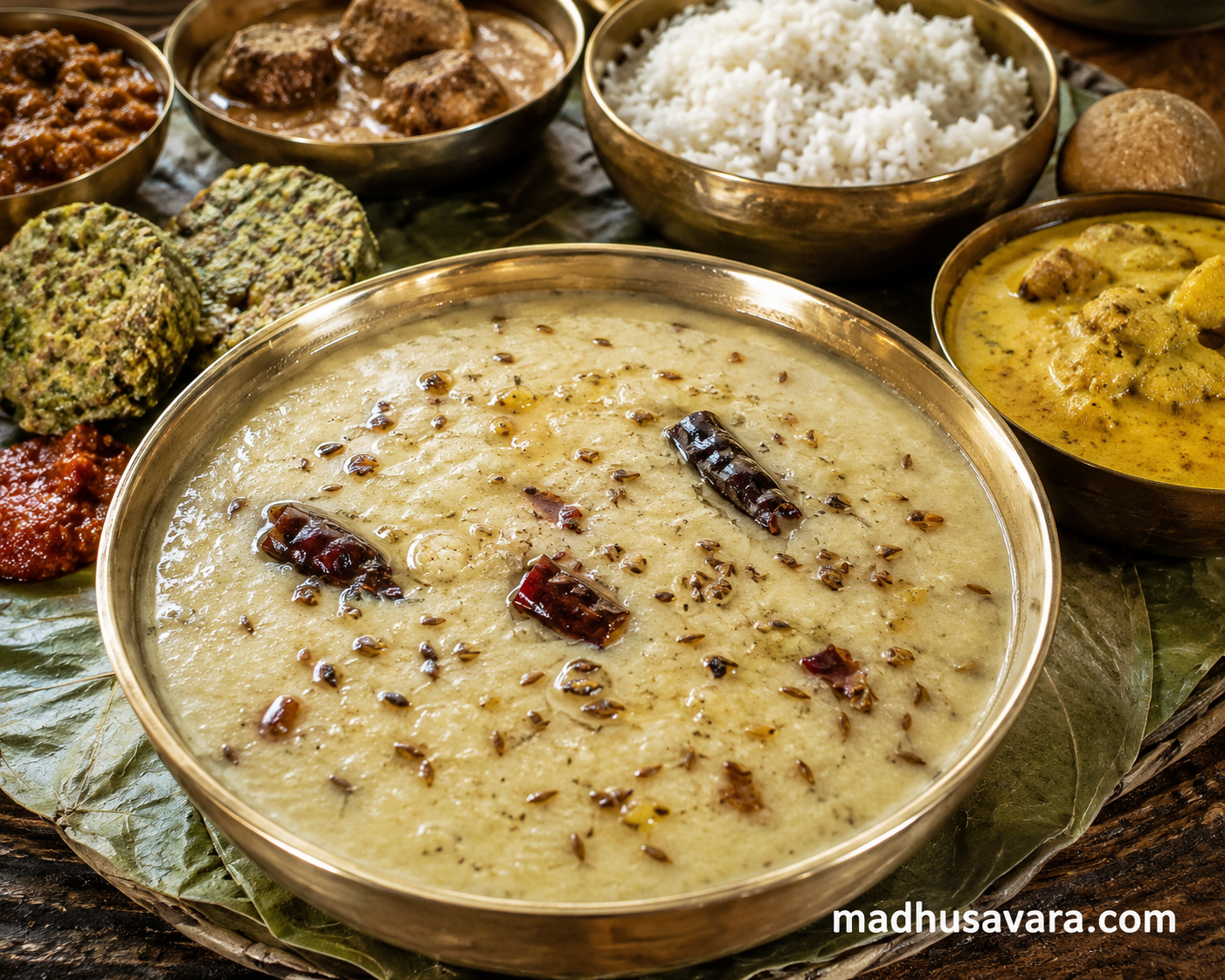
Authentic Dhuli Mah Ki Dal served in a traditional brass bowl on a leaf plate with steamed rice and Mandyali Dham dishes, topped with a fragrant ghee tadka of cumin and dried red chillies.

Author’s Note

Hello dear readers,

I’m Madhu Savara, author and owner of madhusavara.com. Every recipe I share carries a story of tradition, family, and regional flavours. This Dhuli Mah Ki Dal Recipe comes from the rich culinary heritage of Mandyali Dham, where Dhuli Mah Ki Dal is lovingly prepared for festive feasts and special occasions. Made with Dhuli Urad Dal, this authentic Himachali delicacy is simple, nourishing, and full of comforting flavours. I hope this Authentic Dhuli Mah Ki Dal Recipe Mandyali Dham brings the warmth and timeless taste of Himachal Pradesh to your home, just as it has for generations.

Description of the Recipe, Origin, and Significance

No Mandyali Dham is complete without Dhuli Mah Ki Dal. In Mandi, Himachal Pradesh, this comforting dal is traditionally served at weddings, festivals, temple feasts, and other community celebrations. Though simple in appearance, it is one of the most loved dishes on the Dham menu and has been prepared in Himachali homes for generations.

The traditional Dhuli Mah Ki Dal Recipe uses Dhuli Urad Dal and everyday ingredients that are slowly cooked to bring out the natural flavour of the lentils. Instead of heavy spices or rich cream, the dal is finished with a simple tempering that gives it its characteristic aroma and taste. This is the way it has long been prepared in the hill kitchens of Himachal Pradesh.

Apart from its delicious flavour, Dhuli Mah Ki Dal is valued for being wholesome, protein-rich, and satisfying without feeling heavy. It is most often enjoyed with steamed rice during a Dham but tastes just as good with chapati. Whether you are exploring Mandyali Dham for the first time or recreating the flavours of home, this authentic recipe brings a cherished part of Himachali food heritage to your table.

Why You’ll Love This Dhuli Mah Ki Dal Recipe

  • A traditional Mandyali Dham recipe from Mandi, Himachal Pradesh.
  • Mild, comforting flavours the whole family will enjoy.
  • Made with simple ingredients found in every Indian kitchen.
  • Naturally rich in protein and perfect for everyday meals.
  • Easy to prepare with clear step-by-step instructions.
  • Delicious with steamed rice, chapati, and other Himachali Dham dishes.

Table of Contents

  • Author’s Note
  • Description, Origin & Significance
  • Why You’ll Love This Dhuli Mah Ki Dal Recipe
  • Nutritional Value
  • Preparation Time, Cooking Time, Servings & Calories
  • Ingredients You’ll Need
  • Kitchen Equipment Needed
  • Step-by-Step Cooking Instructions
  • Madhu Savara’s Tips & Variations
  • Serving Suggestions
  • Storage & Reheating Tips
  • Allergen Information
  • Frequently Asked Questions (FAQs)
  • Final Thoughts
  • Call to Action
  • About the Author

Servings

6 people

Preparation Time:

10 minutes (plus 30 minutes soaking)

Cooking Time:

35 minutes

Calories

200

Ingredients

For Cooking the Dal

  • 1 cup Dhuli Mah Ki Dal (split, skinned urad dal/white urad dal), rinsed and soaked for 30 minutes
  • 4–5 cups water, or as needed
  • ½ teaspoon turmeric powder
  • 1 teaspoon salt, or to taste
  • 1-inch ginger, finely grated or chopped
  • 2–3 green chillies, slit lengthwise (adjust to taste)
  • 1 medium tomato, finely chopped (optional, for a mild tang)
  • 2 tablespoons fresh coriander leaves, finely chopped, for garnish

For the Traditional Himachali Tadka

  • 2–3 tablespoons ghee (preferred for authentic Mandyali Dham flavour) or mustard oil
  • 1 teaspoon cumin seeds
  • ½ teaspoon asafoetida (hing)
  • 2–3 dried red chillies
  • 4–5 garlic cloves, thinly sliced (optional; omit for a traditional no-onion, no-garlic version)
  • 1 small onion, finely chopped (optional)

Ingredient Note: Traditional Mandyali Dham Dhuli Mah Ki Dal is known for its simplicity. The authentic version relies on a handful of everyday ingredients and a fragrant ghee tempering to bring out the natural, creamy flavour of the Dhuli Urad Dal. Optional onion, garlic, and tomato may be added for home-style cooking without taking away from the comforting character of this classic Himachali recipe.

Equipment Needed

You don’t need any special equipment to prepare this traditional Dhuli Mah Ki Dal Recipe. These basic kitchen tools are all you’ll need:

  • Pressure cooker or heavy-bottomed pot – for cooking the dal until soft and creamy.
  • Small tadka pan – to prepare the aromatic Himachali tempering.
  • Measuring cups and spoons – for accurate ingredient measurements.
  • Sharp knife and chopping board – for chopping ginger, green chillies, onion, and coriander.
  • Wooden spoon or spatula – for stirring the dal without breaking its texture.

Nutrition Information

(Per Serving, Approx.)

Nutrient Amount % Daily Value*
Calories 180–220 kcal 9–11%
Protein 12–14 g 24–28%
Carbohydrates 25–28 g 9–10%
Dietary Fiber 7–8 g 25–30%
Total Fat 4–6 g 6–8%
Iron 2–3 mg 11–17%
Folate 150–200 mcg 38–50%
  • %Daily Values are based on a 2,000-calorie diet. Actual values may vary depending on the ingredients, portion size, and cooking method used.

Nutrition Highlights: Naturally rich in plant-based protein, dietary fibre, iron, and folate, Dhuli Mah Ki Dal is a wholesome, satisfying dish that supports muscle health, healthy digestion, and overall well-being while remaining light and nourishing.

Step by Step Instructions

Step 1: Rinse and Soak the Dal

Rinse 1 cup of Dhuli Mah Ki Dal (Dhuli Urad Dal) under running water until the water runs clear. Soak it in enough water for 20–30 minutes, then drain. Soaking helps the dal cook faster and gives it the creamy texture that is characteristic of an authentic Dhuli Mah Ki Dal Recipe.

Step 2: Cook the Dal

Transfer the soaked dal to a pressure cooker. Add 4 cups of water, turmeric powder, salt, grated ginger, and slit green chillies. Pressure cook over medium heat for 3–4 whistles (15–20 minutes), or until the dal is soft and easily mashed.

If using a heavy-bottomed pot, cover and simmer for 30–40 minutes, stirring occasionally and adding hot water if needed. Once cooked, lightly mash the dal with the back of a spoon to achieve its traditional creamy consistency.

Step 3: Prepare the Traditional Himachali Tadka

Heat ghee (or mustard oil) in a small tadka pan. Add the cumin seeds and let them splutter. Stir in the asafoetida (hing) and dried red chillies. If using, add the garlic and onion and sauté until lightly golden. Finally, add the chopped tomato (if using) and cook until soft and well blended.

Step 4: Combine and Simmer

Pour the hot tempering over the cooked Dhuli Mah Ki Dal and stir gently. Let the dal simmer on low heat for 5–7 minutes, allowing the flavours to blend beautifully. If the dal becomes too thick, add a little hot water to reach a smooth, pourable consistency.

Step 5: Garnish and Serve

Switch off the heat and garnish with fresh coriander leaves. Serve your Authentic Dhuli Mah Ki Dal hot with steamed rice, chapati, or as a traditional accompaniment to a festive Mandyali Dham meal.

Tips and Variations

Madhu Savara’s Tips & Variations

  • For an authentic Mandyali Dham version: Skip the onion and garlic. A traditional Dhuli Mah Ki Dal Recipe gets its flavour from ginger, green chillies, hing, and a simple ghee tempering.
  • Soak for the best texture: Soaking the Dhuli Urad Dal for 30–60 minutes helps it cook faster, become creamier, and improves digestibility.
  • Use ghee for authentic flavour: While mustard oil is a good alternative, ghee gives Dhuli Mah Ki Dal its traditional Himachali aroma and rich taste.
  • Adjust the consistency: This dal should be smooth, creamy, and pourable—not too thick or watery. Add hot water while simmering if needed.
  • Balance the flavours: A squeeze of fresh lemon juice just before serving adds a gentle freshness without overpowering the traditional taste.
  • Restaurant-style variation: For a richer version, stir in 1–2 tablespoons of fresh cream or whisked yogurt after cooking. This is a home-style variation and not part of the traditional Mandyali Dham recipe.
  • Storage tip: Refrigerate leftovers in an airtight container for up to 2 days. Reheat over low heat with a splash of hot water and stir well before serving.
  • Adjust the spice level: Increase or reduce the green and dried red chillies to suit your family’s preference while preserving the authentic flavour of this classic Himachali dal.

Allergen Information

Allergen Information

This Dhuli Mah Ki Dal Recipe is naturally vegetarian and can be easily adapted to suit different dietary needs. Please check the ingredients carefully if you have food allergies or intolerances.

  • Contains Dairy: The traditional recipe uses ghee for the tempering. Replace it with mustard oil or a neutral cooking oil for a dairy-free and vegan version.
  • Contains Asafoetida (Hing): Many commercially available hing varieties contain wheat flour (gluten) as a filler. If you have a gluten allergy or celiac disease, use certified gluten-free asafoetida or omit it.
  • Mustard: If using mustard oil, avoid it if you have a mustard allergy. Substitute with ghee or another cooking oil.
  • Legumes (Urad Dal): This recipe contains Dhuli Urad Dal (split black gram), which belongs to the legume family. Individuals with legume allergies should avoid this dish.
  • Optional Ingredients: Garlic, onion, and tomato are optional. Omit them if required for dietary preferences or religious observances.

Always read ingredient labels carefully, as packaged spices and condiments may contain allergens or be processed in facilities that handle common allergens.

Other Essentials

Things to Avoid

  • Don’t skip soaking if time permits. It helps the dal cook evenly and develop a smoother texture.
  • Don’t overcook the tempering. Burnt garlic, cumin, or hing can leave a bitter taste.
  • Don’t add cold water while the dal is simmering. Always use hot water to maintain its creamy consistency.
  • Avoid making the dal too thick. As it cools, it naturally thickens, so keep it slightly thinner before serving.
  • Don’t overuse spices. The beauty of Dhuli Mah Ki Dal lies in its mild, comforting flavour, not excessive heat or heavy masalas.

Storage & Reheating

  • Refrigerator: Store leftovers in an airtight container for up to 2 days.
  • Freezer: Freeze for up to 1 month in freezer-safe containers. Thaw overnight in the refrigerator before reheating.
  • Reheating: Warm gently over low heat, adding a splash of hot water if the dal has thickened. Stir occasionally until heated through.
  • Avoid repeated reheating, as it can affect both the texture and flavour of the dal.

Frequently Asked Questions (FAQs)

1. What is Dhuli Mah Ki Dal?

Dhuli Mah Ki Dal is prepared using Dhuli Urad Dal (split, skinless black gram). In Mandyali Dham, it is one of the traditional dishes served during weddings, festivals, temple feasts, and other community celebrations across Mandi, Himachal Pradesh.

2. Can I make this Dhuli Mah Ki Dal Recipe without a pressure cooker?

Yes. Cook the soaked dal in a heavy-bottomed pot over medium-low heat for 30–40 minutes, or until it becomes soft and creamy. Stir occasionally and add hot water if needed.

3. Is Dhuli Mah Ki Dal healthy?

Yes. Dhuli Mah Ki Dal is naturally rich in plant-based protein, dietary fibre, iron, and folate. It is a wholesome, satisfying meal that pairs perfectly with steamed rice or chapati.

4. Is this recipe gluten-free?

The recipe is naturally gluten-free, provided you use certified gluten-free asafoetida (hing), as many commercial brands contain wheat flour.

5. Can I make this recipe vegan?

Absolutely. Simply replace the ghee with mustard oil or any neutral cooking oil to prepare a delicious vegan version.

6. Can I prepare Dhuli Mah Ki Dal in advance?

Yes. In fact, the flavours become even better after a few hours. Store it in the refrigerator for up to 2 days and reheat gently with a little hot water before serving.

7. What should I serve with Dhuli Mah Ki Dal?

Traditionally, Dhuli Mah Ki Dal is served with steamed rice as part of a Mandyali Dham. It also pairs beautifully with chapati, pickle, papad, Madra, Sepu Vadi, and other Himachali dishes.

Final Thoughts

Some recipes impress with rich ingredients, while others win hearts through their simplicity. Dhuli Mah Ki Dal belongs to the second kind. A cherished part of Mandyali Dham, this comforting dal has been bringing families together around the dining table for generations. Whether you’re preparing it for a festive occasion or a simple family meal, this authentic recipe lets you experience the comforting flavours of Himachal Pradesh in every bowl.

Call To Action

If you enjoyed this Dhuli Mah Ki Dal Recipe, I’d love to hear from you. Leave a comment below and share your experience, favourite serving ideas, or family variations. Your feedback inspires me to preserve and share more authentic regional recipes.

If you love traditional Indian cuisine, subscribe to Madhusavara.com, bookmark this recipe, and share it with your family and friends so that India’s rich culinary heritage continues to be celebrated in every home.

About the Author

Madhu Savara is the founder of Madhusavara.com and a passionate home cook dedicated to preserving India’s rich culinary heritage. Through carefully tested recipes, regional food stories, and traditional cooking methods, she brings authentic flavours from Himachal Pradesh and across India into home kitchens. Every recipe is created with the belief that good food is more than nourishment—it’s a way to celebrate culture, traditions, and family.

Disclaimer

Important Notice: Read Before Proceeding

The recipes, preparation methods, nutritional details, and related content published on Madhu Savara’s website, social media, and associated platforms are intended solely for general informational and educational purposes. While every effort has been made to ensure accuracy and reliability, we make no guarantees regarding the results, safety, or accuracy of any recipe presented here.

We are not licensed nutritionists, dieticians, or medical professionals. The nutritional values provided are estimates only, calculated using third-party tools, and should not be used for medical diagnosis, dietary treatment, or allergy management. If you have any medical conditions, dietary restrictions, or food allergies, please consult your doctor or certified dietitian before attempting any recipe.

Cooking inherently involves sharp tools, high heat, and the risk of injury or fire. You assume full responsibility for your kitchen practices. Madhu Savara, the website, and all contributors shall not be held liable for any damage, injury, loss, or adverse outcome resulting directly or indirectly from the preparation, consumption, or interpretation of any content herein.

By using this website and attempting any recipe, you agree to hold harmless and indemnify Madhu Savara and her team from any liability, legal claim, or damages arising from the use of this content. You are encouraged to exercise independent judgment and take full responsibility for your health, kitchen safety, and actions.


Authentic Dhuli Mah Ki Dal served in a traditional brass bowl on a leaf plate with steamed rice and Mandyali Dham dishes, topped with a fragrant ghee tadka of cumin and dried red chillies.
Print

Authentic Dhuli Mah Ki Dal Recipe | Traditional Mandyali Dham Dhuli Urad Dal

No Mandyali Dham is complete without Dhuli Mah Ki Dal. In Mandi, Himachal Pradesh, this comforting dal is traditionally served at weddings, festivals, temple feasts, and other community celebrations. Though simple in appearance, it is one of the most loved dishes on the Dham menu and has been prepared in Himachali homes for generations.
Course Main Course, Diet: Vegetarian Dish
Cuisine Himachali Dham, Mandyalli Dham, North Indian
Keyword Authentic Dhuli Mah Ki Dal, Dhuli Mah Ki Dal, Dhuli Mah Ki Dal Recipe, Dhuli Mah Ki Dal Recipe Mandyali Dham, Dhuli Urad Dal Recipe, Himachali Dhuli Mah Ki Dal, Split Black Gram Dal Recipe
Prep Time 10 minutes
Cook Time 35 minutes
Soaking Time 30 minutes
Total Time 1 hour 15 minutes
Servings 6 People
Calories 200kcal
Author Madhu Savara

Equipment

  • Pressure cooker or heavy-bottomed pot – for cooking the dal until soft and creamy.Small tadka pan – to prepare the aromatic Himachali tempering.Measuring cups and spoons – for accurate ingredient measurements.Sharp knife and chopping board – for chopping ginger, green chillies, onion, and coriander.Wooden spoon or spatula – for stirring the dal without breaking its texture

Ingredients

  • For Cooking the Dal
  • 1 cup Dhuli Mah Ki Dal split, skinned urad dal/white urad dal, rinsed and soaked for 30 minutes
  • 4 –5 cups water or as needed
  • ½ teaspoon turmeric powder
  • 1 teaspoon salt or to taste
  • 1- inch ginger finely grated or chopped
  • 2 –3 green chillies slit lengthwise (adjust to taste)
  • 1 medium tomato finely chopped (optional, for a mild tang)
  • 2 tablespoons fresh coriander leaves finely chopped, for garnish
  • For the Traditional Himachali Tadka
  • 2 –3 tablespoons ghee preferred for authentic Mandyali Dham flavour or mustard oil
  • 1 teaspoon cumin seeds
  • ½ teaspoon asafoetida hing
  • 2 –3 dried red chillies
  • 4 –5 garlic cloves thinly sliced (optional; omit for a traditional no-onion, no-garlic version)
  • 1 small onion finely chopped (optional)

Instructions

  • Step 1: Rinse and Soak the Dal
  • Rinse 1 cup of Dhuli Mah Ki Dal (Dhuli Urad Dal) under running water until the water runs clear. Soak it in enough water for 20–30 minutes, then drain. Soaking helps the dal cook faster and gives it the creamy texture that is characteristic of an authentic Dhuli Mah Ki Dal Recipe.
  • Step 2: Cook the Dal
  • Transfer the soaked dal to a pressure cooker. Add 4 cups of water, turmeric powder, salt, grated ginger, and slit green chillies. Pressure cook over medium heat for 3–4 whistles (15–20 minutes), or until the dal is soft and easily mashed.
  • If using a heavy-bottomed pot, cover and simmer for 30–40 minutes, stirring occasionally and adding hot water if needed. Once cooked, lightly mash the dal with the back of a spoon to achieve its traditional creamy consistency.
  • Step 3: Prepare the Traditional Himachali Tadka
  • Heat ghee (or mustard oil) in a small tadka pan. Add the cumin seeds and let them splutter. Stir in the asafoetida (hing) and dried red chillies. If using, add the garlic and onion and sauté until lightly golden. Finally, add the chopped tomato (if using) and cook until soft and well blended.
  • Step 4: Combine and Simmer
  • Pour the hot tempering over the cooked Dhuli Mah Ki Dal and stir gently. Let the dal simmer on low heat for 5–7 minutes, allowing the flavours to blend beautifully. If the dal becomes too thick, add a little hot water to reach a smooth, pourable consistency.
  • Step 5: Garnish and Serve
  • Switch off the heat and garnish with fresh coriander leaves. Serve your Authentic Dhuli Mah Ki Dal hot with steamed rice, chapati, or as a traditional accompaniment to a festive Mandyali Dham meal.

Notes

Madhu Savara’s Tips & Variations

  • For an authentic Mandyali Dham version: Skip the onion and garlic. A traditional Dhuli Mah Ki Dal Recipe gets its flavour from ginger, green chillies, hing, and a simple ghee tempering.
  • Soak for the best texture: Soaking the Dhuli Urad Dal for 30–60 minutes helps it cook faster, become creamier, and improves digestibility.
  • Use ghee for authentic flavour: While mustard oil is a good alternative, ghee gives Dhuli Mah Ki Dal its traditional Himachali aroma and rich taste.
  • Adjust the consistency: This dal should be smooth, creamy, and pourable—not too thick or watery. Add hot water while simmering if needed.
  • Balance the flavours: A squeeze of fresh lemon juice just before serving adds a gentle freshness without overpowering the traditional taste.
  • Restaurant-style variation: For a richer version, stir in 1–2 tablespoons of fresh cream or whisked yogurt after cooking. This is a home-style variation and not part of the traditional Mandyali Dham recipe.
  • Storage tip: Refrigerate leftovers in an airtight container for up to 2 days. Reheat over low heat with a splash of hot water and stir well before serving.
  • Adjust the spice level: Increase or reduce the green and dried red chillies to suit your family’s preference while preserving the authentic flavour of this classic Himachali dal.