
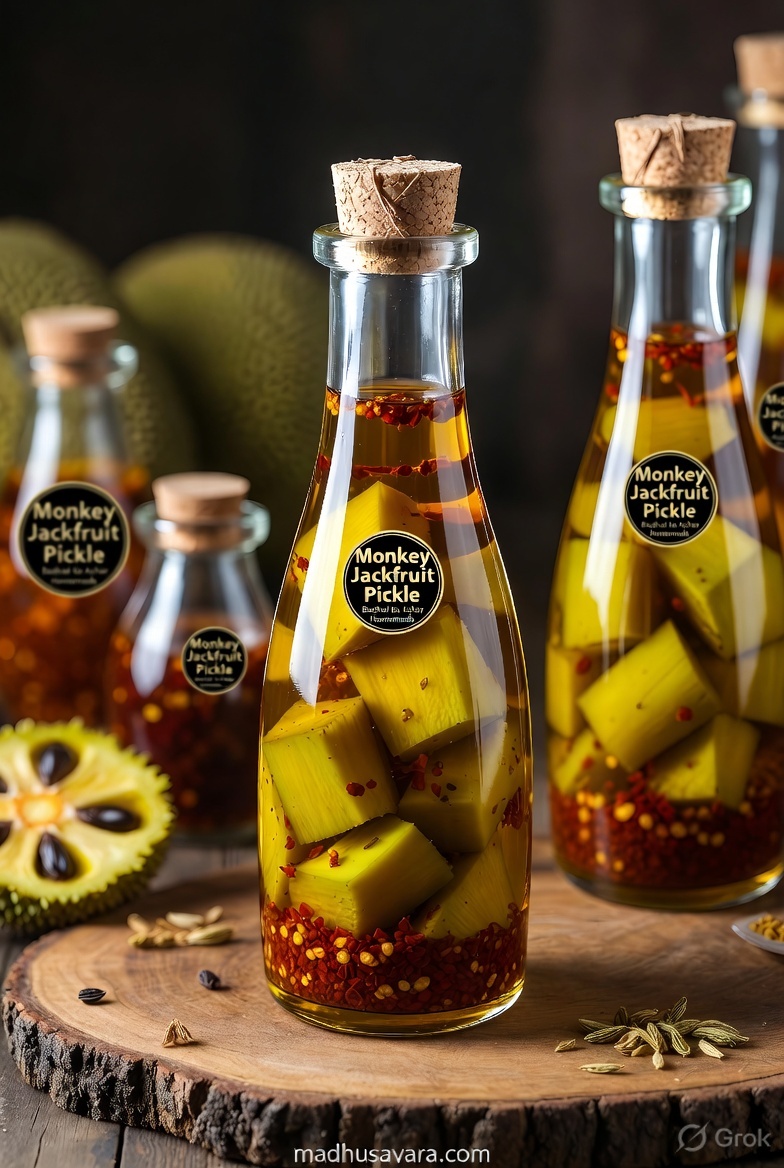
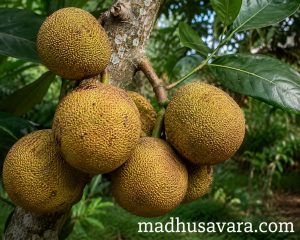

Monkey Jackfruit Pickle: A Tangy Treasure from India’s Forgotten Forests
India’s culinary heritage is built not only on famous dishes but also on countless wild and seasonal ingredients that have quietly nourished communities for generations. Among these hidden treasures is Monkey Jackfruit Pickle, locally known as Badhal Ka Achar. Prepared from the tangy, unripe fruit of the monkey jack tree, this traditional pickle is much more than a simple accompaniment. It reflects the wisdom of preserving seasonal harvests, the resourcefulness of rural households, and the rich food traditions that have been passed down through generations. This guide explores the remarkable journey of Monkey Jackfruit Pickle—from the forests where the fruit grows naturally to the dining table, where it continues to add its distinctive flavour to everyday meals.
Servings 50 serving
Calories 150kcal
Equipment
- Sharp knife – for peeling and cutting the monkey jackfruit into even-sized pieces.Large mixing bowl – to combine the fruit with spices and mustard oil.Heavy-bottomed pan – for gently heating the mustard oil before mixing.Clean glass or ceramic jar – ideal for storing and maturing the pickle without affecting its flavour.Clean tray or cotton cloth – for sun-drying the fruit pieces and allowing the pickle to mature naturally.
Ingredients
- Sharp knife – for peeling and cutting the monkey jackfruit into even-sized pieces.
- Large mixing bowl – to combine the fruit with spices and mustard oil.
- Heavy-bottomed pan – for gently heating the mustard oil before mixing.
- Clean glass or ceramic jar – ideal for storing and maturing the pickle without affecting its flavour.
- Clean tray or cotton cloth – for sun-drying the fruit pieces and allowing the pickle to mature naturally.
Instructions
- Step-by-Step Instructions
- Step 1: Prepare the Monkey Jackfruit
- Wash the monkey jackfruit thoroughly to remove any dirt or sap. Peel the fruit if required and cut it into small, bite-sized pieces. Depending on your family’s traditional method, you may briefly blanch the pieces in boiling water or soak them in salted water for a few minutes. Drain them well before moving to the next step.
- Step 2: Sun-Dry the Fruit
- Spread the prepared pieces in a single layer on a clean cotton cloth or tray. Place them in direct sunlight for 2–3 hours, or until the surface moisture has completely dried. This simple step helps improve the texture of the pickle and increases its shelf life.
- Step 3: Coat with the Spice Mix
- Transfer the dried fruit pieces to a large mixing bowl. Add salt, turmeric powder, red chilli powder and the freshly ground spice mixture. Toss everything gently until each piece is evenly coated with the aromatic spices.
- Step 4: Add the Mustard Oil
- Heat the mustard oil until it reaches its smoking point, then allow it to cool completely. Pour the cooled oil over the spiced fruit and mix well, ensuring every piece is lightly coated. The mustard oil not only enhances the flavour but also acts as a natural preservative.
- Step 5: Fill the Jar and Allow the Pickle to Mature
- Transfer the pickle into a clean, dry, sterilised glass or ceramic jar. Press the mixture down gently to remove any air pockets and ensure the fruit remains covered with oil. Close the jar tightly and place it in direct sunlight for a few days, shaking or stirring it gently once a day. For the best flavour, allow the pickle to mature for 1 to 2 weeks before serving. As it ages, the spices blend beautifully with the fruit, creating the rich, tangy taste that makes traditional Badhal Ka Achar so special.
Notes
Tips and Variations
- For a delicious sweet-and-tangy flavour, add a little grated raw mango or a small piece of grated jaggery while mixing the pickle.
- Adjust the quantity of red chilli powder according to your preferred spice level without compromising the traditional flavour.
- If you enjoy experimenting with regional flavours, try using sesame oil or incorporate your favourite local spice blend for a unique variation.
- Always ensure the fruit, utensils and storage jar are completely dry before preparing the pickle, as even a little moisture can reduce its shelf life.
- Some traditional households like to add a few garlic cloves, which lend a rich aroma and an extra layer of flavour to the pickle
