
Chettinad Chicken Biryani Recipe | Authentic Tamil Nadu Dum Biryani with Seeraga Samba Rice
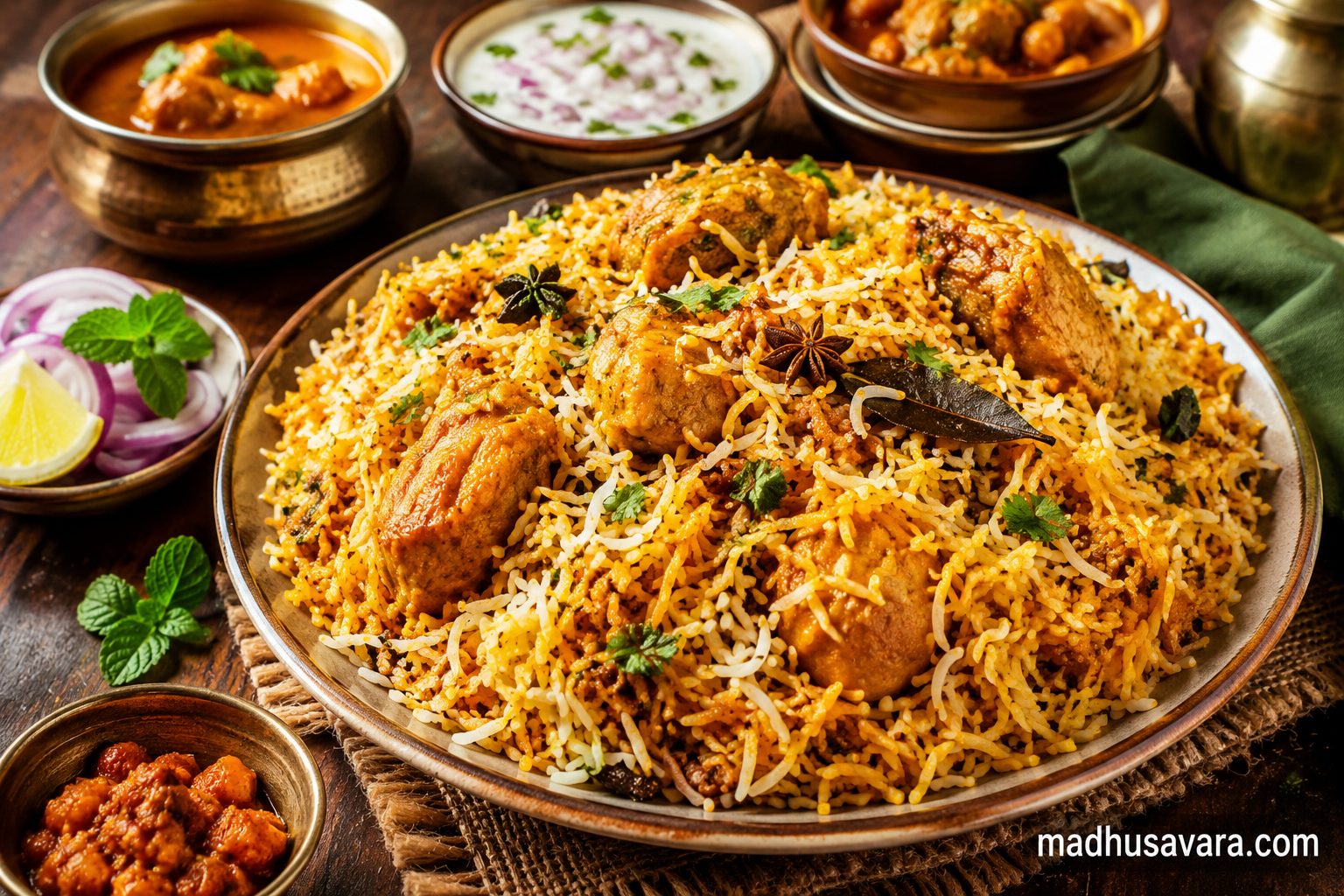
Authentic Chettinad Chicken Biryani served on a plate with fluffy Seeraga Samba rice, tender chicken, onion raita, salna, pickle, papad and lemon wedges on a rustic wooden table.


Author’s Note:

There is something magical about lifting the lid from a freshly cooked Chettinad Chicken Biryani. A cloud of fragrant steam rises first, carrying the aroma of roasted fennel, black pepper, cinnamon, curry leaves, mint, and slow-cooked chicken. Every grain of rice remains separate, lightly coated with spicy masala, while the tender chicken absorbs layers of flavour built patiently over time. This is not merely a biryani—it is one of Tamil Nadu’s greatest culinary treasures.

Unlike richer North Indian biryanis that depend heavily on cream or fried onions, an authentic Chettinad Chicken Biryani celebrates the bold personality of freshly roasted spices. Stone flower (kalpasi), black pepper, fennel, star anise, and curry leaves work together to create a flavour profile that is unmistakably Chettinad. Traditionally prepared using aromatic Seeraga Samba rice, this biryani is lighter than many other regional styles yet remarkably deep in flavour.

At Madhusavara, I believe every traditional recipe deserves to be preserved with respect for its roots while remaining practical for today’s home kitchens. This detailed guide combines authentic techniques, practical cooking advice, and years of culinary understanding to help you prepare a restaurant-quality Chettinad Chicken Biryani with confidence.

About Chettinad Chicken Biryani

Chettinad Chicken Biryani is one of Tamil Nadu’s most treasured culinary creations. It comes from the Chettinad region, the homeland of the Nattukottai Chettiar community, whose cuisine is admired for its bold flavours, fragrant spices and time-honoured cooking traditions. Every family has its own way of preparing this biryani, but one thing remains the same—it is always made with patience and freshly roasted spices.

What makes this biryani truly special is that its flavour comes from ingredients prepared from scratch rather than ready-made spice mixes. Whole spices such as black pepper, fennel, cumin, coriander, star anise and the unique stone flower (kalpasi) are gently roasted and ground just before cooking. As soon as they touch the hot ghee, they release an irresistible aroma that gives Chettinad Chicken Biryani its unmistakable character.

Another hallmark of this traditional recipe is Seeraga Samba rice, a small, fragrant variety grown in Tamil Nadu. Unlike long-grain basmati rice, these tiny grains soak up the rich masala beautifully, allowing every mouthful to be packed with flavour while keeping the biryani light and perfectly balanced.

History and Origin

The story of Chettinad cuisine is closely linked with the enterprising Chettiar community, whose trading journeys took them across South and Southeast Asia. During their travels, they discovered new spices and ingredients, but they always returned home with a deep respect for their own culinary traditions.

Over time, Chettinad cooking evolved into one of India’s most celebrated regional cuisines. Family recipes were carefully preserved and passed down through generations, with every household adding its own subtle touch to the spice blend. Biryani soon became the highlight of weddings, festivals and family celebrations, where a large handi placed at the centre of the dining table brought everyone together.

Even today, despite its popularity in restaurants around the world, authentic Chettinad Chicken Biryani is still prepared the traditional way—with freshly ground spices, slow cooking and plenty of patience. That is what gives it the rich aroma and depth of flavour that no shortcut can truly match.

How Chettinad Chicken Biryani Differs from Other Indian Biryanis

India is blessed with an incredible variety of biryanis, and every region proudly adds its own signature touch. Some are rich and royal, while others are light, spicy or mildly aromatic. Chettinad Chicken Biryani stands apart because it relies on the natural flavour of freshly roasted spices instead of heavy gravies or rich ingredients.

The generous use of black pepper, fennel, curry leaves and kalpasi creates a bold yet beautifully balanced taste that is instantly recognisable. Paired with aromatic Seeraga Samba rice, the result is a deeply flavourful biryani without feeling overly rich. Every spoonful reflects the warmth, hospitality and culinary heritage of Tamil Nadu’s Chettinad region, making it one of India’s most distinctive and memorable biryanis.

Hyderabadi Biryani is famous for its rich dum cooking and the use of basmati rice, saffron, fried onions, and yoghurt. It is luxurious and royal in character.

Lucknowi (Awadhi) Biryani is comparatively delicate. Aromatic whole spices, kewra water, and gentle flavours define this Mughlai classic.

Kolkata Biryani is lighter and subtly sweet, instantly recognised by its famous potato and boiled egg.

Ambur Biryani, another Tamil Nadu favourite, uses short-grained rice but has a simpler spice profile with fewer roasted spices than the Chettinad version.

Dindigul Biryani is tangier because lemon juice and curd play a more prominent role. The flavour is bold but noticeably different from Chettinad.

Kalyani Biryani from Hyderabad was traditionally prepared as an affordable yet satisfying meal with distinctive masala and smaller cuts of meat.

Bohri Biryani reflects the culinary traditions of the Dawoodi Bohra community and balances savoury, mildly sweet, and aromatic flavours.

What truly distinguishes Chettinad Chicken Biryani is its unmistakable use of freshly roasted spices, generous black pepper, curry leaves, kalpasi, fennel, and Seeraga Samba rice. Every ingredient contributes to a biryani that is robust, aromatic, and deeply satisfying without feeling excessively rich.

Why You’ll Love This Recipe

  • Authentic Chettinad flavours without complicated techniques.
  • Freshly roasted spices create exceptional aroma.
  • Juicy chicken cooked until tender.
  • Traditional dum method ensures perfectly flavoured rice.
  • Ideal for weekend meals, festivals, and celebrations.
  • Detailed instructions suitable for both beginners and experienced cooks.
  • Restaurant-quality results using everyday kitchen equipment

Table of Contents

  • Author’s Note
  • About Chettinad Chicken Biryani
  • History and Origin
  • How Chettinad Biryani Differs from Other Indian Biryanis
  • Why You’ll Love This Recipe
  • Recipe Summary
  • Ingredients
  • Ingredient Notes
  • Equipment Required
  • Preparation Before Cooking
  • Step-by-Step Cooking Method
  • Tips and variations
  • Storage,
  • FAQ’s
  • CTA
  • Author’s Bio

Servings

6 people

Preparation Time:

30 minutes, Marination Time: 1 hour, Dum Time: 25 minutes, Resting Time: 15 minutes

Cooking Time:

60

Calories

685

Ingredients

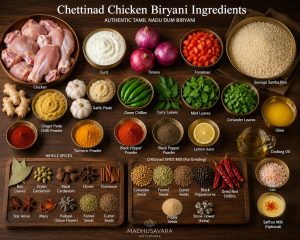
Fresh ingredients for authentic Chettinad Chicken Biryani including Seeraga Samba rice, bone-in chicken, onions, tomatoes, mint, coriander, curry leaves, yoghurt, whole spices and freshly roasted Chettinad masala, arranged on a rustic wooden table.

  • For the Chicken Marinade

    • 1 kg bone-in chicken, cut into medium pieces
    • 1 cup thick curd
    • 1 tablespoon ginger paste
    • 1 tablespoon garlic paste
    • 2 teaspoons Kashmiri red chilli powder
    • ½ teaspoon turmeric powder
    • 1 teaspoon freshly ground black pepper
    • Juice of half a lemon
    • Salt to taste

    For the Rice

    • 750 g Seeraga Samba rice (preferred)
    • Water for soaking and cooking
    • Salt

    Whole Spices

    • 2 bay leaves
    • 5 green cardamoms
    • 2 black cardamoms
    • 6 cloves
    • 2-inch cinnamon stick
    • 2 star anise
    • 1 blade mace
    • 2 pieces kalpasi (stone flower)
    • 1 teaspoon fennel seeds
    • 1 teaspoon cumin seeds

    Fresh Ingredients

    • 4 large onions, thinly sliced
    • 4 tomatoes, finely chopped
    • 2 tablespoons ginger-garlic paste
    • 8 green chillies, slit
    • 1 cup mint leaves
    • 1 cup coriander leaves
    • 2 sprigs curry leaves

    Freshly Ground Chettinad Spice Mix

    Dry roast separately until fragrant:

    • 2 tablespoons coriander seeds
    • 2 teaspoons fennel seeds
    • 1 teaspoon cumin seeds
    • 1 teaspoon black peppercorns
    • 8 dried red chillies
    • 1 teaspoon poppy seeds (optional)
    • ½ teaspoon stone flower (extra, optional)

    Cool completely before grinding into a fine powder.

    Other Ingredients

    • 4 tablespoons ghee
    • 3 tablespoons cooking oil
    • A few strands of saffron soaked in warm milk (optional)

    Ingredient Notes

    The soul of Chettinad cuisine lies in using freshly roasted spices. Grinding them immediately before cooking releases essential oils that produce a richer aroma than ready-made spice powders.

    Seeraga Samba rice is considered the gold standard for authentic Chettinad biryani because its tiny grains absorb masala beautifully while remaining separate after dum cooking. If unavailable, aged basmati rice may be used, though the flavour and texture will differ slightly.

    Bone-in chicken contributes more flavour to the masala than boneless pieces and remains moist throughout the slow cooking process.

    Madhu’s Kitchen Note: Never skip black pepper in Chettinad cooking. It is not added simply for heat—it provides the warm, lingering flavour that defines this regional cuisine.

Equipment Needed

  • Heavy-bottomed handi or Dutch oven
  • Large mixing bowl
  • Spice grinder
  • Heavy frying pan
  • Rice cooking pot
  • Wooden spatula
  • Measuring cups and spoons
  • Aluminium foil or dough for sealing during dum cooking

Nutrition Information

Nutritional Information (Approximate Per Serving)

Nutrient Amount
Calories 685 kcal
Protein 35 g
Carbohydrates 59 g
Total Fat 33 g
Saturated Fat 10 g
Cholesterol 118 mg
Dietary Fibre 4 g
Total Sugars 6 g
Sodium 760 mg*
Potassium 560 mg
Calcium 118 mg
Iron 3.8 mg
Vitamin A 520 IU
Vitamin C 18 mg

*The sodium content depends on the quantity of salt used.

Step by Step Instructions

Preparation Before Cooking

Wash the rice gently until the water runs clear. Soak it for 30 minutes before cooking.

Marinate the chicken for at least one hour. If time permits, refrigerate overnight. Slow marination allows the yoghurt and spices to tenderise the meat while building deeper flavour.

Slice the onions uniformly so they cook evenly. Prepare all ingredients before lighting the stove because Chettinad cooking progresses quickly once the spices begin roasting.

Roast the whole spices over medium-low heat until they release a pleasant aroma. Avoid burning them, as bitterness cannot be corrected later.

Step 1 – Marinate the Chicken

Combine the chicken with curd, ginger paste, garlic paste, turmeric, Kashmiri chilli powder, black pepper, lemon juice, and salt.

Massage the marinade thoroughly into every piece of chicken.

Cover and refrigerate for at least one hour.

Overnight marination produces noticeably juicier, more flavourful chicken because the yoghurt gently tenderises the meat while the spices penetrate deeper.

Step 2 – Prepare the Signature Chettinad Masala

Heat a dry pan over medium heat.

Roast coriander seeds first until aromatic.

Add fennel, cumin, black pepper, dried red chillies, poppy seeds, and stone flower.

Continue roasting gently until the spices become fragrant.

Remove immediately and allow them to cool completely before grinding into a fine powder.

Your kitchen should now be filled with the unmistakable aroma that defines authentic Chettinad cuisine—a wonderful indication that you are building flavour from the very beginning.

Step 3 – Cook the Rice Perfectly

Bring a large pot of water to a rolling boil. Add enough salt so the water tastes slightly salty, similar to light soup. This is your only opportunity to season the rice itself, so don’t skip this step.

Drain the soaked Seeraga Samba rice and gently add it to the boiling water. Stir only once to prevent the grains from sticking together.

Cook the rice until it is approximately 70–75% done. The grain should break with slight resistance when pressed between your fingers. It must not be fully cooked because it will continue cooking during the dum process.

Drain the rice immediately and spread it on a large tray or plate for a few minutes to stop further cooking.

Madhu’s Kitchen Note: Slightly undercooked rice is the secret to fluffy biryani. If the rice is fully cooked before layering, it will become soft and sticky after dum.

Step 4 – Prepare the Chettinad Chicken Masala

Heat the ghee and cooking oil together in a heavy-bottomed handi.

Add the bay leaves, cardamom, cloves, cinnamon, star anise, mace, fennel seeds, cumin seeds and stone flower.

Allow the spices to crackle gently for about 30 seconds until their aroma fills the kitchen.

Add the sliced onions.

Cook patiently over medium heat until the onions turn deep golden brown. Do not rush this process by increasing the flame. Properly caramelised onions provide sweetness that balances the robust spices.

Add the ginger-garlic paste.

Cook until the raw smell completely disappears.

Now add the slit green chillies and curry leaves. Stir for another minute until the curry leaves become crisp and fragrant.

Add the chopped tomatoes.

Cook until the tomatoes soften completely and begin releasing oil around the edges.

Sprinkle the freshly ground Chettinad spice powder over the masala.

Cook for two to three minutes while stirring continuously.

The masala should become thick, aromatic and intensely fragrant without sticking to the bottom of the pan.

Madhu’s Kitchen Note: Never add water immediately after adding the spice powder. Allow the spices to roast briefly in the oil so their natural flavours develop fully.

Step 5 – Cook the Chicken

Add the marinated chicken along with all the marinade.

Mix thoroughly so every piece is coated with the masala.

Cook over medium heat for 15–20 minutes.

Initially, the curd will release moisture. Continue cooking without covering the pan until most of the excess liquid evaporates.

The chicken should now be about 80% cooked.

Add the chopped mint and coriander leaves.

Taste the masala carefully.

This is the last opportunity to adjust the salt before the rice is layered.

The gravy should be slightly stronger and saltier than you prefer because the rice will absorb both flavour and seasoning during dum cooking.

Sensory Cue

The finished masala should look glossy rather than watery.

The oil should begin separating from the edges.

The aroma should be warm, peppery, earthy and fresh, without any raw smell of spices or yoghurt.

Step 6 – Layer the Biryani

Reduce the heat to its lowest setting.

Spread half of the partially cooked rice evenly over the chicken masala.

Do not press the rice down.

Scatter a handful of mint leaves, coriander leaves and a teaspoon of ghee.

Repeat with the remaining rice.

Drizzle the saffron milk, if using.

Finish with another teaspoon of melted ghee.

For a richer festive version, you may also add a few fried onions, although these are not traditionally dominant in Chettinad biryani.

Step 7 – Dum Cooking

Seal the handi tightly using dough around the rim or cover it securely with aluminium foil before placing the lid.

Cook over the lowest possible flame for 25 minutes.

If your cookware has a thin base, place a heavy tawa beneath the handi to prevent scorching.

Once the cooking time is complete, switch off the heat but resist opening the lid immediately.

Allow the biryani to rest undisturbed for another 15 minutes.

This resting period allows the trapped steam to finish cooking the rice while helping every grain absorb the aromatic spices.

Step 8 – Serve

Open the lid gently.

The first burst of aroma should reveal black pepper, fennel, curry leaves and warm spices.

Using a long fork or flat spatula, lift the rice gently from the sides instead of stirring vigorously.

Avoid breaking the delicate grains.

Every serving should contain both rice and chicken along with the richly flavoured masala from the bottom of the handi.


Tips and Variations

Madhu Savara’s Secrets for Restaurant-Style Chettinad Chicken Biryani

  • Roast whole spices separately instead of together to prevent smaller spices from burning.
  • Always grind the spice mix fresh on the day of cooking.
  • Use bone-in chicken for maximum flavour.
  • Do not overcrowd the pan while browning onions.
  • Avoid excessive stirring once the rice has been layered.
  • Dum cooking should always be slow and gentle.
  • Resting after dum is just as important as cooking.


Allergen Information

Allergen Information

This recipe contains:

  • Milk: Curd (yoghurt) and ghee.
  • Possible Tree Nut Traces: Commercially packed spices may be processed in facilities handling nuts.
  • Mustard: Some brands of cooking oil may contain traces depending on processing.

Dietary Notes

  • Naturally gluten-free when prepared with certified gluten-free spices.
  • High in protein.
  • Suitable for low-gluten diets.
  • Not suitable for vegans in its traditional form.

Dairy-Free Alternative

Replace curd with an unsweetened plant-based yoghurt and use neutral cooking oil instead of ghee.

Other Essentials

Common Mistakes to Avoid

  • Using freshly harvested rice instead of aged rice.
  • Cooking the rice completely before layering.
  • Burning the freshly roasted spices.
  • Using low-fat curd, which releases excess water.
  • Skipping the marination time.
  • Cooking over high heat during dum.
  • Opening the handi repeatedly to check the progress.
  • Mixing the rice aggressively after cooking.

Delicious Variations

Chettinad Mutton Biryani

Replace chicken with mutton and increase the cooking time until the meat is fork-tender before layering.

Chettinad Egg Biryani

Use boiled eggs fried lightly with pepper and turmeric.

Chettinad Prawn Biryani

Cook the prawns separately and add them only during layering to prevent overcooking.

Extra-Spicy Version

Increase black pepper rather than red chilli powder to preserve authentic Chettinad flavour.

Why This Recipe Works

This recipe follows the traditional Chettinad philosophy of building flavour layer by layer instead of depending on heavy gravies or excessive spices.

Freshly roasted spices provide complexity.

Seeraga Samba rice absorbs masala beautifully.

Bone-in chicken enriches the gravy naturally.

Slow dum cooking allows steam to unite every ingredient into one harmonious dish.

Rather than overpowering the palate with heat, this biryani creates a balanced flavour where pepper, fennel, curry leaves and aromatic spices complement one another.

Serving Suggestions

Chettinad Chicken Biryani is a complete meal on its own, but the right accompaniments elevate the dining experience. Traditionally, this biryani is served with a cooling side dish that balances its bold spices.

Serve it with:

  • Onion raita made with thick curd, sliced onions, roasted cumin powder, coriander leaves and a pinch of black salt.
  • Brinjal (eggplant) curry or South Indian ennai kathirikai.
  • Chicken or vegetable salna for a restaurant-style experience.
  • Boiled eggs lightly sprinkled with salt and black pepper.
  • Crisp papad or appalam.
  • Fresh onion rings, lemon wedges and green chillies.
  • Mango, lemon or mixed vegetable pickle.

For festive occasions, finish the meal with payasam, kesari or chilled rose milk.

Madhu’s Kitchen Note: Avoid serving heavily spiced side dishes. The biryani itself is the star of the meal, and simple accompaniments allow its flavours to shine.

Storage, Freezing & Reheating

Refrigeration

Allow the biryani to cool completely before storing. Transfer it to an airtight container and refrigerate for up to 3 days.

Freezing

Portion the biryani into freezer-safe containers. Freeze for up to 1 month. Thaw overnight in the refrigerator before reheating.

Reheating

For the best texture, sprinkle 1–2 tablespoons of water over the biryani, cover the pan and heat gently on a low flame for 8–10 minutes.

Microwave reheating is convenient, but cover the dish to retain moisture.

Avoid reheating multiple times, as this dries the rice and affects food safety.

The result is a biryani that remains light enough to enjoy generously while still delivering remarkable depth of flavour.

Frequently Asked Questions

Which rice is traditionally used for Chettinad Chicken Biryani?

Authentic Chettinad Chicken Biryani is prepared with Seeraga Samba rice, prized for its ability to absorb spices while remaining fluffy and aromatic.

Can I use basmati rice?

Yes. Although the flavour will differ slightly, aged basmati rice is a good alternative if Seeraga Samba rice is unavailable.

Why is my biryani sticky?

Sticky biryani is usually caused by overcooked rice, excessive stirring or too much moisture in the masala.

Can I prepare the spice mix in advance?

Freshly roasted and ground spices provide the best flavour. However, the spice mix can be prepared up to one week in advance and stored in an airtight container.

How spicy is this biryani?

Chettinad cuisine is known for its bold flavour rather than excessive heat. You can reduce the number of dried red chillies while retaining the authentic flavour by keeping the black pepper.

Can I make this recipe ahead for a party?

Yes. Prepare it a few hours in advance, allow it to rest, and reheat gently before serving. Many cooks believe the flavours become even better after resting.

Call-to-Action

If you enjoyed this authentic Chettinad Chicken Biryani Recipe, I would love to hear about your experience.

Please leave a comment below and rate the recipe. Your feedback helps other home cooks and encourages me to continue documenting India’s remarkable culinary traditions.

You may also enjoy these recipes on madhusavara.com:

  • Hyderabadi Chicken Biryani
  • Bombay Biryani
  • Memoni Biryani
  • Bhatkali Biryani
  • Butter Chicken Burrito
  • Crispy Chilli Paneer Tikka Wraps

Don’t forget to share this recipe with your family and friends and follow Madhusavara for more authentic regional Indian recipes.

Author’s Bio:

Madhu Savara is the founder, writer, and passionate curator behind Madhusavara.com. With a deep love for food heritage, traditional recipes, and sustainable living, she weaves together stories of regional Indian cuisines, forgotten ingredients, and time-honoured culinary traditions.

Her work celebrates the rich connection between food, farming, culture, and history — bringing authentic, soulful recipes from Sindhi, Punjabi, Rajasthani, and other regional kitchens to home cooks worldwide.

Through Madhusavara.com, Madhu inspires readers to preserve culinary legacies while embracing mindful and sustainable practices in the kitchen.

Disclaimer

Important Notice: Read Before Proceeding

The recipes, preparation methods, nutritional details, and related content published on Madhu Savara’s website, social media, and associated platforms are intended solely for general informational and educational purposes. While every effort has been made to ensure accuracy and reliability, we make no guarantees regarding the results, safety, or accuracy of any recipe presented here.

We are not licensed nutritionists, dieticians, or medical professionals. The nutritional values provided are estimates only, calculated using third-party tools, and should not be used for medical diagnosis, dietary treatment, or allergy management. If you have any medical conditions, dietary restrictions, or food allergies, please consult your doctor or certified dietitian before attempting any recipe.

Cooking inherently involves sharp tools, high heat, and the risk of injury or fire. You assume full responsibility for your kitchen practices. Madhu Savara, the website, and all contributors shall not be held liable for any damage, injury, loss, or adverse outcome resulting directly or indirectly from the preparation, consumption, or interpretation of any content herein.

By using this website and attempting any recipe, you agree to hold harmless and indemnify Madhu Savara and her team from any liability, legal claim, or damages arising from the use of this content. You are encouraged to exercise independent judgment and take full responsibility for your health, kitchen safety, and actions.


Authentic Chettinad Chicken Biryani served on a plate with fluffy Seeraga Samba rice, tender chicken, onion raita, salna, pickle, papad and lemon wedges on a rustic wooden table.
Print

Chettinad Chicken Biryani Recipe | Authentic Tamil Nadu Dum Biryani with Seeraga Samba Rice

Chettinad Chicken Biryani originates from the Chettinad region of Tamil Nadu, home to the famous Nattukottai Chettiar community. Their cuisine is celebrated throughout India for its bold spices, carefully balanced flavours, and remarkable understanding of aromatic ingredients.
Unlike many biryanis that depend on commercially prepared spice blends, traditional Chettinad cooking begins by roasting whole spices and grinding them fresh immediately before cooking. This single practice creates an extraordinary depth of flavour that packaged masalas simply cannot match.
Course Main Course
Cuisine Chettinad, South Indian, Tamil Nadu
Keyword Authentic Chettinad Chicken Biryani, Chettinad Chicken Biryani Recipe, Chettinad Dum Biryani, Homemade Chicken Biryani, Seeraga Samba Chicken Biryani, South Indian Chicken Biryani, Tamil Nadu Chicken Biryani, Traditional Chicken Biryani
Prep Time 30 minutes
Cook Time 1 hour
Marination Time:, Dum Time: Resting Time: 1 hour 40 minutes
Total Time 3 hours 10 minutes
Servings 6 People
Calories 685kcal
Author Madhu Savara

Equipment

  • Heavy-bottomed handi or Dutch ovenLarge mixing bowlSpice grinderHeavy frying panRice cooking potWooden spatulaMeasuring cups and spoonsAluminium foil or dough for sealing during dum cooking

Ingredients

  • For the Chicken Marinade
  • 1 kg bone-in chicken cut into medium pieces
  • 1 cup thick curd
  • 1 tablespoon ginger paste
  • 1 tablespoon garlic paste
  • 2 teaspoons Kashmiri red chilli powder
  • ½ teaspoon turmeric powder
  • 1 teaspoon freshly ground black pepper
  • Juice of half a lemon
  • Salt to taste
  • For the Rice
  • 750 g Seeraga Samba rice preferred
  • Water for soaking and cooking
  • Salt
  • Whole Spices
  • 2 bay leaves
  • 5 green cardamoms
  • 2 black cardamoms
  • 6 cloves
  • 2- inch cinnamon stick
  • 2 star anise
  • 1 blade mace
  • 2 pieces kalpasi stone flower
  • 1 teaspoon fennel seeds
  • 1 teaspoon cumin seeds
  • Fresh Ingredients
  • 4 large onions thinly sliced
  • 4 tomatoes finely chopped
  • 2 tablespoons ginger-garlic paste
  • 8 green chillies slit
  • 1 cup mint leaves
  • 1 cup coriander leaves
  • 2 sprigs curry leaves
  • Freshly Ground Chettinad Spice Mix
  • Dry roast separately until fragrant:
  • 2 tablespoons coriander seeds
  • 2 teaspoons fennel seeds
  • 1 teaspoon cumin seeds
  • 1 teaspoon black peppercorns
  • 8 dried red chillies
  • 1 teaspoon poppy seeds optional
  • ½ teaspoon stone flower extra, optional

Instructions

  • Step 1 – Marinate the Chicken
  • Combine the chicken with curd, ginger paste, garlic paste, turmeric, Kashmiri chilli powder, black pepper, lemon juice, and salt.
  • Massage the marinade thoroughly into every piece of chicken.
  • Cover and refrigerate for at least one hour.
  • Overnight marination produces noticeably juicier, more flavourful chicken because the yoghurt gently tenderises the meat while the spices penetrate deeper.
  • Step 2 – Prepare the Signature Chettinad Masala
  • Heat a dry pan over medium heat.
  • Roast coriander seeds first until aromatic.
  • Add fennel, cumin, black pepper, dried red chillies, poppy seeds, and stone flower.
  • Continue roasting gently until the spices become fragrant.
  • Remove immediately and allow them to cool completely before grinding into a fine powder.
  • Your kitchen should now be filled with the unmistakable aroma that defines authentic Chettinad cuisine—a wonderful indication that you are building flavour from the very beginning.
  • Step 3 – Cook the Rice Perfectly
  • Bring a large pot of water to a rolling boil. Add enough salt so the water tastes slightly salty, similar to light soup. This is your only opportunity to season the rice itself, so don’t skip this step.
  • Drain the soaked Seeraga Samba rice and gently add it to the boiling water. Stir only once to prevent the grains from sticking together.
  • Cook the rice until it is approximately 70–75% done. The grain should break with slight resistance when pressed between your fingers. It must not be fully cooked because it will continue cooking during the dum process.
  • Drain the rice immediately and spread it on a large tray or plate for a few minutes to stop further cooking.
  • Madhu’s Kitchen Note: Slightly undercooked rice is the secret to fluffy biryani. If the rice is fully cooked before layering, it will become soft and sticky after dum.
  • Step 4 – Prepare the Chettinad Chicken Masala
  • Heat the ghee and cooking oil together in a heavy-bottomed handi.
  • Add the bay leaves, cardamom, cloves, cinnamon, star anise, mace, fennel seeds, cumin seeds and stone flower.
  • Allow the spices to crackle gently for about 30 seconds until their aroma fills the kitchen.
  • Add the sliced onions.
  • Cook patiently over medium heat until the onions turn deep golden brown. Do not rush this process by increasing the flame. Properly caramelised onions provide sweetness that balances the robust spices.
  • Add the ginger-garlic paste.
  • Cook until the raw smell completely disappears.
  • Now add the slit green chillies and curry leaves. Stir for another minute until the curry leaves become crisp and fragrant.
  • Add the chopped tomatoes.
  • Cook until the tomatoes soften completely and begin releasing oil around the edges.
  • Sprinkle the freshly ground Chettinad spice powder over the masala.
  • Cook for two to three minutes while stirring continuously.
  • The masala should become thick, aromatic and intensely fragrant without sticking to the bottom of the pan.
  • Madhu’s Kitchen Note: Never add water immediately after adding the spice powder. Allow the spices to roast briefly in the oil so their natural flavours develop fully.
  • Step 5 – Cook the Chicken
  • Add the marinated chicken along with all the marinade.
  • Mix thoroughly so every piece is coated with the masala.
  • Cook over medium heat for 15–20 minutes.
  • Initially, the curd will release moisture. Continue cooking without covering the pan until most of the excess liquid evaporates.
  • The chicken should now be about 80% cooked.
  • Add the chopped mint and coriander leaves.
  • Taste the masala carefully.
  • This is the last opportunity to adjust the salt before the rice is layered.
  • The gravy should be slightly stronger and saltier than you prefer because the rice will absorb both flavour and seasoning during dum cooking.
  • Sensory Cue
  • The finished masala should look glossy rather than watery.
  • The oil should begin separating from the edges.
  • The aroma should be warm, peppery, earthy and fresh, without any raw smell of spices or yoghurt.
  • Step 6 – Layer the Biryani
  • Reduce the heat to its lowest setting.
  • Spread half of the partially cooked rice evenly over the chicken masala.
  • Do not press the rice down.
  • Scatter a handful of mint leaves, coriander leaves and a teaspoon of ghee.
  • Repeat with the remaining rice.
  • Drizzle the saffron milk, if using.
  • Finish with another teaspoon of melted ghee.
  • For a richer festive version, you may also add a few fried onions, although these are not traditionally dominant in Chettinad biryani.
  • Step 7 – Dum Cooking
  • Seal the handi tightly using dough around the rim or cover it securely with aluminium foil before placing the lid.
  • Cook over the lowest possible flame for 25 minutes.
  • If your cookware has a thin base, place a heavy tawa beneath the handi to prevent scorching.
  • Once the cooking time is complete, switch off the heat but resist opening the lid immediately.
  • Allow the biryani to rest undisturbed for another 15 minutes.
  • This resting period allows the trapped steam to finish cooking the rice while helping every grain absorb the aromatic spices.
  • Step 8 – Serve
  • Open the lid gently.
  • The first burst of aroma should reveal black pepper, fennel, curry leaves and warm spices.
  • Using a long fork or flat spatula, lift the rice gently from the sides instead of stirring vigorously.
  • Avoid breaking the delicate grains.
  • Every serving should contain both rice and chicken along with the richly flavoured masala from the bottom of the handi.

Notes

Tips and Variations


Madhu Savara’s Secrets for Restaurant-Style Chettinad Chicken Biryani

  • Roast whole spices separately instead of together to prevent smaller spices from burning.
  • Always grind the spice mix fresh on the day of cooking.
  • Use bone-in chicken for maximum flavour.
  • Do not overcrowd the pan while browning onions.
  • Avoid excessive stirring once the rice has been layered.
  • Dum cooking should always be slow and gentle.
  • Resting after dum is just as important as cooking.