
Best Authentic Biryani Masala Recipe | Homemade Biryani Spice Mix
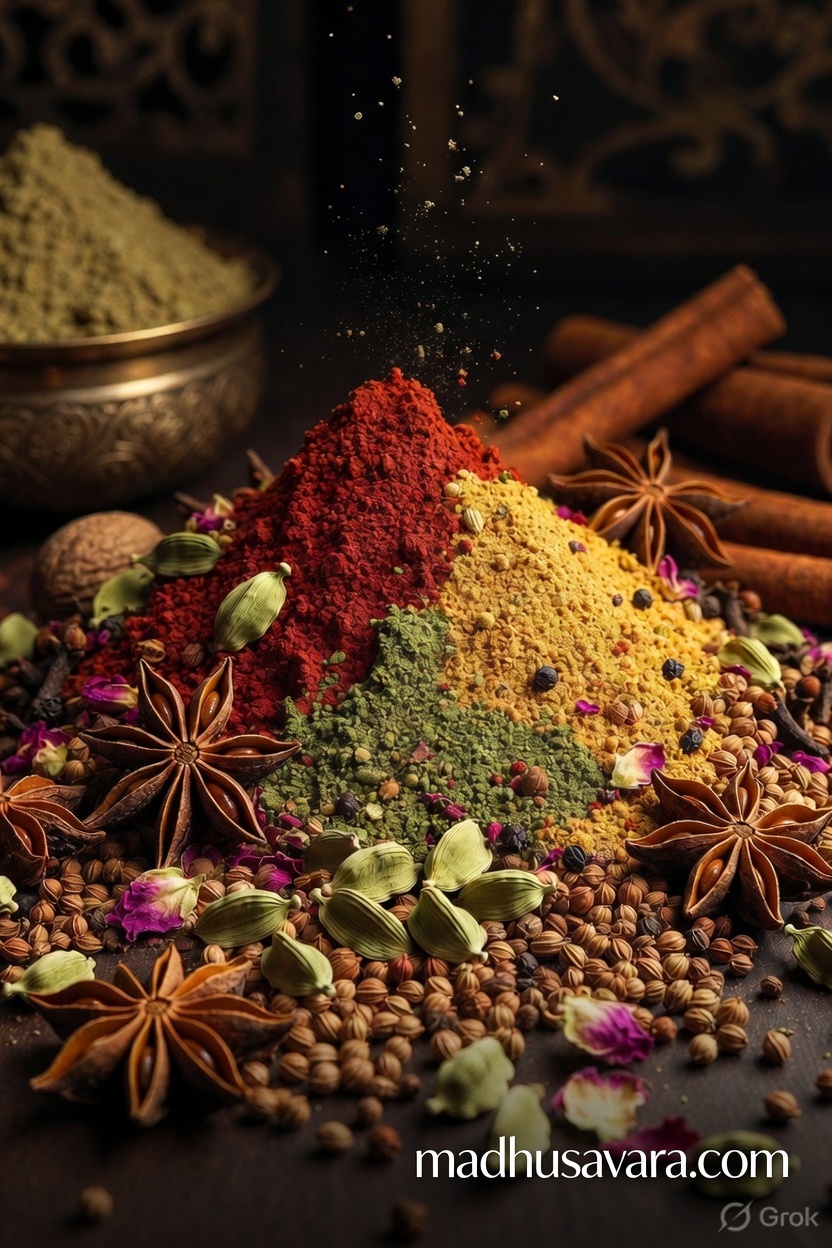
Vibrant pile of authentic homemade Biryani Masala spice mix with whole spices including cardamom, star anise, cinnamon, cloves and rose petals on dark wooden background - madhusavara.com

Author’s Note

Every memorable biryani begins long before the rice is layered or the pot is sealed for dum. It begins with the fragrance of freshly roasted spices dancing gently through the kitchen. Growing up, I always believed that the irresistible aroma drifting from my mother’s spice box was the true invitation to the dining table. Years later, while documenting India’s traditional recipes, I realised that every region proudly guards its own biryani masala, and every family quietly adds its own signature touch.

I am Madhu Savara, a food enthusiast, recipe developer, and owner of madhusavara.com. My passion is preserving authentic Indian recipes, forgotten regional cuisines, Himalayan food traditions, and time-tested cooking methods for future generations. Among the many recipes I have collected over the years, homemade biryani masala remains one of the most treasured because it transforms an ordinary pot of rice into an unforgettable feast.

Unlike commercial spice powders that often contain fillers, artificial colours, anti-caking agents, and excess chilli powder, this authentic biryani masala is prepared entirely from premium whole spices. Each spice is roasted carefully to release its essential oils before being ground into a fragrant blend that perfumes every grain of rice.

Whether you are preparing Hyderabadi Dum Biryani, Donne Biryani, Lucknowi Biryani, Kolkata Biryani, Ambur Biryani, Malabar Biryani, Bombay Biryani, Memoni Biryani, Beary Biryani, Arcot Biryani, Chettinad Biryani, Sindhi Biryani or a simple vegetable biryani for your family, this homemade spice blend brings depth, warmth, and authentic flavour to every recipe.

Welcome to my kitchen, where tradition meets simplicity and every spice tells a story.

What Is Authentic Biryani Masala?

Authentic biryani masala is a carefully balanced blend of roasted whole spices specially formulated for biryani. Although it shares a few ingredients with garam masala, the two are not identical.

Garam masala is generally stronger and used in a wide variety of curries. Biryani masala is more aromatic, with floral, earthy, woody, and slightly sweet notes that complement layered rice dishes. Its primary purpose is not to make the biryani spicy but to create complexity and a lingering aroma.

Each region of India prepares its own version. Hyderabadi biryani often highlights green cardamom and saffron, Karnataka’s Donne Biryani includes stone flower and black pepper, while Malabar biryani favours fennel and star anise. This recipe brings together the finest elements of these traditions while remaining true to authentic Indian cooking.

Origin and Cultural Significance

The story of biryani is believed to have begun centuries ago through the interaction of Persian culinary traditions with the diverse regional cuisines of the Indian subcontinent. As biryani travelled across royal kitchens, military camps, bustling ports, and family homes, every region gradually developed its own spice profile.

In Hyderabad, biryani became synonymous with royal elegance. In Karnataka, Donne Biryani acquired its earthy aroma through stone flower and fresh herbs. Kolkata introduced subtle sweetness, while the Malabar Coast incorporated spices brought by ancient maritime trade.

Despite these regional differences, one tradition remained unchanged: families prepared their own biryani masala using freshly roasted whole spices. The recipe was often handed down from one generation to another and considered a treasured family secret.

Preparing biryani masala at home was once a festive ritual. Grandmothers carefully cleaned each spice, roasted them over a gentle flame, cooled them naturally, and ground them into an aromatic powder that would flavour several family celebrations. Even today, that timeless practice connects us with India’s rich culinary heritage

Why This Authentic Biryani Masala Recipe Is Special

Homemade biryani masala is more than a spice powder—it is the heart of every exceptional biryani. A carefully balanced blend enhances the natural flavour of rice, meat, seafood, vegetables, herbs, and saffron without allowing any single spice to dominate.

This recipe has been designed to provide:

  • Rich restaurant-style aroma
  • Balanced flavour without excessive heat
  • Freshness from whole spices
  • No preservatives or artificial colours
  • Long shelf life
  • Versatility for every style of biryani
  • Consistent results every time

Because every ingredient is roasted individually, the essential oils remain intact, giving this masala an extraordinary fragrance that packaged spice blends rarely achieve.

Table of Contents

  • Author’s Note
  • Why This Recipe Works
  • What Is Biryani Masala?
  • Origin and Significance
  • Preparation Details
  • Ingredients
  • Equipment Needed
  • Why Each Spice Matters
  • Step-by-Step Method
  • Nutrition Facts
  • Comparison with Other Masalas
  • Tips and Variations
  • Storage Guide
  • Frequently Asked Questions
  • Author’s Bio
  • References

Servings

25 biryani

Preparation Time:

15 minutes

Cooking Time:

15 minutes

Calories

18

Ingredients

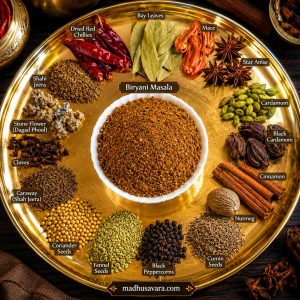
Homemade biryani masala ingredients arranged on a polished brass plate with freshly ground biryani masala in a white bowl at the centre, including cloves, cinnamon, cardamom, star anise, mace, cumin, coriander, fennel, black pepper, bay leaves and dried red chillies.

Whole Spices

  • ½ cup coriander seeds
  • ¼ cup cumin seeds
  • ¼ cup fennel seeds
  • 3 tablespoons black peppercorns
  • 20 green cardamom pods
  • 8 black cardamom pods
  • 25 cloves
  • 5-inch Ceylon cinnamon sticks
  • 10 bay leaves
  • 4 star anise
  • 4 blades mace
  • 1 whole nutmeg
  • 2 tablespoons shahi jeera (caraway)
  • 2 teaspoons stone flower (dagad phool)
  • 1 teaspoon black cumin (optional)
  • 2 tablespoons dried rose petals (optional for royal aroma)

Optional Flavour Enhancers

  • 1 teaspoon dry ginger powder
  • 1 teaspoon white pepper powder
  • ½ teaspoon saffron powder
  • 1 teaspoon dried mint powder

Why Every Spice Matters

Coriander Seeds

They create the base of the masala with gentle citrus notes and mild sweetness while balancing stronger spices.

Cumin Seeds

Cumin contributes earthy warmth and enhances the savoury flavour of rice and meat.

Fennel Seeds

Natural sweetness from fennel prevents the spice blend from tasting harsh and complements rich meat beautifully.

Black Peppercorns

Pepper provides clean, lingering heat that develops gradually instead of overwhelming the palate.

Green and Black Cardamom

Green cardamom offers delicate floral freshness, whereas black cardamom introduces smoky richness that is especially suitable for mutton and beef biryani.

Cloves

Cloves intensify the aroma and lend warmth to every spoonful.

Cinnamon

True cinnamon contributes gentle sweetness and harmonises all the spices into a balanced blend.

Nutmeg and Mace

These premium spices provide luxurious depth and are responsible for the signature fragrance associated with festive biryanis.

Equipment Needed

  • Heavy-bottomed frying pan or cast-iron skillet
  • Wooden spatula
  • Large mixing bowl
  • Measuring cups
  • Measuring spoons
  • Spice grinder or mixer grinder
  • Fine mesh sieve (optional)
  • Airtight sterilised glass jar
  • Dry spoon for storage

Using a heavy-bottomed pan ensures that the spices roast evenly without scorching. A powerful grinder produces a fine, uniform powder that blends effortlessly into biryani.

Nutrition Information

Nutritional Information (Approximate)

Nutrient Per Teaspoon
Calories 18 kcal
Carbohydrates 3 g
Protein 0.6 g
Fat 0.7 g
Fibre 1.5 g
Sodium Negligible
Iron 5% DV
Calcium 3% DV

Values are approximate and may vary depending on ingredient quality and proportions.

Biryani Masala vs Other Popular Spice Blends

Spice Blend Best Used For Distinctive Character
Biryani Masala Layered rice dishes Highly aromatic and balanced
Garam Masala Curries and gravies Warm and intense
Meat Masala Meat curries Pepper-forward and bold
Kitchen King Masala Mixed vegetable dishes Mild with a slight sweetness
Curry Powder Everyday cooking Turmeric-dominant flavour

Biryani masala is designed to perfume rice rather than overpower it, making it unique among Indian spice blends.

Step by Step Instructions

Smiling Indian woman in traditional saree happily roasting fresh whole spices for authentic homemade Biryani Masala in a brass pan in a warm kitchen, ingredients scattered on counter - madhusavara.com

Step 1: Clean the Whole Spices

Spread all the whole spices on a large plate and inspect them carefully. Remove tiny stones, dust, stalks, or damaged spices. This simple step ensures a clean, aromatic spice blend and extends its shelf life.

Step 2: Dry Roast the Spices

Heat a heavy-bottomed pan over low to medium heat. Dry roast each spice separately because every spice releases its essential oils at a different rate.

  • Coriander seeds: 2–3 minutes
  • Cumin seeds: 1–2 minutes
  • Fennel seeds: 1 minute
  • Black peppercorns: 1 minute
  • Cloves: 30–40 seconds
  • Green cardamom: 1 minute
  • Black cardamom: 1 minute
  • Cinnamon: 1 minute
  • Bay leaves: 45 seconds
  • Star anise: 45 seconds
  • Shahi jeera: 30 seconds
  • Stone flower: 20–30 seconds
  • Mace: 20 seconds
  • Nutmeg: Roast lightly for 30 seconds before grating.

The spices are perfectly roasted when they release a pleasant aroma without changing colour. Avoid roasting over high heat, as burnt spices will make the masala bitter.

Step 3: Cool Completely

Transfer the roasted spices to a wide plate and allow them to cool naturally for 20–30 minutes. Grinding warm spices traps moisture, reducing shelf life and affecting flavour.

Step 4: Grind

Break the cinnamon into smaller pieces and grate the nutmeg.

Transfer all the cooled spices to a spice grinder. Grind until a fine, aromatic powder forms. For an ultra-smooth texture, sift through a fine sieve and regrind any coarse particles.

Step 5: Store

Transfer the freshly prepared biryani masala into a clean, completely dry, airtight glass jar. Label the jar with the preparation date.

Store in a cool, dark cupboard away from moisture, direct sunlight, and steam.

How to Use Homemade Biryani Masala

The quantity depends on the style of biryani and personal preference.

Biryani Type Quantity
Vegetable Biryani 1½ tablespoons
Egg Biryani 1½ tablespoons
Chicken Biryani 2 tablespoons
Mutton Biryani 2–2½ tablespoons
Fish Biryani 1 tablespoon
Prawn Biryani 1 tablespoon

For richer flavour, add half the masala while marinating and the remaining half during layering.

Tips and Variations

Expert Tips for the Perfect Biryani Masala

  • Always use fresh whole spices for maximum aroma.
  • Roast spices over low heat to preserve essential oils.
  • Cool completely before grinding.
  • Use a dedicated spice grinder for the purest flavour.
  • Never add salt to the spice blend.
  • Prepare small batches every three to four months for peak freshness.
  • Use glass jars instead of plastic containers.
  • Always use a dry spoon while handling the masala.

Delicious Variations

Hyderabadi Style

Increase green cardamom slightly and add a pinch of saffron powder.

Donne Biryani Style

Increase black pepper and stone flower for a deeper, earthy aroma.

Lucknowi Style

Add a few extra blades of mace and a little more nutmeg for a subtle royal fragrance.

Malabar Style

Increase fennel seeds and star anise to create a sweeter spice profile.

Mild Family Version

Reduce black pepper by half while maintaining the remaining spices.

Allergen Information

This recipe is naturally:

  • Vegetarian
  • Vegan
  • Gluten-free
  • Dairy-free
  • Nut-free (except nutmeg, which is a spice rather than a tree nut)

Individuals with spice sensitivities should consult their healthcare professional before consuming large quantities.

Other Essentials

Common Mistakes to Avoid

  • Roasting spices on high heat.
  • Grinding warm spices.
  • Using stale spices.
  • Storing in damp containers.
  • Leaving the jar open for long periods.
  • Preparing excessively large batches that lose freshness.
  • Exposing the masala to direct sunlight.

Avoiding these common mistakes ensures every batch remains fragrant and flavourful.

Storage Instructions

Store the biryani masala in an airtight glass jar in a cool, dry place.

  • Pantry: Best within 6 months.
  • Refrigerator: Up to 8 months.
  • Freezer: Up to 12 months in sealed freezer-safe containers.

For the freshest aroma, prepare smaller batches several times a year rather than one very large batch.

Frequently Asked Questions

Can I skip stone flower?

Yes, but stone flower adds a distinctive earthy aroma found in many South Indian biryanis.

Can I use cassia instead of Ceylon cinnamon?

Yes. Cassia has a stronger flavour, so reduce the quantity slightly.

Is homemade biryani masala better than store-bought?

Yes. Homemade blends contain no preservatives, offer superior freshness, and allow complete control over quality and flavour.

Can I use this masala in pulao?

Yes. Use about half the quantity to maintain a delicate flavour.

Does this masala contain chilli powder?

No. Heat is provided mainly by black pepper. Add chilli powder separately according to your preference.

Why should spices be roasted separately?

Different spices release their essential oils at different temperatures. Roasting them individually prevents burning and ensures a balanced flavour.

Which grinder is best?

A dedicated electric spice grinder produces the finest, most aromatic powder.

How much masala is needed for 1 kg of rice?

Approximately 2½–3 tablespoons, depending on the recipe and your preferred intensity.

Serving Suggestions

This homemade biryani masala pairs beautifully with:

  • Chicken biryani
  • Mutton biryani
  • Vegetable biryani
  • Egg biryani
  • Fish biryani
  • Prawn biryani
  • Biryani marinades
  • Biryani gravy
  • Rice-based festive dishes

Call to Action

If you enjoyed this Authentic Biryani Masala Recipe, explore more traditional Indian recipes on madhusavara.com. You may also like my Donne Biryani, Bhatkali Biryani, and other regional biryani recipes, where this homemade spice blend can be used to create rich, authentic flavours in your own kitchen.

If you try this recipe, I would love to hear about your experience. Share your feedback in the comments, and let us continue to preserve India’s remarkable culinary heritage—one authentic recipe at a time.

About the Author

Madhu Savara is the founder of madhusavara.com, where she shares authentic Indian recipes, Himalayan cuisine, traditional cooking techniques, forgotten regional foods, and practical kitchen wisdom. Her mission is to preserve India’s rich culinary traditions through carefully tested recipes that home cooks can prepare with confidence.

Selected References

    1. Srinivasan, K. (2005). Spices as Influencers of Body Metabolism: An Overview of Three Decades of Research. Food Research International, 38(1), 77–86.
      DOI: 10.1016/j.foodres.2004.09.001
    2. Srinivasan, K. (2005). Role of Spices Beyond Food Flavouring: Nutraceuticals with Multiple Health Effects. Food Reviews International, 21(2), 167–188.
      DOI: 10.1081/FRI-200051872
    3. Srinivasan, K. (2014). Antioxidant Potential of Spices and Their Active Constituents. Critical Reviews in Food Science and Nutrition, 54(3), 352–372.
      DOI: 10.1080/10408398.2011.585525
    4. Srinivasan, K. (2018). Cumin (Cuminum cyminum) and Black Cumin (Nigella sativa) Seeds: Traditional Uses, Chemical Constituents, and Nutraceutical Effects. Food Quality and Safety, 2(1), 1–16.
      DOI: 10.1093/fqsafe/fyx031
    5. Nadeem, M., Anjum, F. M., Khan, M. I., Tehseen, S., El-Ghorab, A., & Sultan, J. I. (2013). Nutritional and Medicinal Aspects of Coriander (Coriandrum sativum L.): A Review. British Food Journal, 115(5), 743–755.
      DOI: 10.1108/00070701311331526
    6. Peter, K. V. (Ed.). (2012). Handbook of Herbs and Spices (2nd ed., Vol. 1), Chapter: Cumin. Woodhead Publishing.DOI: 10.1533/9780857095671.2507
    7. Spices in India: 75 Years of Research and Development. Springer Nature, 2024.


  1. Did you make this recipe? Leave a rating, share your tips, and tag madhusavara.com when you recreate this authentic homemade biryani masala. Happy cooking!
Disclaimer

Important Notice: Read Before Proceeding

The recipes, preparation methods, nutritional details, and related content published on Madhu Savara’s website, social media, and associated platforms are intended solely for general informational and educational purposes. While every effort has been made to ensure accuracy and reliability, we make no guarantees regarding the results, safety, or accuracy of any recipe presented here.

We are not licensed nutritionists, dieticians, or medical professionals. The nutritional values provided are estimates only, calculated using third-party tools, and should not be used for medical diagnosis, dietary treatment, or allergy management. If you have any medical conditions, dietary restrictions, or food allergies, please consult your doctor or certified dietitian before attempting any recipe.

Cooking inherently involves sharp tools, high heat, and the risk of injury or fire. You assume full responsibility for your kitchen practices. Madhu Savara, the website, and all contributors shall not be held liable for any damage, injury, loss, or adverse outcome resulting directly or indirectly from the preparation, consumption, or interpretation of any content herein.

By using this website and attempting any recipe, you agree to hold harmless and indemnify Madhu Savara and her team from any liability, legal claim, or damages arising from the use of this content. You are encouraged to exercise independent judgment and take full responsibility for your health, kitchen safety, and actions.


Vibrant pile of authentic homemade Biryani Masala spice mix with whole spices including cardamom, star anise, cinnamon, cloves and rose petals on dark wooden background - madhusavara.com
Print

Best Authentic Biryani Masala Recipe | Homemade Biryani Spice Mix

Discover the secret to a perfect biryani with this Authentic Biryani Masala Recipe. Made from freshly roasted whole spices, this homemade biryani spice mix delivers restaurant-style aroma, balanced flavour, and natural freshness without preservatives. Ideal for all varieties of Indian biryani
Course indian
Cuisine Homemade Biryani Masala, Indian, Spice Blend
Keyword ** Indian Biryani Masala, Authentic Biryani Masala Recipe, Best Biryani Masala Recipe, Biryani Masala Recipe, Biryani Spice Powder, Chicken Biryani Masala, Dum Biryani Masala, Homemade Biryani Masala, Homemade Biryani Spice Mix, Homemade Garam Masala for Biryani**, Homemade Spice Blend, Mutton Biryani Masala, Restaurant Style Biryani Masala, Traditional Biryani Masala, Vegetable Biryani Masala
Prep Time 15 minutes
roasting 15 minutes
Total Time 30 minutes
Servings 25 serving
Calories 18kcal
Author Madhu Savara
Cost NA

Equipment

  • Heavy-bottomed frying pan or cast-iron skilletWooden spatulaLarge mixing bowlMeasuring cupsMeasuring spoonsSpice grinder or mixer grinderFine mesh sieve (optional)Airtight sterilised glass jarDry spoon for storage Using a heavy-bottomed pan ensures that the spices roast evenly without scorching. A powerful grinder produces a fine, uniform powder that blends effortlessly into biryani.

Ingredients

  • Whole Spices
  • ½ cup coriander seeds
  • ¼ cup cumin seeds
  • ¼ cup fennel seeds
  • 3 tablespoons black peppercorns
  • 20 green cardamom pods
  • 8 black cardamom pods
  • 25 cloves
  • 5- inch Ceylon cinnamon sticks
  • 10 bay leaves
  • 4 star anise
  • 4 blades mace
  • 1 whole nutmeg
  • 2 tablespoons shahi jeera caraway
  • 2 teaspoons stone flower dagad phool
  • 1 teaspoon black cumin optional
  • 2 tablespoons dried rose petals optional for royal aroma
  • Optional Flavour Enhancers
  • 1 teaspoon dry ginger powder
  • 1 teaspoon white pepper powder
  • ½ teaspoon saffron powder
  • 1 teaspoon dried mint powder

Instructions

  • Step 1: Clean the Whole Spices
  • Spread all the whole spices on a large plate and inspect them carefully. Remove tiny stones, dust, stalks, or damaged spices. This simple step ensures a clean, aromatic spice blend and extends its shelf life.
  • Step 2: Dry Roast the Spices
  • Heat a heavy-bottomed pan over low to medium heat. Dry roast each spice separately because every spice releases its essential oils at a different rate.
  • Coriander seeds: 2–3 minutes
  • Cumin seeds: 1–2 minutes
  • Fennel seeds: 1 minute
  • Black peppercorns: 1 minute
  • Cloves: 30–40 seconds
  • Green cardamom: 1 minute
  • Black cardamom: 1 minute
  • Cinnamon: 1 minute
  • Bay leaves: 45 seconds
  • Star anise: 45 seconds
  • Shahi jeera: 30 seconds
  • Stone flower: 20–30 seconds
  • Mace: 20 seconds
  • Nutmeg: Roast lightly for 30 seconds before grating.
  • The spices are perfectly roasted when they release a pleasant aroma without changing colour. Avoid roasting over high heat, as burnt spices will make the masala bitter.
  • Step 3: Cool Completely
  • Transfer the roasted spices to a wide plate and allow them to cool naturally for 20–30 minutes. Grinding warm spices traps moisture, reducing shelf life and affecting flavour.
  • Step 4: Grind
  • Break the cinnamon into smaller pieces and grate the nutmeg.
  • Transfer all the cooled spices to a spice grinder. Grind until a fine, aromatic powder forms. For an ultra-smooth texture, sift through a fine sieve and regrind any coarse particles.
  • Step 5: Store
  • Transfer the freshly prepared biryani masala into a clean, completely dry, airtight glass jar. Label the jar with the preparation date.
  • Store in a cool, dark cupboard away from moisture, direct sunlight, and steam.
  • How to Use Homemade Biryani Masala
  • The quantity depends on the style of biryani and personal preference.
  • Biryani Type Quantity
  • Vegetable Biryani 1½ tablespoons
  • Egg Biryani 1½ tablespoons
  • Chicken Biryani 2 tablespoons
  • Mutton Biryani 2–2½ tablespoons
  • Fish Biryani 1 tablespoon
  • Prawn Biryani 1 tablespoon
  • For richer flavour, add half the masala while marinating and the remaining half during layering.

Notes

Step 1: Clean the Whole Spices

Spread all the whole spices on a large plate and inspect them carefully. Remove tiny stones, dust, stalks, or damaged spices. This simple step ensures a clean, aromatic spice blend and extends its shelf life.

Step 2: Dry Roast the Spices

Heat a heavy-bottomed pan over low to medium heat. Dry roast each spice separately because every spice releases its essential oils at a different rate.
  • Coriander seeds: 2–3 minutes
  • Cumin seeds: 1–2 minutes
  • Fennel seeds: 1 minute
  • Black peppercorns: 1 minute
  • Cloves: 30–40 seconds
  • Green cardamom: 1 minute
  • Black cardamom: 1 minute
  • Cinnamon: 1 minute
  • Bay leaves: 45 seconds
  • Star anise: 45 seconds
  • Shahi jeera: 30 seconds
  • Stone flower: 20–30 seconds
  • Mace: 20 seconds
  • Nutmeg: Roast lightly for 30 seconds before grating.
The spices are perfectly roasted when they release a pleasant aroma without changing colour. Avoid roasting over high heat, as burnt spices will make the masala bitter.

Step 3: Cool Completely

Transfer the roasted spices to a wide plate and allow them to cool naturally for 20–30 minutes. Grinding warm spices traps moisture, reducing shelf life and affecting flavour.

Step 4: Grind

Break the cinnamon into smaller pieces and grate the nutmeg.
Transfer all the cooled spices to a spice grinder. Grind until a fine, aromatic powder forms. For an ultra-smooth texture, sift through a fine sieve and regrind any coarse particles.

Step 5: Store

Transfer the freshly prepared biryani masala into a clean, completely dry, airtight glass jar. Label the jar with the preparation date.
Store in a cool, dark cupboard away from moisture, direct sunlight, and steam.

How to Use Homemade Biryani Masala

The quantity depends on the style of biryani and personal preference.
Biryani Type Quantity
Vegetable Biryani 1½ tablespoons
Egg Biryani 1½ tablespoons
Chicken Biryani 2 tablespoons
Mutton Biryani 2–2½ tablespoons
Fish Biryani 1 tablespoon
Prawn Biryani 1 tablespoon
For richer flavour, add half the masala while marinating and the remaining half during layering.