
Author’s Note Namaste! I am Madhu Savara, the founder of madhusavara.com, based in Chandigarh. Though my family roots are not in the hills, my deep love for authentic Indian regional flavours has led me to explore and document traditional recipes from across the country. This Hisalu Berry Preserve Recipe is one that I have carefully perfected after multiple visits to the Himalayan regions, conversations with local families, and many happy experiments in my Chandigarh kitchen. It is my humble effort to bring the pure, wild essence of the mountains straight to your table. I hope this preserve fills your home with the same warmth and joy it brings to mine. Memorable Childhood Story Growing up in Chandigarh, our summer vacations often meant road trips to the serene hills of Himachal and Uttarakhand. One particular trip when I was around ten years old stands out vividly. We stopped at a small roadside dhaba near Shimla where a kind Pahadi aunty served us fresh, warm parathas slathered with her homemade golden berry preserve. The moment I tasted that sweet-tangy burst of Hisalu, I was hooked. Curious and wide-eyed, I followed her into the kitchen as she shared stories of foraging these glowing berries with her children. That single experience sparked my lifelong fascination with Himalayan ingredients. Even today, whenever I make this Hisalu Berry Preserve Recipe in my kitchen, it transports me back to that misty morning and the unforgettable flavours that first captured my heart. Table of Contents Preface Origin of Hisalu Berry Importance and Significance Description of the Recipe Where Hisalu Grows and Its Role in Villagers’ Lives Preparation Time, Cooking Time, and Calories Standard Ingredients Equipment Required Step-by-Step Detailed Recipe Nutritional Values Nutritional Comparison with Other Varieties Allergen Information Tips and Variations Things to Avoid Other Essentials Detailed FAQs Call to Action Conclusion Preface In the rugged beauty of the Himalayas, nature offers treasures like the Hisalu berry. This Hisalu Berry Preserve Recipe captures its essence in a jar, blending traditional Pahadi techniques with simple home cooking. It is perfect for breakfast spreads, gifting, or as a reminder of mountain heritage. Origin of Hisalu Berry Hisalu, scientifically known as Rubus ellipticus (golden Himalayan raspberry or yellow Himalayan raspberry), is a wild shrub native to the temperate Himalayas. It thrives in regions across India (especially Uttarakhand, Himachal Pradesh), Nepal, and parts of Southeast Asia. Locals call it Hisalu (Kumaoni), Hisol (Garhwali), Ainselu (Nepali), or Aakhe. For generations, Pahadi communities have foraged these berries, turning them into preserves to enjoy their goodness year-round. Importance and Significance Hisalu holds deep cultural and ecological value. It provides vital nutrition during scarce seasons and supports biodiversity by feeding birds and wildlife. In Pahadi households, making Hisalu preserve is a ritual of love and preservation of heritage. Its high antioxidant and vitamin content make it a natural immunity booster, significant in the challenging high-altitude life.
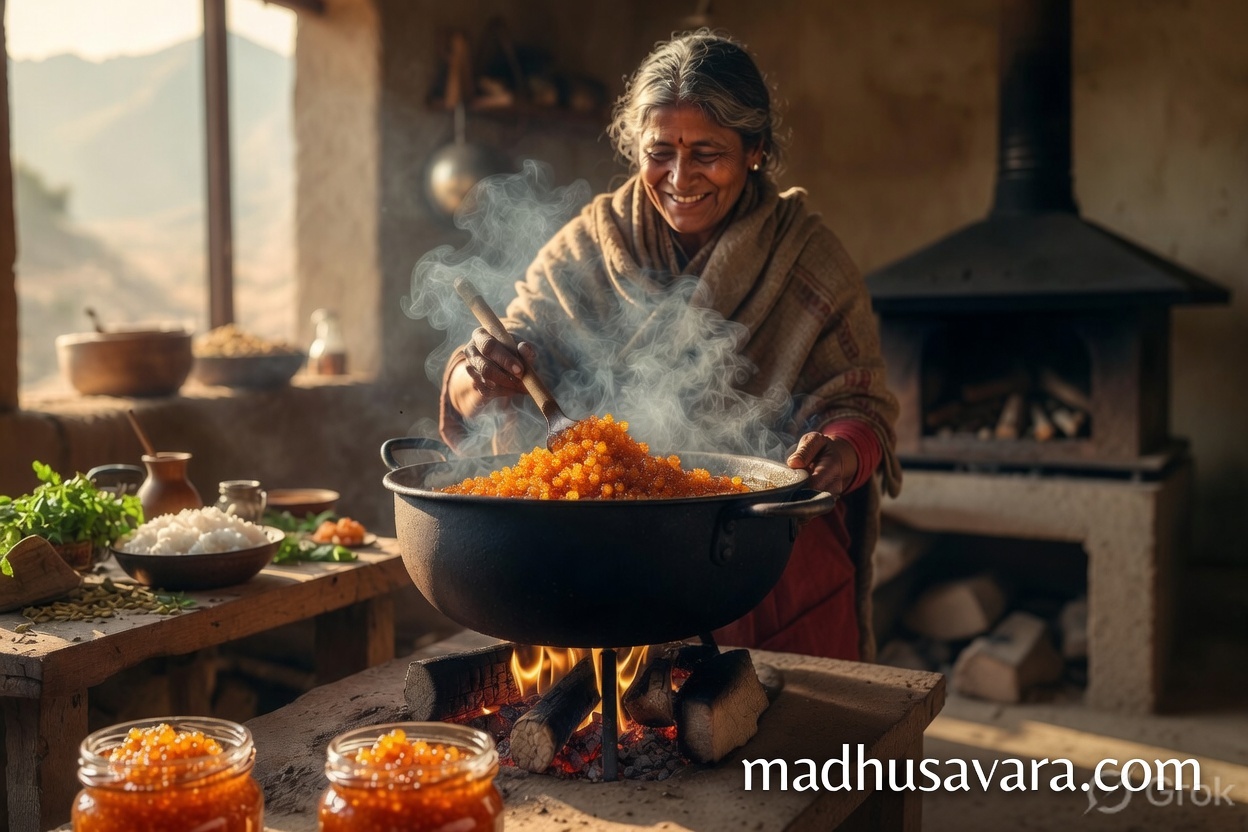
Alt Text: Pahadi villager lady cooking traditional Hisalu Berry Preserve Recipe in a rustic Himalayan kitchen with fresh ingredients and finished preserve jars

This authentic Hisalu Berry Preserve Recipe produces a thick, glossy, ruby-golden spread with balanced sweetness and a delightful tang. Infused with traditional Pahadi spices like cardamom and a hint of fennel, it offers a unique flavour profile – sweet, tart, aromatic, and deeply comforting. Unlike commercial jams, it retains the wild, fragrant essence of fresh berries with minimal processing.

Area Where Hisalu Grows and Its Role in Villagers’ Lives

Hisalu grows wild in the mid-Himalayan slopes (1,500–2,100 metres) of Uttarakhand, Himachal Pradesh, and surrounding areas, often in pine forests and open grasslands. For villagers, it is more than food – it is income during the short season, a source of pride in local markets, and a health tonic. Women and children forage together, strengthening community bonds while supplementing diets with natural vitamins. It plays a key role in the local economy and traditional medicine.

Servings

20–25 servings (approximately 20g per serving)

Preparation Time:

40-55 minutes

Cooking Time:

45–60 minutes Yield: Approximately 500–600g (2 medium jars)

Calories

55

Ingredients

  • 500g fresh Hisalu berries (washed and sorted)
  • 300–350g sugar (adjust for tartness; preferably unrefined or jaggery for an authentic Pahadi touch)
  • Juice of 1 large lemon (or 2 small)
  • 1 tsp crushed cardamom pods (elaichi)
  • ½ tsp fennel seeds (saunf), lightly crushed
  • A pinch of Himalayan pink salt
  • 100ml water (if needed for initial boiling)

Equipment Needed

  • Heavy-bottomed kadhai or stainless steel pan
  • Wooden spatula
  • Sterilised glass jars with airtight lids
  • Fine mesh strainer or muslin cloth (optional for smoother texture)
  • Masher or fork
  • Measuring cups and spoons

Nutrition Information

Nutritional Profile of Hisalu Berries (Approximate per 100g fresh berries)

Nutrient Amount % Daily Value (approx.)
Calories 60–80 kcal 3–4%
Carbohydrates 12–18g 4–6%
Dietary Fibre 4–7g 15–25%
Protein 1.5–3.5g 3–7%
Fat 0.5–1g 1%
Vitamin C High (30–60mg+) 35–70%+
Antioxidants (Phenolics, Flavonoids) Very High Excellent source
Beta-Carotene Significant Good source
Minerals (Potassium, Iron, Calcium, Magnesium) Notable amounts Supports immunity & energy

Note: Values are approximate based on studies of wild Rubus ellipticus. The preserve’s nutrition will vary slightly due to added sugar.

Nutritional Comparison with Other Varieties

Comparison Table (Approximate per 100g fresh fruit)

Berry Type Calories Fibre (g) Vitamin C (mg) Key Highlights
Hisalu (Golden Himalayan Raspberry) 60–80 4–7 30–60+ Superior wild antioxidants, beta-carotene, and unique Himalayan minerals
Red Raspberry 52 6.5 26 High manganese, good fibre
Strawberry 32 2 59 Lower fibre, higher water content
Blackberry 43 5.3 21 Richer in Vitamin K & antioxidants

Hisalu stands out for its robust wild profile — higher natural fibre and unique phytochemicals compared to cultivated berries, making the preserve a nutrient-dense choice.

Step by Step Instructions

  • Prepare the Berries: Rinse 500g Hisalu berries gently under cold water. Remove any stems, leaves, or unripe green ones. Pat dry. In a large bowl, mash half the berries lightly with a fork to release juices while keeping some whole for texture.
  • Initial Cooking: Place berries in a heavy kadhai. Add 100ml water and cook on medium heat for 10–12 minutes, stirring occasionally, until berries soften and release more juice.
  • Add Sweetener and Spices: Stir in sugar, lemon juice, crushed cardamom, fennel seeds, and a pinch of salt. Mix well.
  • Simmer to Perfection: Bring to a gentle boil, then reduce to low-medium heat. Cook for 35–45 minutes, stirring frequently to prevent sticking. The mixture will thicken and reach a glossy consistency. To test: Drop a small spoonful on a chilled plate; it should wrinkle when pushed with a finger.
  • Jar It Up: Remove from heat. Let it rest for 5 minutes. Pour hot preserve into sterilised jars, leaving 1cm headspace. Seal immediately. Invert jars for 5 minutes, then cool upright.
  • Store: Once cooled, store in a cool, dark place. Refrigerate after opening. Shelf life: 6–8 months unopened.

Why This Hisalu Berry Preserve Stays Fresh

The preservation of Hisalu berries depends on three key factors: sugar, acidity, and proper sterilisation. Sugar helps bind excess moisture, making it difficult for spoilage microorganisms to grow. Lemon juice increases acidity, which naturally supports preservation and helps the preserve set properly. Sterilised jars further reduce contamination, allowing the preserve to remain fresh for several months when stored correctly.

Tips and Variations

  • Use jaggery for a deeper, caramel-like Pahadi flavour.
  • Add a few fresh mint leaves during the last 5 minutes for a refreshing twist.
  • For a spiced version, include a pinch of cinnamon or dried ginger powder.
  • Make it sugar-free by using honey (add after cooling slightly) for a healthier option.
  • Double the batch size during peak gifting season.

Allergen Information

This recipe is naturally gluten-free, nut-free, and dairy-free. Contains no common allergens. However, always check for individual sensitivities to berries. Not suitable for those with Rosaceae family allergies (e.g., some rose-related sensitivities).

Other Essentials

Things to Avoid

  • Do not use overripe or fermented berries, as they can spoil the batch.
  • Avoid high heat after adding sugar to prevent crystallisation.
  • Skip washing berries too early; do it just before cooking to retain freshness.
  • Never use aluminium pans, as they react with the acidity.

Sterilise jars by boiling them for 10 minutes. Use fresh, seasonal berries for the best results. Label jars with date and batch name for easy tracking.

Detailed FAQs

Q1: Can I use frozen Hisalu berries? A: Yes, thaw them completely and drain excess water before cooking. Fresh is ideal for authentic taste.

Q2: How long does the preserve last? A: Unopened jars last 6–8 months in a cool place; opened, 4–6 weeks in the fridge.

Q3: Is this recipe suitable for people with diabetes? A: Use less sugar or sugar substitutes and consult a doctor. The natural fibre helps, but moderation is key.

Q4: What if I cannot find Hisalu? A: Substitute with a mix of raspberries and a few strawberries, though the authentic Himalayan flavour will differ.

Q5: Can I make it without lemon? A: Lemon aids setting and preservation. You can use citric acid as an alternative.

Q6: Why add fennel and cardamom? A: These are traditional Pahadi spices that enhance aroma and aid digestion.

Call to Action (CTA)

Ready to bring Himalayan sunshine to your kitchen? Try this Hisalu Berry Preserve recipe today and share your creation with us in the comments! Tag your photos with #PahadiHisaluPreserve and inspire others to preserve mountain traditions. Visit madhusavara.com for more authentic regional recipes.

Strong Conclusion

This Hisalu Berry Preserve is more than a condiment – it is a celebration of Himalayan resilience, natural bounty, and timeless traditions. Every spoonful connects you to the misty hills, the laughter of children foraging, and the wisdom of Pahadi kitchens. Make a batch, savour the flavours, and pass on this heritage. The mountains call – answer with love in your cooking. JAi Himalayas!

Disclaimer

Important Notice: Read Before Proceeding

The recipes, preparation methods, nutritional details, and related content published on Madhu Savara’s website, social media, and associated platforms are intended solely for general informational and educational purposes. While every effort has been made to ensure accuracy and reliability, we make no guarantees regarding the results, safety, or accuracy of any recipe presented here.

We are not licensed nutritionists, dieticians, or medical professionals. The nutritional values provided are estimates only, calculated using third-party tools, and should not be used for medical diagnosis, dietary treatment, or allergy management. If you have any medical conditions, dietary restrictions, or food allergies, please consult your doctor or certified dietitian before attempting any recipe.

Cooking inherently involves sharp tools, high heat, and the risk of injury or fire. You assume full responsibility for your kitchen practices. Madhu Savara, the website, and all contributors shall not be held liable for any damage, injury, loss, or adverse outcome resulting directly or indirectly from the preparation, consumption, or interpretation of any content herein.

By using this website and attempting any recipe, you agree to hold harmless and indemnify Madhu Savara and her team from any liability, legal claim, or damages arising from the use of this content. You are encouraged to exercise independent judgment and take full responsibility for your health, kitchen safety, and actions.


Author’s Note Namaste! I am Madhu Savara, the founder of madhusavara.com, based in Chandigarh. Though my family roots are not in the hills, my deep love for authentic Indian regional flavours has led me to explore and document traditional recipes from across the country. This Hisalu Berry(Rubus ellipticus) Preserve Recipe is one that I have carefully perfected after multiple visits to the Himalayan regions, conversations with local families, and many happy experiments in my Chandigarh kitchen. It is my humble effort to bring the pure, wild essence of the mountains straight to your table. I hope this preserve fills your home with the same warmth and joy it brings to mine.

Memorable Childhood Story

Growing up in Chandigarh,  during a family trip to Himachal, I tasted a homemade Hisalu preserve at a roadside eatery. The flavour stayed with me for years. That single experience sparked my lifelong fascination with Himalayan ingredients. Even today, whenever I make this Hisalu Berry Preserve Recipe in my kitchen, it transports me back to that misty morning and the unforgettable flavours that first captured my heart.

Table of Contents

  • Preface
  • Origin of Hisalu Berry(Rubus ellipticus)
  • Importance and Significance
  • Description of the Recipe
  • Where Hisalu Grows and Its Role in Villagers’ Lives
  • Preparation Time, Cooking Time, and Calories
  • Standard Ingredients
  • Equipment Required
  • Step-by-Step Detailed Recipe
  • Nutritional Values
  • Nutritional Comparison with Other Varieties
  • Allergen Information
  • Tips and Variations
  • Things to Avoid
  • Other Essentials
  • Detailed FAQs
  • Call to Action
  • Conclusion

Preface

In the rugged beauty of the Himalayas, nature offers treasures like the Hisalu berry. This Hisalu Berry Preserve Recipe captures its essence in a jar, blending traditional Pahadi techniques with simple home cooking. It is perfect for breakfast spreads, gifting, or as a reminder of mountain heritage.

Origin of Hisalu Berry

Hisalu, scientifically known as Rubus ellipticus (golden Himalayan raspberry or yellow Himalayan raspberry), is a wild shrub native to the temperate Himalayas. It thrives in regions across India (especially Uttarakhand, Himachal Pradesh), Nepal, and parts of Southeast Asia. Locals call it Hisalu (Kumaoni), Hisol (Garhwali), Ainselu (Nepali), or Aakhe. For generations, Pahadi communities have foraged these berries, turning them into preserves to enjoy their goodness year-round.

Importance and Significance

Hisalu holds deep cultural and ecological value. It provides vital nutrition during scarce seasons and supports biodiversity by feeding birds and wildlife. In Pahadi households, making Hisalu preserve is a ritual of love and preservation of heritage. Its high antioxidant and vitamin content make it a natural immunity booster, significant in the challenging high-altitude life.