Manday Bread Recipe – Traditional Himachali Flatbread from Pangi Valley, Chamba
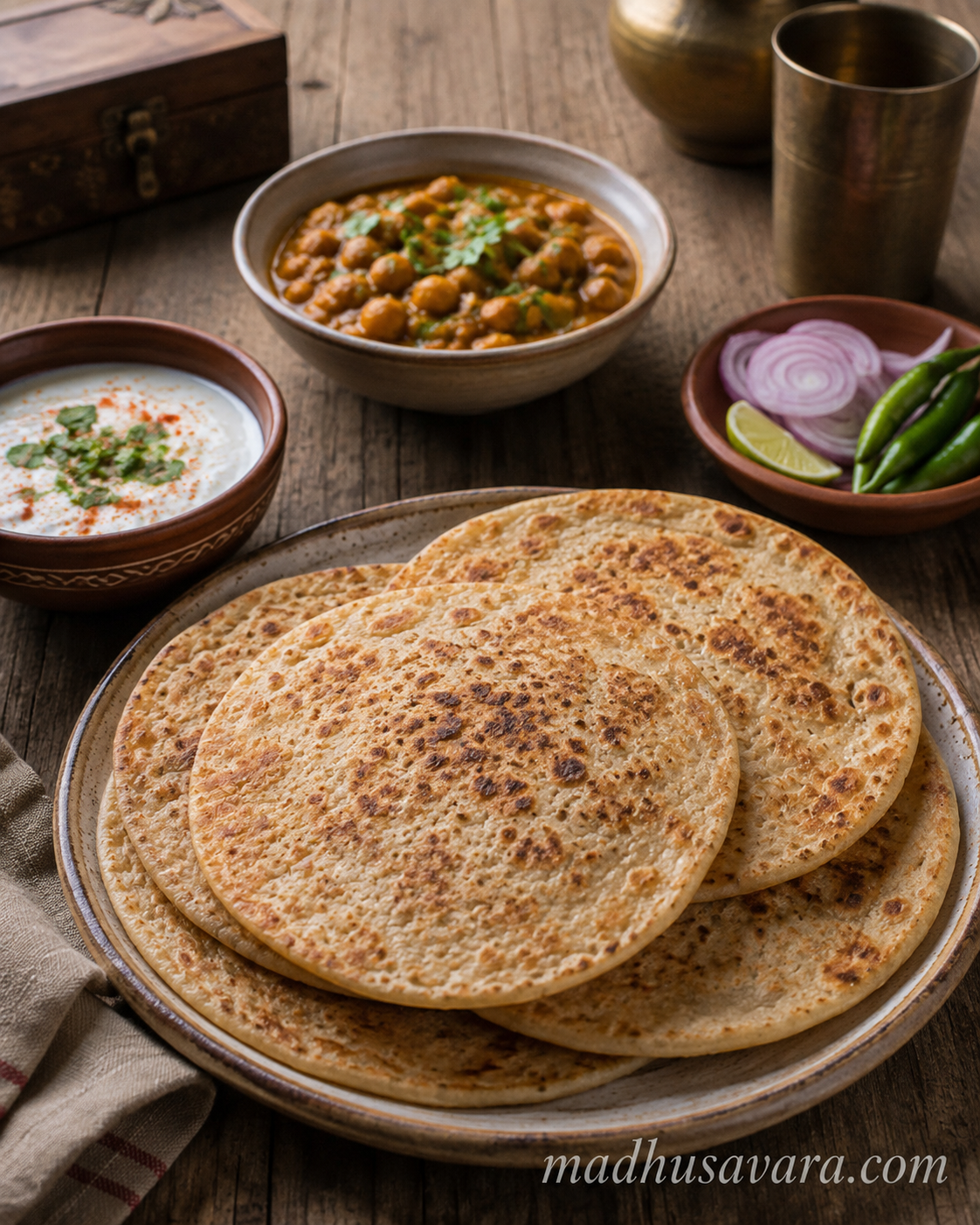
Manday bread served on a rustic wooden table with curd, green chutney, onions, green chillies and Himalayan-style accompaniments

Author’s Note

I am Madhu Savara, owner of Madhusavara.com, and I have always believed that traditional recipes are more than just food—they carry the memories, customs and everyday wisdom of the communities that created them. Manday Bread Recipe is one such lesser-known Himachali preparation from the Pangi Valley of Chamba. Its delicate, paper-thin texture and simple preparation reflect the traditional cooking of the mountain region. Through this recipe, I want to document and share Himachali Manday in a way that respects its regional identity and keeps this traditional bread connected to Chamba’s culinary heritage.

Description of the Recipe

Manday Bread Recipe is a traditional Himachali Manday known for its exceptionally thin, soft and pliable texture. This paper-thin Himachali bread is rolled much finer than an everyday roti and cooked on a hot tawa until it is lightly cooked yet flexible. When rolled correctly, Manday can be almost translucent in places, making its delicate texture a true test of the cook’s skill.

Made with a simple wheat flour dough and traditionally prepared without stuffing, Manday is a beautiful example of traditional Himachali bread from the mountain region. The dough needs to be rolled evenly and very thin without tearing, which is the most important part of making authentic Manday Himachali bread.

Origin of Manday

Himachali Manday is associated with the Pangi Valley of Chamba district, Himachal Pradesh, where it forms part of the region’s traditional food heritage. It belongs to the wider tradition of thin Himalayan bread found across the western Himalayas, where wheat has long been an important grain for mountain communities.

This Chamba Manday is particularly distinctive because of its delicate, paper-thin form and the skill required to prepare it. Its simple ingredients reflect the practical nature of traditional mountain cooking.

Significance of Manday

Manday Bread Recipe is traditionally associated with festive occasions, weddings, special gatherings and ceremonial feasts. Like many traditional foods served on important occasions, Manday reflects the hospitality and care given to guests.

Preparing an authentic Chamba Manday requires patience and a practised hand. The dough must be rolled extremely thin without breaking, and achieving an even, delicate sheet is considered an important part of the preparation. This makes the Manday Recipe not just a traditional Himachali bread recipe, but also a fine example of the skill preserved in the region’s culinary traditions.

able of Contents

  1. Author’s Note
  2. Description of the Recipe
  3. Origin of Manday
  4. Significance of Manday
  5. Nutritional Value
  6. Ingredients
  7. Equipment Needed
  8. Recipe Cooking
  9. Allergen Information
  10. Tips and Variations
  11. Things to Avoid
  12. Storage
  13. Serving Suggestions
  14. Frequently Asked Questions
  15. Call to Action
  16. Final Thoughts
  17. Author Bio

Servings

10 Manday

Preparation Time:

15 Minutes plus 4 hours resting time

Cooking Time:

25 Minutes

Calories

90

Ingredients

List

Makes 10 Manday

  • 2 cups whole wheat flour (atta)
  • 1 cup buttermilk, or as needed
  • Water, as required to adjust the consistency
  • Salt, to taste
  • Ghee or oil, for cooking

Equipment Needed

Needed

  • Mixing bowl
  • Wooden spoon
  • Tawa or flat griddle
  • Rolling pin (belan)
  • Rolling board (chakla)
  • Spatula
  • Clean kitchen cloth

Nutrition Information

Nutritional Value

Approximate values per Manday, based on 10 Manday prepared from the listed ingredients. Actual values may vary slightly depending on the amount of buttermilk and ghee or oil used.

NutrientApprox. per Manday
Calories90 kcal
Carbohydrates14–16 g
Protein3–4 g
Fat2–3 g
Fibre2–3 g

Step by Step Instructions

Method of Preparation

Step 1: Prepare the Manday Batter

In a mixing bowl, combine the whole wheat flour and salt. Add the buttermilk and mix well. Gradually add water, whisking continuously, until you get a smooth, lump-free batter with a pouring consistency similar to dosa batter. Cover the bowl with a clean cloth and leave it to ferment for 4–6 hours or overnight, depending on the room temperature.

Step 2: Check the Fermented Batter

Once fermented, the Himachali Manday batter should look slightly lighter and have a mild, pleasantly tangy aroma. Stir the batter gently. If it has thickened, add a little water and mix until it reaches a smooth pouring consistency.

Step 3: Heat the Tawa

Place a tawa or flat griddle over medium heat. Once hot, lightly grease the surface with a little ghee or oil. The tawa should be evenly heated before cooking the Manday Recipe.

Step 4: Cook the Manday

Pour a ladleful of batter into the centre of the hot tawa and spread it gently into a thin, even round. Cook for 1–2 minutes, or until the underside turns lightly golden and the Manday begins to release from the tawa. Carefully flip and cook the other side for about a minute.

The finished Manday Himachali bread should remain soft and pliable rather than becoming crisp.

Step 5: Cook the Remaining Manday

Repeat the process with the remaining batter, lightly greasing the tawa as needed. Keep the cooked Manday covered with a clean cloth or in a covered container so that the traditional Himachali bread stays soft and warm until serving.

Tips and Variations

Tips and Variations

  • Use fresh buttermilk for a naturally tangy flavour and better fermentation.
  • During colder weather, keep the Manday batter in a warm corner of the kitchen to help it ferment properly.
  • If you regularly prepare Himachali Manday, a small amount of leftover fermented batter can be mixed into the next batch to encourage fermentation.
  • Some households prepare Manday slightly thicker, resulting in a softer texture. For a more traditional paper-thin finish, spread the batter evenly and gently across the hot tawa.

Allergen Information

Information

  • Gluten: Manday is made with whole wheat flour and contains gluten.
  • Dairy: Buttermilk is used in the batter, so the recipe contains dairy.

Those with wheat, gluten or dairy allergies or intolerances should avoid this recipe or use suitable alternatives only if they are consistent with the traditional preparation.

Other Essentials

Things to Avoid

  • Do not make the Manday batter too thin, as it may be difficult to spread evenly and hold its shape on the tawa.
  • Avoid cooking Manday over very high heat. The surface can brown or burn before the centre is properly cooked.
  • Do not rush the fermentation. Proper fermentation gives Himachali Manday its characteristic mild tang and softer texture.
  • Do not spread the batter too aggressively, especially if you are aiming for the delicate, paper-thin texture traditionally associated with Manday.

Storage

Manday is best enjoyed fresh while it is soft and warm. If you have leftovers, place the cooked Manday in an airtight container and consume them within the same day. Reheat gently on a hot tawa before serving.

The prepared batter can be refrigerated for up to 1 day. Bring it close to room temperature and stir gently before making the next batch.

Serving Suggestions

Serve Manday warm with traditional Himachali preparations such as Rajmah Madra, local seasonal vegetables, Labuk Chatien or a simple dal. In the Pangi Valley, this traditional Himachali bread is also associated with special meals and festive gatherings.

Frequently Asked Questions

What is Manday?

Manday is a traditional fermented preparation made with whole wheat flour and buttermilk and associated with the Pangi Valley of Chamba, Himachal Pradesh. Its thin, soft texture makes it a distinctive part of the region’s traditional food heritage.

Is Manday the same as dosa?

No. Although both are cooked on a hot tawa from a pourable batter, Manday Recipe uses whole wheat flour and buttermilk and belongs to the traditional cuisine of the Pangi Valley. It is not a dosa.

Can I make Manday without buttermilk?

Buttermilk is an important part of this Manday Recipe, helping with fermentation and giving the bread its characteristic mild tang. Using only water will change the flavour, texture and fermentation process.

How long should Manday batter ferment?

The batter generally needs 4–6 hours in warm weather or can be left overnight in cooler conditions. Fermentation time depends on the temperature of your kitchen.

Is Manday unique to Pangi Valley?

Manday is documented as a distinctive traditional food of the Pangi Valley, making it an important part of the culinary heritage of this Himalayan region.

Call to Action

Have you tried this traditional Manday Bread Recipe? Share your experience in the comments and tell me how your Manday turned out. For more Himachali recipes, traditional Himalayan bread and regional foods, explore the recipes and food stories on Madhusavara.com.

Final Thoughts

Manday is a beautiful example of how simple ingredients can become a distinctive regional food through traditional knowledge and careful preparation. Wheat flour, buttermilk and time are all it takes to make this soft, fermented Himachali bread. What makes Manday special is not its elaborate ingredients, but the skill and tradition behind its preparation in the Pangi Valley of Chamba.

Author Bio

Madhu Savara is the founder and owner of Madhusavara.com, where she documents authentic Indian recipes, traditional food practices and the rich culinary heritage of the Himalayas. Her work focuses on preserving lesser-known regional recipes and sharing their stories with readers in a simple, practical way.

Disclaimer

Important Notice: Read Before Proceeding

The recipes, preparation methods, nutritional details, and related content published on Madhu Savara’s website, social media, and associated platforms are intended solely for general informational and educational purposes. While every effort has been made to ensure accuracy and reliability, we make no guarantees regarding the results, safety, or accuracy of any recipe presented here.

We are not licensed nutritionists, dieticians, or medical professionals. The nutritional values provided are estimates only, calculated using third-party tools, and should not be used for medical diagnosis, dietary treatment, or allergy management. If you have any medical conditions, dietary restrictions, or food allergies, please consult your doctor or certified dietitian before attempting any recipe.

Cooking inherently involves sharp tools, high heat, and the risk of injury or fire. You assume full responsibility for your kitchen practices. Madhu Savara, the website, and all contributors shall not be held liable for any damage, injury, loss, or adverse outcome resulting directly or indirectly from the preparation, consumption, or interpretation of any content herein.

By using this website and attempting any recipe, you agree to hold harmless and indemnify Madhu Savara and her team from any liability, legal claim, or damages arising from the use of this content. You are encouraged to exercise independent judgment and take full responsibility for your health, kitchen safety, and actions.


Manday bread served on a rustic wooden table with curd, green chutney, onions, green chillies and Himalayan-style accompaniments
Print

Manday Bread Recipe – Traditional Himachali Flatbread from Pangi Valley, Chamba

Manday Bread Recipe is a traditional Himachali Manday known for its exceptionally thin, soft and pliable texture. This paper-thin Himachali bread is rolled much finer than an everyday roti and cooked on a hot tawa until it is lightly cooked yet flexible. When rolled correctly, Manday can be almost translucent in places, making its delicate texture a true test of the cook’s skill.
Course Main Course
Cuisine Himachali Cuisine, Chamba Cuisine, North Indian Cuisine, Pahadi Cuisine
Keyword Manday Bread Recipe
Prep Time 15 minutes
Cook Time 25 minutes
Resting Time 4 hours
Total Time 4 hours 40 minutes
Servings 10 Manday
Calories 90kcal
Author Madhu Savara

Equipment

  • Mixing bowlWooden spoonTawa or flat griddleRolling pin (belan)Rolling board (chakla)SpatulaClean kitchen cloth

Ingredients

  • 2 cups whole wheat flour atta
  • 1 cup buttermilk or as needed
  • Water as required to adjust the consistency
  • Salt to taste
  • Ghee or oil for cooking

Instructions

  • Step 1: Prepare the Manday Batter
  • In a mixing bowl, combine the whole wheat flour and salt. Add the buttermilk and mix well. Gradually add water, whisking continuously, until you get a smooth, lump-free batter with a pouring consistency similar to dosa batter. Cover the bowl with a clean cloth and leave it to ferment for 4–6 hours or overnight, depending on the room temperature.
  • Step 2: Check the Fermented Batter
  • Once fermented, the Himachali Manday batter should look slightly lighter and have a mild, pleasantly tangy aroma. Stir the batter gently. If it has thickened, add a little water and mix until it reaches a smooth pouring consistency.
  • Step 3: Heat the Tawa
  • Place a tawa or flat griddle over medium heat. Once hot, lightly grease the surface with a little ghee or oil. The tawa should be evenly heated before cooking the Manday Recipe.
  • Step 4: Cook the Manday
  • Pour a ladleful of batter into the centre of the hot tawa and spread it gently into a thin, even round. Cook for 1–2 minutes, or until the underside turns lightly golden and the Manday begins to release from the tawa. Carefully flip and cook the other side for about a minute.
  • The finished Manday Himachali bread should remain soft and pliable rather than becoming crisp.
  • Step 5: Cook the Remaining Manday
  • Repeat the process with the remaining batter, lightly greasing the tawa as needed. Keep the cooked Manday covered with a clean cloth or in a covered container so that the traditional Himachali bread stays soft and warm until serving.

Notes

Tips and Variations

  • Use fresh buttermilk for a naturally tangy flavour and better fermentation.
  • During colder weather, keep the Manday batter in a warm corner of the kitchen to help it ferment properly.
  • If you regularly prepare Himachali Manday, a small amount of leftover fermented batter can be mixed into the next batch to encourage fermentation.
  • Some households prepare Manday slightly thicker, resulting in a softer texture. For a more traditional paper-thin finish, spread the batter evenly and gently across the hot tawa.


0 Comments

Submit a Comment

Your email address will not be published. Required fields are marked *

Recipe Rating