Authentic Mandyali Buttermilk Jhol – The Soulful Finale of a Traditional Mandyali Dham
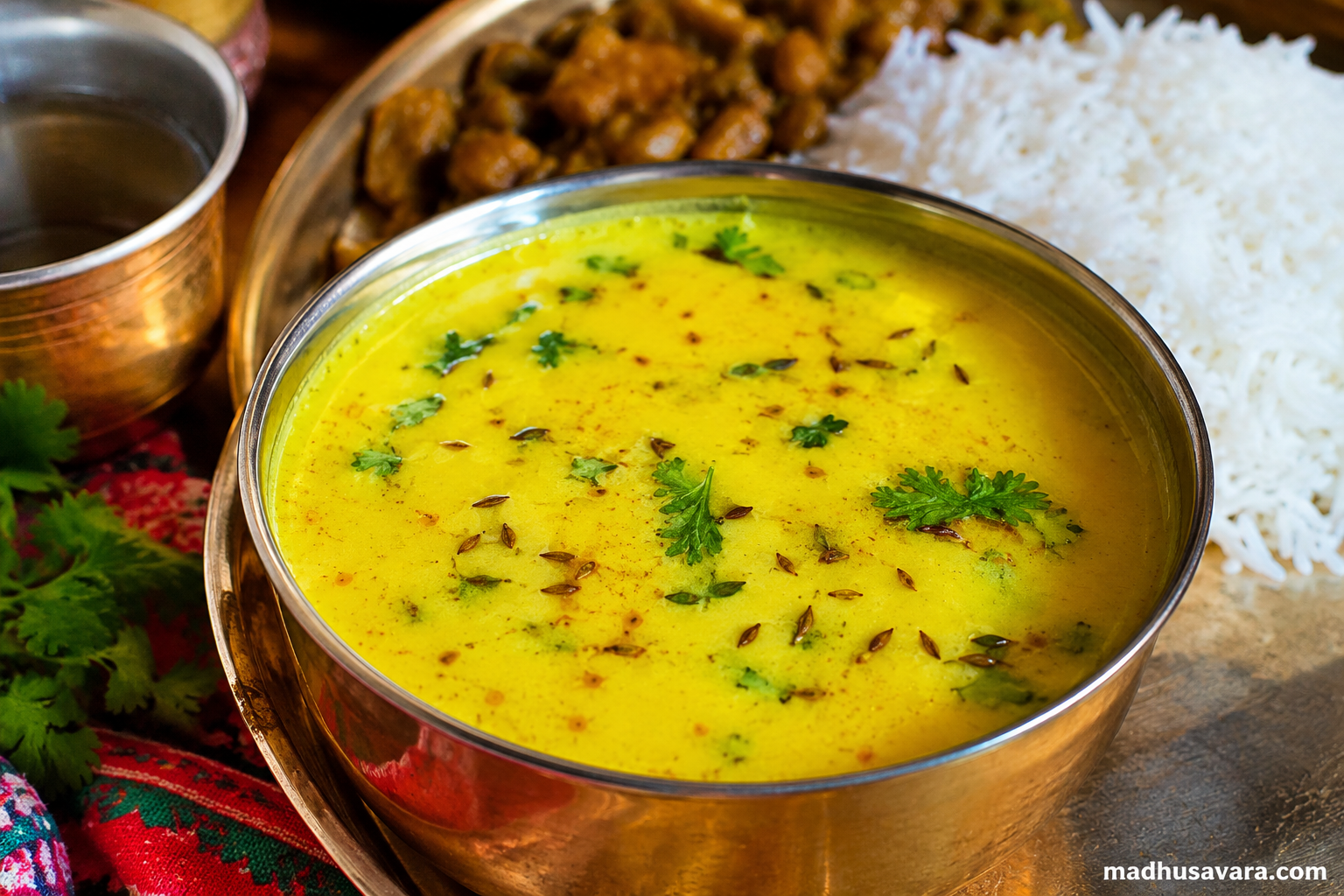
Authentic Mandyali Buttermilk Jhol served in a traditional brass bowl with steamed rice, the refreshing final course of a traditional Mandyali Dham from Himachal Pradesh.

Author’s Note
By Madhu Savara, author and owner of madhusavara.com

Namaste! Every traditional Mandyali Dham ends with a bowl of Buttermilk Jhol, a simple dish that leaves a lasting impression. While the feast is remembered for its rich curries and festive flavours, this light, tangy preparation quietly brings everything together. It has long been served as the final course, offering a refreshing finish to the meal.

I am delighted to share this authentic Mandyali Buttermilk Jhol recipe, as it is prepared in many homes across the Mandi region. I hope it brings a small part of Himachal’s warm hospitality and timeless food traditions to your kitchen.

Description of the Recipe

Mandyali Buttermilk Jhol is the traditional final course of a traditional Mandyali Dham, served to bring a rich festive meal to a gentle close. It is prepared with fresh buttermilk, a small amount of gram flour, and a simple tempering of everyday spices. Unlike thicker buttermilk curries, Buttermilk Jhol has a light, flowing consistency and is traditionally served over hot steamed rice, offering a refreshing finish to the feast.

Origin

Buttermilk Jhol is an integral part of the culinary heritage of Himachal Pradesh’s Mandi district. It has been prepared for generations in homes and during community feasts, where it holds an established place in the traditional Mandyali Dham. While each family may have its own way of seasoning it, the recipe has remained true to its simple character and enduring tradition.

Significance

Every dish in a traditional Mandyali Dham is served in a particular sequence, and Mandyali Buttermilk Jhol is reserved for the final course. After the rich lentils, curries, and rice served during the feast, its light, mildly tangy flavour provides a refreshing finish. More than just the last dish on the menu, Buttermilk Jhol reflects the thoughtful balance and enduring traditions that define a Mandyali Dham.

Why People Love It

The beauty of Buttermilk Jhol lies in its simplicity. Its light, soupy texture, gentle tang, and delicate seasoning make it a comforting companion to steamed rice without feeling heavy. Whether served as part of a traditional Mandyali Dham or prepared as a simple family meal, Mandyali Buttermilk Jhol continues to be appreciated for its honest flavours and timeless appeal.

Table of Contents

  • Author’s Note
  • Description of the Recipe
  • Origin
  • Significance
  • Why People Love It
  • Recipe Card
  • Nutritional Value Chart
  • Ingredients
  • Equipment Needed
  • How to Make Mandyali Buttermilk Jhol (Step-by-Step)
  • Madhu Savara’s Tips
  • Serving Suggestions
  • Storage & Reheating
  • Variations
  • Allergen Information
  • Frequently Asked Questions
  • Call to Action
  • Final Thoughts
  • About the Author

Servings

6 people

Preparation Time:

15 minutes

Cooking Time:

25 mins

Calories

120

Ingredients

  • 3–4 cups slightly sour homemade buttermilk (If homemade buttermilk is unavailable, whisk plain curd with water until smooth and pourable.)
  • ½ cup besan (gram flour)
  • ½–1 tsp cumin seeds (jeera)
  • ¼ tsp turmeric powder
  • 1–2 green chillies, finely chopped (or a pinch of red chilli powder, adjusted to taste)
  • Salt, to taste
  • Fresh coriander leaves, chopped, for garnish

Optional Tempering

  • 1–2 tsp ghee or mustard oil
  • A pinch of asafoetida (hing)
  • ½ tsp cumin seeds or ajwain (carom seeds)

Equipment Needed

  • Mixing bowl
  • Balloon whisk or traditional wooden churner (mathani)
  • Heavy-bottomed saucepan or kadai
  • Small tempering pan (optional)
  • Wooden spatula or ladle
  • Measuring cups and spoons
  • Serving bowl

Nutrition Information

Nutritional Value (Per Serving)

Nutrient Approximate Amount
Calories 118 kcal
Carbohydrates 12.8 g
Protein 5.6 g
Total Fat 4.6 g
Saturated Fat 2.1 g
Cholesterol 10 mg
Dietary Fibre 2.0 g
Total Sugars 5.8 g
Sodium* 285 mg
Potassium 235 mg
Calcium 165 mg
Iron 1.1 mg
Magnesium 28 mg
Phosphorus 135 mg
Vitamin A 95 IU
Vitamin C 3 mg

Step by Step Instructions

  1. Prepare the buttermilk: Whisk the buttermilk until smooth. If using curd, whisk it with water until it reaches a thin, pourable consistency.
  2. Make the jhol mixture: In a small bowl, combine the besan, turmeric powder, salt, chopped green chillies, and cumin seeds. Gradually whisk this mixture into the buttermilk until smooth and free of lumps.
  3. Cook the jhol: Pour the mixture into a heavy-bottomed steel or copper pan and place it over medium heat. Stir continuously to prevent the besan from settling at the bottom. As the mixture heats, it will become smooth, develop a gentle yellow colour, and thicken slightly while retaining its light, soupy consistency. Once it reaches a gentle boil, continue cooking for another 3–5 minutes. Avoid a vigorous boil, as it may cause the buttermilk to split.
  4. Prepare the tempering (optional): Heat the ghee or mustard oil in a small tempering pan. Add the cumin seeds and asafoetida, if using. When the seeds begin to crackle, pour the tempering over the hot jhol and stir gently. Garnish with freshly chopped coriander leaves.
  5. Serve: Serve Mandyali Buttermilk Jhol hot over steamed rice. In a traditional Mandyali Dham, it is served as the final course, bringing the meal to a simple and refreshing close.

Tips and Variations

Madhu Savara’s Tips

  • Use slightly sour homemade buttermilk for the most authentic flavour. Fresh buttermilk works too, but a gentle tang gives the jhol its traditional taste.
  • Whisk the buttermilk and besan thoroughly before cooking to ensure a smooth, lump-free jhol.
  • Cook over medium heat, stirring continuously until the mixture comes to a gentle boil. This helps prevent the buttermilk from splitting.
  • Keep the jhol light and soupy. It should coat the spoon lightly rather than become thick like a curry.
  • Add the tempering just before serving to bring out the aroma of the spices.
  • Serve hot with freshly steamed rice for the best flavour and texture.

Variations

  • Traditional Tempering: Prepare the jhol with a simple tempering of ghee, cumin seeds, and a pinch of asafoetida for a classic Mandyali flavour.
  • Mustard Oil Version: Replace ghee with mustard oil for a slightly more robust taste, as preferred in some households.
  • Mild Version: Reduce or omit the green chillies for a gentler flavour without changing the character of the dish.
  • Red Chilli Variation: Use a pinch of red chilli powder instead of green chillies for a different style of heat.
  • Everyday Family Version: Enjoy Buttermilk Jhol with steamed rice as a light home-cooked meal, even when you’re not preparing a traditional Mandyali Dham.

Allergen Information

Contains

  • Milk (Dairy): This recipe contains buttermilk, which is made from milk and is not suitable for people with a milk allergy.
  • Gram Flour (Besan): Made from chickpeas. Although chickpea allergy is uncommon, it may affect individuals with legume allergies.

Naturally Free From

When prepared as written, Mandyali Buttermilk Jhol is naturally free from:

  • Gluten
  • Eggs
  • Peanuts
  • Tree nuts
  • Soy
  • Sesame
  • Shellfish

Cross-Contact

If preparing this recipe for someone with food allergies, use clean utensils and cookware to help prevent cross-contact with allergens from other foods prepared in the kitchen.

Important

If you have a milk allergy, this recipe should be avoided. If you are lactose intolerant, your tolerance may vary depending on the type of buttermilk used and your individual sensitivity.

Other Essentials

Things to Avoid

Even though Mandyali Buttermilk Jhol is a simple recipe, a few small mistakes can affect its taste and texture.

  • Do not use very fresh buttermilk. Slightly sour buttermilk gives the jhol its characteristic flavour.
  • Do not skip whisking the besan. Any lumps left at this stage will remain in the cooked jhol.
  • Avoid cooking over high heat. Gentle, steady heat helps the buttermilk cook evenly without splitting.
  • Do not stop stirring while the jhol is heating. This prevents the besan from settling at the bottom of the pan.
  • Do not make it too thick. Authentic Buttermilk Jhol should have a light, flowing consistency that pairs beautifully with steamed rice.
  • Do not overuse spices. The delicate flavour of the buttermilk should remain the highlight of the dish.

Storage

  • Allow the jhol to cool completely before storing.
  • Transfer it to a clean, airtight container and refrigerate for up to 2 days.
  • Reheat gently over low heat, stirring continuously. If it has thickened slightly, add a splash of water or buttermilk to restore its original consistency.
  • This recipe is not suitable for freezing, as dairy-based dishes may separate after thawing.

Frequently Asked Questions

What is Mandyali Buttermilk Jhol?

Mandyali Buttermilk Jhol is a traditional Himachali dish prepared with buttermilk, besan, and simple spices. It is served as the final course of a traditional Mandyali Dham, usually with steamed rice.

Is Buttermilk Jhol the same as Kadhi?

No. Although both recipes use buttermilk and besan, Buttermilk Jhol is much lighter and has a thin, soupy consistency. It is prepared and served differently from the thicker kadhi enjoyed in many parts of India.

Can I use curd instead of buttermilk?

Yes. Whisk plain curd with water until it becomes smooth and thin before preparing the recipe.

Why did my jhol split while cooking?

This usually happens when the heat is too high, or the mixture is not stirred regularly while cooking. Cook over medium heat and stir continuously until it reaches a gentle boil.

Can I prepare Buttermilk Jhol in advance?

Yes. You can prepare it a few hours before serving and reheat it gently over low heat. Stir well before serving.

Which rice is traditionally served with Buttermilk Jhol?

Freshly steamed rice is the traditional accompaniment. In a Mandyali Dham, the jhol is poured over rice and served as the final course of the meal.

Can I make this recipe without the tempering?

Yes. The jhol can be served without tempering, but a simple tempering of ghee, cumin seeds, and asafoetida adds extra aroma and flavour.

Is Mandyali Buttermilk Jhol spicy?

No. It has a mild flavour with only a gentle warmth from green chillies or a small amount of red chilli powder.

Call to Action

Have you prepared this Mandyali Buttermilk Jhol at home? I would love to hear how it turned out for you. If your family has its own traditional way of making this recipe, do share it in the comments below. Your suggestions and memories help preserve the rich food heritage of Himachal Pradesh for future generations.

If you enjoyed this recipe, please share it with your family and friends, and don’t forget to explore more authentic Mandyali Dham recipes on madhusavara.com.

Final Thoughts

Some recipes are remembered for their richness, while others leave a lasting impression through their simplicity. Mandyali Buttermilk Jhol belongs to the second kind. Served at the end of a traditional Mandyali Dham, it reflects the thoughtful balance that makes this celebrated feast so special.

Whether you are preparing a complete Dham or simply looking for a light and comforting dish to enjoy with steamed rice, I hope this traditional recipe brings the authentic flavours of Himachal Pradesh to your table.

I hope this traditional recipe brings the authentic flavours of Himachal Pradesh to your table.

About the Author

Madhu Savara is the founder of madhusavara.com, where she shares authentic recipes from Himachal Pradesh and other regional Indian cuisines. Her passion is preserving traditional recipes, local food heritage, and time-honoured cooking methods so that they can be enjoyed by home cooks around the world. Every recipe published on the website is carefully presented with a focus on authenticity, simplicity, and regional flavour.

Disclaimer

Important Notice: Read Before Proceeding

The recipes, preparation methods, nutritional details, and related content published on Madhu Savara’s website, social media, and associated platforms are intended solely for general informational and educational purposes. While every effort has been made to ensure accuracy and reliability, we make no guarantees regarding the results, safety, or accuracy of any recipe presented here.

We are not licensed nutritionists, dieticians, or medical professionals. The nutritional values provided are estimates only, calculated using third-party tools, and should not be used for medical diagnosis, dietary treatment, or allergy management. If you have any medical conditions, dietary restrictions, or food allergies, please consult your doctor or certified dietitian before attempting any recipe.

Cooking inherently involves sharp tools, high heat, and the risk of injury or fire. You assume full responsibility for your kitchen practices. Madhu Savara, the website, and all contributors shall not be held liable for any damage, injury, loss, or adverse outcome resulting directly or indirectly from the preparation, consumption, or interpretation of any content herein.

By using this website and attempting any recipe, you agree to hold harmless and indemnify Madhu Savara and her team from any liability, legal claim, or damages arising from the use of this content. You are encouraged to exercise independent judgment and take full responsibility for your health, kitchen safety, and actions.


Authentic Mandyali Buttermilk Jhol served in a traditional brass bowl with steamed rice, the refreshing final course of a traditional Mandyali Dham from Himachal Pradesh.
Print

Authentic Mandyali Buttermilk Jhol – The Soulful Finale of a Traditional Mandyali Dham

Mandyali Buttermilk Jhol is the traditional final course of a traditional Mandyali Dham, served to bring a rich festive meal to a gentle close. It is prepared with fresh buttermilk, a small amount of gram flour, and a simple tempering of everyday spices. Unlike thicker buttermilk curries, Buttermilk Jhol has a light, flowing consistency and is traditionally served over hot steamed rice, offering a refreshing finish to the feast.
Course Main Course
Cuisine Himachali Cuisine, Mandyali Cuisine
Keyword buttermilk jhol, Himachali Buttermilk Jhol, Mandyali Buttermilk Jhol, Mandyali Dham, traditional Mandyali Dham
Prep Time 15 minutes
Cook Time 25 minutes
Total Time 40 minutes
Servings 6 people
Calories 120kcal
Author Madhu Savara

Equipment

  • Mixing bowlBalloon whisk or traditional wooden churner (mathani)Heavy-bottomed saucepan or kadaiSmall tempering pan (optional)Wooden spatula or ladleMeasuring cups and spoonsServing bowl

Ingredients

  • 3 –4 cups slightly sour homemade buttermilk If homemade buttermilk is unavailable, whisk plain curd with water until smooth and pourable.
  • ½ cup besan gram flour
  • ½ –1 tsp cumin seeds jeera
  • ¼ tsp turmeric powder
  • 1 –2 green chillies finely chopped (or a pinch of red chilli powder, adjusted to taste)
  • Salt to taste
  • Fresh coriander leaves chopped, for garnish
  • Optional Tempering
  • 1 –2 tsp ghee or mustard oil
  • A pinch of asafoetida hing
  • ½ tsp cumin seeds or ajwain carom seeds

Instructions

  • Prepare the buttermilk: Whisk the buttermilk until smooth. If using curd, whisk it with water until it reaches a thin, pourable consistency.
  • Make the jhol mixture: In a small bowl, combine the besan, turmeric powder, salt, chopped green chillies, and cumin seeds. Gradually whisk this mixture into the buttermilk until smooth and free of lumps.
  • Cook the jhol: Pour the mixture into a heavy-bottomed steel or copper pan and place it over medium heat. Stir continuously to prevent the besan from settling at the bottom. As the mixture heats, it will become smooth, develop a gentle yellow colour, and thicken slightly while retaining its light, soupy consistency. Once it reaches a gentle boil, continue cooking for another 3–5 minutes. Avoid a vigorous boil, as it may cause the buttermilk to split.
  • Prepare the tempering (optional): Heat the ghee or mustard oil in a small tempering pan. Add the cumin seeds and asafoetida, if using. When the seeds begin to crackle, pour the tempering over the hot jhol and stir gently. Garnish with freshly chopped coriander leaves.
  • Serve: Serve Mandyali Buttermilk Jhol hot over steamed rice. In a traditional Mandyali Dham, it is served as the final course, bringing the meal to a simple and refreshing close.

Notes

Madhu Savara’s Tips

  • Use slightly sour homemade buttermilk for the most authentic flavour. Fresh buttermilk works too, but a gentle tang gives the jhol its traditional taste.
  • Whisk the buttermilk and besan thoroughly before cooking to ensure a smooth, lump-free jhol.
  • Cook over medium heat, stirring continuously until the mixture comes to a gentle boil. This helps prevent the buttermilk from splitting.
  • Keep the jhol light and soupy. It should coat the spoon lightly rather than become thick like a curry.
  • Add the tempering just before serving to bring out the aroma of the spices.
  • Serve hot with freshly steamed rice for the best flavour and texture.

Variations

  • Traditional Tempering: Prepare the jhol with a simple tempering of ghee, cumin seeds, and a pinch of asafoetida for a classic Mandyali flavour.
  • Mustard Oil Version: Replace ghee with mustard oil for a slightly more robust taste, as preferred in some households.
  • Mild Version: Reduce or omit the green chillies for a gentler flavour without changing the character of the dish.
  • Red Chilli Variation: Use a pinch of red chilli powder instead of green chillies for a different style of heat.
  • Everyday Family Version: Enjoy Buttermilk Jhol with steamed rice as a light home-cooked meal, even when you’re not preparing a traditional Mandyali Dham.