
Kashmiri Rajma Chawal Recipe | Authentic North Indian Comfort Food with Traditional Kashmiri Flavours
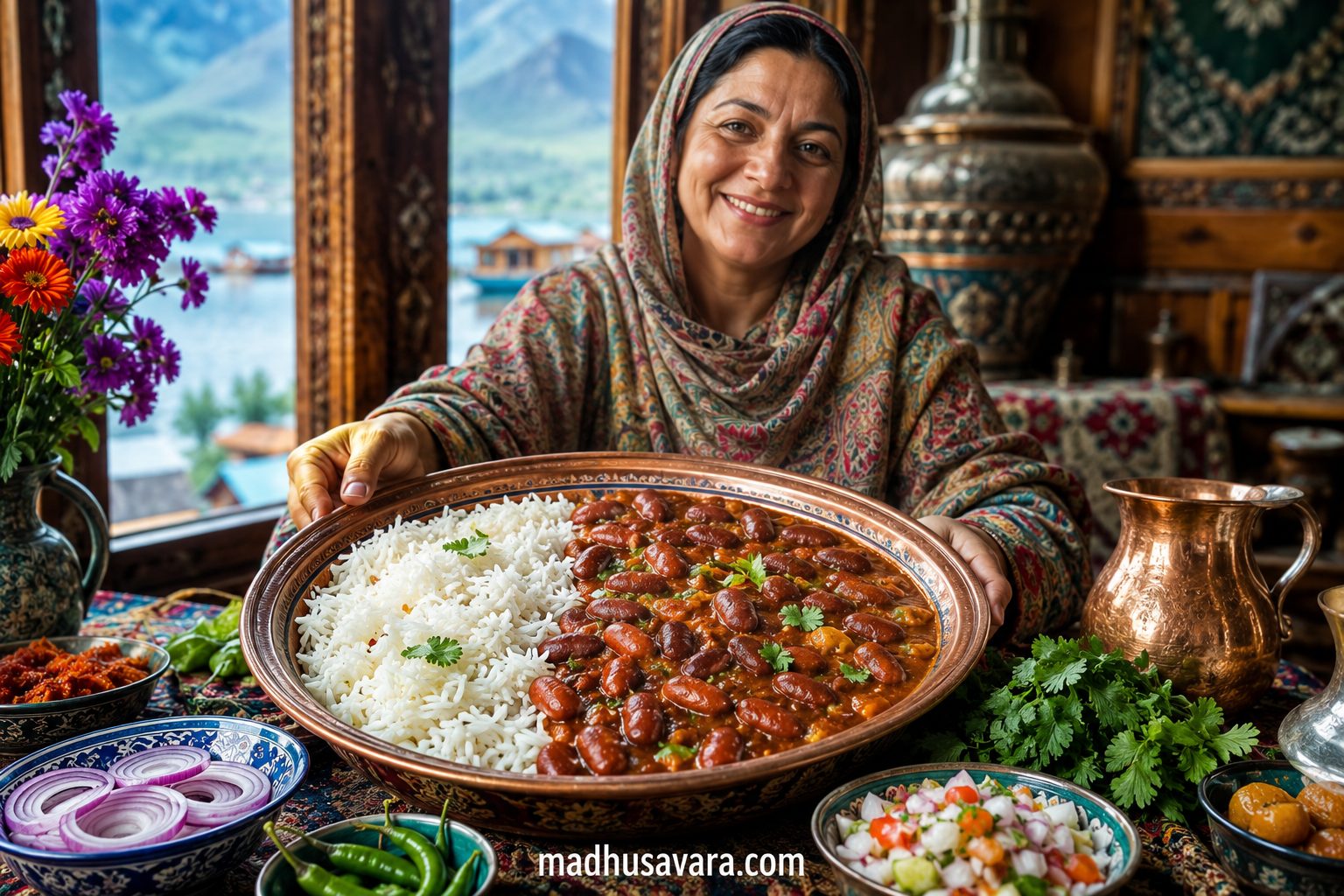
Joyful Kashmiri woman serving authentic Kashmiri Rajma Chawal in a traditional copper platter with steamed basmati rice, onion salad, green chillies, Kashmiri pickle, and fresh coriander in a beautifully decorated Kashmiri dining setting.

Author’s Note

This Kashmiri Rajma Chawal Recipe is prepared with authentic Kashmiri Rajma, renowned for its small size, creamy texture, and rich flavour. Slow-cooked into a fragrant Kashmir-style Rajma Masala, it delivers the authentic taste of a traditional North Indian Rajma Chawal Recipe. Serve it with steamed basmati rice for a wholesome, comforting meal that’s perfect for everyday lunches or family dinners.

If you cannot find Kashmiri Rajma, you can substitute it with Jammu Rajma or good-quality red kidney beans. However, authentic Kashmiri Rajma gives this Rajma Chawal Recipe its signature creamy texture, rich flavour, and traditional Kashmiri character.

— Madhu Savara

Kashmiri Rajma Chawal is a treasured variation of India’s beloved Rajma Chawal Recipe, deeply rooted in the culinary traditions of the Kashmir Valley. Although kidney beans (rajma) originated in Central and South America and were introduced to India centuries ago, Kashmiri Rajma evolved into one of India’s finest regional varieties, renowned for its small size, thin skin, creamy texture, and exceptional flavour. It is the preferred choice for preparing an authentic Kashmiri Rajma Chawal Recipe.

India is home to several varieties of rajma, including Kashmiri Rajma, Jammu Rajma, Chitra Rajma, and large red kidney beans, each with its own unique texture and taste. More than just a North Indian comfort food, Kashmiri Rajma Chawal reflects the warmth of family meals, wholesome home cooking, and Kashmir’s rich culinary heritage. Slow-cooked with onions, tomatoes, ginger, garlic, and aromatic Indian spices, this Kashmir Style Rajma Masala develops a rich, creamy gravy that pairs beautifully with steamed basmati rice. Whether you’re searching for the Best Kashmiri Rajma Chawal Recipe or an Authentic Kashmiri Rajma Recipe, this traditional dish brings the true flavours of Kashmir to your table.

Quick Facts Details
Origin Kashmir Valley, India (Kashmiri variation of Rajma Chawal)
Significance A cherished North Indian comfort food representing wholesome home cooking, family togetherness, and Kashmir’s culinary heritage.
Main Ingredient Authentic Kashmiri Rajma (small, creamy kidney beans)
Popular Rajma Varieties Kashmiri Rajma, Jammu Rajma, Chitra Rajma, Large Red Kidney Beans
Flavour Profile Rich, mildly spiced, creamy, earthy, and aromatic
Best Served With Steamed basmati rice, onion salad, lemon wedges, papad, and cucumber raita

.

Table of Contents

  • Introduction to Rajma Chawal
  • Local Varieties of Rajma
  • Significance and Origin
  • Recipe Description
  • Serving Suggestions
  • Preparation and Cooking Time
  • Nutritional Information
  • Standard Ingredients (Punjabi Style)
  • Utensils Required
  • Step-by-Step Instructions (Punjabi Style)
  • Kashmiri-Inspired Variation
  • Tips and Variations
  • Allergen Information
  • Other Essentials
  • Things to Avoid
  • Storage Instructions
  • Conclusion

Servings

Serves 4. Garnish with fresh coriander, onion rings, lemon wedges. Accompany with raita, papad, or pickle.

Preparation Time:

45–60 minutes (including slow simmer)

Cooking Time:

15 minutes (plus 8-10 hours soaking)

Calories

450

Ingredients

Ingredients

For Kashmiri Rajma Masala

  • 200 g Kashmiri Rajma, soaked overnight (or 8–10 hours)
  • 2 medium onions, finely chopped
  • 2 medium tomatoes, pureed
  • 2 green chillies, slit
  • 1 tbsp ginger-garlic paste
  • 2 tbsp mustard oil or ghee
  • Salt, to taste

Whole Spices

  • 1 bay leaf
  • 1-inch cinnamon stick
  • 2 green cardamoms
  • 3 cloves
  • ½ tsp cumin seeds
  • A pinch of asafoetida (hing)

Ground Spices

  • 1 tsp Kashmiri red chilli powder
  • 1 tsp coriander powder
  • ½ tsp turmeric powder
  • ½ tsp fennel powder (saunf powder)
  • ½ tsp dry ginger powder (saunth)
  • ½ tsp garam masala

For Garnish

  • Fresh coriander leaves, finely chopped
  • 1 tsp ghee (optional, for finishing)

For Steamed Basmati Rice (Chawal)

  • 200 g aged basmati rice
  • 400 ml water
  • ½ tsp salt (optional)
  • 1 tsp ghee (optional)

Equipment Needed

  • Pressure cooker or heavy-bottomed pot (for cooking the Kashmiri rajma)
  • Heavy-bottomed kadai or sauté pan (for preparing the Kashmiri rajma masala)
  • Medium saucepan or rice cooker (for steaming basmati rice)
  • Blender or mixer grinder (optional, for pureeing tomatoes)
  • Wooden spoon or heat-resistant spatula
  • Fine-mesh strainer or colander (for rinsing and draining rajma and rice)
  • Measuring cups and measuring spoons
  • Sharp knife and chopping board
  • Serving bowl and rice serving spoon

Nutrition Information

Per Serving (1 cup Rajma + 1 cup Steamed Basmati Rice)
Calories ~450 kcal
Carbohydrates ~75 g
Protein ~18 g
Total Fat ~8 g
Dietary Fibre ~12 g
Iron ~4 mg
Folate (Vitamin B9) ~200 mcg
Potassium ~800 mg
Magnesium ~75–90 mg*
Vitamin C ~8–12 mg*

*Values are approximate and may vary depending on the variety of Kashmiri rajma, ingredients used, cooking method, and serving size.

Nutritional Highlights

  • High in plant-based protein to support muscle health.
  • Rich in dietary fibre for healthy digestion

Step by Step Instructions

How to Make Authentic Kashmiri Rajma Chawal (Step-by-Step)

Step 1: Soak the Kashmiri Rajma

Wash 200 g Kashmiri Rajma thoroughly under running water and soak it in plenty of fresh water for 8–10 hours or overnight. Drain and rinse before cooking. Soaking softens the beans, reduces cooking time, and helps them absorb the aromatic spices more effectively.

Step 2: Pressure Cook the Rajma

Transfer the soaked Kashmiri Rajma to a pressure cooker with 4 cups water, salt, 1 bay leaf, 2 green cardamoms, 1 black cardamom, 3 cloves, 1-inch cinnamon stick, and a pinch of asafoetida (hing). Pressure cook for 5–6 whistles, then simmer for 15–20 minutes until the beans are perfectly tender. Reserve the cooking liquid, as it forms the base of the rich Kashmir Style Rajma Masala.

Step 3: Prepare the Kashmiri Rajma Masala

Heat 2 tablespoons mustard oil or ghee in a heavy-bottomed kadai until the mustard oil reaches its smoking point, then cool slightly. Add ½ teaspoon cumin seeds and allow them to crackle. Stir in the chopped onions and sauté until lightly golden. Add the ginger-garlic paste and slit green chillies, cooking for 2 minutes until fragrant.

Step 4: Add the Traditional Kashmiri Spices

Mix in Kashmiri red chilli powder, coriander powder, fennel powder (saunf), dry ginger powder (saunth), and turmeric. Stir for a few seconds, then add the tomato purée. Cook over medium heat for 8–10 minutes, stirring occasionally, until the masala thickens and the oil begins to separate.

Step 5: Simmer the Rajma

Add the cooked Kashmiri Rajma along with its reserved cooking liquid to the masala. Mix well and bring to a gentle boil. Lightly mash a few beans with the back of a spoon to naturally thicken the gravy without adding cream or flour.

Step 6: Slow Cook for Authentic Flavour

Reduce the heat to low and simmer the Kashmiri Rajma Masala for 25–30 minutes, stirring occasionally. This slow cooking allows the spices to penetrate the beans, creating the signature creamy texture and deep, comforting flavour of an authentic Kashmiri Rajma Chawal Recipe.

Step 7: Finish the Rajma

Sprinkle in garam masala and adjust the seasoning if required. Finish with a teaspoon of ghee and garnish with freshly chopped coriander leaves for added aroma and richness.

Step 8: Cook the Basmati Rice

While the rajma simmers, rinse the aged basmati rice until the water runs clear. Cook it with water until the grains are fluffy, separate, and perfectly tender. Allow the rice to rest for 5 minutes before fluffing gently with a fork.

Step 9: Serve and Enjoy

Serve the hot Kashmiri Rajma Chawal with steamed basmati rice, onion salad, lemon wedges, cucumber raita, roasted papad, and green chillies. This wholesome North Indian comfort food is perfect for everyday family meals and special occasions alike.

Madhu Savara’s Tips

  • Always use authentic Kashmiri Rajma for the creamiest texture and richest flavour.
  • Slow simmering for at least 25 minutes is the secret to a naturally thick, velvety gravy.
  • Mustard oil, fennel powder (saunf), dry ginger powder (saunth), and Kashmiri red chilli powder are the key ingredients that distinguish Kashmir Style Rajma Masala from the Punjabi version.
  • The rajma tastes even better the next day, as the flavours deepen overnight.

Tips and Variations

  • Expert Tips

    • Use authentic Kashmiri Rajma for the creamiest texture, thin skin, and rich, earthy flavour.
    • Soak the rajma overnight (8–10 hours) to ensure even cooking and better digestibility.
    • Slow-simmer the rajma for 25–30 minutes after pressure cooking to develop a naturally thick, creamy gravy without using cream.
    • Cook in mustard oil or ghee for an authentic Kashmiri flavour.
    • Use freshly ground spices whenever possible. Lightly roasting whole spices before grinding enhances their aroma and depth.
    • Add a pinch of asafoetida (hing) while tempering to improve flavour and aid digestion.
    • Allow the Kashmiri Rajma Masala to rest for 10–15 minutes before serving, as the flavours continue to develop.

    Delicious Variations

    • Traditional Kashmiri Version: Enhance the authentic flavour with a little extra fennel powder (saunf) and dry ginger powder (saunth).
    • Rajma Aloo: Add diced boiled potatoes during the final 10 minutes of simmering for a heartier family meal.
    • Extra Spicy Version: Increase the Kashmiri red chilli powder or add a finely chopped green chilli for extra heat.
    • Vegan Variation: Replace ghee with mustard oil or any neutral vegetable oil for a completely vegan meal.
    • One-Pot Meal: Cook the rajma a day ahead and serve it fresh with steamed basmati rice for even richer flavour the next day.

Allergen Information

Allergen Information

  • Naturally Gluten-Free: This Kashmiri Rajma Chawal Recipe is naturally gluten-free when prepared with pure spices and ingredients that are free from cross-contamination.
  • Vegan-Friendly: Prepare the recipe with mustard oil or vegetable oil instead of ghee to make it completely vegan.
  • Dairy: The recipe contains no dairy unless ghee is used for cooking or as a finishing drizzle.
  • Legumes: Contains kidney beans (rajma), which are legumes. Individuals with legume allergies should avoid this dish.
  • Digestive Note: Rajma is rich in fibre and plant protein. Some people may experience bloating or gas. Soaking the beans overnight, discarding the soaking water, and cooking them thoroughly can help improve digestibility.
  • Spice Sensitivity: The recipe contains whole and ground spices that may not be suitable for individuals with spice sensitivities. Adjust the chilli level to taste.

.

Other Essentials

Things to Avoid

  • Don’t skip soaking the Kashmiri Rajma. Soaking for 8–10 hours ensures even cooking, improves digestibility, and helps the beans develop a creamy texture.
  • Don’t add acidic ingredients too early. Tomatoes should be added only after the onions and spices are cooked.

Frequently Asked Questions

1. What makes Kashmiri Rajma different from regular kidney beans?

Kashmiri Rajma is smaller, darker in colour, has a thinner skin, and cooks to a naturally creamy texture. It absorbs spices exceptionally well, making it the preferred choice for an authentic Kashmiri Rajma Chawal Recipe.

2. Can I use regular red kidney beans instead of Kashmiri Rajma?

Yes. If authentic Kashmiri Rajma is unavailable, you can substitute Jammu Rajma, Chitra Rajma, or large red kidney beans. However, the texture and flavour will differ slightly, and Kashmiri Rajma remains the best choice for this traditional recipe.

3. Why should rajma be soaked overnight?

Soaking rajma for 8–10 hours reduces cooking time, promotes even cooking, improves digestibility, and helps the beans become soft and creamy.

4. Why is my rajma still hard after pressure cooking?

Hard rajma is usually caused by old beans, insufficient soaking, or adding tomatoes or other acidic ingredients before the beans are fully cooked. Always cook the rajma until tender before combining it with the masala.

5. What is the secret to a creamy Kashmiri Rajma Masala?

The secret lies in using Kashmiri Rajma, slow simmering for at least 25–30 minutes, lightly mashing a few cooked beans, and allowing the gravy to thicken naturally without adding cream.

6. Can I make this recipe in an Instant Pot?

Yes. Pressure-cook the soaked rajma at High Pressure for 30–35 minutes, then allow a natural pressure release. Prepare the masala separately or use the sauté function before pressure cooking.

7. Is Kashmiri Rajma Chawal healthy?

Yes. This dish is rich in plant-based protein, dietary fibre, iron, folate, potassium, and magnesium. When served with steamed basmati rice, it becomes a wholesome and balanced meal.

8. Can I prepare Kashmiri Rajma in advance?

Absolutely. In fact, the flavour deepens after resting overnight. Refrigerate it for up to 3 days or freeze it for up to 1 month in an airtight container.

9. Which rice pairs best with Kashmiri Rajma?

Aged basmati rice is traditionally served with Kashmiri Rajma because its long, fluffy grains complement the rich, creamy gravy without becoming sticky.

10. What can I serve with Kashmiri Rajma Chawal?

Serve it with steamed basmati rice, onion salad, lemon wedges, cucumber raita, roasted papad, green chillies, or traditional Kashmiri pickles for a complete meal.

11. Is this recipe vegan and gluten-free?

Yes. The recipe is naturally gluten-free. To make it vegan, cook it with mustard oil or any neutral vegetable oil instead of ghee.

12. Why does Kashmiri Rajma taste better the next day?

As the curry rests, the spices continue to infuse into the beans, producing a deeper, richer flavour and an even creamier texture, making leftovers especially delicious.

Author’s Bio:

Madhu Savara is the founder, writer, and passionate curator behind Madhusavara.com. With a deep love for food heritage, traditional recipes, and sustainable living, she weaves together stories of regional Indian cuisines, forgotten ingredients, and time-honoured culinary traditions.

Her work celebrates the rich connection between food, farming, culture, and history — bringing https://www.madhusavara.com/kitchen-blog/7-day-red-and-black-rice-glow-swap-challenge/authentic, soulful recipes from Sindhi, Punjabi, Rajasthani, and other regional kitchens to home cooks worldwide.

Through Madhusavara.com, Madhu inspires readers to preserve culinary legacies while embracing mindful and sustainable practices in the kitchen.

Did You Try This Authentic Kashmiri Rajma Chawal Recipe?

I hope this Kashmiri Rajma Chawal Recipe brings the comforting flavours of the Kashmir Valley to your kitchen. If you tried this recipe, I’d love to hear about your experience! Please leave a star rating, share your feedback in the comments, and tell me which variety of rajma you used—Kashmiri Rajma, Jammu Rajma, or another favourite.

Your reviews, cooking tips, and family traditions help preserve India’s rich culinary heritage and inspire fellow home cooks. If you enjoyed this recipe, don’t forget to share it with your friends and family, and explore more authentic Kashmiri recipes, North Indian comfort food, and traditional regional dishes on MadhuSavara.com.

References:-

  • Achaya, K. T. Indian Food: A Historical Companion. Oxford University Press, 1994.
  • Dar, Krishna Prasad. Kashmiri Cooking. Penguin Books India, 2000.
  • Razdan, Sarla. Kashmiri Cuisine: Through the Ages. Roli Books, 2020.
  • National Council for Hotel Management & Catering Technology (NCHMCT). Indian Food Heritage: History, Evolution, Influences and Modern Trends. Government of India.

Note: This recipe has been carefully developed by combining traditional home cooking, repeated kitchen trials, and insights from respected food historians and authentic Kashmiri culinary references.

Disclaimer

Important Notice: Read Before Proceeding

The recipes, preparation methods, nutritional details, and related content published on Madhu Savara’s website, social media, and associated platforms are intended solely for general informational and educational purposes. While every effort has been made to ensure accuracy and reliability, we make no guarantees regarding the results, safety, or accuracy of any recipe presented here.

We are not licensed nutritionists, dieticians, or medical professionals. The nutritional values provided are estimates only, calculated using third-party tools, and should not be used for medical diagnosis, dietary treatment, or allergy management. If you have any medical conditions, dietary restrictions, or food allergies, please consult your doctor or certified dietitian before attempting any recipe.

Cooking inherently involves sharp tools, high heat, and the risk of injury or fire. You assume full responsibility for your kitchen practices. Madhu Savara, the website, and all contributors shall not be held liable for any damage, injury, loss, or adverse outcome resulting directly or indirectly from the preparation, consumption, or interpretation of any content herein.

By using this website and attempting any recipe, you agree to hold harmless and indemnify Madhu Savara and her team from any liability, legal claim, or damages arising from the use of this content. You are encouraged to exercise independent judgment and take full responsibility for your health, kitchen safety, and actions.


Joyful Kashmiri woman serving authentic Kashmiri Rajma Chawal in a traditional copper platter with steamed basmati rice, onion salad, green chillies, Kashmiri pickle, and fresh coriander in a beautifully decorated Kashmiri dining setting.
Print

Kashmiri Rajma Chawal Recipe | Authentic North Indian Comfort Food with Traditional Kashmiri Flavours

Kashmiri Rajma Chawal is a treasured variation of India’s beloved Rajma Chawal Recipe, deeply rooted in the culinary traditions of the Kashmir Valley. Although kidney beans (rajma) originated in Central and South America and were introduced to India centuries ago, Kashmiri Rajma evolved into one of India’s finest regional varieties, renowned for its small size, thin skin, creamy texture, and exceptional flavour. It is the preferred choice for preparing an authentic Kashmiri Rajma Chawal Recipe.
Course Main Course, Diet: Vegetarian Dish
Cuisine Kashmiri, North Indian, Indian
Keyword Authentic Kashmir Cuisine, Authentic Kashmiri Rajma Recipe, Best Kashmiri Rajma Recipe, homemade rajma chawal, Indian Kidney Bean Curry, Kashmir Style Rajma, Kashmir Style Rajma Masala, Kashmiri Comfort Food, Kashmiri Kidney Bean Curry, Kashmiri Rajma Chawal, Kashmiri Rajma Chawal Recipe, Kashmiri Rajma Recipe, Kashmiri Rajmah Chawal, north indian rajma recipe, Rajma Chawal Indian Recipe, rajma chawal recipe, Rajma Curry with Rice, Rajma Masala Recipe, rajma rice recipe, Traditional Kashmiri Recipe
Prep Time 1 hour
Cook Time 15 minutes
Soaking Time 10 hours
Total Time 11 hours 15 minutes
Servings 4 People
Calories 450kcal
Author Madhu Savara

Equipment

  • Pressure cooker or heavy-bottomed pot (for cooking the Kashmiri rajma)Heavy-bottomed kadai or sauté pan (for preparing the Kashmiri rajma masala)Medium saucepan or rice cooker (for steaming basmati rice)Blender or mixer grinder (optional, for pureeing tomatoes)Wooden spoon or heat-resistant spatulaFine-mesh strainer or colander (for rinsing and draining rajma and rice)Measuring cups and measuring spoonsSharp knife and chopping boardServing bowl and rice serving spoon[adjustable][/adjustable]

Ingredients

  • 200 g Kashmiri Rajma soaked overnight (or 8–10 hours)
  • 2 medium onions finely chopped
  • 2 medium tomatoes pureed
  • 2 green chillies slit
  • 1 tbsp ginger-garlic paste
  • 2 tbsp mustard oil or ghee
  • Salt to taste
  • Whole Spices
  • 1 bay leaf
  • 1- inch cinnamon stick
  • 2 green cardamoms
  • 3 cloves
  • ½ tsp cumin seeds
  • A pinch of asafoetida hing
  • Ground Spices
  • 1 tsp Kashmiri red chilli powder
  • 1 tsp coriander powder
  • ½ tsp turmeric powder
  • ½ tsp fennel powder saunf powder
  • ½ tsp dry ginger powder saunth
  • ½ tsp garam masala
  • For Garnish
  • Fresh coriander leaves finely chopped
  • 1 tsp ghee optional, for finishing
  • For Steamed Basmati Rice Chawal
  • 200 g aged basmati rice
  • 400 ml water
  • ½ tsp salt optional
  • 1 tsp ghee optional

Instructions

  • Step 1: Soak the Kashmiri Rajma
  • Wash 200 g Kashmiri Rajma thoroughly under running water and soak it in plenty of fresh water for 8–10 hours or overnight. Drain and rinse before cooking. Soaking softens the beans, reduces cooking time, and helps them absorb the aromatic spices more effectively.
  • Step 2: Pressure Cook the Rajma
  • Transfer the soaked Kashmiri Rajma to a pressure cooker with 4 cups water, salt, 1 bay leaf, 2 green cardamoms, 1 black cardamom, 3 cloves, 1-inch cinnamon stick, and a pinch of asafoetida (hing). Pressure cook for 5–6 whistles, then simmer for 15–20 minutes until the beans are perfectly tender. Reserve the cooking liquid, as it forms the base of the rich Kashmir Style Rajma Masala.
  • Step 3: Prepare the Kashmiri Rajma Masala
  • Heat 2 tablespoons mustard oil or ghee in a heavy-bottomed kadai until the mustard oil reaches its smoking point, then cool slightly. Add ½ teaspoon cumin seeds and allow them to crackle. Stir in the chopped onions and sauté until lightly golden. Add the ginger-garlic paste and slit green chillies, cooking for 2 minutes until fragrant.
  • Step 4: Add the Traditional Kashmiri Spices
  • Mix in Kashmiri red chilli powder, coriander powder, fennel powder (saunf), dry ginger powder (saunth), and turmeric. Stir for a few seconds, then add the tomato purée. Cook over medium heat for 8–10 minutes, stirring occasionally, until the masala thickens and the oil begins to separate.
  • Step 5: Simmer the Rajma
  • Add the cooked Kashmiri Rajma along with its reserved cooking liquid to the masala. Mix well and bring to a gentle boil. Lightly mash a few beans with the back of a spoon to naturally thicken the gravy without adding cream or flour.
  • Step 6: Slow Cook for Authentic Flavour
  • Reduce the heat to low and simmer the Kashmiri Rajma Masala for 25–30 minutes, stirring occasionally. This slow cooking allows the spices to penetrate the beans, creating the signature creamy texture and deep, comforting flavour of an authentic Kashmiri Rajma Chawal Recipe.
  • Step 7: Finish the Rajma
  • Sprinkle in garam masala and adjust the seasoning if required. Finish with a teaspoon of ghee and garnish with freshly chopped coriander leaves for added aroma and richness.
  • Step 8: Cook the Basmati Rice
  • While the rajma simmers, rinse the aged basmati rice until the water runs clear. Cook it with water until the grains are fluffy, separate, and perfectly tender. Allow the rice to rest for 5 minutes before fluffing gently with a fork.
  • Step 9: Serve and Enjoy
  • Serve the hot Kashmiri Rajma Chawal with steamed basmati rice, onion salad, lemon wedges, cucumber raita, roasted papad, and green chillies. This wholesome North Indian comfort food is perfect for everyday family meals and special occasions alike.
  • Madhu Savara’s Tips
  • Always use authentic Kashmiri Rajma for the creamiest texture and richest flavour.
  • Slow simmering for at least 25 minutes is the secret to a naturally thick, velvety gravy.
  • Mustard oil, fennel powder (saunf), dry ginger powder (saunth), and Kashmiri red chilli powder are the key ingredients that distinguish Kashmir Style Rajma Masala from the Punjabi version.
  • The rajma tastes even better the next day, as the flavours deepen overnight.

Notes

  • Expert Tips

    • Use authentic Kashmiri Rajma for the creamiest texture, thin skin, and rich, earthy flavour.
    • Soak the rajma overnight (8–10 hours) to ensure even cooking and better digestibility.
    • Slow-simmer the rajma for 25–30 minutes after pressure cooking to develop a naturally thick, creamy gravy without using cream.
    • Cook in mustard oil or ghee for an authentic Kashmiri flavour.
    • Use freshly ground spices whenever possible. Lightly roasting whole spices before grinding enhances their aroma and depth.
    • Add a pinch of asafoetida (hing) while tempering to improve flavour and aid digestion.
    • Allow the Kashmiri Rajma Masala to rest for 10–15 minutes before serving, as the flavours continue to develop.

    Delicious Variations

    • Traditional Kashmiri Version: Enhance the authentic flavour with a little extra fennel powder (saunf) and dry ginger powder (saunth).
    • Rajma Aloo: Add diced boiled potatoes during the final 10 minutes of simmering for a heartier family meal.
    • Extra Spicy Version: Increase the Kashmiri red chilli powder or add a finely chopped green chilli for extra heat.
    • Vegan Variation: Replace ghee with mustard oil or any neutral vegetable oil for a completely vegan meal.
    • One-Pot Meal: Cook the rajma a day ahead and serve it fresh with steamed basmati rice for even richer flavour the next day.