
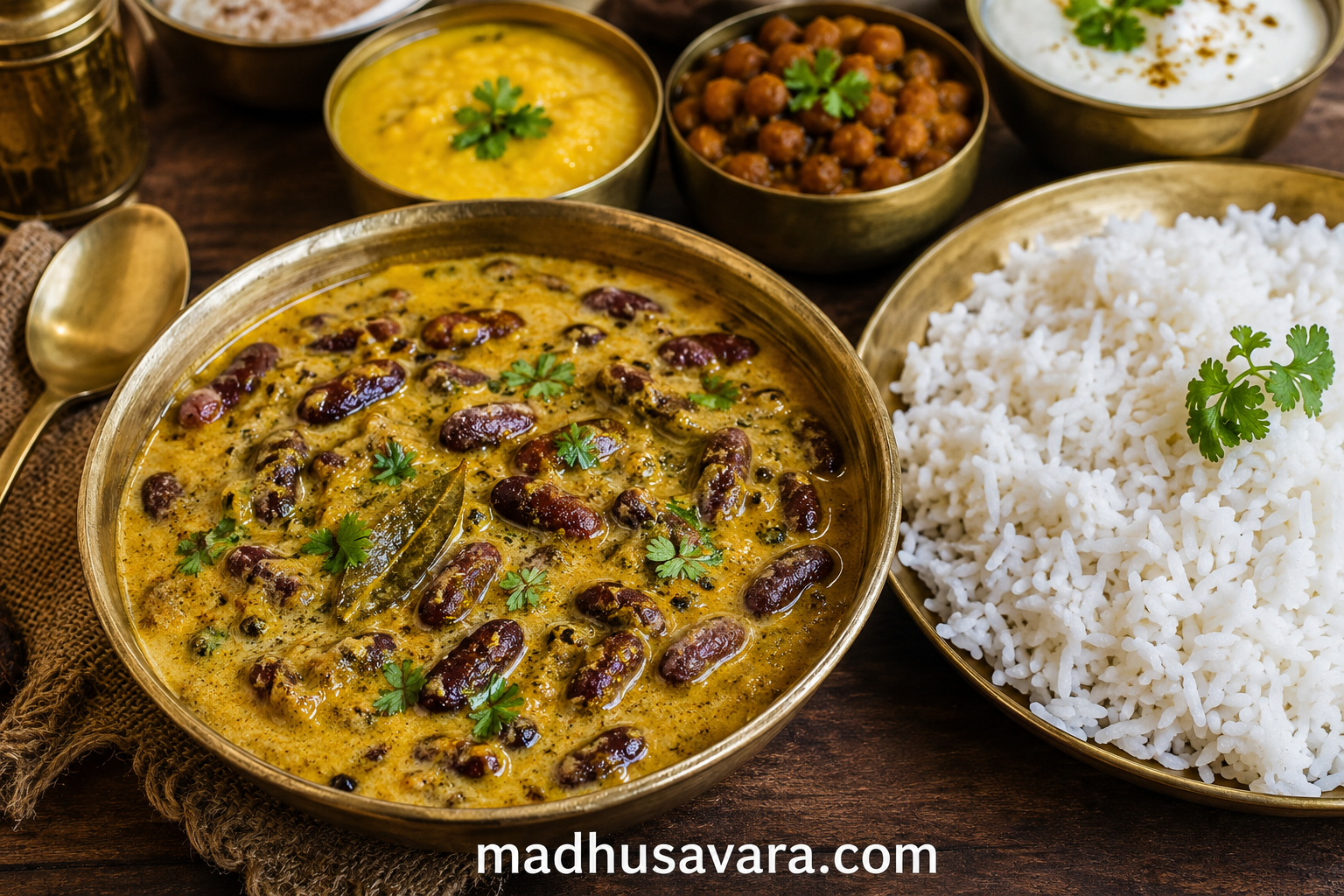
Rajmah Madra Recipe – Authentic Chambyalli Dham Rajmah Madra from Chamba, Himachal Pradesh
Rajmah Madra Recipe is a traditional Himachali delicacy prepared by gently simmering soaked kidney beans in a thick curd-based gravy flavoured with desi ghee and whole spices. Unlike the familiar Punjabi rajma, this recipe has a mild, creamy and aromatic taste that allows every ingredient to shine without overpowering the natural flavour of the rajmah.
Servings 6 People
Calories 285kcal
Equipment
- Pressure cookerHeavy-bottomed kadhai or panMixing bowlBalloon whiskWooden spatulaMeasuring cups and spoonsServing bowl
Ingredients
- For Cooking the Rajmah
- 1½ cups Chamba rajmah or red kidney beans
- Water for soaking and cooking
- 1 teaspoon salt
- For the Madra Gravy
- 2 cups fresh thick curd well whisked
- 4 tablespoons desi ghee
- 2 tablespoons gram flour besan
- 1 teaspoon turmeric powder
- 1 teaspoon coriander powder
- ½ teaspoon red chilli powder
- ½ teaspoon Kashmiri chilli powder
- ½ teaspoon fennel powder
- ¼ teaspoon asafoetida hing
- Salt to taste
- Whole Spices
- 1 black cardamom
- 2 green cardamoms
- 4 cloves
- 1- inch cinnamon stick
- 1 bay leaf
- 1 teaspoon cumin seeds
- 6 –8 black peppercorns
- For Garnishing
- Fresh coriander leaves finely chopped
- A teaspoon of desi ghee optional
Instructions
- Step 1: Soak the Rajmah
- Wash the rajmah thoroughly under running water. Soak it in plenty of fresh water for 8–10 hours or overnight. Proper soaking helps the beans cook evenly and gives the Rajmah Madra Recipe its soft, creamy texture.
- Step 2: Cook the Rajmah
- Drain the soaked rajmah and transfer it to a pressure cooker. Add fresh water to cover the beans by about 2 inches, along with 1 teaspoon salt.
- Pressure cook for 5–6 whistles over medium heat, then reduce the heat and cook for another 15–20 minutes, or until the rajmah is completely tender. The beans should mash easily when pressed between your fingers. Reserve about 1 cup of the cooking liquid and keep the cooked rajmah aside.
- Step 3: Prepare the Curd Mixture
- Whisk the curd until smooth and lump-free.
- Add gram flour, turmeric powder, coriander powder, fennel powder, red chilli powder and Kashmiri chilli powder. Mix well until the spices are completely blended with the curd.
- Step 4: Temper the Whole Spices
- Heat desi ghee in a heavy-bottomed kadhai over low heat.
- Add cumin seeds, bay leaf, black cardamom, green cardamoms, cloves, cinnamon and black peppercorns. Allow the spices to release their aroma without burning.
- Add asafoetida and stir for a few seconds.
- Step 5: Cook the Curd
- Reduce the flame to the lowest setting.
- Slowly pour the whisked curd mixture into the pan while stirring continuously. Keep stirring until the mixture comes to a gentle simmer. This prevents the curd from splitting and gives the gravy its smooth texture.
- Cook for 8–10 minutes, stirring regularly, until the ghee begins to separate around the edges.
- Step 6: Add the Rajmah
- Add the cooked rajmah along with about 1 cup of the reserved cooking liquid.
- Mix gently so the beans remain whole.
- Allow the Rajmah Madra to simmer over low heat for 15–20 minutes, stirring occasionally. The gravy should become rich, creamy and lightly coat the rajmah without becoming too thick.
- Taste and adjust the salt if required.
- Step 7: Rest Before Serving
- Switch off the heat and allow the Rajmah Madra Recipe to rest for 10 minutes before serving.
- This resting time allows the spices and curd gravy to blend beautifully, giving the dish the authentic flavour associated with Chambyalli Dham Rajmah Madra.
Notes
Tips and Variations
Madhu Savara’s Tips
- Always soak the rajmah overnight for even cooking and better texture.
- Use fresh, thick curd at room temperature to prevent curdling.
- Whisk the curd thoroughly before adding it to the pan.
- Keep the flame low while cooking the curd gravy and stir continuously.
- Do not overcook the rajmah after adding it to the gravy, as the beans may break.
- Fresh desi ghee gives Traditional Rajmah Madra its distinctive aroma and authentic taste.
- Allow the dish to rest for a few minutes before serving for the best flavour.
