Authentic Rongi Madra Recipe | Traditional Kullu Dham Himachali Lobia Madra
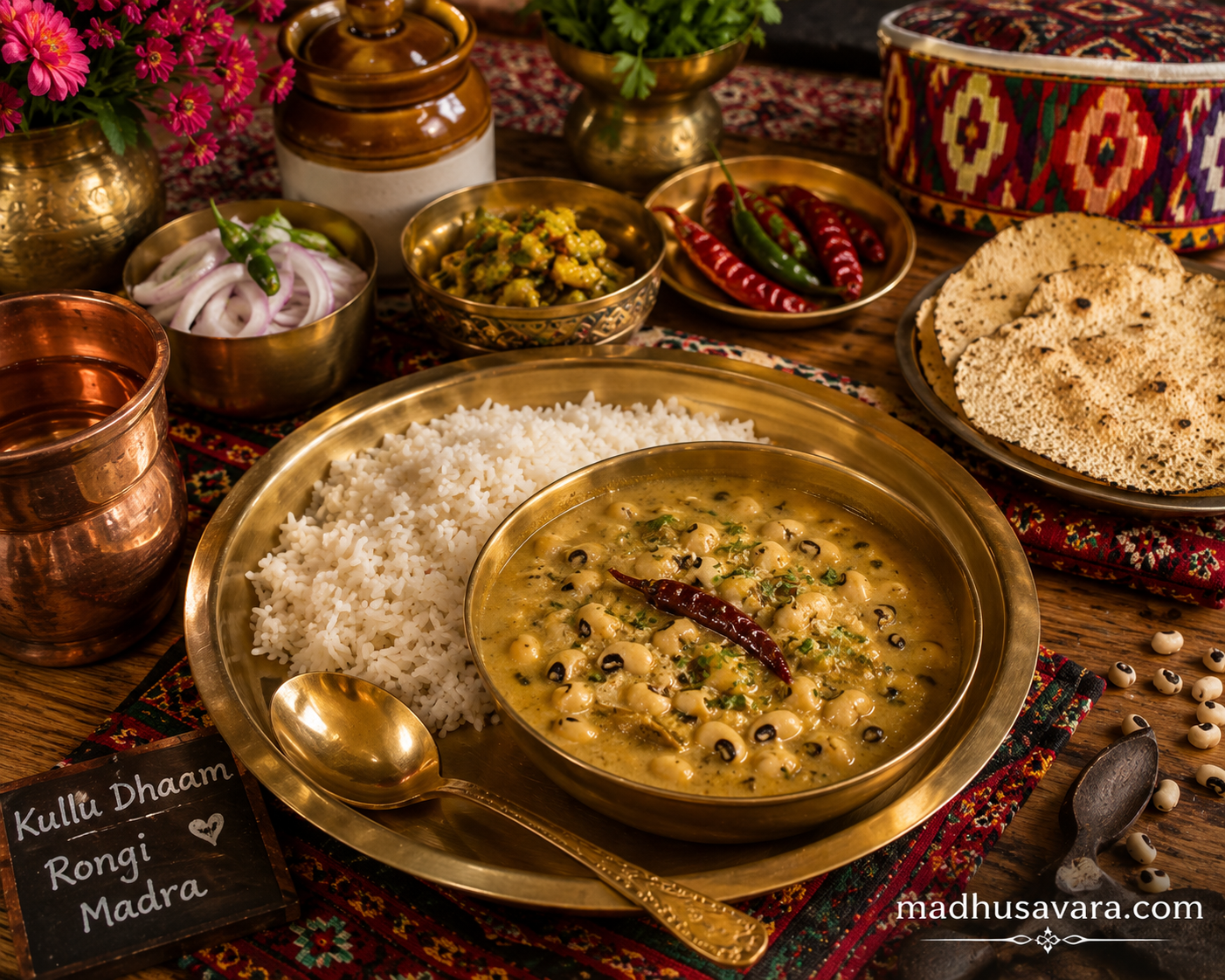
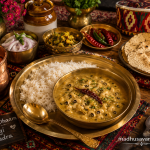
Authentic Rongi Madra served in a traditional brass bowl with steamed rice on a brass thali, accompanied by Himachali pickle, papad, green chillies and copper utensils, beautifully presented in the traditional Kullu Dham style.

Author’s Note

Namaste! I am Madhu Savara, the founder and owner of madhusavara.com.

This Authentic Rongi Madra Recipe brings one of the traditional flavours of Kullu Dham to your kitchen. Himachali Rongi Madra, also known as Lobia Madra, is a simple yet flavourful preparation in which rongi (black-eyed peas) are cooked in a rich yoghurt-based gravy with ghee and carefully balanced spices.

I prepare this Kullu Dham Rongi Madra in the traditional home-style way, allowing the yoghurt and spices to develop their flavour slowly. The result is a wholesome Himachali Madra that is satvik, satisfying and true to the character of this well-loved dish.

I hope this Lobia Madra Recipe helps you experience the authentic taste of Kullu Dham and encourages you to explore the rich culinary heritage of Himachal Pradesh, one traditional recipe at a time.

About Rongi Madra – Origin, Significance and Why You Will Love It

Rongi Madra is a traditional Himachali Madra prepared with rongi (black-eyed peas or lobia) simmered in a rich yoghurt-based gravy flavoured with desi ghee and aromatic whole spices. This Authentic Rongi Madra Recipe is an integral part of the famous Kullu Dham, the ceremonial feast served during festivals, weddings and other auspicious occasions across the Kullu Valley of Himachal Pradesh.

In Himachali cuisine, Madra refers to a satvik preparation in which yoghurt forms the base of the gravy. Unlike many Indian curries, a traditional Kullu Dham Rongi Madra is prepared without onion, garlic or tomatoes. The slow cooking of yoghurt with carefully selected spices gives this Himachali Rongi Madra its rich texture, balanced flavour and distinctive character.

Known locally as Rongi Madra and widely recognised as Lobia Madra, this dish reflects the simplicity and wisdom of traditional Pahadi cooking. Every ingredient has a purpose, and the recipe relies on patience rather than complicated techniques to develop its flavour.

You will enjoy this Authentic Rongi Madra for its creamy yoghurt gravy, tender black-eyed peas and delicate blend of spices. It is naturally satvik, wholesome and satisfying, making it equally suitable for festive meals, family gatherings and everyday lunches. Served with steamed rice, this Black-Eyed Peas Madra remains one of the most cherished dishes of a traditional Kullu Dham and a timeless favourite in Himachali cuisine.

Table of Contents

  • Author’s Note
  • The Heritage of Rongi Madra – History, Cultural Significance and Kullu Dham Tradition
  • Why You Will Love This Authentic Rongi Madra Recipe
  • Recipe Details – Preparation Time, Cooking Time, Servings and Difficulty Level
  • Nutritional Value of Rongi Madra (Per Serving)
  • Allergen Information
  • Essential Utensils for Preparing Rongi Madra
  • Ingredients for Authentic Himachali Rongi Madra
  • How to Make Authentic Rongi Madra – Step-by-Step Recipe
  • Madhu Savara’s Tips for Perfect Kullu Dham Rongi Madra
  • Delicious Variations of Himachali Rongi Madra
  • Serving Suggestions
  • Storage and Reheating Instructions
  • Things to Avoid While Making Rongi Madra
  • Frequently Asked Questions (FAQs)
  • Explore More Authentic Himachali Recipes
  • Call to Action
  • Final Thoughts
  • Author’s Bio

Servings

4 people

Preparation Time:

15 minutes + overnight soaking

Cooking Time:

50 minutes

Calories

285

Ingredients

For Authentic Rongi Madra

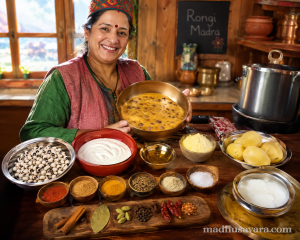
Traditional ingredients for Authentic Rongi Madra Recipe arranged in a Himachali kitchen by a joyful lady, featuring black-eyed peas (rongi), yoghurt, desi ghee, whole spices and potatoes, ready for cooking Kullu Dham Himachali Madra.

For Cooking the Rongi (Black-Eyed Peas)

  • 1 cup dried rongi (black-eyed peas/lobia), soaked overnight
  • 2½–3 cups water
  • 1 small cinnamon stick
  • 2 green cardamom pods
  • 2 cloves
  • 1 bay leaf
  • Salt, to taste

For the Authentic Himachali Madra Gravy

  • 2–2½ cups thick full-fat yoghurt, whisked until smooth
  • 3–4 tablespoons pure desi ghee
  • 1 teaspoon cumin seeds
  • 1–2 bay leaves
  • 1-inch cinnamon stick
  • 2 black cardamoms, lightly crushed
  • 3–4 green cardamoms, lightly crushed
  • 4–5 cloves
  • 8–12 black peppercorns
  • 1 small piece of mace (javitri)
  • 1–2 dried red chillies (optional)
  • A pinch of asafoetida (hing)

Spice Powders

  • ½ teaspoon turmeric powder
  • 1–1½ teaspoons coriander powder
  • ½–¾ teaspoon Kashmiri red chilli powder
  • ½ teaspoon garam masala
  • ¼ teaspoon fenugreek (methi) powder (optional)
  • Salt, to taste

Optional – For Aloo Rongi Madra

  • 2 medium potatoes, peeled, cut into cubes and lightly fried in desi ghee

Equipment Needed

 For Preparing Authentic Rongi Madra

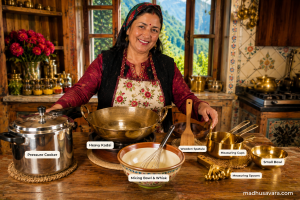
Essential utensils for preparing Authentic Rongi Madra Recipe arranged in a traditional Himachali kitchen by a joyful Himachali lady, featuring a pressure cooker, heavy kadai, whisk, wooden spatula, measuring cups, mixing bowl and spice bowls, ready to cook Kullu Dham Himachali Rongi Madra.

Preparing Authentic Rongi Madra does not require specialised equipment. A few basic kitchen utensils are all you need to recreate this traditional Kullu Dham Rongi Madra with ease.

Utensil Purpose
Pressure cooker Cooks the soaked rongi (black-eyed peas/lobia) until soft while retaining their shape.
Heavy-bottomed kadai or deep pan Ensures even cooking of the yoghurt-based gravy and helps prevent the yoghurt from sticking or scorching.
Whisk Blends the yoghurt until smooth, reducing the risk of curdling during cooking.
Wooden spatula or flat ladle Ideal for stirring the gravy gently and continuously while the yoghurt cooks.
Measuring cups and measuring spoons Help maintain the correct proportion of ingredients for consistent results.
Mixing bowl Useful for whisking the yoghurt and preparing the spice mixture before cooking.
Small bowl Convenient for keeping the whole spices and spice powders ready before tempering.

Nutrition Information

Nutritional Value of Rongi Madra (Per Serving)

The following nutritional values are approximate and are based on one serving of this Authentic Rongi Madra Recipe, prepared with black-eyed peas (rongi/lobia), full-fat yoghurt and desi ghee. The actual values may vary depending on the ingredients and quantities used.

Nutrient Approximate Amount (Per Serving)
Energy 295 kcal
Protein 14.5 g
Carbohydrates 32 g
Dietary Fibre 8.2 g
Total Fat 12.8 g
Saturated Fat 6.2 g
Calcium 190 mg
Iron 3.8 mg
Potassium 520 mg
Sodium* Varies according to the salt used

Note: These values are approximate estimates and should be used as a general nutritional guide. The nutritional content of Himachali Rongi Madra may vary depending on the type of yoghurt, quantity of desi ghee and other ingredients used. This Lobia Madra Recipe is a good source of plant-based protein, dietary fibre and essential minerals, making it a wholesome addition to a balanced diet.

Step by Step Instructions

Step-by-Step Cooking Method for Authentic Kullu Dham Rongi Madra

Essential utensils for preparing Authentic Rongi Madra Recipe arranged in a traditional Himachali kitchen by a joyful Himachali lady, featuring a pressure cooker, heavy kadai, whisk, wooden spatula, measuring cups, mixing bowl and spice bowls, ready to cook Kullu Dham Himachali Rongi Madra.

Step 1: Cook the Rongi (Black-Eyed Peas)

Drain the soaked rongi and transfer it to a pressure cooker. Add water, cinnamon, green cardamom, cloves, bay leaf and salt. Pressure cook for 3–4 whistles or until the rongi becomes tender but still retains its shape. Allow the pressure to release naturally. Reserve a little of the cooking liquid and keep the cooked rongi aside.

Step 2: Prepare the Yoghurt

Whisk the full-fat yoghurt until smooth and lump-free. Bring it to room temperature before cooking to minimise the risk of curdling.

Step 3: Temper the Whole Spices

Heat the desi ghee in a heavy-bottomed kadai over low to medium heat. Add the cumin seeds and allow them to crackle. Add the bay leaves, cinnamon, black cardamoms, green cardamoms, cloves, black peppercorns, mace and dried red chillies. Sauté for 30–40 seconds, allowing the spices to release their aroma without burning. Switch off the heat and stir in the asafoetida (hing).

Step 4: Cook the Yoghurt Gravy

Pour the whisked yoghurt into the kadai and immediately place it over low heat. Stir continuously with a whisk or wooden spatula until the yoghurt thickens and the ghee begins to separate around the edges. This process usually takes 10–12 minutes and forms the foundation of an authentic Himachali Rongi Madra. Continuous stirring is essential to achieve a smooth, creamy gravy.

Step 5: Add the Spice Powders

Once the ghee begins to separate, add the turmeric powder, coriander powder, Kashmiri red chilli powder, fenugreek (methi) powder and garam masala. Stir continuously for about 1 minute so that the spices blend evenly into the yoghurt and ghee.

Step 6: Combine the Rongi

Add the cooked rongi to the gravy and mix gently so that the black-eyed peas are evenly coated. If preparing Aloo Rongi Madra, add the lightly fried potato cubes at this stage. Adjust the salt and add a little reserved cooking liquid if the gravy appears too thick.

Step 7: Simmer the Madra

Cook the Authentic Rongi Madra over low heat for 8–10 minutes, stirring occasionally. The gravy should become rich, smooth and lightly thick, allowing the flavours of the yoghurt, spices and rongi to blend.

Step 8: Rest and Serve

Switch off the heat and allow the Kullu Dham Rongi Madra to rest for 5 minutes before serving. This resting time helps the gravy settle, and the flavours develop further. Serve hot with steamed rice as part of a traditional Kullu Dham meal or enjoy it with plain rice for a wholesome Himachali lunch.

Tips and Variations

Madhu Savara’s Tips and Variations for Perfect Himachali Madra

Preparing an Authentic Rongi Madra is simple, but a few traditional practices help achieve the rich texture and balanced flavour that make this Kullu Dham Rongi Madra so distinctive.

Madhu Savara’s Tips

  • Use fresh full-fat yoghurt at room temperature. Cold yoghurt is more likely to curdle during cooking.
  • Whisk the yoghurt until smooth before adding it to the kadai.
  • Cook the yoghurt over low heat and stir continuously until the ghee begins to separate. This is an important step in preparing traditional Himachali Rongi Madra.
  • Use pure desi ghee for the authentic flavour and texture of this Lobia Madra Recipe.
  • Cook the rongi until tender, but avoid overcooking, as the black-eyed peas should retain their shape.
  • Allow the Authentic Rongi Madra to rest for a few minutes before serving so that the gravy settles naturally.

Variations

  • Add lightly fried potato cubes to prepare the popular Aloo Rongi Madra, a variation enjoyed in many Himachali homes.
  • For a mild touch of sweetness, add a small handful of raisins while the curry simmers.
  • Adjust the quantity of dried red chillies and black peppercorns to suit your preferred level of heat without overpowering the delicate yoghurt gravy.

Allergen Information

This Authentic Rongi Madra Recipe contains the following allergens:

  • Milk: Full-fat yoghurt and desi ghee are the primary dairy ingredients used in this recipe.
  • Legumes: Rongi (black-eyed peas/lobia) belongs to the legume family and may not be suitable for individuals with legume allergies.

This traditional Himachali Rongi Madra is naturally prepared without onion, garlic, eggs, nuts and soy. However, if you are using packaged spices or other ready-made ingredients, always check the product labels for allergen information and cross-contamination warnings.

If you have a known food allergy or dietary restriction, choose suitable ingredient alternatives or consult your healthcare professional before preparing this Kullu Dham Rongi Madra.

Other Essentials

Things to Avoid While Making Rongi Madra

  • Do not use cold yoghurt, as it is more likely to curdle during cooking.
  • Avoid low-fat yoghurt, which may not produce the rich, creamy texture expected in an Authentic Rongi Madra Recipe.
  • Do not cook the yoghurt over high heat. Keep the flame low and stir continuously until the ghee begins to separate.
  • Avoid adding the spice powders before the yoghurt is properly cooked, as this affects the flavour and texture of the gravy.
  • Do not overcook the rongi (black-eyed peas). They should be soft yet retain their shape.
  • Avoid making the gravy too thin. Traditional Himachali Rongi Madra has a thick, smooth consistency that coats the rongi well.

Storage and Reheating Instructions

Allow the Rongi Madra to cool to room temperature before transferring it to a clean, airtight container.

  • Refrigerator: Store for up to 2 days.
  • Freezer: Not recommended, as the yoghurt-based gravy may separate after thawing.

To reheat, warm the Kullu Dham Rongi Madra gently over low heat. If required, add a small quantity of warm water to adjust the consistency and stir continuously until the gravy becomes smooth.

Frequently Asked Questions (FAQs)

Is Rongi Madra the same as Chana Madra?

No. Rongi Madra is prepared with black-eyed peas (rongi/lobia), whereas Chana Madra uses white chickpeas (kabuli chana). Although both are traditional Himachali Madra dishes prepared in a yoghurt-based gravy, they differ in texture and flavour.

Can I prepare Rongi Madra without potatoes?

Yes. The traditional Authentic Rongi Madra Recipe does not require potatoes. Fried potato cubes are added only in the Aloo Rongi Madra variation.

Why does the yoghurt curdle while cooking?

Yoghurt may curdle if it is cold, cooked over high heat or not stirred continuously. Using room-temperature full-fat yoghurt and cooking over low heat helps produce a smooth gravy.

Can packaged yoghurt be used?

Yes. Thick, full-fat yoghurt works well. Avoid low-fat or flavoured yoghurt, as they may affect the texture and taste of the dish.

What is traditionally served with Rongi Madra?

Kullu Dham Rongi Madra is traditionally served with steamed rice as part of a festive Dham meal. It also pairs well with plain rice for an everyday lunch.

Call to Action

Have you tried this Authentic Rongi Madra Recipe? Share your experience in the comments on madhusavara.com. Your feedback, suggestions and cooking tips help other readers prepare this traditional Himachali Rongi Madra with confidence.

Final Thoughts

Rongi Madra reflects the simplicity and richness of traditional Kullu Dham cuisine. Prepared with black-eyed peas, yoghurt, desi ghee and carefully balanced spices, this classic Himachali Madra continues to be appreciated for its wholesome ingredients and distinctive flavour. Whether served during a festive Dham or as part of a family meal, this traditional recipe brings the authentic taste of Himachal Pradesh to the dining table.

Author’s Bio

Madhu Savara is the founder of madhusavara.com, where she shares authentic Indian recipes, regional cuisines, traditional Dham dishes, heritage foods, festive recipes, forgotten culinary traditions, agricultural knowledge and sustainable living practices. Through the website, she continues to document and share the diverse food traditions of India, with many more regional cuisines and traditional recipes planned for the future.

Disclaimer

Important Notice: Read Before Proceeding

The recipes, preparation methods, nutritional details, and related content published on Madhu Savara’s website, social media, and associated platforms are intended solely for general informational and educational purposes. While every effort has been made to ensure accuracy and reliability, we make no guarantees regarding the results, safety, or accuracy of any recipe presented here.

We are not licensed nutritionists, dieticians, or medical professionals. The nutritional values provided are estimates only, calculated using third-party tools, and should not be used for medical diagnosis, dietary treatment, or allergy management. If you have any medical conditions, dietary restrictions, or food allergies, please consult your doctor or certified dietitian before attempting any recipe.

Cooking inherently involves sharp tools, high heat, and the risk of injury or fire. You assume full responsibility for your kitchen practices. Madhu Savara, the website, and all contributors shall not be held liable for any damage, injury, loss, or adverse outcome resulting directly or indirectly from the preparation, consumption, or interpretation of any content herein.

By using this website and attempting any recipe, you agree to hold harmless and indemnify Madhu Savara and her team from any liability, legal claim, or damages arising from the use of this content. You are encouraged to exercise independent judgment and take full responsibility for your health, kitchen safety, and actions.


15

Authentic Rongi Madra served in a traditional brass bowl with steamed rice on a brass thali, accompanied by Himachali pickle, papad, green chillies and copper utensils, beautifully presented in the traditional Kullu Dham style.
Print

Authentic Rongi Madra Recipe | Traditional Kullu Dham Himachali Lobia Madra

Rongi Madra is a traditional Himachali Madra prepared with rongi (black-eyed peas or lobia) simmered in a rich yoghurt-based gravy flavoured with desi ghee and aromatic whole spices. This Authentic Rongi Madra Recipe is an integral part of the famous Kullu Dham, the ceremonial feast served during festivals, weddings and other auspicious occasions across the Kullu Valley of Himachal Pradesh.
Course Main Course
Cuisine Himachal, Himachali Dham, Indian
Keyword Authentic Rongi Madra, Black-Eyed Peas Madra, Himachali Madra, Himachali Rongi Madra, Kullu Dham Recipe, Kullu Dham Rongi Madra, Lobia Madra Recipe, Rongi Madra Recipe, Satvik Himachali Recipe
Prep Time 15 minutes
Cook Time 50 minutes
overnight soaking 12 hours
Total Time 13 hours 5 minutes
Servings 4 serving
Calories 285kcal
Author Madhu Savara

Equipment

  • UtensilPurposePressure cookerCooks the soaked rongi (black-eyed peas/lobia) until soft while retaining their shape.Heavy-bottomed kadai or deep panEnsures even cooking of the yoghurt-based gravy and helps prevent the yoghurt from sticking or scorching.WhiskBlends the yoghurt until smooth, reducing the risk of curdling during cooking.Wooden spatula or flat ladleIdeal for stirring the gravy gently and continuously while the yoghurt cooks.Measuring cups and measuring spoonsHelp maintain the correct proportion of ingredients for consistent results.Mixing bowlUseful for whisking the yoghurt and preparing the spice mixture before cooking.Small bowlConvenient for keeping the whole spices and spice powders ready before tempering.

Ingredients

  • For Cooking the Rongi Black-Eyed Peas
  • 1 cup dried rongi black-eyed peas/lobia, soaked overnight
  • –3 cups water
  • 1 small cinnamon stick
  • 2 green cardamom pods
  • 2 cloves
  • 1 bay leaf
  • Salt to taste
  • For the Authentic Himachali Madra Gravy
  • 2 –2½ cups thick full-fat yoghurt whisked until smooth
  • 3 –4 tablespoons pure desi ghee
  • 1 teaspoon cumin seeds
  • 1 –2 bay leaves
  • 1- inch cinnamon stick
  • 2 black cardamoms lightly crushed
  • 3 –4 green cardamoms lightly crushed
  • 4 –5 cloves
  • 8 –12 black peppercorns
  • 1 small piece of mace javitri
  • 1 –2 dried red chillies optional
  • A pinch of asafoetida hing
  • Spice Powders
  • ½ teaspoon turmeric powder
  • 1 –1½ teaspoons coriander powder
  • ½ –¾ teaspoon Kashmiri red chilli powder
  • ½ teaspoon garam masala
  • ¼ teaspoon fenugreek methi powder (optional)
  • Salt to taste
  • Optional – For Aloo Rongi Madra
  • 2 medium potatoes peeled, cut into cubes and lightly fried in desi ghee

Instructions

  • Step 1: Cook the Rongi (Black-Eyed Peas)
  • Drain the soaked rongi and transfer it to a pressure cooker. Add water, cinnamon, green cardamom, cloves, bay leaf and salt. Pressure cook for 3–4 whistles or until the rongi becomes tender but still retains its shape. Allow the pressure to release naturally. Reserve a little of the cooking liquid and keep the cooked rongi aside.
  • Step 2: Prepare the Yoghurt
  • Whisk the full-fat yoghurt until smooth and lump-free. Bring it to room temperature before cooking to minimise the risk of curdling.
  • Step 3: Temper the Whole Spices
  • Heat the desi ghee in a heavy-bottomed kadai over low to medium heat. Add the cumin seeds and allow them to crackle. Add the bay leaves, cinnamon, black cardamoms, green cardamoms, cloves, black peppercorns, mace and dried red chillies. Sauté for 30–40 seconds, allowing the spices to release their aroma without burning. Switch off the heat and stir in the asafoetida (hing).
  • Step 4: Cook the Yoghurt Gravy
  • Pour the whisked yoghurt into the kadai and immediately place it over low heat. Stir continuously with a whisk or wooden spatula until the yoghurt thickens and the ghee begins to separate around the edges. This process usually takes 10–12 minutes and forms the foundation of an authentic Himachali Rongi Madra. Continuous stirring is essential to achieve a smooth, creamy gravy.
  • Step 5: Add the Spice Powders
  • Once the ghee begins to separate, add the turmeric powder, coriander powder, Kashmiri red chilli powder, fenugreek (methi) powder and garam masala. Stir continuously for about 1 minute so that the spices blend evenly into the yoghurt and ghee.
  • Step 6: Combine the Rongi
  • Add the cooked rongi to the gravy and mix gently so that the black-eyed peas are evenly coated. If preparing Aloo Rongi Madra, add the lightly fried potato cubes at this stage. Adjust the salt and add a little reserved cooking liquid if the gravy appears too thick.
  • Step 7: Simmer the Madra
  • Cook the Authentic Rongi Madra over low heat for 8–10 minutes, stirring occasionally. The gravy should become rich, smooth and lightly thick, allowing the flavours of the yoghurt, spices and rongi to blend.
  • Step 8: Rest and Serve
  • Switch off the heat and allow the Kullu Dham Rongi Madra to rest for 5 minutes before serving. This resting time helps the gravy settle, and the flavours develop further. Serve hot with steamed rice as part of a traditional Kullu Dham meal or enjoy it with plain rice for a wholesome Himachali lunch.

Notes

Madhu Savara’s Tips and Variations for Perfect Himachali Madra

Preparing an Authentic Rongi Madra is simple, but a few traditional practices help achieve the rich texture and balanced flavour that make this Kullu Dham Rongi Madra so distinctive.

Madhu Savara’s Tips

  • Use fresh full-fat yoghurt at room temperature. Cold yoghurt is more likely to curdle during cooking.
  • Whisk the yoghurt until smooth before adding it to the kadai.
  • Cook the yoghurt over low heat and stir continuously until the ghee begins to separate. This is an important step in preparing traditional Himachali Rongi Madra.
  • Use pure desi ghee for the authentic flavour and texture of this Lobia Madra Recipe.
  • Cook the rongi until tender, but avoid overcooking, as the black-eyed peas should retain their shape.
  • Allow the Authentic Rongi Madra to rest for a few minutes before serving so that the gravy settles naturally.

Variations

  • Add lightly fried potato cubes to prepare the popular Aloo Rongi Madra, a variation enjoyed in many Himachali homes.
  • For a mild touch of sweetness, add a small handful of raisins while the curry simmers.
  • Adjust the quantity of dried red chillies and black peppercorns to suit your preferred level of heat without overpowering the delicate yoghurt gravy.