Authentic Himachali Siddu Recipe | Traditional Pahadi Steamed Bun with Walnut & Poppy Seed Filling
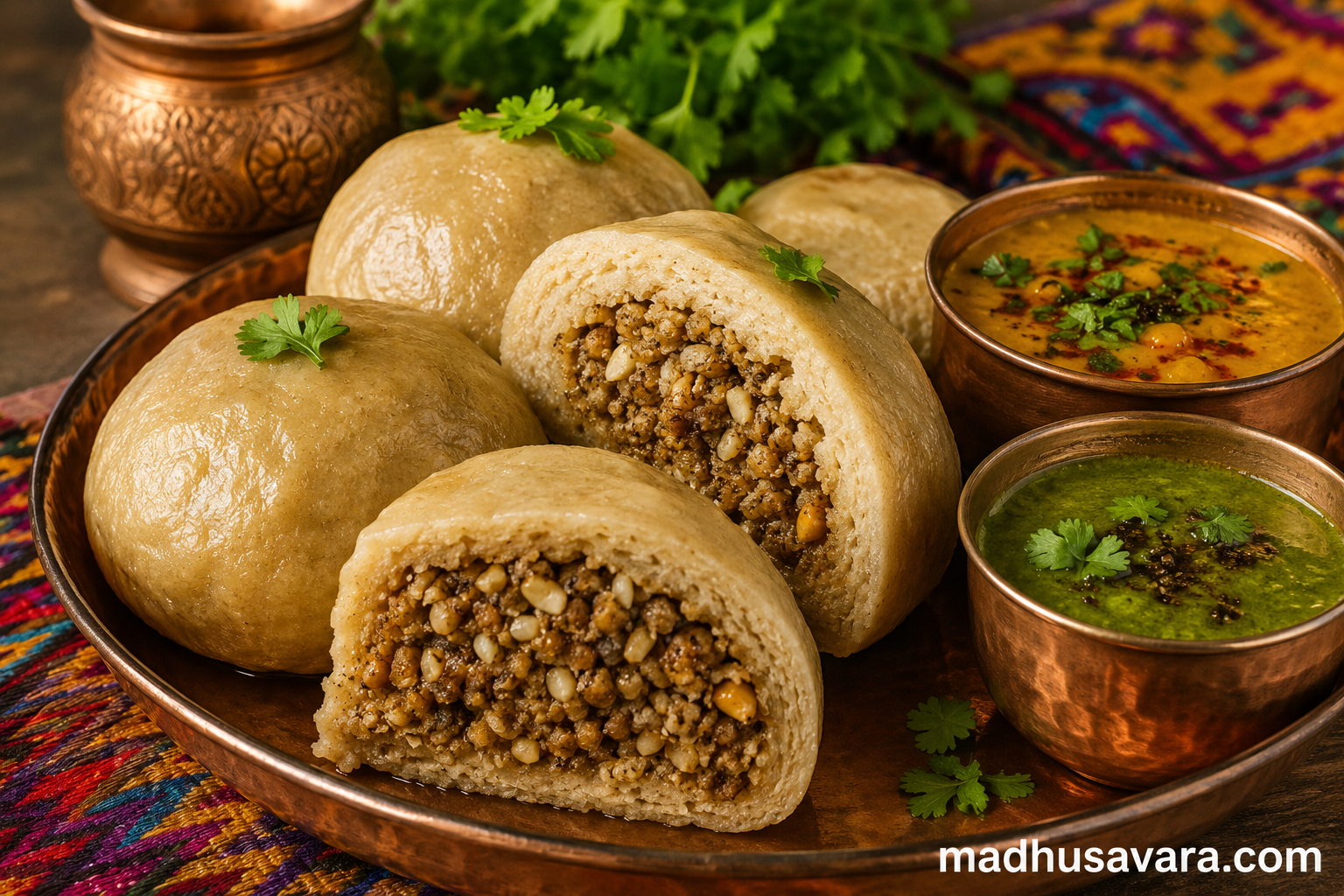
Authentic Himachali Siddu served with desi ghee, Himachali dal and green chutney, featuring soft steamed buns with a traditional walnut and poppy seed filling, inspired by Kullu Dham cuisine.

Author’s Note

The Authentic Himachali Siddu Recipe is one of the finest treasures of Himachal Pradesh cuisine and a signature delicacy of the traditional Kullu Dham. This soft, fluffy Pahadi steamed bun, filled with a classic walnut and poppy seed filling, is traditionally enjoyed hot with pure desi ghee. In this recipe, I have shared the authentic method and flavours that make Traditional Himachali Siddu a timeless favourite in the Himalayan region and a cherished recipe on madhusavara.com.

Description of the Recipe

This Authentic Himachali Siddu Recipe is a traditional Pahadi steamed bun made with naturally fermented wheat dough and a rich walnut-and-poppy seed filling. A signature delicacy of Kullu Dham and Himachal Pradesh cuisine, Traditional Himachali Siddu is steamed until soft and fluffy, then generously served with pure desi ghee. Every bite offers the wholesome flavours and timeless culinary heritage of the Himalayan hills.

Why You’ll Love This Recipe

You’ll love this Authentic Himachali Siddu Recipe because it is soft, fluffy, naturally fermented and packed with the rich flavours of walnuts, poppy seeds and pure desi ghee. This traditional Himachali steamed bun is wholesome, filling and perfect for winter meals, festive occasions and Kullu Dham feasts. Made with simple pantry ingredients, this Pahadi Siddu is easy to prepare at home and brings the authentic taste of Himachal Pradesh cuisine to your table.

Origin

The Authentic Himachali Siddu Recipe originated in the historic Mahasu region of present-day Shimla district and later became an integral part of the cuisine of Kullu Dham and Himachal Pradesh. Many food historians associate its name with the Tibetan word tse-doe, meaning steamed bread, reflecting centuries of cultural exchange across the Himalayas. Today, Traditional Himachali Siddu is recognised as one of the most iconic dishes of the Himalayan region.

Significance

Traditional Himachali Siddu is an integral part of Kullu Dham, where it is served during festivals, weddings and religious celebrations as a symbol of hospitality and abundance. This nourishing Pahadi steamed bun, made with fermented wheat dough and a traditional walnut filling, reflects the resourcefulness of Himachali cuisine and the rich food heritage of the Himalayas. Served hot with desi ghee, Siddu continues to preserve the authentic flavours and traditions of Himachal Pradesh.

Table of Contents

  • Author’s Note
  • Description of the Recipe
  • Why You’ll Love This Authentic Himachali Siddu Recipe
  • Origin of Himachali Siddu
  • Cultural Significance of Siddu in Kullu Dham
  • Preparation & Cooking Time
  • Nutritional Value (Per Serving)
  • Allergen Information
  • Essential Utensils
  • Ingredients for Authentic Himachali Siddu
  • Ingredient Notes & Substitutions
  • Step-by-Step Authentic Himachali Siddu Recipe
  • Madhu Savara’s Tips
  • Serving Suggestions
  • Storage & Reheating Instructions
  • Variations of Himachali Siddu
  • Common Mistakes to Avoid
  • Frequently Asked Questions (FAQs)
  • Call to Action
  • Final Thoughts

Servings

8 people

Preparation Time:

20 minutes (plus 2 hours fermentation)

Cooking Time:

25 minutes

Calories

290

Ingredients

For the Fermented Dough

  • 2 cups whole wheat flour (atta)
  • 1 cup refined flour (maida) (optional, for a softer texture)
  • 1 teaspoon active dry yeast
  • 1 teaspoon sugar
  • ¾ teaspoon salt
  • 1 tablespoon pure desi ghee
  • ¾–1 cup lukewarm water, or as required

For the Traditional Walnut & Poppy Seed Filling

  • ½ cup walnuts, lightly roasted and coarsely crushed
  • 3 tablespoons poppy seeds (khus khus), soaked for 30 minutes and drained
  • 1 small onion, finely chopped (optional)
  • 2–3 green chillies, finely chopped
  • 1-inch ginger, grated
  • 2–3 garlic cloves, finely chopped (optional)
  • 2–3 tablespoons fresh coriander leaves, finely chopped
  • ½ teaspoon cumin seeds, lightly crushed
  • ½ teaspoon fennel seeds, lightly crushed
  • ¼ teaspoon freshly ground black pepper
  • Salt, to taste

For Steaming

  • Water, as required for steaming

For Serving

  • Pure desi ghee
  • Green chutney
  • Traditional Himachali dal or madra (optional, as served in Kullu Dham)

Equipment Needed

  • Large mixing bowl
  • Measuring cups and measuring spoons
  • Clean kitchen towel or plastic wrap (for proofing the dough)
  • Steamer, idli steamer or a large pot with a steaming rack
  • Rolling pin (optional, for shaping the dough)
  • Greased steaming plate, perforated steamer tray or banana leaves
  • Sharp knife or dough scraper
  • Mixing spoon or spatula

Nutrition Information

(Approximate Per One Medium Himachali Siddu)

Nutrient Amount
Calories 290 kcal
Carbohydrates 38 g
Protein 8 g
Total Fat 12 g
Saturated Fat 2.5 g
Dietary Fibre 4 g
Natural Sugars 2 g
Sodium 180 mg
Potassium 220 mg
Calcium 45 mg
Iron 2.1 mg
Magnesium 55 mg
Phosphorus 145 mg
Zinc 1.2 mg
Vitamin B1 (Thiamine) 0.18 mg
Vitamin B3 (Niacin) 2.1 mg
Folate 32 mcg

These values are approximate and may vary depending on the ingredients used, portion size, the walnut and poppy seed filling, and the quantity of desi ghee served with the Authentic Himachali Siddu Recipe.

Step by Step Instructions

Step 1: Activate the Yeast

Combine the yeast, sugar and ¼ cup lukewarm water in a small bowl. Stir gently and leave for 8–10 minutes until the mixture turns frothy and bubbly. If the yeast does not foam, discard it and use a fresh batch.

Step 2: Prepare the Dough

In a large mixing bowl, combine the whole wheat flour, refined flour (if using) and salt. Rub in the desi ghee, then add the activated yeast mixture. Gradually pour in the remaining lukewarm water and knead into a soft, smooth dough. Knead for 6–8 minutes, lightly grease the surface with ghee, cover with a damp kitchen towel and allow it to proof in a warm place for 1½–2 hours, or until doubled in size.

Step 3: Prepare the Traditional Filling

In a bowl, combine the roasted and coarsely crushed walnuts, soaked poppy seeds, onion (if using), green chillies, ginger, garlic (if using), coriander leaves, lightly crushed cumin and fennel seeds, black pepper and salt. Mix well until evenly combined and adjust the seasoning to taste.

Step 4: Shape the Siddu

Gently deflate the risen dough and divide it into 6–8 equal portions. Flatten each portion into a thick disc using your hands or a rolling pin. Place 1½–2 tablespoons of the walnut and poppy seed filling in the centre, bring the edges together and seal them firmly. Shape into smooth round or oval buns.

Step 5: Steam the Siddu

Lightly grease the steamer tray with desi ghee and arrange the shaped Himachali Siddu with enough space between them. Steam over medium heat for 18–25 minutes, depending on their size. The buns are ready when they are well puffed, firm to the touch and a toothpick inserted into the centre comes out clean.

Step 6: Serve Hot

Brush each Authentic Himachali Siddu generously with warm desi ghee immediately after steaming. Serve hot with green chutney, Himachali dal, madra, or any traditional accompaniment from Kullu Dham for an authentic Himalayan meal.

Tips and Variations

Madhu Savara’s Tips & Variations

  • Use a flour blend for softer Siddu: Combine equal parts whole wheat flour (atta) and refined flour (maida) for a lighter, softer texture. For a healthier version, use only whole wheat flour.
  • Choose a traditional filling: The classic Authentic Himachali Siddu Recipe uses a walnut and poppy seed filling, while some households prepare sweet Siddu with jaggery or a savoury urad dal filling.
  • Proof the dough in a warm place: During winter, keep the dough near a warm stove or inside an oven with the light switched on to ensure proper fermentation.
  • Seal the dough well: Pinch the edges firmly after filling to prevent the stuffing from leaking during steaming.
  • Steam over medium heat: Avoid high heat, as it may cook the outside quickly while leaving the centre undercooked.
  • Add extra richness: Mix a tablespoon of grated paneer into the savoury filling for a richer flavour and softer texture.
  • Serve the traditional way: Brush the freshly steamed Himachali Siddu generously with pure desi ghee and enjoy it with green chutney, Himachali dal, madra, or other dishes served in Kullu Dham.

Allergen Information

  • Contains Gluten: Whole wheat flour (atta) and refined flour (maida).
  • Contains Tree Nuts: Walnuts.
  • Contains Poppy Seeds: Khus khus (poppy seeds).
  • Contains Yeast: Prepared with active dry yeast for fermentation.
  • Optional Allergens: Onion and garlic, if included in the filling.
  • Cross-Contamination: Store-bought ingredients may contain traces of other nuts, sesame or gluten due to shared processing facilities.
  • Dietary Note: Not suitable for individuals with gluten, tree nut or yeast allergies. Always read ingredient labels if cooking for someone with food allergies.
Other Essentials

Common Mistakes to Avoid

  • Do not use cold water to activate the yeast, as it prevents proper fermentation and the Authentic Himachali Siddu will not turn soft and fluffy.
  • Avoid adding too much filling, or the walnut and poppy seed stuffing may burst during steaming.
  • Do not steam on high heat, as the outside may become firm while the centre remains undercooked.
  • Keep the steamer covered throughout the cooking process to maintain even steam and a light texture.
  • Serve Himachali Siddu hot, brushed generously with desi ghee, for the authentic taste of Kullu Dham.

Storage & Reheating

  • Best Enjoyed Fresh: Authentic Himachali Siddu tastes best straight from the steamer with hot desi ghee.
  • Refrigerate: Store leftovers in an airtight container for up to 2 days.
  • Reheat: Steam for 4–5 minutes or warm gently in a covered pan with a few drops of water until soft and heated through.
  • Freezing: Not recommended, as the texture of the Pahadi steamed bun changes after thawing.

Frequently Asked Questions

1. Can I make Authentic Himachali Siddu without yeast?

Yes, but traditional Himachali Siddu relies on yeast or natural fermentation for its signature soft and fluffy texture. Without fermentation, the buns will be denser.

2. Why is Siddu an important part of Kullu Dham?

Traditional Himachali Siddu is a cherished dish in Kullu Dham, where it is served with desi ghee during festivals, weddings and religious celebrations as a symbol of hospitality.

3. What is the traditional filling for Himachali Siddu?

The classic Authentic Himachali Siddu Recipe uses a walnut and poppy seed filling, while some families also prepare urad dal or jaggery variations.

4. Can I make Siddu using only whole wheat flour?

Yes. Using only whole wheat flour creates a slightly denser but more wholesome Pahadi Siddu, while adding maida produces a softer texture.

5. How do I know when the Siddu is fully cooked?

The Himachali steamed bun should be well puffed, firm to the touch and spring back lightly when pressed. A toothpick inserted into the centre should come out clean.

6. Is Authentic Himachali Siddu healthy?

Yes. This steamed Himachali delicacy is rich in complex carbohydrates, healthy fats from walnuts, dietary fibre and plant-based protein. Served with desi ghee, it makes a nourishing traditional winter meal.

7. Can I prepare the dough in advance?

Yes. Prepare and proof the dough once, refrigerate it overnight, then bring it to room temperature before shaping and steaming the Traditional Himachali Siddu.

Call to Action

Bring the authentic flavours of Himachal Pradesh to your kitchen with this Authentic Himachali Siddu Recipe. If you enjoyed this traditional Pahadi steamed bun, share your feedback in the comments on madhusavara.com and explore more Kullu Dham recipes, Himachali recipes and regional Indian delicacies from our kitchen.

Final Thoughts

The Authentic Himachali Siddu Recipe is more than a steamed bun—it’s a celebration of Himachal Pradesh’s rich culinary heritage and the timeless traditions of Kullu Dham. Soft, fluffy and generously served with desi ghee, this Traditional Himachali Siddu continues to bring families together with its wholesome ingredients, comforting flavours and authentic mountain charm.

Author’s Bio

Madhu Savara is the founder of madhusavara.com, where she documents India’s rich culinary heritage through authentic regional recipes and traditional home cooking. Her work celebrates the flavours of Himachal Pradesh, Kullu Dham, North Indian cuisine and many other regional food traditions, preserving time-honoured recipes with clear instructions, cultural insights and practical cooking tips for today’s home kitchens.

Disclaimer

Important Notice: Read Before Proceeding

The recipes, preparation methods, nutritional details, and related content published on Madhu Savara’s website, social media, and associated platforms are intended solely for general informational and educational purposes. While every effort has been made to ensure accuracy and reliability, we make no guarantees regarding the results, safety, or accuracy of any recipe presented here.

We are not licensed nutritionists, dieticians, or medical professionals. The nutritional values provided are estimates only, calculated using third-party tools, and should not be used for medical diagnosis, dietary treatment, or allergy management. If you have any medical conditions, dietary restrictions, or food allergies, please consult your doctor or certified dietitian before attempting any recipe.

Cooking inherently involves sharp tools, high heat, and the risk of injury or fire. You assume full responsibility for your kitchen practices. Madhu Savara, the website, and all contributors shall not be held liable for any damage, injury, loss, or adverse outcome resulting directly or indirectly from the preparation, consumption, or interpretation of any content herein.

By using this website and attempting any recipe, you agree to hold harmless and indemnify Madhu Savara and her team from any liability, legal claim, or damages arising from the use of this content. You are encouraged to exercise independent judgment and take full responsibility for your health, kitchen safety, and actions.


2

Authentic Himachali Siddu served with desi ghee, Himachali dal and green chutney, featuring soft steamed buns with a traditional walnut and poppy seed filling, inspired by Kullu Dham cuisine.
Print

Authentic Himachali Siddu Recipe | Traditional Pahadi Steamed Bun with Walnut & Poppy Seed Filling

This Authentic Himachali Siddu Recipe is a traditional Pahadi steamed bun prepared with naturally fermented wheat dough and a rich walnut and poppy seed filling. A signature delicacy of Kullu Dham and Himachal Pradesh cuisineTraditional Himachali Siddu is steamed until soft and fluffy, then generously served with pure desi ghee. Every bite offers the wholesome flavours and timeless culinary heritage of the Himalayan hills.
Course Main Course, Diet: Vegetarian Dish
Cuisine Himachal, Himachali Dham, Indian, North India
Keyword Authentic Himachali Siddu Recipe, Himachali Siddu, Himachali Steamed Bun, Kullu Dham Siddu, Pahadi Siddu, Siddu recipe, Siddu with Desi Ghee, Steamed Wheat Bun Recipe, Traditional Himachali Siddu, Walnut Poppy Seed Siddu
Prep Time 20 minutes
Cook Time 25 minutes
Fermentation 2 hours
Total Time 2 hours 45 minutes
Servings 8 People
Calories 290kcal
Author Madhu Savara

Equipment

  • Large mixing bowlMeasuring cups and measuring spoonsClean kitchen towel or plastic wrap (for proofing the dough)Steamer, idli steamer or a large pot with a steaming rackRolling pin (optional, for shaping the dough)Greased steaming plate, perforated steamer tray or banana leavesSharp knife or dough scraperMixing spoon or spatula

Ingredients

  • For the Fermented Dough
  • 2 cups whole wheat flour atta
  • 1 cup refined flour maida (optional, for a softer texture)
  • 1 teaspoon active dry yeast
  • 1 teaspoon sugar
  • ¾ teaspoon salt
  • 1 tablespoon pure desi ghee
  • ¾ –1 cup lukewarm water or as required
  • For the Traditional Walnut & Poppy Seed Filling
  • ½ cup walnuts lightly roasted and coarsely crushed
  • 3 tablespoons poppy seeds khus khus, soaked for 30 minutes and drained
  • 1 small onion finely chopped (optional)
  • 2 –3 green chillies finely chopped
  • 1- inch ginger grated
  • 2 –3 garlic cloves finely chopped (optional)
  • 2 –3 tablespoons fresh coriander leaves finely chopped
  • ½ teaspoon cumin seeds lightly crushed
  • ½ teaspoon fennel seeds lightly crushed
  • ¼ teaspoon freshly ground black pepper
  • Salt to taste
  • For Steaming
  • Water as required for steaming
  • For Serving
  • Pure desi ghee
  • Green chutney
  • Traditional Himachali dal or madra optional, as served in Kullu Dham

Instructions

  • Step 1: Activate the Yeast
  • Combine the yeast, sugar and ¼ cup lukewarm water in a small bowl. Stir gently and leave for 8–10 minutes until the mixture turns frothy and bubbly. If the yeast does not foam, discard it and use a fresh batch.
  • Step 2: Prepare the Dough
  • In a large mixing bowl, combine the whole wheat flour, refined flour (if using) and salt. Rub in the desi ghee, then add the activated yeast mixture. Gradually pour in the remaining lukewarm water and knead into a soft, smooth dough. Knead for 6–8 minutes, lightly grease the surface with ghee, cover with a damp kitchen towel and allow it to proof in a warm place for 1½–2 hours, or until doubled in size.
  • Step 3: Prepare the Traditional Filling
  • In a bowl, combine the roasted and coarsely crushed walnuts, soaked poppy seeds, onion (if using), green chillies, ginger, garlic (if using), coriander leaves, lightly crushed cumin and fennel seeds, black pepper and salt. Mix well until evenly combined and adjust the seasoning to taste.
  • Step 4: Shape the Siddu
  • Gently deflate the risen dough and divide it into 6–8 equal portions. Flatten each portion into a thick disc using your hands or a rolling pin. Place 1½–2 tablespoons of the walnut and poppy seed filling in the centre, bring the edges together and seal them firmly. Shape into smooth round or oval buns.
  • Step 5: Steam the Siddu
  • Lightly grease the steamer tray with desi ghee and arrange the shaped Himachali Siddu with enough space between them. Steam over medium heat for 18–25 minutes, depending on their size. The buns are ready when they are well puffed, firm to the touch and a toothpick inserted into the centre comes out clean.
  • Step 6: Serve Hot
  • Brush each Authentic Himachali Siddu generously with warm desi ghee immediately after steaming. Serve hot with green chutney, Himachali dal, madra, or any traditional accompaniment from Kullu Dham for an authentic Himalayan meal.

Notes


Madhu Savara’s Tips & Variations

  • Use a flour blend for softer Siddu: Combine equal parts whole wheat flour (atta) and refined flour (maida) for a lighter, softer texture. For a healthier version, use only whole wheat flour.
  • Choose a traditional filling: The classic Authentic Himachali Siddu Recipe uses a walnut and poppy seed filling, while some households prepare sweet Siddu with jaggery or a savoury urad dal filling.
  • Proof the dough in a warm place: During winter, keep the dough near a warm stove or inside an oven with the light switched on to ensure proper fermentation.
  • Seal the dough well: Pinch the edges firmly after filling to prevent the stuffing from leaking during steaming.
  • Steam over medium heat: Avoid high heat, as it may cook the outside quickly while leaving the centre undercooked.
  • Add extra richness: Mix a tablespoon of grated paneer into the savoury filling for a richer flavour and softer texture.
  • Serve the traditional way: Brush the freshly steamed Himachali Siddu generously with pure desi ghee and enjoy it with green chutneyHimachali dalmadra, or other dishes served in Kullu Dham.
Allergen Information
 
  • Contains Gluten: Whole wheat flour (atta) and refined flour (maida).
  • Contains Tree Nuts: Walnuts.
  • Contains Poppy Seeds: Khus khus (poppy seeds).
  • Contains Yeast: Prepared with active dry yeast for fermentation.
  • Optional Allergens: Onion and garlic, if included in the filling.
  • Cross-Contamination: Store-bought ingredients may contain traces of other nuts, sesame or gluten due to shared processing facilities.
  • Dietary Note: Not suitable for individuals with gluten, tree nut or yeast allergies. Always read ingredient labels if cooking for someone with food allergies.