Himachali Bhaturu Recipe | Authentic Himachal-Style Fermented Roti
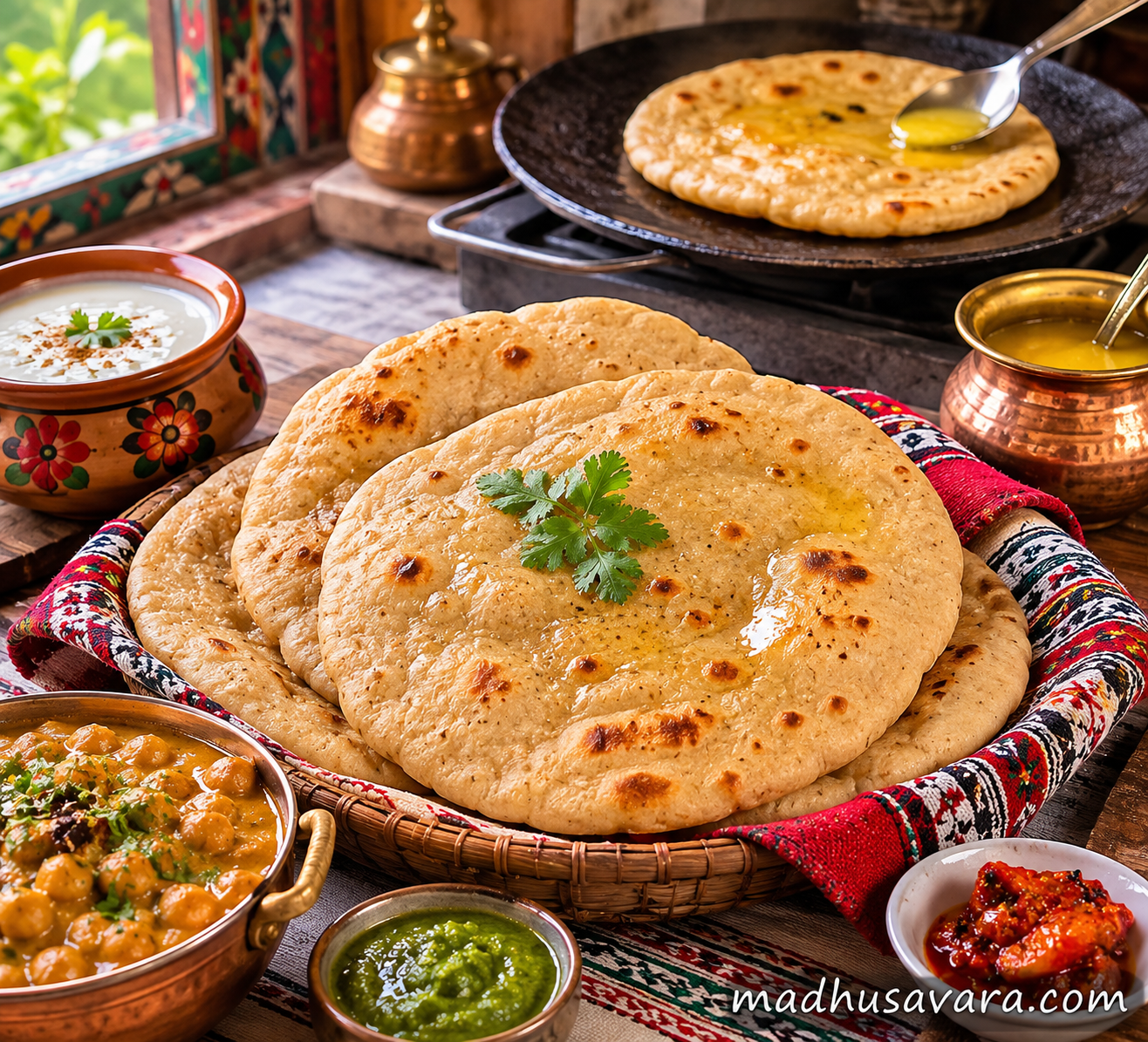
Authentic Himachali Bhaturu roasted on a tawa with ghee, served with Chana Madra, chutney and traditional accompaniments in a Himachali kitchen.

Author’s Note

Namaste. I am Madhu Savara, founder of madhusavara.com. Himachali Bhaturu is a traditional fermented bread from Himachal Pradesh, prepared with wheat dough and known for its soft, spongy texture and mild tang. Also known as Pahadi Bhaturu, it is a traditional Himachali food enjoyed as part of everyday meals in the hills.

I am sharing this authentic Himachali Bhaturu recipe to document the traditional preparation of this fermented wheat roti. The ingredients are simple, but fermentation is the key to getting the characteristic soft texture and mild flavour of a good Himachal-style Bhaturu bread.

Through madhusavara.com, I document traditional Himachali recipes, Pahadi food, regional Himalayan dishes and traditional breads of Himachal Pradesh. Bhaturu is one such recipe that deserves to be known beyond the hills. In this Himachali Bhaturu recipe, I have explained the dough preparation, fermentation and cooking method, along with practical tips for making soft, properly cooked traditional Bhaturu at home.

What is Bhaturu?

Bhaturu, also called Bhatooru or Baturu, is a traditional Himachali fermented bread made with wheat flour and malera, a natural fermented starter. Unlike Punjabi bhatura, Himachali Bhaturu is generally prepared as a thick, soft roti and has a mild fermented flavour.

Origin of Bhaturu

Bhaturu is a traditional bread of Chamba, Himachal Pradesh, especially associated with Pahadi home cooking. The preparation varies between households, but natural fermentation remains an important part of an authentic Himachali Bhaturu recipe.

Significance

This Pahadi Bhaturu reflects the simple ingredients and traditional fermentation methods of Himachali cuisine. It is commonly served with Chana Madra, Aloo Palda, vegetables and desi ghee.

Why You Will Love It

You will love Himachali Bhaturu for its soft, spongy texture, gentle tang and ability to soak up rich curries. This traditional fermented wheat roti is simple, filling and brings an authentic taste of Himachal Pradesh to your table.

Table of Contents

  • Author’s Note
  • What is Bhaturu? Origin and Description
  • Why You Will Love This Himachali Bhaturu Recipe
  • Authentic Ingredients for Himachali Bhaturu
  • Preparation Time, Cooking Time, Servings & Calories
  • Nutritional Value per Serving
  • Equipment Needed
  • Step-by-Step Himachali Bhaturu Recipe
  • Allergen Information
  • Madhu savara’s Tips and Variations
  • Things to Avoid While Making Bhaturu
  • Storage Tips for Himachali Bhaturu
  • FAQs about Himachali Bhaturu Recipe
  • Call to Action
  • Final Thoughts
  • Author’s Bio

Servings

4 People

Preparation Time:

15 Minutes plus resting time 3 hours

Cooking Time:

25 Minutes

Calories

160

Ingredients

Authentic Ingredients for Himachali Bhaturu

Makes 8 medium Bhaturus

  • 2 cups whole wheat flour (atta)
  • ½ cup malera (traditional fermented starter)
  • ¾–1 cup lukewarm water, as required for the dough
  • ½ teaspoon salt, or to taste
  • 1 tablespoon oil or ghee for kneading
  • Extra whole wheat flour for dusting
  • Ghee or oil for roasting

Yeast Alternative

If malera is not available, you can use 1 teaspoon active dry yeast with 1 teaspoon sugar. Dissolve both in ¼ cup lukewarm water and keep aside for 5–7 minutes, or until frothy. Add this mixture while preparing the dough.

For the authentic Himachali Bhaturu recipe, malera is the traditional choice. Yeast is only a convenient alternative for home cooks who do not have access to malera.

Equipment Needed

Needed

  • Large mixing bowl
  • Clean kitchen cloth or plate for covering the dough
  • Rolling pin, optional
  • Tawa or flat iron griddle
  • Spatula
  • Deep kadai, if making the fried version

Nutrition Information

Nutritional Value per Serving

Approximate nutritional values for 1 medium roasted Himachali Bhaturu (75-80g):

  • Calories: 160 kcal
  • Carbohydrates: 28–30 g
  • Protein: 5 g
  • Fat: 2.5–3.5 g
  • Dietary Fibre: Approximately 4 g

Values are approximate and may vary depending on the type of wheat flour used, the amount of oil or ghee added, and the cooking method. Deep-fried Bhaturu will have a higher fat and calorie content than roasted Bhaturu.

Step by Step Instructions

Himachali Bhaturu Recipe

Step 1 – Prepare the Leavening

If using yeast instead of traditional malera, take ¼ cup lukewarm water in a small bowl. Add 1 teaspoon active dry yeast and 1 teaspoon sugar. Mix and keep aside for 5–7 minutes until frothy. If using malera, skip this step.

Step 2 – Prepare the Bhaturu Dough

Take 2 cups whole wheat flour (atta) and ½ teaspoon salt in a large mixing bowl. Add ½ cup malera or the prepared yeast mixture. Mix well and gradually add lukewarm water to make a soft dough.

Add 1 tablespoon oil or ghee and knead for another 3–4 minutes. The dough for Himachali Bhaturu should be softer than regular chapati dough.

Step 3 – Ferment the Dough

Apply a little oil over the dough and cover the bowl with a clean cloth or lid. Keep it in a warm place for 3–6 hours, depending on the weather. In cooler weather, fermentation may take longer.

The dough is ready when it has increased noticeably in volume and feels light and airy. Proper fermentation gives authentic Himachali Bhaturu its characteristic soft texture and mild fermented flavour.

Step 4 – Shape the Bhaturu

Gently press down the fermented dough and knead it once. Divide it into 8 equal portions and make smooth balls.

Flatten each ball with your palms or roll gently into a thick disc, approximately 4–5 inches in diameter. Keep the Bhaturu thicker than a regular roti. Cover the shaped discs and rest for 10–15 minutes.

Step 5 – Cook the Himachali Bhaturu

Heat a tawa over medium flame. Place one Pahadi Bhaturu on the hot tawa and cook for about 1–1½ minutes, until light brown spots appear. Turn and cook the other side.

For a lightly puffed Bhaturu, hold it carefully with tongs and place it over an open flame for a few seconds on each side. Apply a little ghee if desired. Keep the cooked Himachali Bhaturu covered in a casserole to retain its softness.

For Fried Bhaturu

For a festive or fried version, heat oil in a deep kadai. Carefully slide in a rested Bhaturu and press gently with a slotted spoon to help it puff. Fry until golden on both sides and drain on kitchen paper.

Serve traditional Himachali Bhaturu hot with Chana Madra, Aloo Palda, seasonal vegetable curry or simply with desi ghee.


Tips and Variations

Madhu Savara’s Tips for Himachali Bhaturu

  • Use malera for the traditional taste: For an authentic Himachali Bhaturu recipe, malera gives the characteristic fermented flavour and texture. Use yeast only when malera is not available.
  • Keep the dough soft: Bhaturu dough should be softer than regular chapati dough. A firm dough can result in hard or dense Pahadi Bhaturu.
  • Do not rush fermentation: Fermentation time depends on the weather. The dough should become light and airy before shaping.
  • Do not roll Bhaturu too thin: Keep each Bhaturu thick enough to retain its soft, spongy texture after cooking.
  • Cook on medium heat: Very high heat can brown the outside quickly while leaving the centre undercooked.
  • Keep cooked Bhaturu covered: Place the roasted Himachali fermented bread in a covered casserole or cloth-lined container to retain softness.
  • Serve it hot: Traditional Bhaturu tastes best freshly cooked with Chana Madra, Aloo Palda, seasonal vegetables or a little desi ghee.

Variations of Himachali Bhaturu

  • Traditional Malera Bhaturu: Use malera for the most traditional preparation and authentic fermented flavour.
  • Yeast Bhaturu: Use active dry yeast when malera is unavailable. This gives a convenient home-kitchen version while retaining the soft texture of Himachali Bhaturu.
  • Roasted Bhaturu: Cook on a tawa for a traditional everyday version with very little added fat.
  • Fried Bhaturu: Deep-fry the shaped dough for a richer, crispier version, suitable for festive meals or special occasions.
  • Ghee Bhaturu: Lightly brush freshly cooked Bhaturu with desi ghee before serving for added flavour.

Allergen Information

Information

  • Gluten: Contains gluten from whole wheat flour.
  • Dairy: Dairy-free when prepared with oil instead of ghee.
  • Yeast: Check the yeast packet for ingredients if you have any yeast or ingredient sensitivity.
  • Malera: Contains fermented wheat ingredients; check the starter composition if using a prepared malera.
Other Essentials

Things to Avoid While Making Himachali Bhaturu

  • Do not make the dough hard. Soft dough ferments better and helps give Himachali Bhaturu its soft, spongy texture.
  • Do not roll Bhaturu too thin. Traditional Himachali Bhaturu is thicker than a regular chapati.
  • Do not skip the resting time after shaping. Allow the Bhaturu to rest for 10–15 minutes before cooking.
  • Avoid very high heat. Cook on medium heat so the Himachal-style Bhaturu bread cooks properly from inside without burning outside.
  • Avoid cold water for kneading. Lukewarm water is better suited to preparing the fermented dough.

Storage Tips for Himachali Bhaturu

  • Fresh Bhaturu: Best served hot and fresh.
  • Roasted Bhaturu: Store leftover Himachali fermented bread in an airtight container for up to 1 day at room temperature or up to 2 days in the refrigerator.
  • Reheating: Reheat on a tawa over medium heat and brush lightly with ghee if desired.
  • Fermented dough: Refrigerate leftover dough and use within 1 day.
  • Fried Bhaturu: Best consumed on the same day.

FAQs About Himachali Bhaturu Recipe

What is the difference between Bhaturu and Punjabi Bhatura?

Himachali Bhaturu is a fermented wheat bread traditionally made with whole wheat flour and malera and generally cooked on a tawa. Punjabi bhatura is usually made with refined flour and deep-fried.

Can I make Himachali Bhaturu without malera?

Yes. You can use active dry yeast as an alternative. However, malera is the traditional starter used for authentic Himachali Bhaturu.

How long should Bhaturu dough ferment?

Fermentation depends on the temperature. In warm weather, it may take around 3–4 hours, while cooler weather can require 5–6 hours or longer. Look for a visibly risen, light and airy dough rather than relying only on the clock.

Can I make stuffed Bhaturu?

Yes. Stuffed Bhaturu, including versions filled with spiced urad dal, can be prepared as a variation. Keep the filling dry enough to prevent the dough from becoming difficult to shape.

Call to Action

Try this authentic Himachali Bhaturu recipe at home and experience the soft texture and mild fermented flavour of this traditional Pahadi bread. If you make it, share your Bhaturu with us and tag madhusavara.com. For more Himachali recipes, Pahadi food, traditional breads and regional Indian recipes, continue exploring madhusavara.com.

Final Thoughts

Himachali Bhaturu is a simple traditional bread made special by fermentation, soft wheat dough and careful cooking. This Himachali Bhaturu recipe keeps the method straightforward for the home kitchen while retaining the character of traditional Pahadi food. Serve the freshly cooked Bhaturu with Chana Madra, Aloo Palda, seasonal vegetables or desi ghee for a satisfying Himachali meal.

Author’s Bio

Madhu Savara is the founder of madhusavara.com, where she documents authentic Himachali recipes, Pahadi food, Himalayan cuisine, regional Indian recipes and traditional food heritage. Her work focuses on recording lesser-known regional dishes and presenting practical, clear recipes for the home kitchen. Through madhusavara.com, she brings traditional Himachali food and regional Indian cooking to a wider audience while keeping the recipes rooted in their traditional character.

Disclaimer

Important Notice: Read Before Proceeding

The recipes, preparation methods, nutritional details, and related content published on Madhu Savara’s website, social media, and associated platforms are intended solely for general informational and educational purposes. While every effort has been made to ensure accuracy and reliability, we make no guarantees regarding the results, safety, or accuracy of any recipe presented here.

We are not licensed nutritionists, dieticians, or medical professionals. The nutritional values provided are estimates only, calculated using third-party tools, and should not be used for medical diagnosis, dietary treatment, or allergy management. If you have any medical conditions, dietary restrictions, or food allergies, please consult your doctor or certified dietitian before attempting any recipe.

Cooking inherently involves sharp tools, high heat, and the risk of injury or fire. You assume full responsibility for your kitchen practices. Madhu Savara, the website, and all contributors shall not be held liable for any damage, injury, loss, or adverse outcome resulting directly or indirectly from the preparation, consumption, or interpretation of any content herein.

By using this website and attempting any recipe, you agree to hold harmless and indemnify Madhu Savara and her team from any liability, legal claim, or damages arising from the use of this content. You are encouraged to exercise independent judgment and take full responsibility for your health, kitchen safety, and actions.


Authentic Himachali Bhaturu roasted on a tawa with ghee, served with Chana Madra, chutney and traditional accompaniments in a Himachali kitchen.
Print

Himachali Bhaturu Recipe | Authentic Himachal-Style Fermented Roti

Bhaturu, also called Bhatooru or Baturu, is a traditional Himachali fermented bread made with wheat flour and malera, a natural fermented starter. Unlike Punjabi bhatura, Himachali Bhaturu is generally prepared as a thick, soft roti and has a mild fermented flavour.
Course Main Course
Cuisine Himachal, North India
Keyword authentic Himachali Bhaturu, authentic Himachali recipe, Bhaturu recipe, fermented wheat roti, Himachal Pradesh bread, Himachal-style Bhaturu, Himachali Bhaturu recipe, Himachali fermented bread, Madhu Savara recipe, Malera bread, Pahadi Bhaturu, traditional Bhaturu
Prep Time 15 minutes
Cook Time 25 minutes
Resting Time 3 hours
Total Time 3 hours 40 minutes
Servings 4 People
Calories 160kcal
Author Madhu Savara

Equipment

  • Large mixing bowlClean kitchen cloth or plate for covering the doughRolling pin, optionalTawa or flat iron griddleSpatulaDeep kadai, if making the fried version

Ingredients

  • 2 cups whole wheat flour atta
  • ½ cup malera traditional fermented starter
  • ¾ –1 cup lukewarm water as required for the dough
  • ½ teaspoon salt or to taste
  • 1 tablespoon oil or ghee for kneading
  • Extra whole wheat flour for dusting
  • Ghee or oil for roasting
  • Yeast Alternative
  • If malera is not available you can use 1 teaspoon active dry yeast with 1 teaspoon sugar. Dissolve both in ¼ cup lukewarm water and keep aside for 5–7 minutes, or until frothy. Add this mixture while preparing the dough.
  • For the authentic Himachali Bhaturu recipe malera is the traditional choice. Yeast is only a convenient alternative for home cooks who do not have access to malera.

Instructions

  • Step 1 – Prepare the Leavening
  • If using yeast instead of traditional malera, take ¼ cup lukewarm water in a small bowl. Add 1 teaspoon active dry yeast and 1 teaspoon sugar. Mix and keep aside for 5–7 minutes until frothy. If using malera, skip this step.
  • Step 2 – Prepare the Bhaturu Dough
  • Take 2 cups whole wheat flour (atta) and ½ teaspoon salt in a large mixing bowl. Add ½ cup malera or the prepared yeast mixture. Mix well and gradually add lukewarm water to make a soft dough.
  • Add 1 tablespoon oil or ghee and knead for another 3–4 minutes. The dough for Himachali Bhaturu should be softer than regular chapati dough.
  • Step 3 – Ferment the Dough
  • Apply a little oil over the dough and cover the bowl with a clean cloth or lid. Keep it in a warm place for 3–6 hours, depending on the weather. In cooler weather, fermentation may take longer.
  • The dough is ready when it has increased noticeably in volume and feels light and airy. Proper fermentation gives authentic Himachali Bhaturu its characteristic soft texture and mild fermented flavour.
  • Step 4 – Shape the Bhaturu
  • Gently press down the fermented dough and knead it once. Divide it into 8 equal portions and make smooth balls.
  • Flatten each ball with your palms or roll gently into a thick disc, approximately 4–5 inches in diameter. Keep the Bhaturu thicker than a regular roti. Cover the shaped discs and rest for 10–15 minutes.
  • Step 5 – Cook the Himachali Bhaturu
  • Heat a tawa over medium flame. Place one Pahadi Bhaturu on the hot tawa and cook for about 1–1½ minutes, until light brown spots appear. Turn and cook the other side.
  • For a lightly puffed Bhaturu, hold it carefully with tongs and place it over an open flame for a few seconds on each side. Apply a little ghee if desired. Keep the cooked Himachali Bhaturu covered in a casserole to retain its softness.
  • For Fried Bhaturu
  • For a festive or fried version, heat oil in a deep kadai. Carefully slide in a rested Bhaturu and press gently with a slotted spoon to help it puff. Fry until golden on both sides and drain on kitchen paper.
  • Serve traditional Himachali Bhaturu hot with Chana Madra, Aloo Palda, seasonal vegetable curry or simply with desi ghee.

Notes

Madhu Savara’s Tips for Himachali Bhaturu

  • Use malera for the traditional taste: For an authentic Himachali Bhaturu recipe, malera gives the characteristic fermented flavour and texture. Use yeast only when malera is not available.
  • Keep the dough soft: Bhaturu dough should be softer than regular chapati dough. A firm dough can result in hard or dense Pahadi Bhaturu.
  • Do not rush fermentation: Fermentation time depends on the weather. The dough should become light and airy before shaping.
  • Do not roll Bhaturu too thin: Keep each Bhaturu thick enough to retain its soft, spongy texture after cooking.
  • Cook on medium heat: Very high heat can brown the outside quickly while leaving the centre undercooked.
  • Keep cooked Bhaturu covered: Place the roasted Himachali fermented bread in a covered casserole or cloth-lined container to retain softness.
  • Serve it hot: Traditional Bhaturu tastes best freshly cooked with Chana Madra, Aloo Palda, seasonal vegetables or a little desi ghee.

Variations of Himachali Bhaturu

  • Traditional Malera Bhaturu: Use malera for the most traditional preparation and authentic fermented flavour.
  • Yeast Bhaturu: Use active dry yeast when malera is unavailable. This gives a convenient home-kitchen version while retaining the soft texture of Himachali Bhaturu.
  • Roasted Bhaturu: Cook on a tawa for a traditional everyday version with very little added fat.
  • Fried Bhaturu: Deep-fry the shaped dough for a richer, crispier version, suitable for festive meals or special occasions.
  • Ghee Bhaturu: Lightly brush freshly cooked Bhaturu with desi ghee before serving for added flavour.