
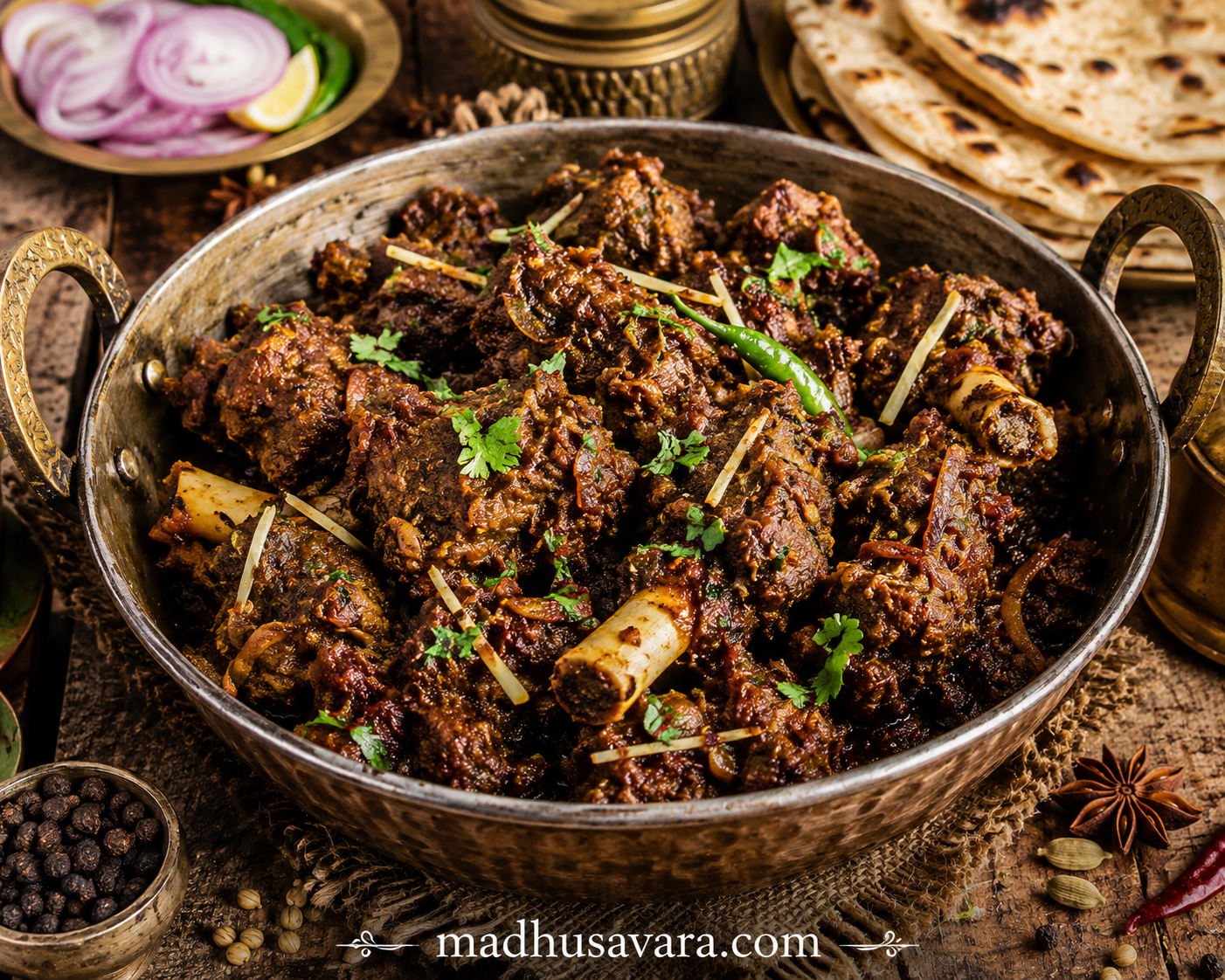
Home Style Ranjha Gosht Recipe | Traditional Punjabi Mutton Dish | Forgotten Meat Dish of Punjab
Home Style Ranjha Gosht is a traditional Punjabi mutton dish cooked slowly with simple spices and patience. This version is prepared in a heavy-bottomed handi on a regular stove. Marinated mutton is gently simmered with onions, yoghurt, and a balanced mix of whole and ground spices until it becomes tender and full of flavour.
Servings 4 People
Calories 420kcal
Equipment
- Heavy-bottomed handi or thick kadhai for slow cooking the muttonMixing bowl for marinating the mutton with spices and yoghurtWooden spoon or spatula for gentle stirring during cookingSharp knife and chopping board for preparing onions and other ingredientsMeasuring spoons for accurate spice measurements
Ingredients
- For the Marinade
- 1 kg mutton preferably bone-in
- 1 cup thick full-fat yoghurt
- 1 tbsp fresh ginger-garlic paste
- 1 tsp red chilli powder
- 1 tsp turmeric powder
- 1 tsp salt
- For Cooking
- 4 –5 medium onions finely sliced
- 1 tsp cumin seeds
- 3 –4 green cardamoms
- 4 –5 cloves
- 1 black cardamom
- 1- inch cinnamon stick
- 2 –3 bay leaves
- 2 tsp coriander powder
- 1 tsp garam masala
- 2 –3 green chillies slit lengthwise
- 4 –5 tbsp mustard oil or ghee
- Salt to taste
- 1 –1½ cups water or as needed
- Fresh coriander leaves finely chopped, for garnish
Instructions
- Wash the mutton pieces and pat them dry. In a large bowl, mix yoghurt, ginger-garlic paste, red chilli powder, turmeric and salt. Add the mutton and coat well. Cover and leave to marinate for at least one hour.
- Heat mustard oil or ghee in a heavy-bottomed handi on medium flame. Add cumin seeds, green cardamoms, cloves, black cardamom, cinnamon and bay leaves. Let them release their aroma for a few seconds.
- Add the sliced onions and cook on medium heat until they turn golden brown. Stir regularly so they colour evenly.
- Add the marinated mutton along with all the marinade. Cook on medium-high heat for 8–10 minutes, stirring often, until the raw smell of the yoghurt and spices goes away and the meat starts to change colour.
- Lower the flame. Add coriander powder, green chillies and salt if needed. Mix well.
- Pour in 1 to 1½ cups of water, just enough to create a light gravy. Cover the handi with a tight lid and cook on low heat for 50–60 minutes. Stir once or twice in between. The mutton should become soft, and the oil should begin to separate.
- Sprinkle garam masala and mix gently. Cook uncovered for another 5–7 minutes so the gravy thickens slightly.
- Turn off the heat. Garnish with fresh coriander leaves. Let the Home Style Ranjha Gosht rest for 10 minutes before serving.
Notes
Tips and Variations
Madhu Savara’s Tips and Variations
- Use mutton pieces with some bone as they add more depth and flavour to the gravy during slow cooking.
- Full-fat yoghurt gives a smoother texture and richer taste compared to low-fat yoghurt.
- If the gravy is thinner than desired, cook the Ranjha Gosht uncovered for a few extra minutes until it reaches the preferred consistency.
- For mature mutton that requires extra tenderness, a small piece of raw papaya can be added while marinating.
- Some Punjabi households add a pinch of crushed dried fenugreek leaves (kasuri methi) at the end for a mild earthy aroma and added flavour.
